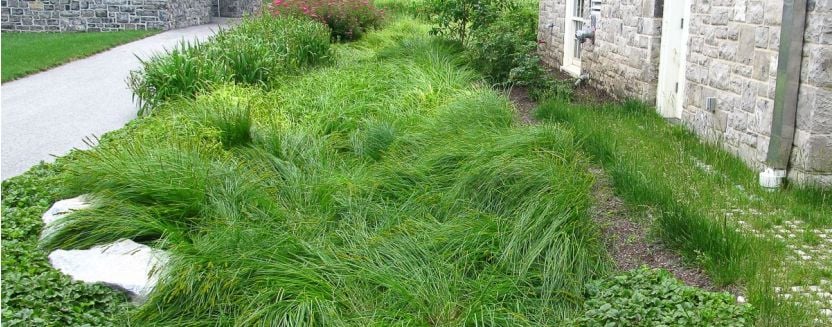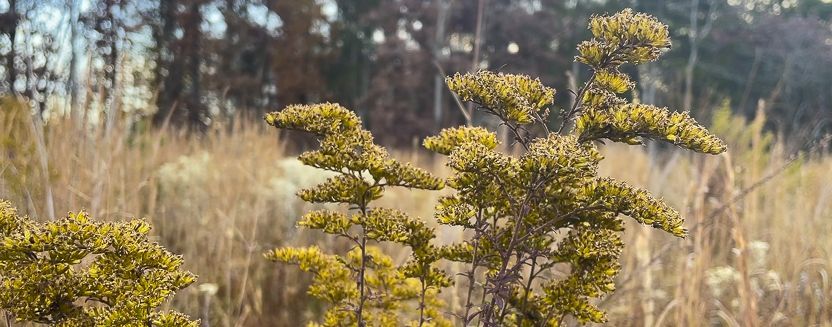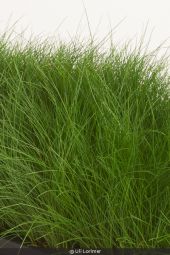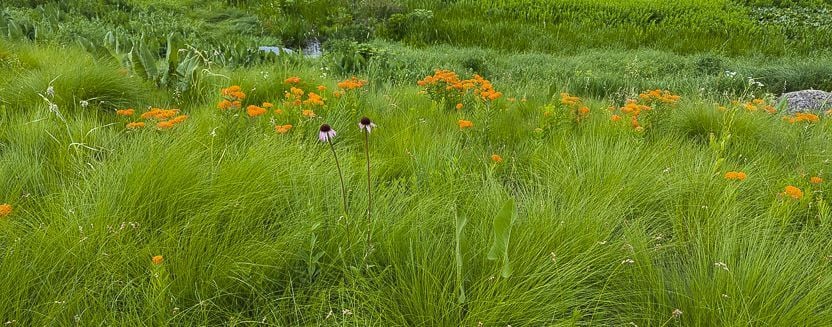
When you experience a landscape dominated by grasses, something magical happens.
The wind is made manifest in undulating waves as it sweeps across their blades and blooms. The sound and movement are mesmerizing.
Grasses can transform and elevate our garden experience, even when they’re not the dominant element. Yet many familiar ornamental grasses are big, and not every garden can accommodate them. Fortunately, there are many smaller, native grasses that provide similar benefits without the big footprint. And they adapt well to cultivated landscapes.
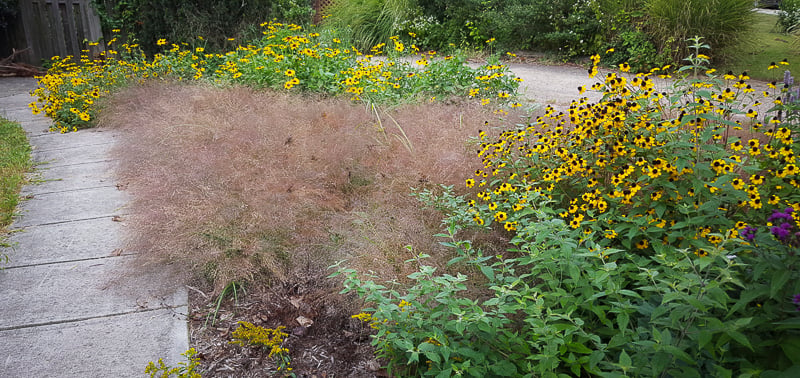
Species like Deschampsia cespitosa (tufted hairgrass) and Eragrostis spectabilis (purple lovegrass) are valuable not only for their ecological benefits and workhorse abilities but also for their roles in planting design. They can unify a complex composition, create a foundation for a perennial planting, or fit easily into a townhouse garden.
An Eye Toward Design
These smaller-scale natives offer the distinct combination of aesthetic and sensory qualities that most ornamental grasses share. Their long, linear foliage contrasts visually with the garden’s more typical rounded and oblong leaves. Several have inflorescences that catch the light and glow when backlit by the sun. The rich visual texture of the foliage and flowers softens hardscapes.
Grasses create visual stability and lend unity to a design. Herbaceous perennials vary considerably in the interest they provide, standing out at certain points in time and then fading into the background. Grasses also change throughout the growing season, but their overall appearance does not differ as much. Because they are more stable visually, they can simplify and declutter a space, providing a place to rest one’s eyes. They’re unifying and soothing.
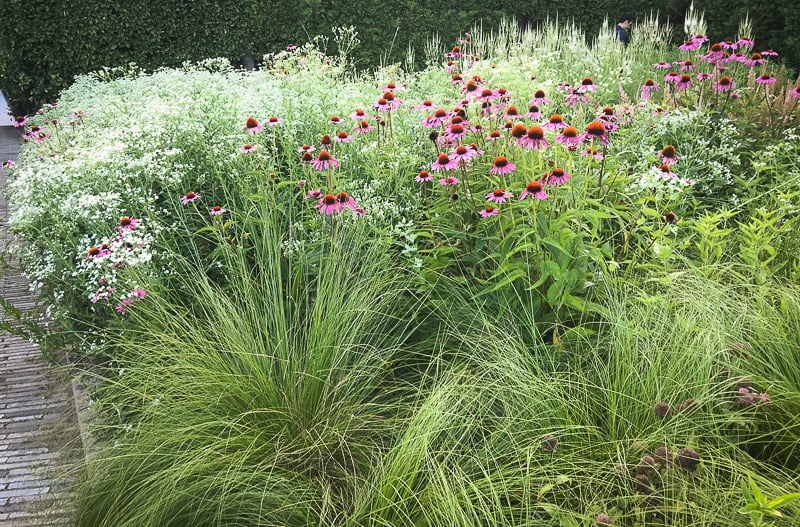
Movement and sound are integral to grasses’ appeal. Grasses wave and flutter in the breeze, whispering softly and making the landscape feel alive. This appeal translates to the dormant season. Rather than melting to the ground with the first freeze, most grasses keep their structure intact. The dried foliage catches winter winds and rustles deliciously. A heavy snowstorm can dampen the party, but the sensory elements grasses provide in winter are invaluable.
Garden Muscle
In addition to their useful aesthetic, these grasses are workhorses. They’re unfussy, with few pest problems and minimal maintenance demands. Their real power lies in offering serious solutions to landscape challenges. Dense crowns and foliage help suppress weeds, slow and filter stormwater runoff, and keep soil in place. Fibrous, branching root systems further reduce erosion while increasing water infiltration. The roots improve soil health by adding organic matter and creating air space when portions of the root system die back each winter. And while most offer shelter, cover, and food for wildlife, these grasses are near the bottom of the list when it comes to deer browsing.
Part-shade Players
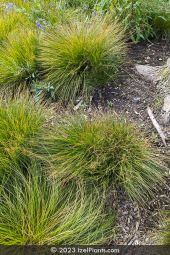
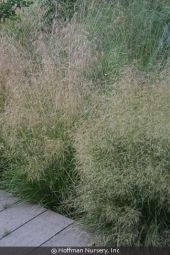
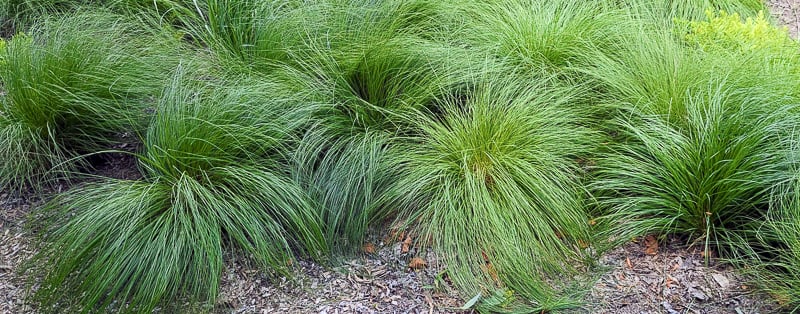
Deschampsia cespitosa (tufted hairgrass) is a delightful mounding grass with fine-textured foliage and airy panicles that rise up in summer. With a foliage height between 16 and 24 inches, it’s the right size to serve as a “shoes and socks” plant for taller, leggier perennials like Pycnanthemum (mountain mints) and Monarda (beebalms). It does well in sun and into partial shade, making it a versatile plant for gardens with tree cover and variable exposure. The plumes, which rise up to two feet above the foliage, are “see-through”— airy enough to allow a glimpse of whatever grows behind. The cultivar ‘Goldtau’ is a favorite, with a more compact habit and a heavy set of golden plumes.
Tufted hairgrass is a cool-season grass, growing most actively in the cooler temperatures of spring and fall. It makes its wild home around the globe, primarily in northern latitudes, and loves moist, well-drained soils, although it can tolerate drier conditions. It can suffer in hotter, more humid climates like the Southeastern U.S. and will rarely flower in southern latitudes.
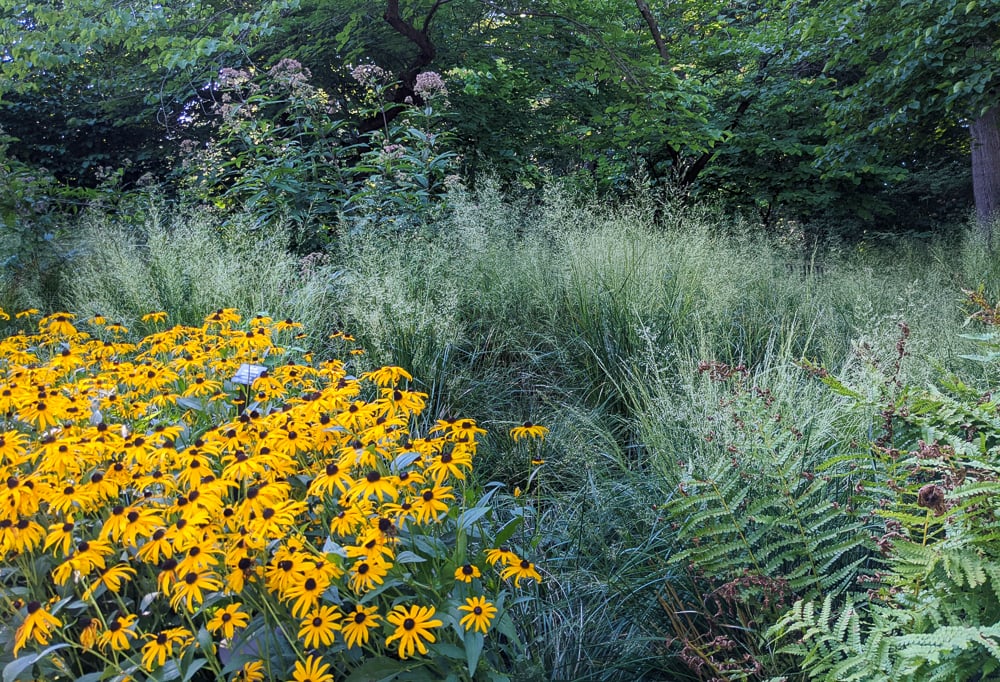
The closely related Deschampsia flexuosa (wavy hairgrass) is smaller in stature, reaching 12 to 18 inches tall, and it does slightly better in warmer climates than its cousin. Some botanic authorities place this grass in the genus Avenella. Regardless of its classification, it’s a charming plant that will happily mingle with low-growing perennials and underneath taller ones, especially in shady conditions. It will tolerate drier soils than tufted hairgrass; it’s often found growing on mountain balds and on sandy, well-drained soils. It is more likely to flower in warmer regions but needs partial shade to withstand the heat. Its shorter, delicate panicles are borne on straight, upright stems. They’re like a little cloud hovering above the foliage.

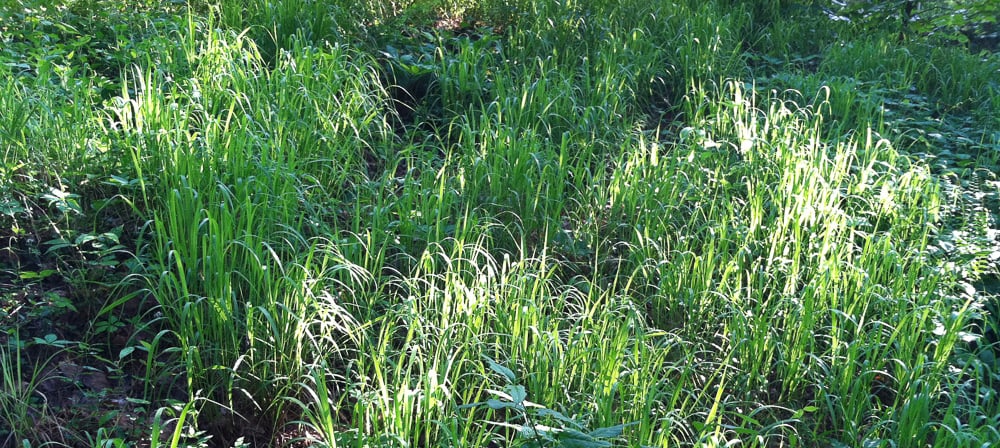
Chasmanthium laxum (slender woodoats) offers another option for partial shade. This unassuming native is a handy two-foot-tall filler that can be tucked among tall and mid-height perennials and shrubs to provide coverage and reduce weed pressure. I’ve seen it used in woodland gardens on the slopes of small ravines to stabilize the soil. The habit is clumping and tends to be more upright in brighter conditions and more arching in shadier settings. Delicate, arrowhead-shaped spikelets that resemble oats appear in rows along the slender stems.
Occurring primarily in the Southeast and Mid-Atlantic, this cool-season grower is usually found in wet or moist habitats, and it performs best with consistent moisture. Periods of drought will knock it back. Nevertheless, it will grow in drier soils, won’t fuss about soil type, and does well in a garden setting. Slender woodoats is a host plant for several butterflies, and birds and small mammals eat the seeds. While it tends to self-sow, it’s a gentler spreader than the often-prolific Chasmanthium latifolium (river oats, Indian woodoats).
Stunners for Full Sun
For hot, dry, sunny spots, the 12- to 20- inch-tall Sporobolus heterolepis (prairie dropseed) is a versatile and elegant choice. The finely textured blades and mounding habit give it the polish to work in formal, structured landscapes, yet it’s equally at home in naturalistic settings. Combine it with showy flowering perennials for a composed ensemble or use it as the base layer for an urban prairie planting. It underlies the gorgeous perennial mixtures in the Lurie Garden in Chicago and on the High Line in New York City.
Native to mixed prairies and open areas, it thrives in dry, rocky soils and tolerates heat and drought. It’s most common in the Midwest, yet it performs well in other regions of the country. The airy, open panicles appear in summer, rising well above the foliage. Prairie dropseed is a warm-season grass, growing most actively during the heat of summer. It’s slower to establish and reach maturity than other prairie grasses but well worth the wait and long-lived once established. It gets bonus points for producing edible seeds for juncos and other sparrows and for its gorgeous fall color.
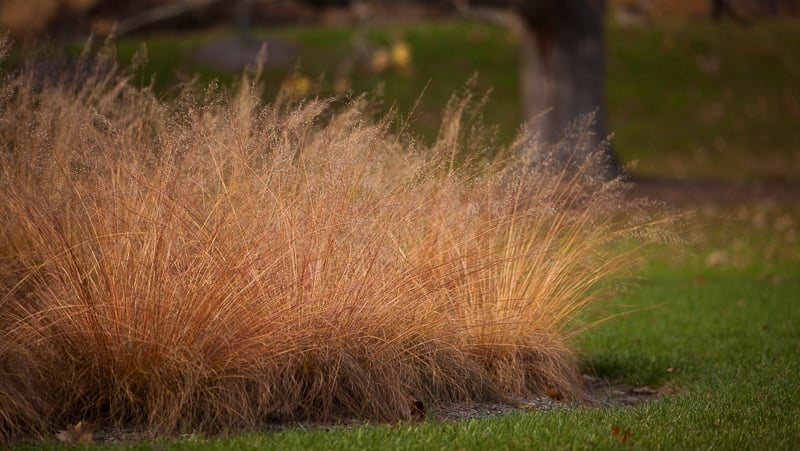
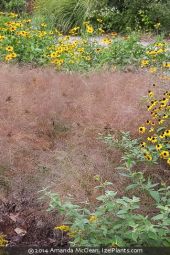
Eragrostis spectabilis (purple lovegrass) is another winner for hot, dry, sunny sites. This plucky native, which is widespread throughout the central and eastern U.S., is what I call an edge plant: it prefers barren, rocky or sandy soils and dry conditions, so it’s an excellent option for the edges of walkways, driveways, and parking lots. In fertile or poorly drained soils, it is easily outcompeted by other grasses and is susceptible to rot.
Small pinkish-purple spikelets appear from late summer to early fall and float in airy clouds atop the 6-to-12-inch foliage mound. Its petite habit is bunching, but it will spread slowly by rhizomes to form a mass. It self-seeds as well, making it a great candidate for a groundcover in poor, infertile soils.
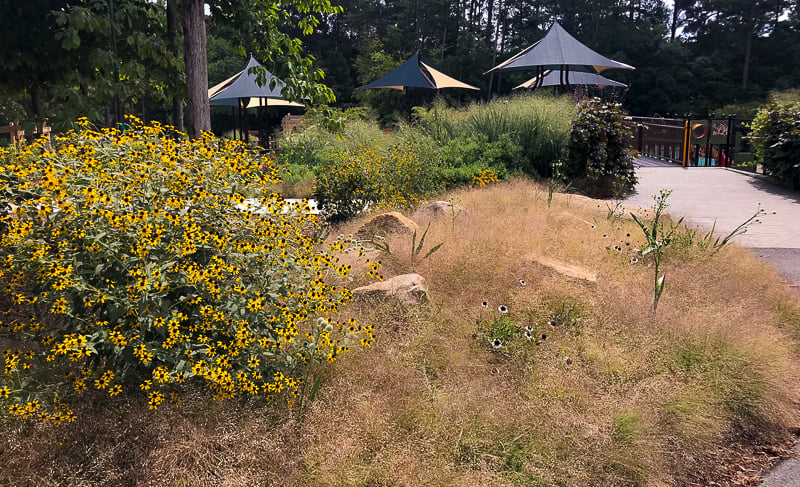
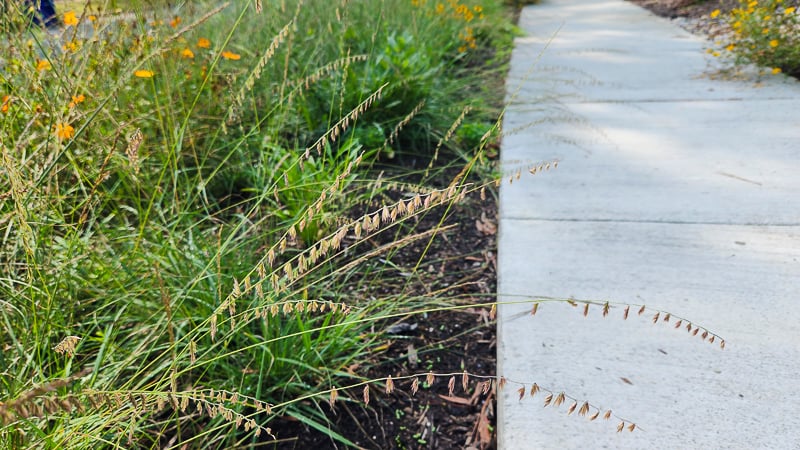
Bouteloua curtipendula (sideoats grama) is an understated, widely adaptable warm-season grass. With medium-green foliage and a dense, upright habit to two feet tall, it takes on the role of unifier and filler in dry, full sun conditions. It’s a favorite for matrix plantings, serving as the ground layer into which other perennials and woodies are planted. It blooms with oat-like spikes that hang down one side of the gently arching stems.
Sideoats grama is native to grasslands in central North America, with scattered populations in the East. It’s a good choice for cultivated landscapes because it tolerates dry conditions, it is not fussy about pH, and it will grow in a range of soil types, from sand to clay. It will self-sow and may spread via rhizomes, although drier conditions tend to encourage clumping rather than spreading. It hosts several species of skipper butterflies, and its seeds attract birds.
Big Contributors
The list of smaller, native grass possibilities goes on— Bouteloua gracilis (blue grama), Danthonia spicata (poverty oatgrass), and others also deserve more attention—but these are a great starting point. As always, “right plant, right place” must be part of the process. Not every native grass will work for every garden. Nevertheless, if you’d like to boost biodiversity, increase functionality, and add some aesthetic magic, these smaller native grasses may be just the right fit.
Editorial Note: This post is adapted from the article of the same name that first appeared in the July/August 2024 issue of Horticulture magazine.

Shannon Currey is a horticultural educator with Izel Native Plants. She’s worked in the nursery trade since 2006, and has established herself as an expert on graminoids, including native grasses and sedges. She serves on the North Carolina Plant Conservation Program Scientific Committee and the board of the Perennial Plant Association. In 2022 she joined our team to expand our outreach efforts. Shannon lives in Durham, North Carolina and loves exploring the incredible plant diversity around her.