Creating a Garden-scale Grassland: Part 1

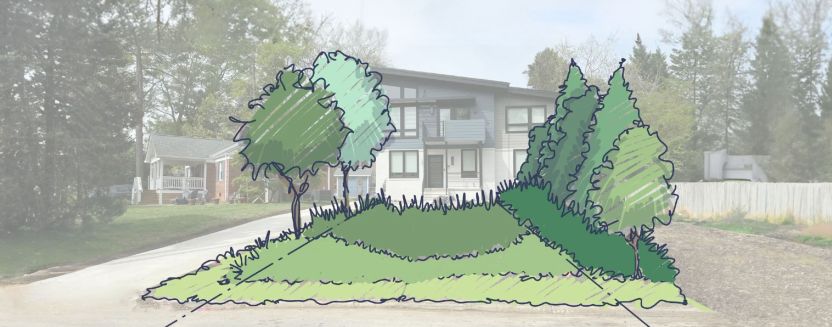
A residential garden design overlay on a photograph
August 24, 2023
Creating a Garden-scale Grassland: Part 1

Desiging for function.

Have you wondered about having a different kind of landscape? An alternative to the traditional lawn and foundation shrubs? A landscape that welcomes wildlife, boosts ecological function, and reduces the need to mow? That’s what landscape architect Preston Montague was aiming for with his client’s new home. She didn’t want to mow—but was willing to string trim occasionally—and she wanted to preserve the view to the street from inside the house.

With a lawn out of the question, and the site ravaged by construction, Preston needed a cost-effective, efficient way to create a large planting that was low enough to see over to the street. His solution: a garden-scale grassland.
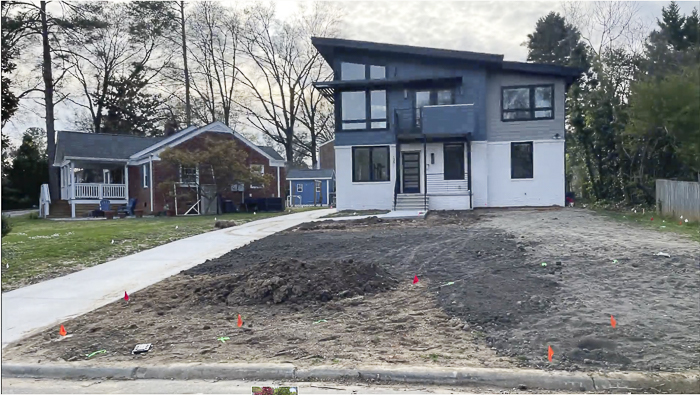
The front yard, post construction, pre garden installation

For this project, Preston adapted an approach he uses with mass plantings on ecological restoration projects. A seed mix of native plants jumpstarts erosion control and weed suppression, while reducing the need for mowing. Plugs planted directly into the seed mix give more design control, creating patterns and aesthetic cues that show this planting is cultivated and intentional.

Join Preston for a three-part video series where he shares the process and shows us this garden-scale grassland project for a homeowner in Raleigh, North Carolina.

Part 1: Designing for function 
Part 2: Soil prep and sowing seed
Part 3: Adding plugs for more design control



Preston Montague

Preston Montague is a landscape architect and artist who developed a passion for the natural world while growing up in the rural foothills of Virginia. Currently, he lives in Durham, North Carolina working on projects that encourage stronger relationships between people and the natural world for the purpose of improving public and environmental health. Preston is a recipient of the Perennial Plant Association’s 2022 Landscape Design Awards.

Related posts
Comments
Leave your comment
Monica MacAdams
August 26, 2023
Hi Mr. Montague, Your plan looks great for NC (probably the best place to garden in the USA), in a garden that has sun. Wish you'd post some ideas for those of us who live just a bit further north (DC), whose gardens enjoy little sun (ranging from partial sun to full shade), and have deer, squirrels & rabbits romping & chomping. I've done the best I can for the (almost) 14 years I've lived here, but I'm (almost) 74...and exhausted! I have no "turf grass," but have tried other grasses (spent a fortune on PA Carex, which hasn't worked...and a "stream" of Toffee Twist NZ carex, which has fared better, but needs replenishing every spring & I can't always find it). Anyhow, it wd be very interesting if you cd post a few ideas for those of us who live in not-ideal conditions.
Izel Native Plants
August 28, 2023
Hi Monica. While Preston’s project is in North Carolina, we asked him to share it because the process he goes through as a designer and the principles he’s using apply across different sites and different regions. His site analysis considers the climate, sun exposure, soil conditions, and moisture availability, among other factors. And he’s considering the client’s needs and functionality that needs to happen in the landscape. The specifics will change, of course, but the underlying process remains the same. Many of our readers are dealing with new construction, and this seemed like a good project to use as an example. The later videos in this short series will highlight specific plants that work for that site in NC, and he’ll talk about why he’s choosing those plants. That “why” should help people translate the process to their own site. However, we know that’s not an easy process. Your experience trying to create a non-turf landscape does sound difficult. Your suggestion to highlight a project with similar or analogous challenges would be a great complement to this series. We’ll keep an eye out for one where we have access and would be a good fit. Thanks for the input!
Lyn Rutherford
September 11, 2023
Wow! This video is absolutely packed with helpful design concepts: transitioning to magnolias later because "successional planning is part of vegetation design", using grassland space as a kind of stormwater control measure, planting taller grasses where you need support for taller forbs. Fantastic! Thank you so much for sharing, Preston!
Powered by Amasty Magento 2 Blog Extension
Loading...