When you’re a fan of native grasses, fall is the best.
One of my first jobs in horticulture was working a fall season at Niche Gardens, a native plant nursery in central North Carolina. It was a short stint—only a few months—but it awakened in me an appreciation for plants that are at peak late in the growing season. Because they stand out this time of year and take the foreground, I call them fall-forward plants. Grasses are at the top of my fall-forward list, and this is the perfect time to seek them out.
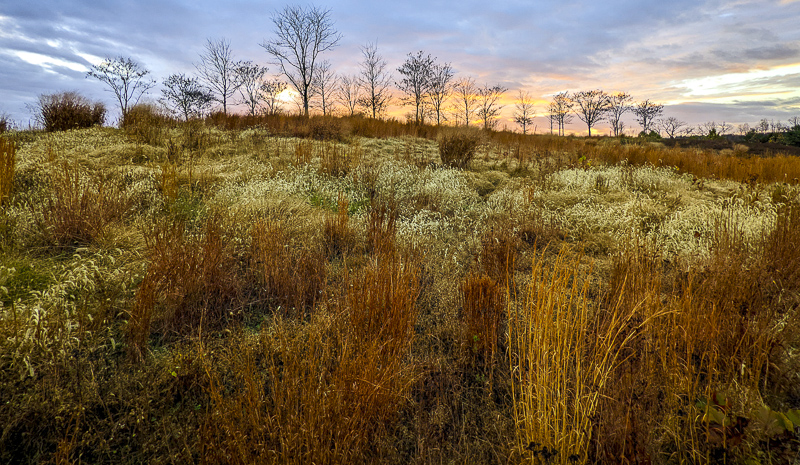
Walking around during “golden hour”—the period after sunrise or before sunset when the light is infused with reddish and golden hues—is particularly gratifying. In fall, the decreasing angle of the sun’s rays softens the light and eliminates the harshness we experience during the summer months. The lower angle also extends and intensifies golden hour. When the sun shines through grasses’ translucent blooms, it opens our eyes to a magical show.
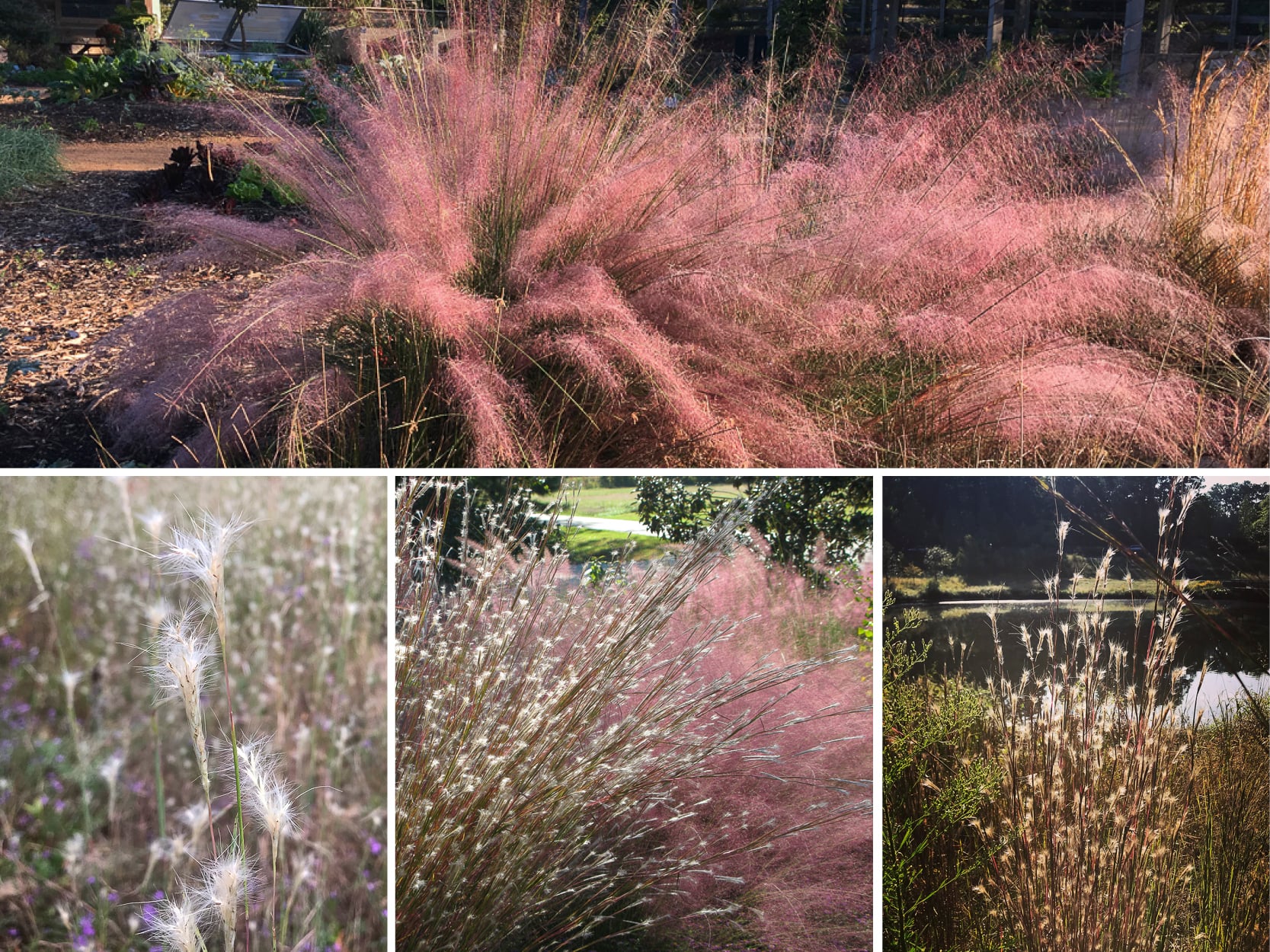
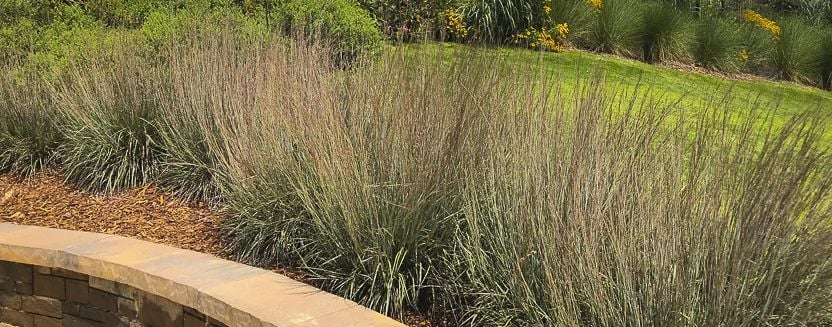
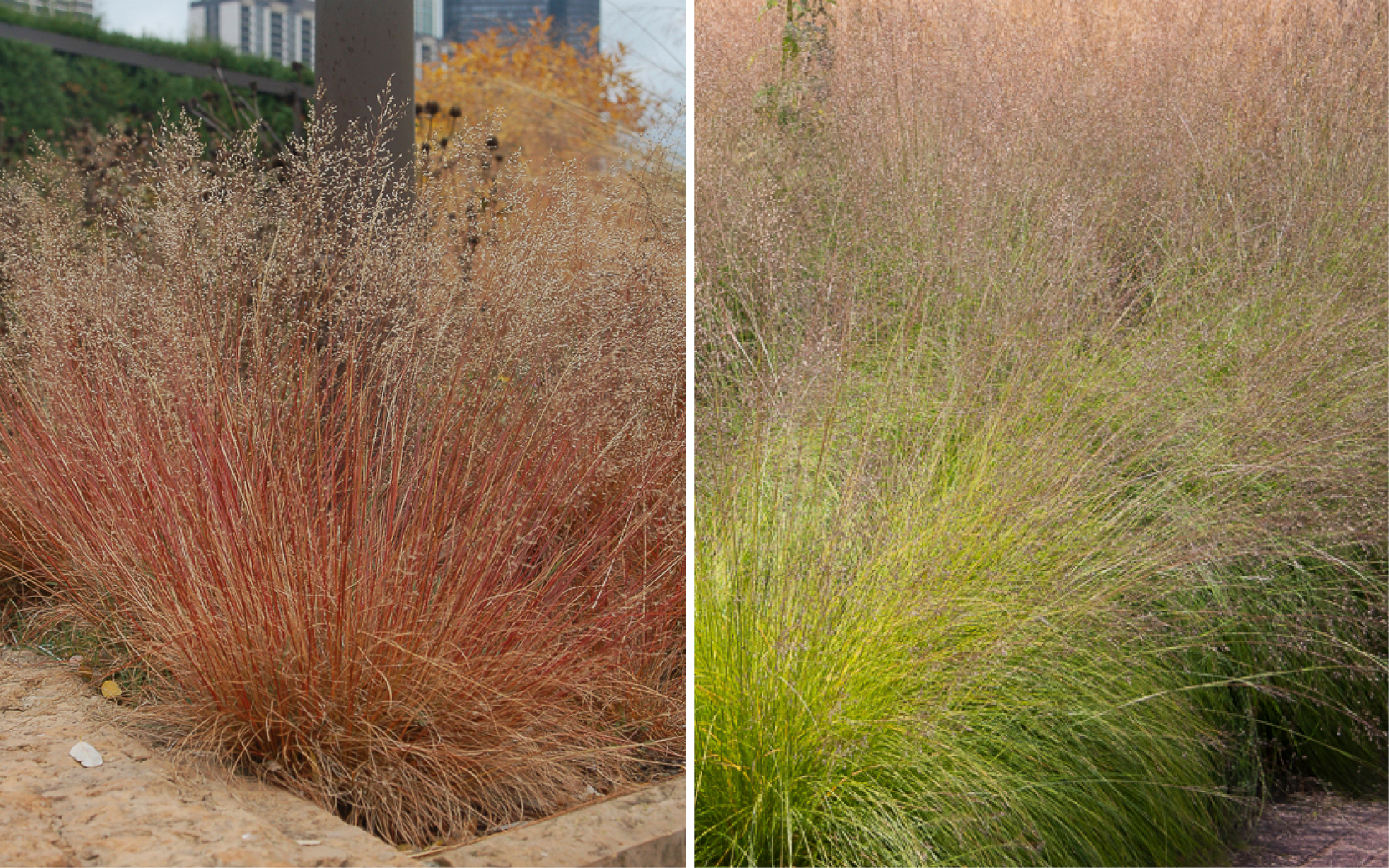
Visiting my favorite grasses this time of year, I’m rewarded with sights like splitbeard bluestem at its best. The seed heads catch my breath—they glow like fireflies in the sun’s rays. Closely related little bluestem also catches my eye along a path. Its seed heads join the party, sparkling like fairy lights on delicate strings showing me the way.
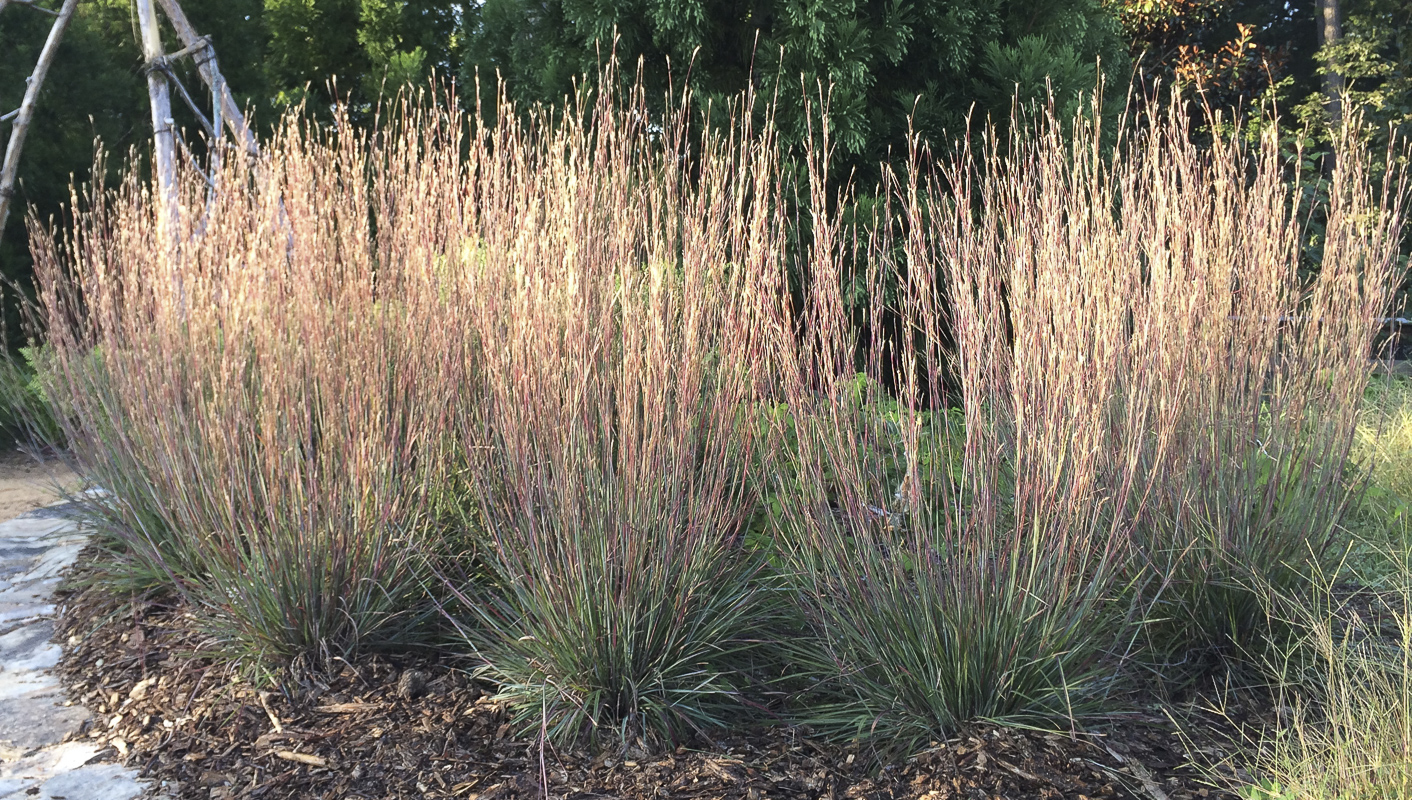
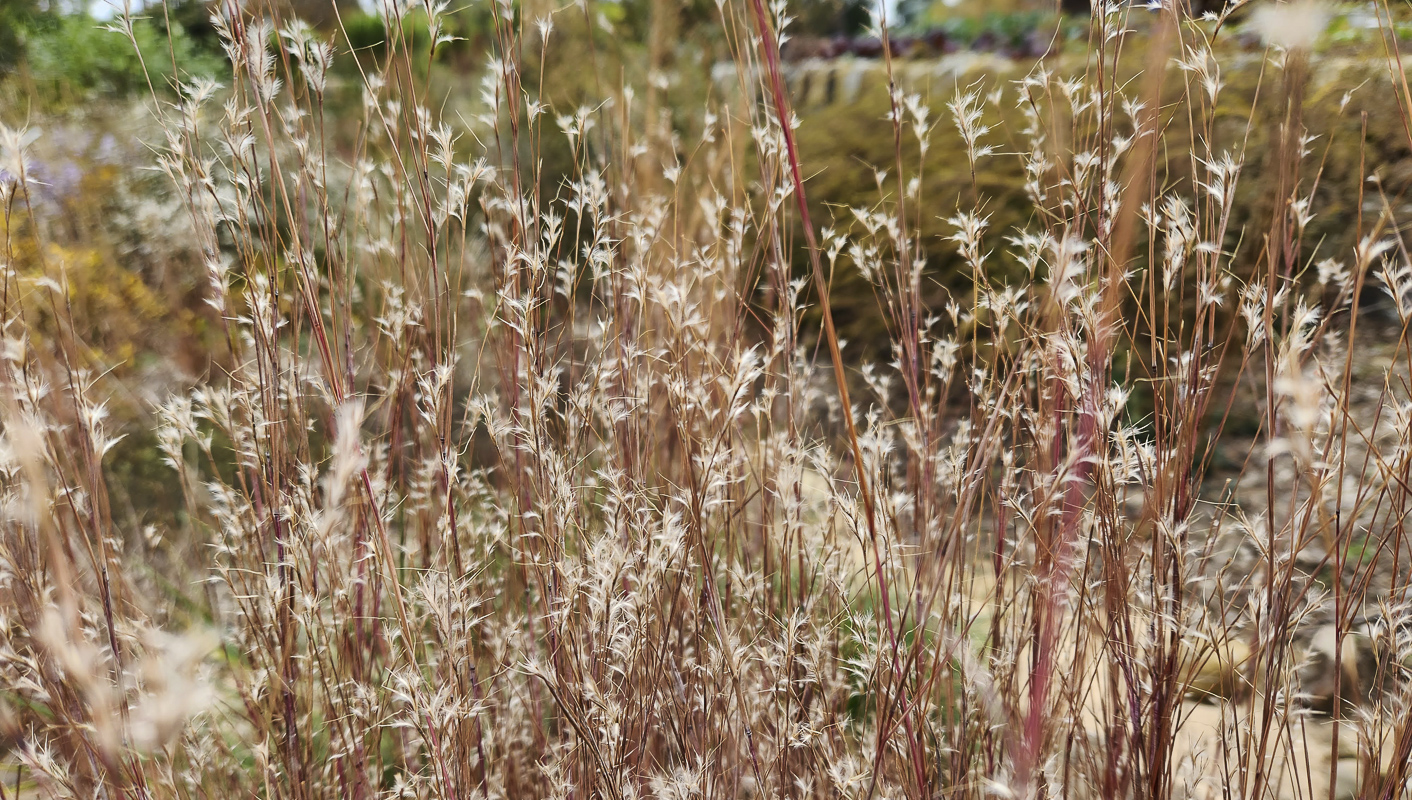
Not to be outdone by their inflorescences, splitbeard and little bluestem intensify their foliage colors. The soft blue leaves and multicolored stems of splitbeard bluestem slowly turn to brilliant copper as the weeks progress. The melange of color on little bluestem rivals autumn sunsets. Pastel blues, pinks, and mauves transform to mixes of red, burgundy, deep purple, bronze, and gold. Their colors add splendor and richness at a time when landscapes are shifting toward dormancy.
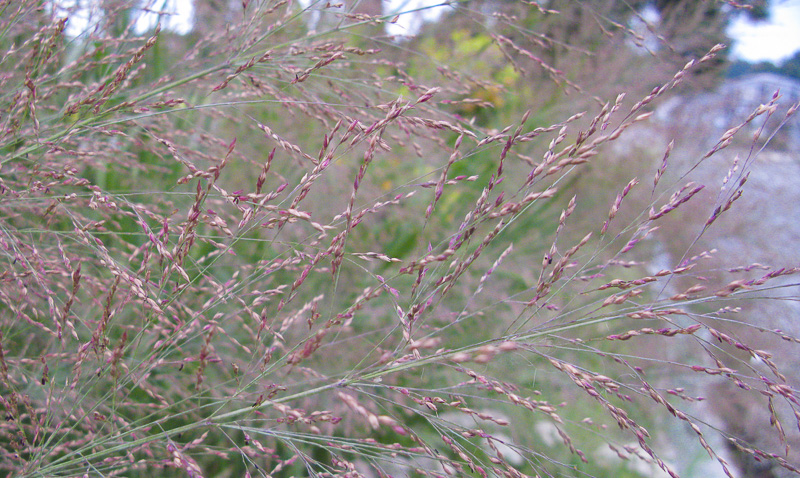
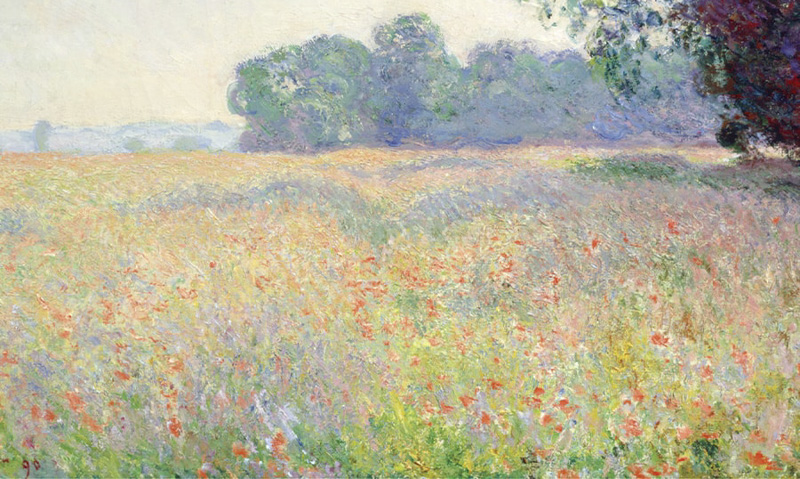
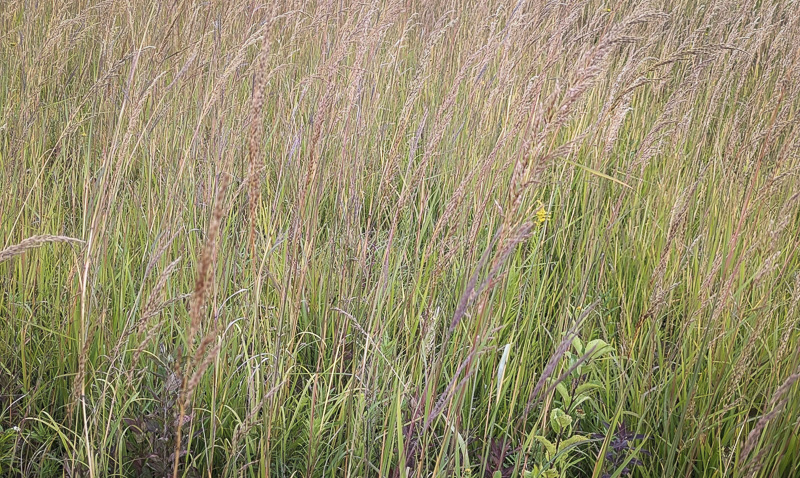
Switchgrass panicles billow and sparkle with the slightest breeze. That’s a grass superpower, by the way. They make the wind manifest. You can see and hear the wind as it ruffles the foliage and tickles the inflorescences. Standing in a field of grass, the movement is mesmerizing. And if you close your eyes, you can hear the wind stirring the grasses and feel your heart and mind calm. Fortunately, you don’t need a field to call on this superpower. Even a few grasses in your yard and a light breeze will soothe your soul.
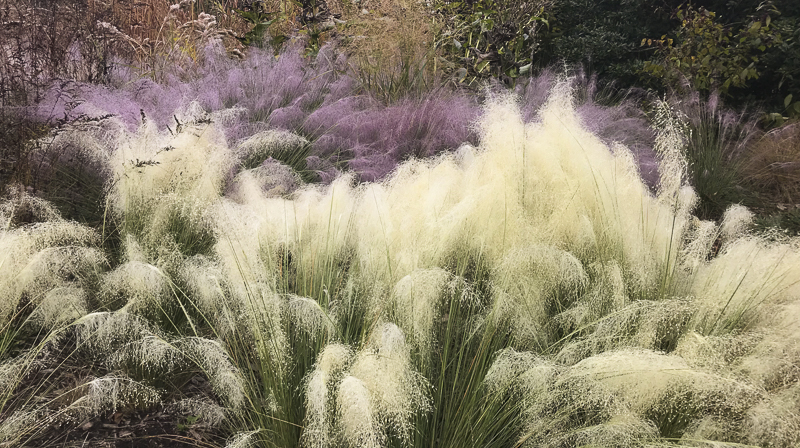
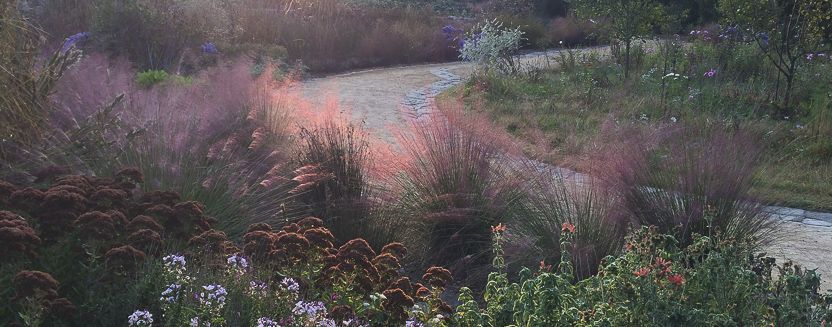
Muhly grass…well, just, wow. The tiny, pink spikelets on cloud-like panicles become fluorescent when backlit by the sun. White muhly grass glows like a super moon, and the blooms last well into January here in central North Carolina. Muhly’s mash-up of color and light adds drama that few other plants can match, and the foliage and plumes visually soften hardscape.
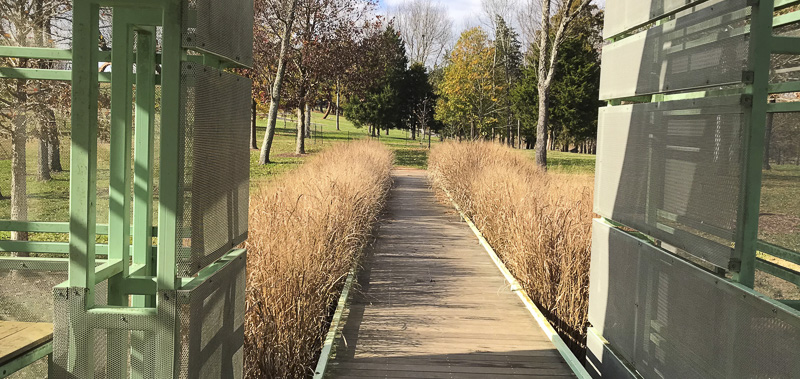
This time of year, it’s easy to become infatuated with yellow prairie grass. It stands out on roadsides where its tall, blue stems are topped with long, wispy, rust-gold panicles. It suffuses a morning drive with joy as the sun rises behind it. Looking closely at the panicles (off road, for sure), the spikelets are like tiny puzzles. Feathery pink stigmas peek out from their papery enclosures, bright yellow stamen dangle from the flower scales, and twisted bristles top each tiny floret. Their delicacy belies the resilience and adaptability of the species that is just at home on abandoned fields as it is tucked into a perennial border.
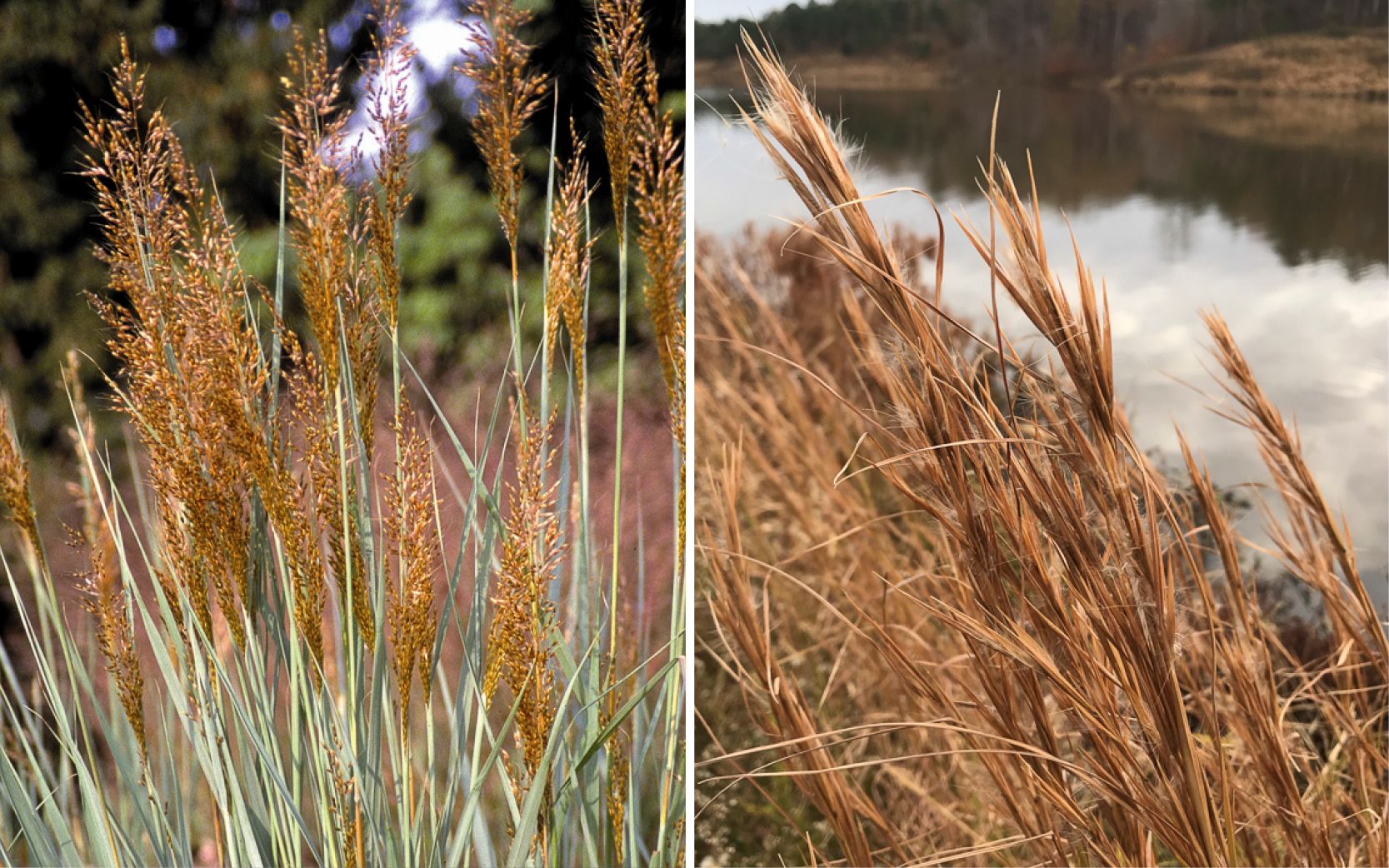
Stopping to soak in the glow of autumn light on a field of copper-colored broomsedge or immersing oneself in the intricacies of a big bluestem flower—these are the moments that slow us down and help us reconnect with nature. Even if grasses did nothing else, this gift makes them worthwhile. That’s why I fall in love.
All images are @ Izel Native Plants, unless indicated otherwise.

Shannon Currey is a horticultural educator with Izel Native Plants. She’s worked in the nursery trade since 2006, and has established herself as an expert on graminoids, including native grasses and sedges. She serves on the North Carolina Plant Conservation Program Scientific Committee and the board of the Perennial Plant Association. In 2022 she joined our team to expand our outreach efforts. Shannon lives in Durham, North Carolina and loves exploring the incredible plant diversity around her.