
Composites have got it together.
According to the New Oxford American Dictionary, composite means “made up of various parts or elements.” That’s a defining characteristic of this plant family that is the largest and most diverse in the world. Composed of mostly herbaceous plants, it contains more than 33,000 documented species. The next largest family, Orchidaceae (orchids), includes just over 31,000 species. For a sense of scale, about 2 out of 10 flowering plant species in the world are either a composite or an orchid. That’s a big chunk of the world’s flora!
The family is known by many common names, including aster family, sunflower family, daisy family, and composite family. Originally designated Compositae, the botanical name was modernized to Asteraceae, and its members share a unique, composite flower structure. Their flowers may look simple at first glance, but the design is complex and gives them evolutionary adaptability. Asteraceae species are literally greater than the sum of their parts—visually, botanically, and ecologically.
Whatever you call the family, its members serve important roles in ecosystems and are fundamental in supporting complex food webs. They’re also highly favored by pollinators. Every garden should have them. To understand why they’re so important, we need to get familiar with some of the family’s characteristics.
The Architecture of the Collective
Asteraceae flowers are composites. Describing their cool structure requires using some technical terms, but we’ll just tiptoe gently through them. Composites have inflorescences made up of small, individual flowers (usually called florets) gathered in a headlike structure called a capitulum. It's what we think of as the flowerhead, but in this case, it contains a collection of florets rather than a single flower. There are two types of florets: disc florets and ray florets.
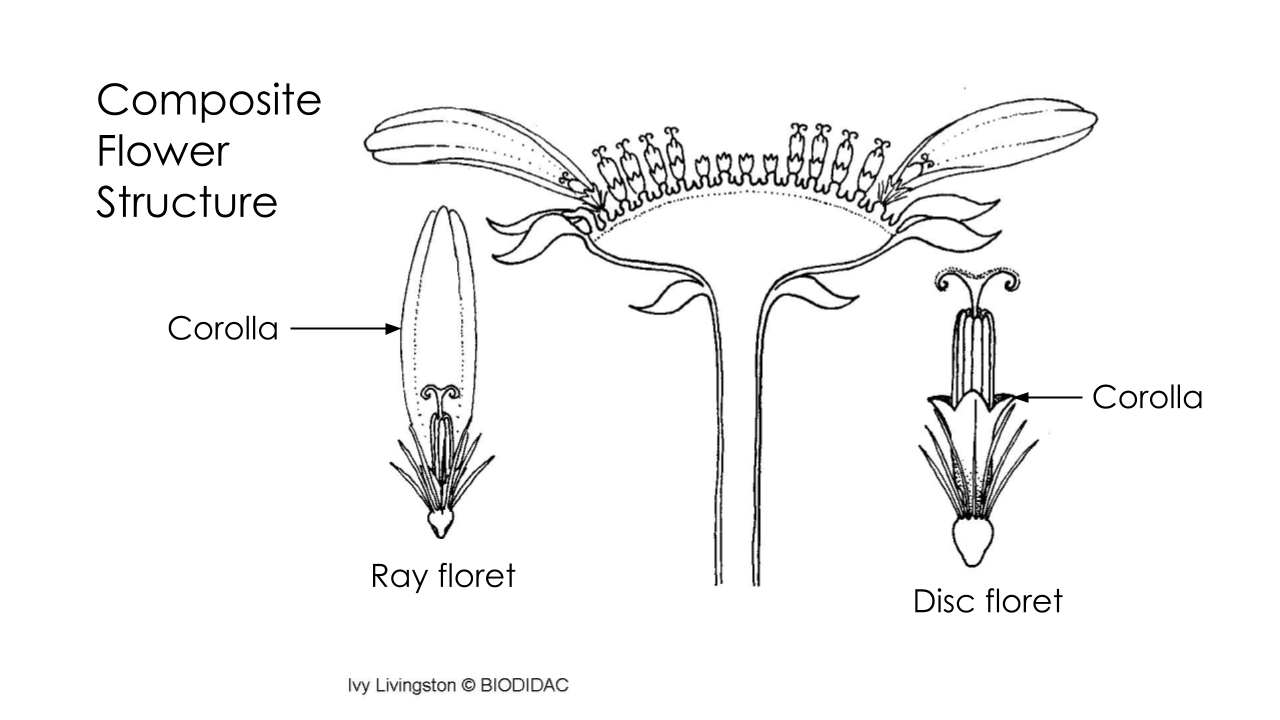
Disc florets are arranged in the center of the capitulum and have a tubular corolla. Ray florets ring the outer edges of the capitulum and have a single, showier, straplike corolla. The ray florets are what we think of as petals of a flower, while the disc florets make up the flower’s center. Depending on the species, the head of a composite flower may have both kinds of florets (e.g., coneflowers), only disc florets (e.g., blazing stars), or only ray florets (e.g., dandelions; there are a few N. American species with ray florets only, but they are much less familiar).
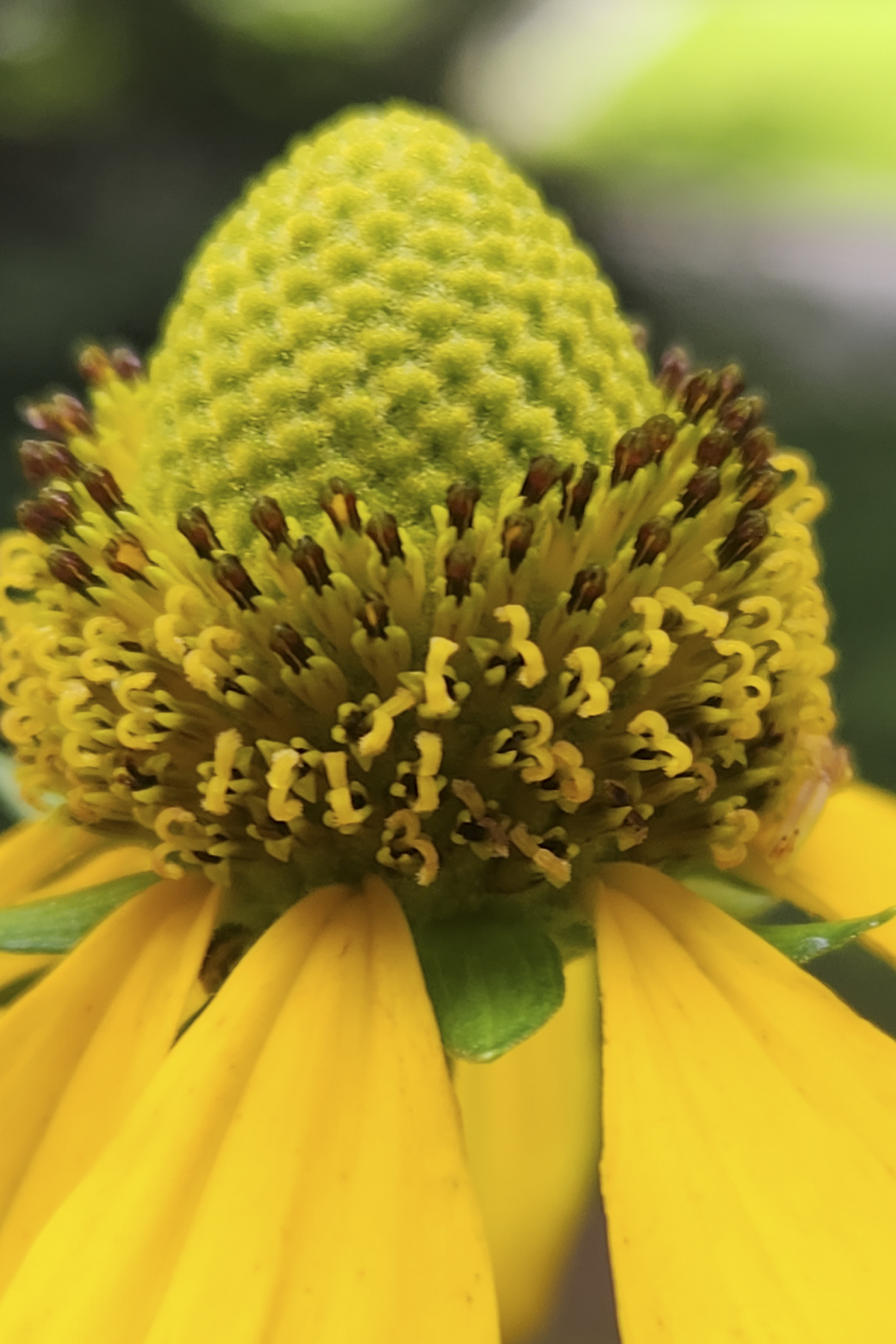
Like this coneflower, the majority of Asteraceae species have both ray florets and disc florets. © Izel Native Plants
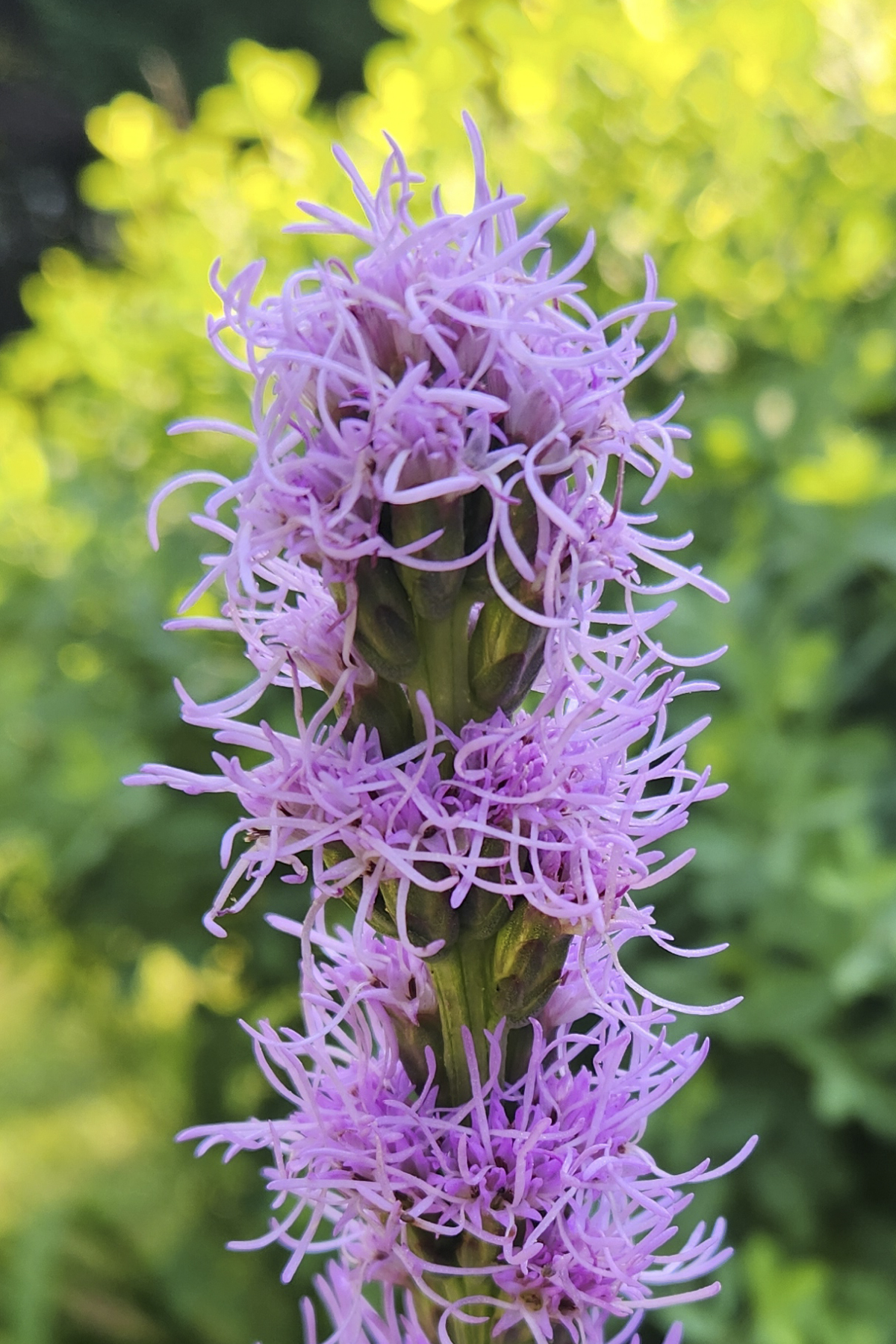
A few genera, like blazing stars (Liatris spp.), have only disc florets. © Izel Native Plants
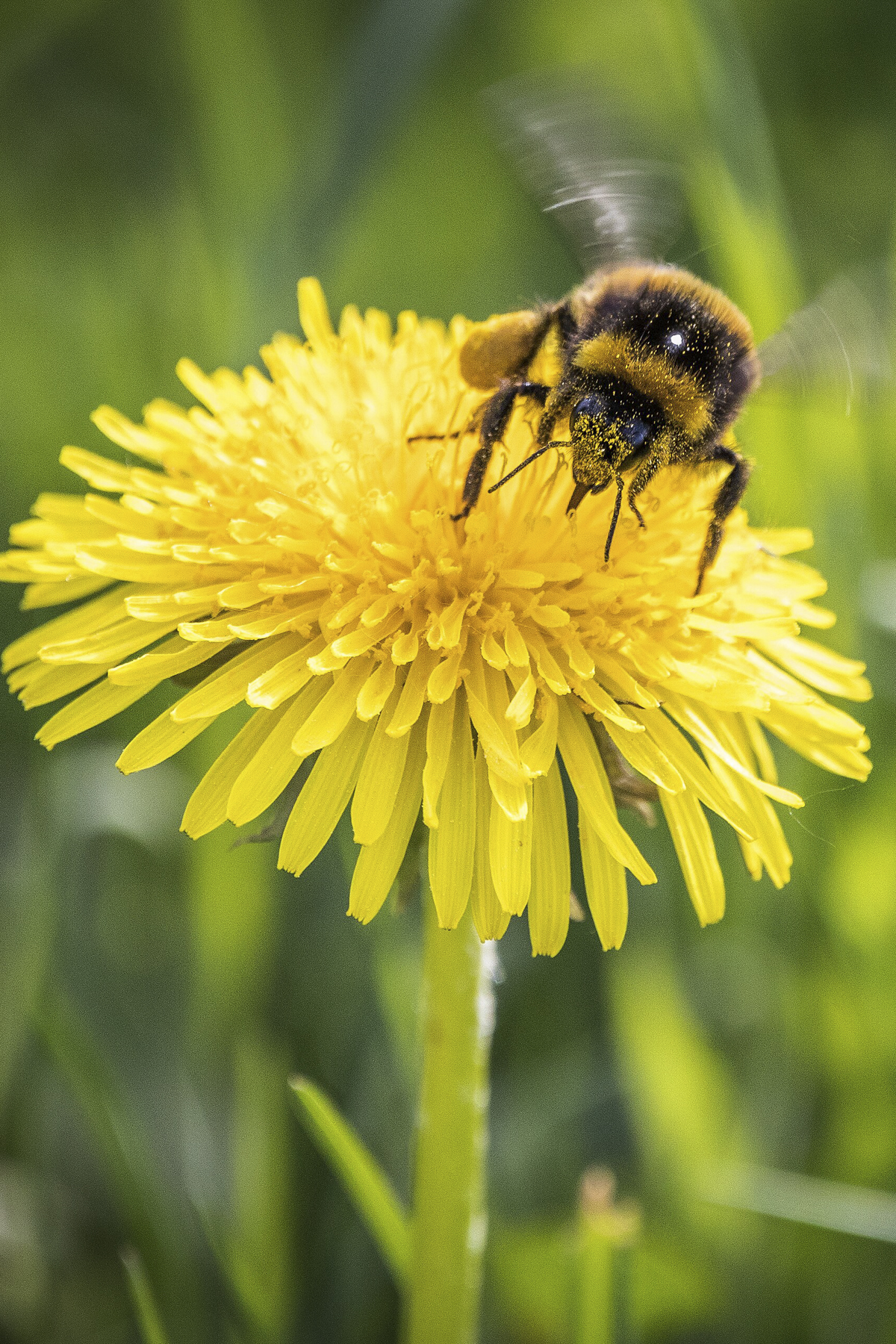
Even fewer genera, like dandelions (Taraxacum spp.), have only ray florets. Photo: Markus Trienke, CC BY-SA 2.0
The disc florets are arranged in whorls on the capitulum. They mature from the outer florets inward, with florets at the center being the last to flower and form seeds. In some Asteraceae species, some of the florets are sterile and lack the reproductive structures to produce seed. For example, members of Helianthus (sunflowers) have sterile ray flowers, and only the disc florets produce seeds.
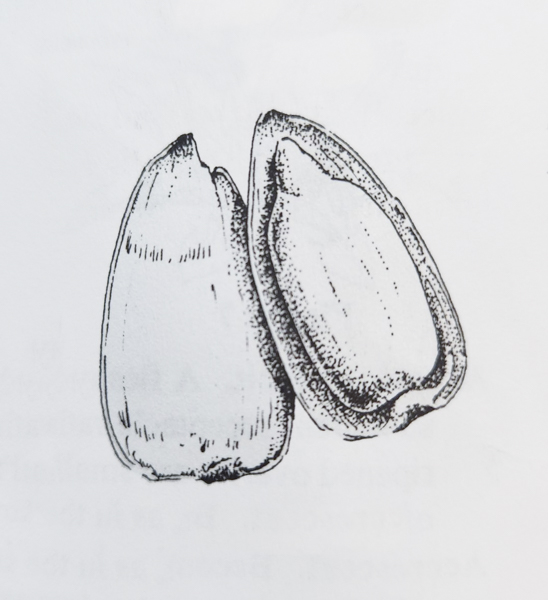
When cracked open, an achene reveals its single seed. © James G. Harris and Melinda Woolf Harris
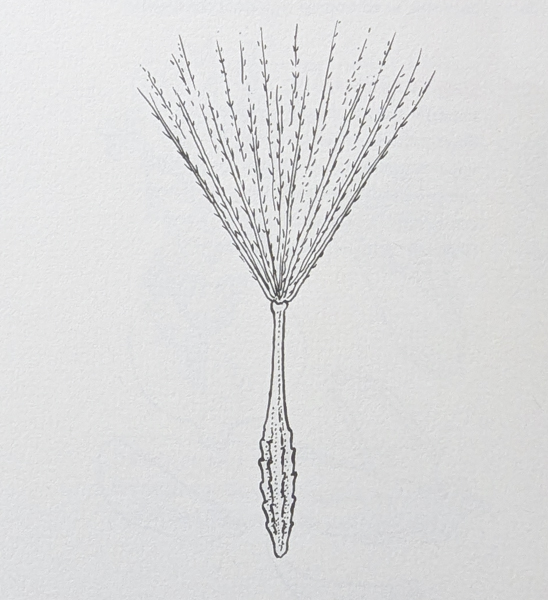
The pappus, a modified calyx unique to composites, attaches directly to the achene. © Bobbi Angell
Composite flowers share several other structural features. Each floret only produces one seed. It’s contained in an achene, a small, dry fruit that is indehiscent (does not open to release the seed). The calyx (the whorl of vegetative structures surrounding the base of each floret) is modified to form a tuft of hairs called a pappus. The pappus often appears on the mature achene, giving it a fluffy appearance. If you’ve seen a fall-blooming aster or goldenrod inflorescence in winter, you’ll know what that looks like. In some species, the pappus allows for wind dispersal and the ability to spread rapidly via seed.
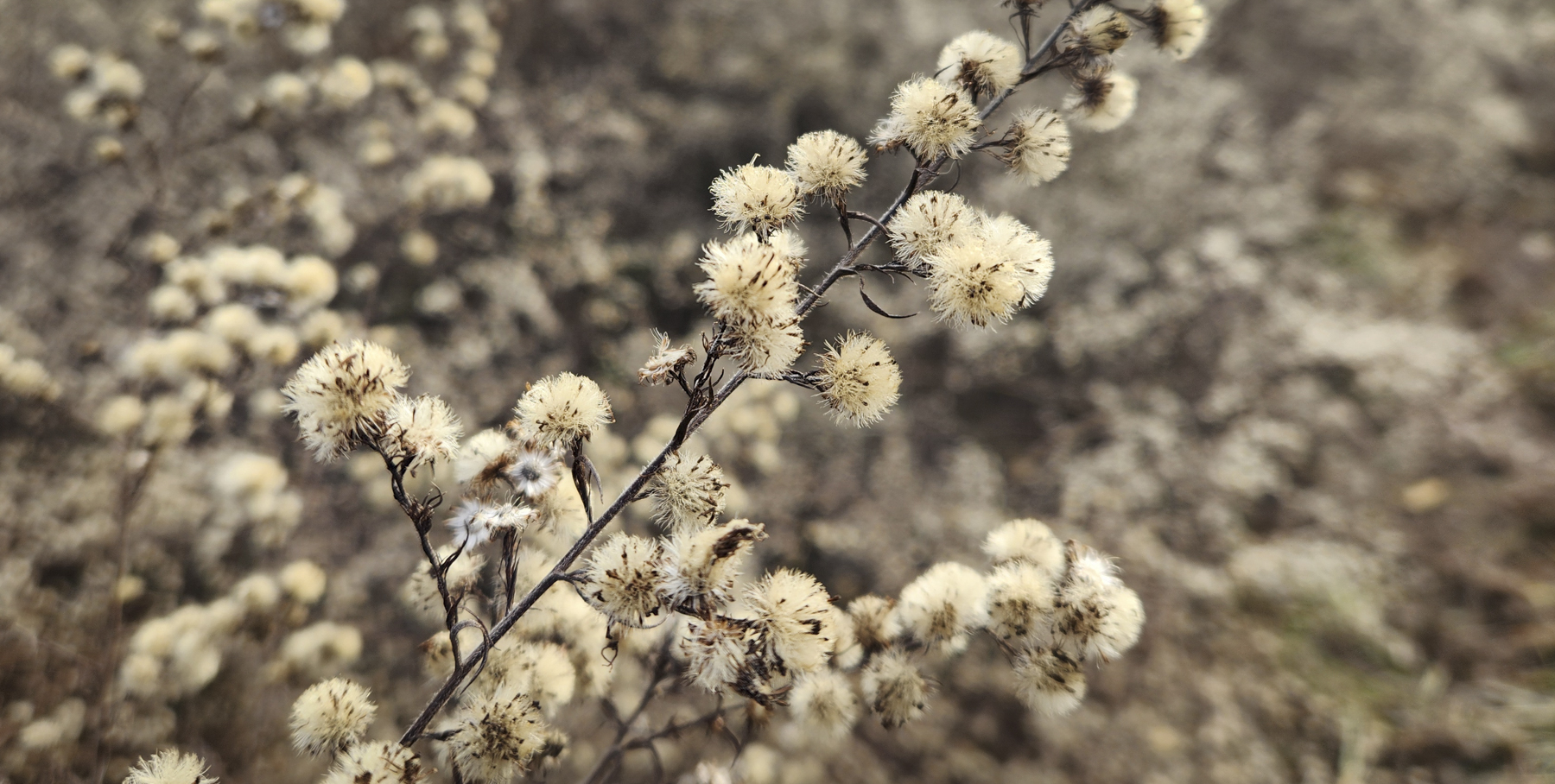
With thousands of florets—each producing a lightweight achene and fluffy pappus—this field aster gets an assist from the wind in spreading its seed. © Izel Native Plants
Its floral architecture can take many forms, allowing Asteraceae to adapt to a variety of habitats. Its many species appeal to a wide variety of pollinators, whose visits can produce many viable seeds. The composite model has served it well.
Super Support for Ecosystems
Asteraceae shows some of its ecological muscle by dominating the ranks of keystone herbaceous perennials in North America. Keystone plants are native species that are necessary for local food webs and allow wildlife species to complete their life cycles. They feed and support the insects that birds and other creatures rely on. Ninety-six percent of North American terrestrial birds rely on insects that are supported by keystone plants. There are two types of keystone plants: those that feed caterpillars and those that feed specialist bees. (to learn more about keystone plants, see our earlier post)
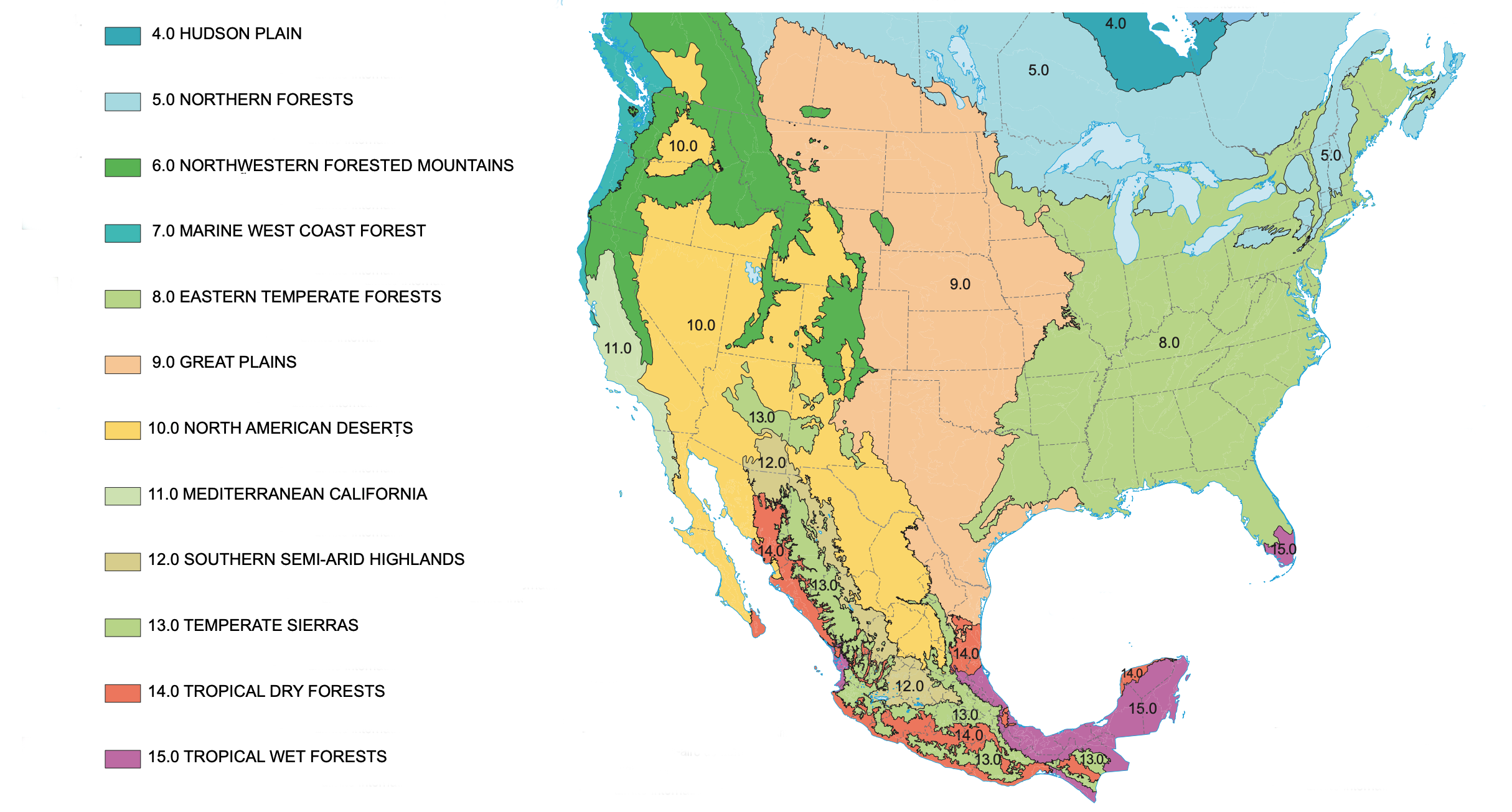
EPA Ecoregions, Level I
Eastern Temperate Forests cover most of the eastern U.S. (see Ecoregion 8 in light green on the right side of the map above). The top ten keystone herbaceous perennials in that region are all in Asteraceae. In fact, Asteraceae comprises the top ten in most North American ecoregions, from Tropical Wet Forests in southern Florida and Mexico to North American Deserts across the Southwest. They are consistently critical to pollinators and ecosystems.
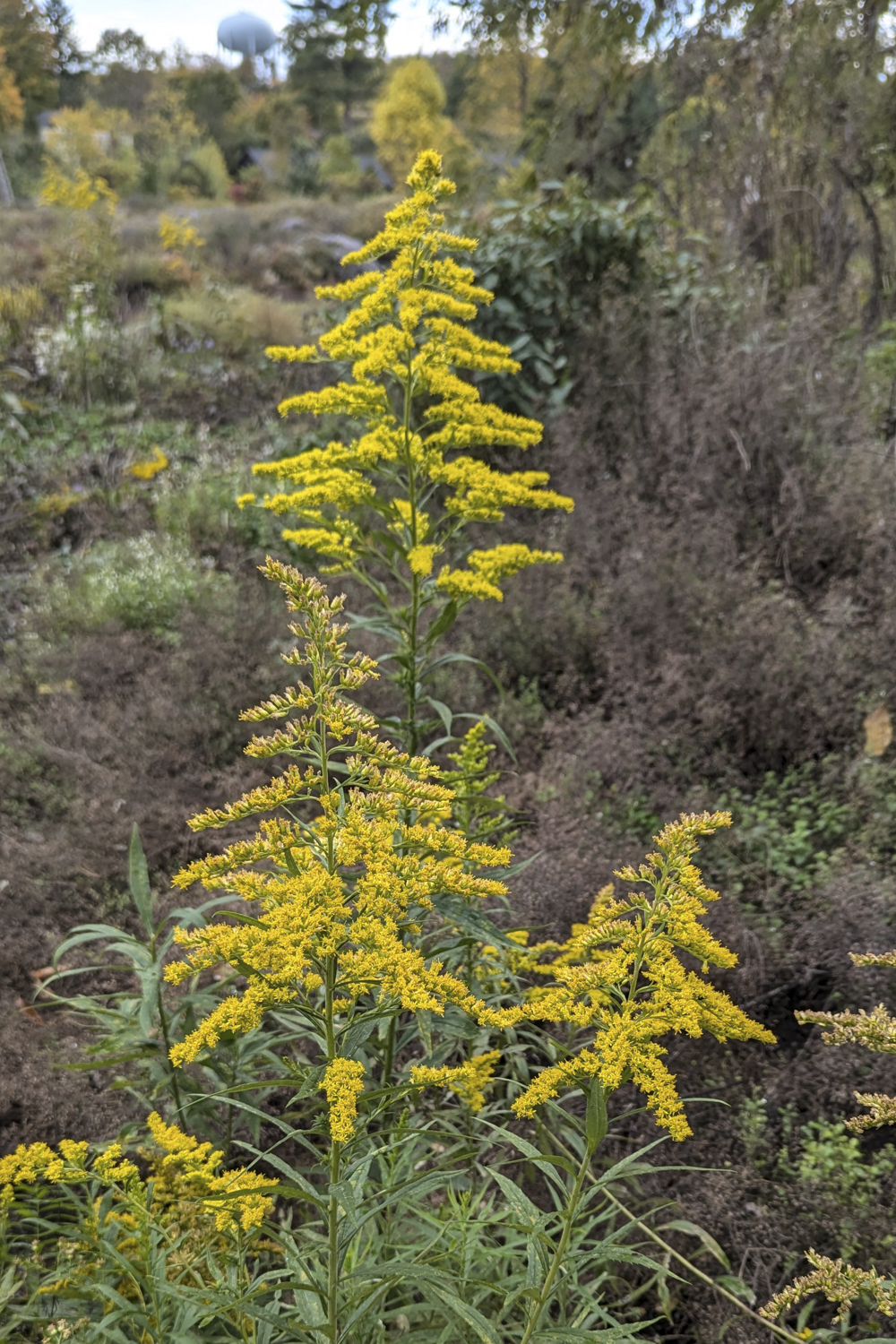
Solidago sp. (goldenrod). © Izel Native Plants
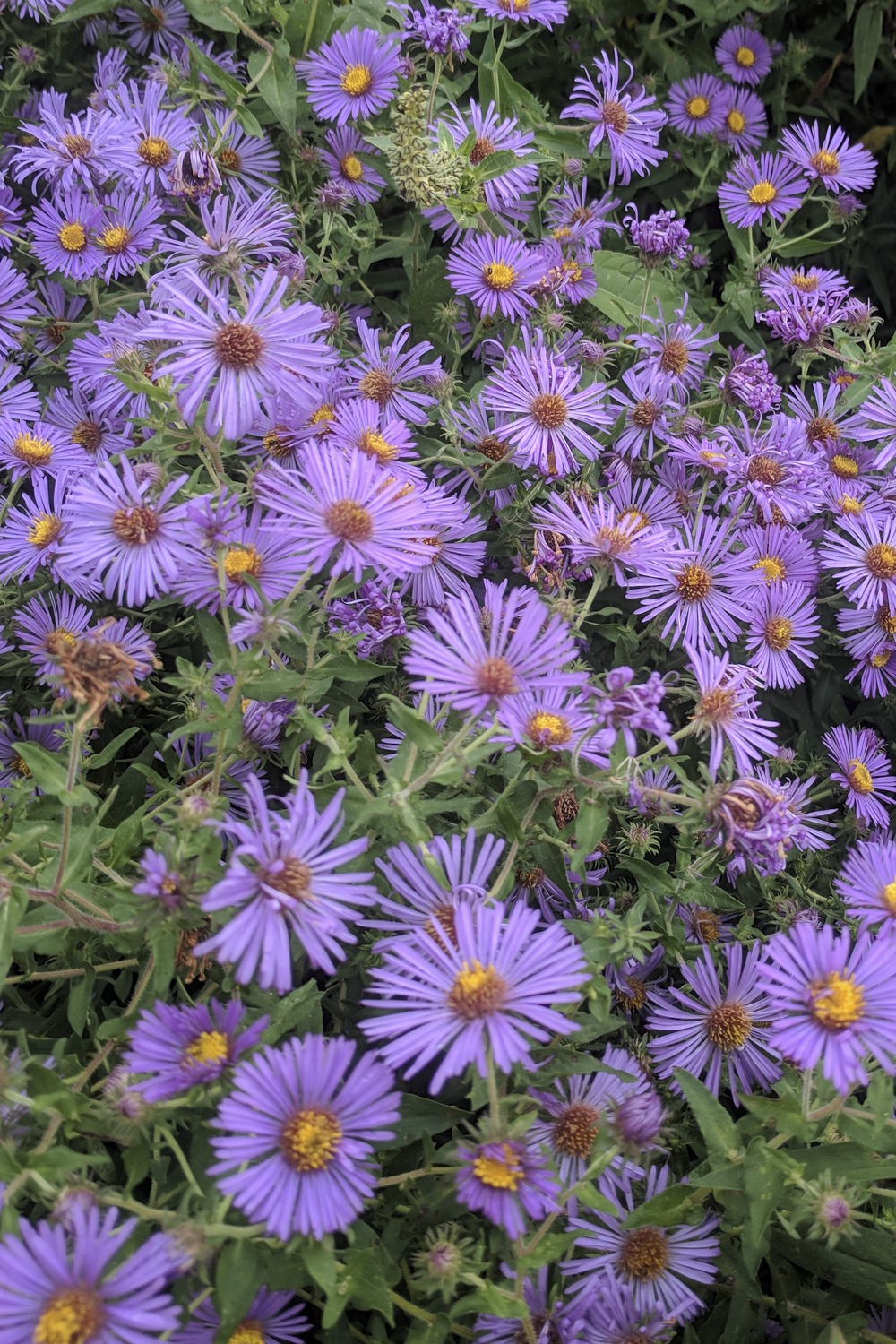
Symphyotrichum novae-angliae. (New England aster). © Izel Native Plants
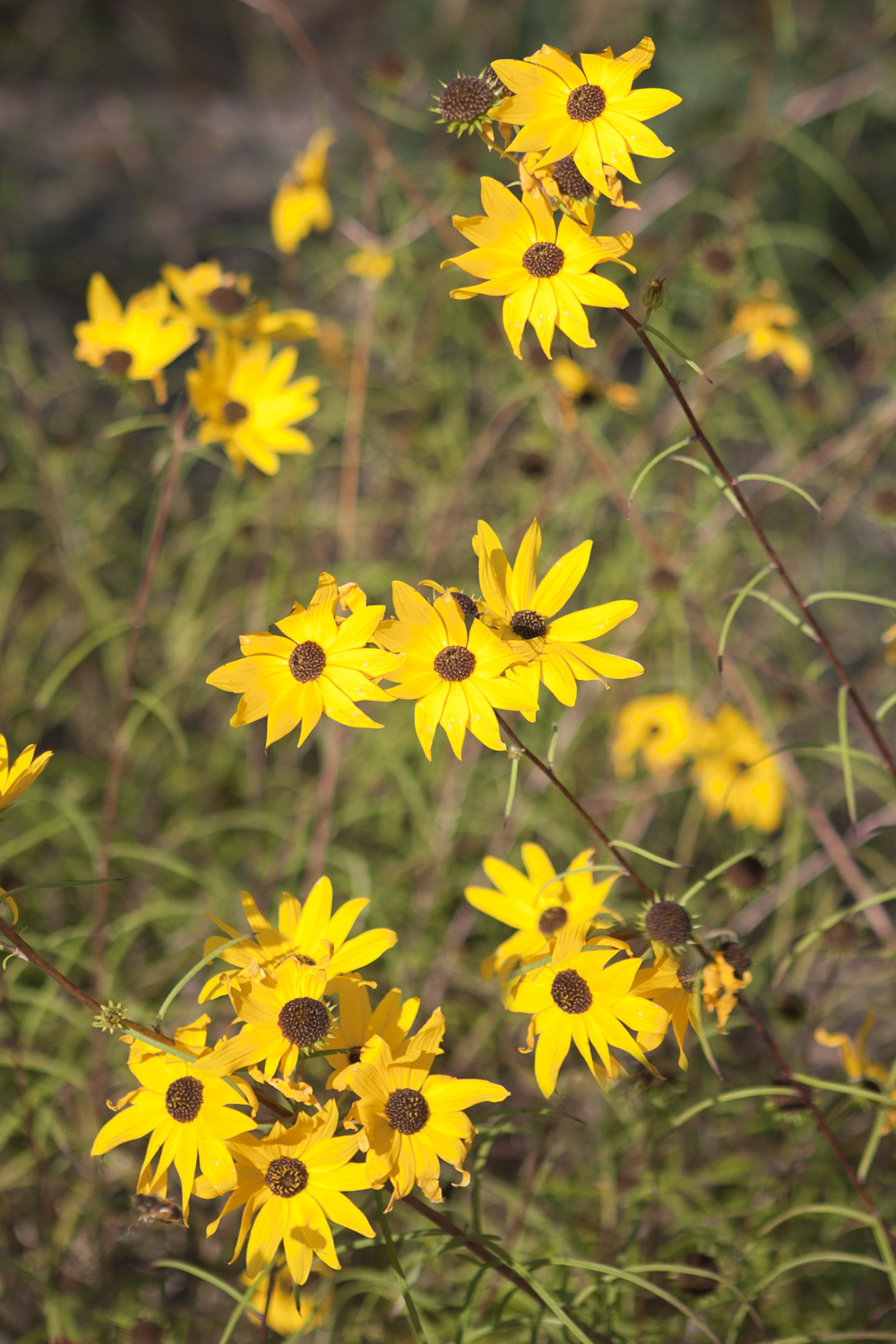
Helianthus angustifolius (swamp sunflower). © Izel Native Plants
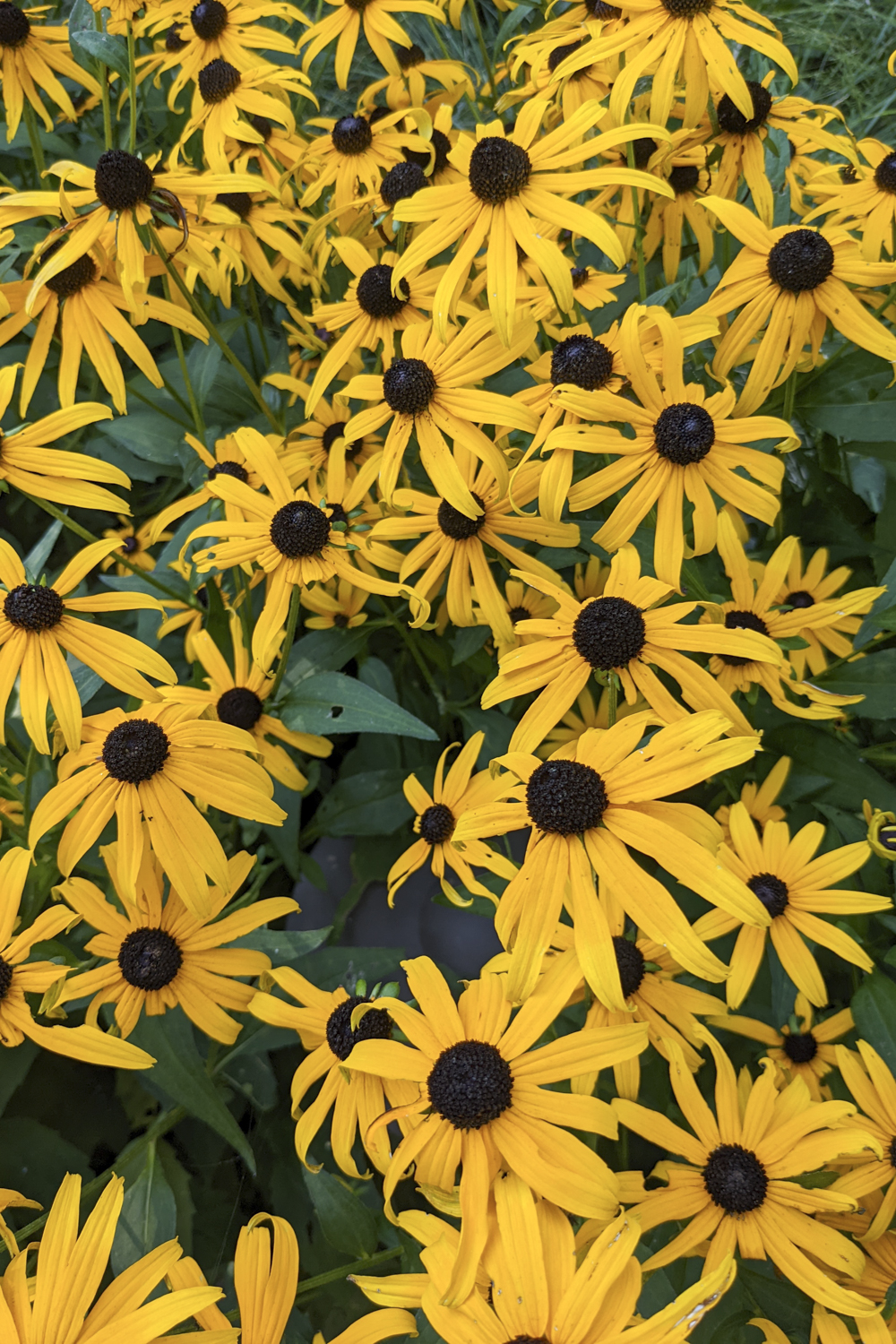
Rudbeckia fulgida (orange coneflower). © Izel Native Plants
Top keystone, herbaceous perennial genera for Eastern Temperate Forests include Solidago spp. (sunflowers), Symphyotrichum spp. (asters), Helianthus spp. (sunflowers), and Rudbeckia spp. (coneflowers). For example, Solidago species (goldenrods) support 42 species of specialist bees, and 104 caterpillar species use them as host plants. Fifty species of specialist bees rely on Helianthus (sunflowers) for pollen. Composites and their kin are powerhouses.
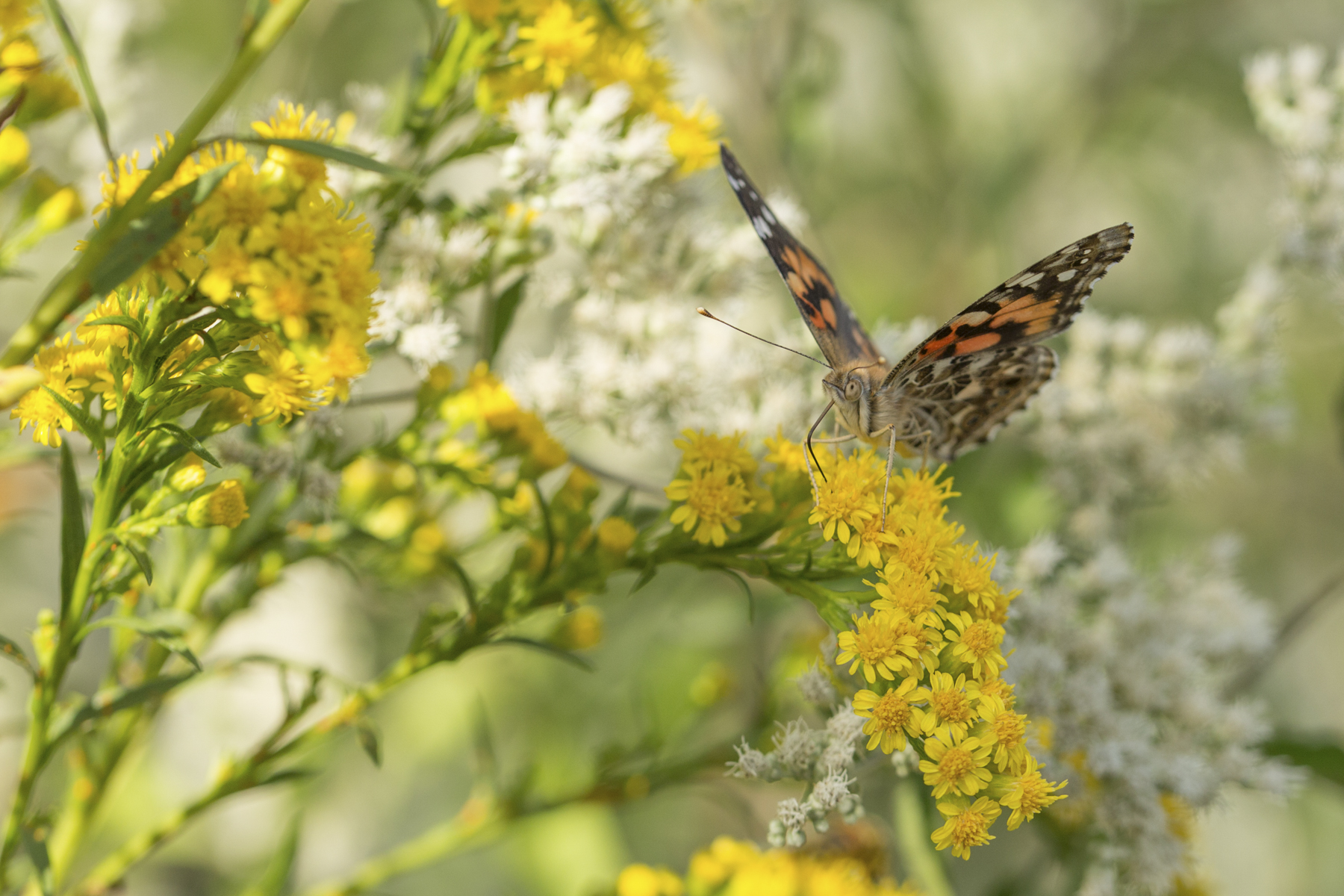
American painted lady on Solidago sempervirens (seaside goldenrod) © Uli Lorimer
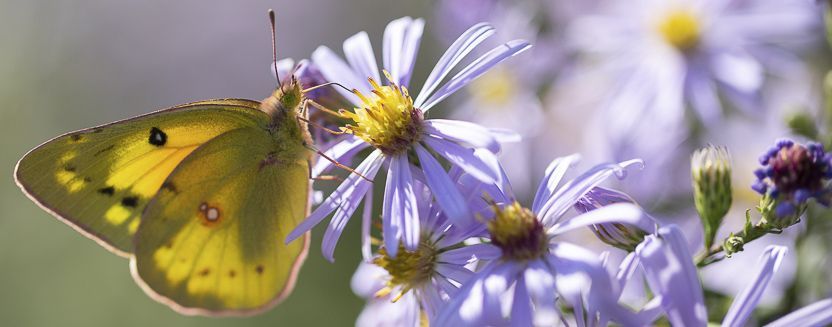
While composites are critical to specialist bees, they attract a wide range of generalists, too. The most important and common pollinators are solitary bees. Fly pollinators are common, too. Butterflies also get in on the nectar buffet. According to pollinator conservationist Heather Holm, butterflies like the open, flat landing platforms that many composites offer. By perching on the flowers while they feed, they conserve energy.
My, I Like Your Flowers!
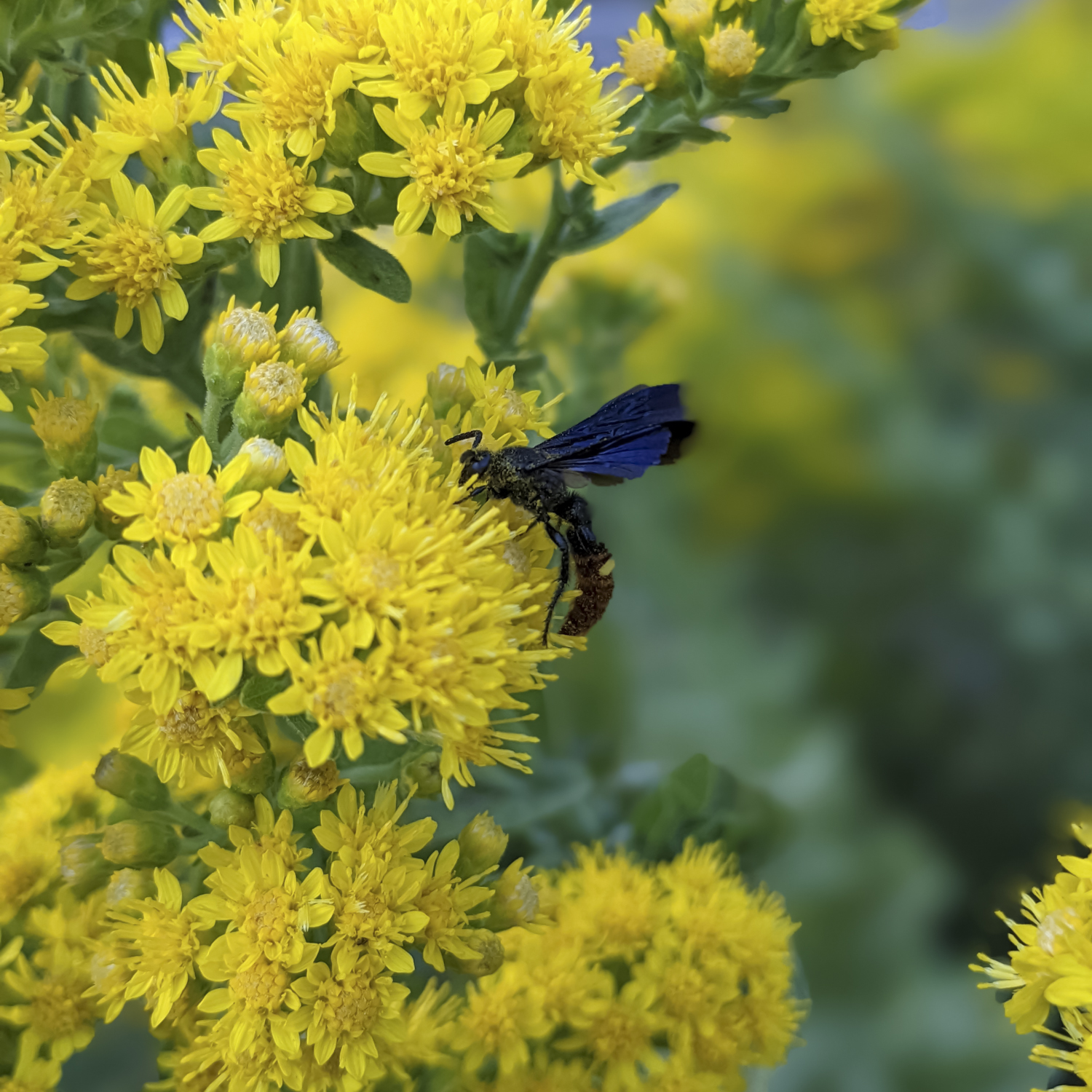
Solidago rigida (syn. Oligoneuron rigidum), known as stiff goldenrod, offers dense clusters of flowerheads for late-season pollinators. © Izel Native Plants
The flower structure of Asteraceae appeals to pollinators for many reasons.
When an insect lands on a composite flower, it has access to multiple florets, with each being a potential source of nectar and pollen. Moreover, Asteraceae species often hold their composites in clusters, so insects can go from flower to flower quickly and easily.
Insects spend less energy than they would going to single flowers. The composite structure makes for very efficient foraging at the flower level and at the plant level.
Pollinators are also attracted to the visual presentation of composites. Even though the individual florets may be small, the floral head functions visually as a single flower. That platform often uses colors and patterns to guide pollinators toward a promised reward. Many Asteraceae species have contrasting light and dark ray and disc florets. Think about Echinacea spp. (coneflowers), with light pink petals surrounding a dark cone, or the fall-blooming Symphyotrichum (aster) with lavender petals surrounding a gold center. That pattern creates a highly visible target.
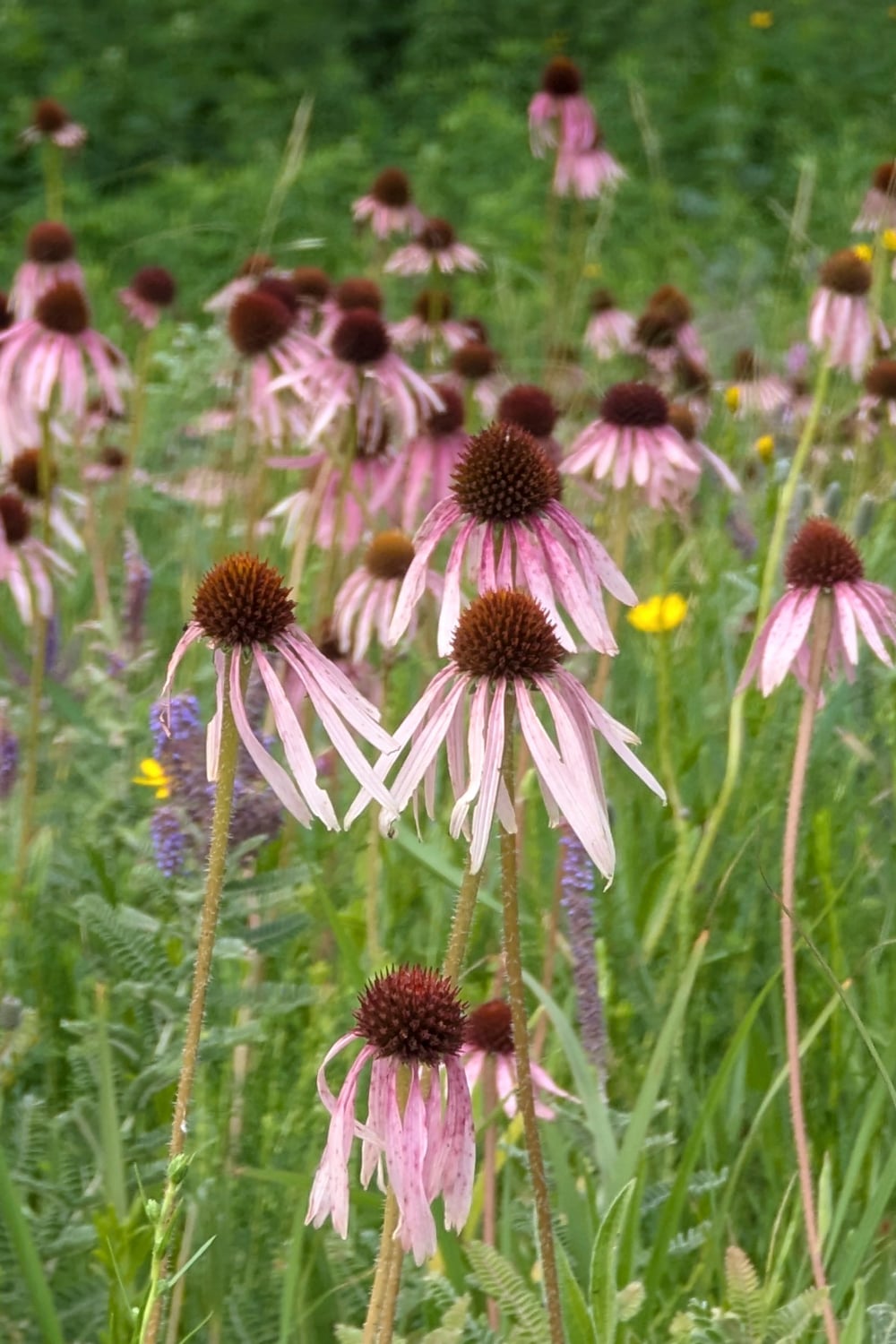
Echinacea pallida (pale purple coneflower). © Izel Native Plants
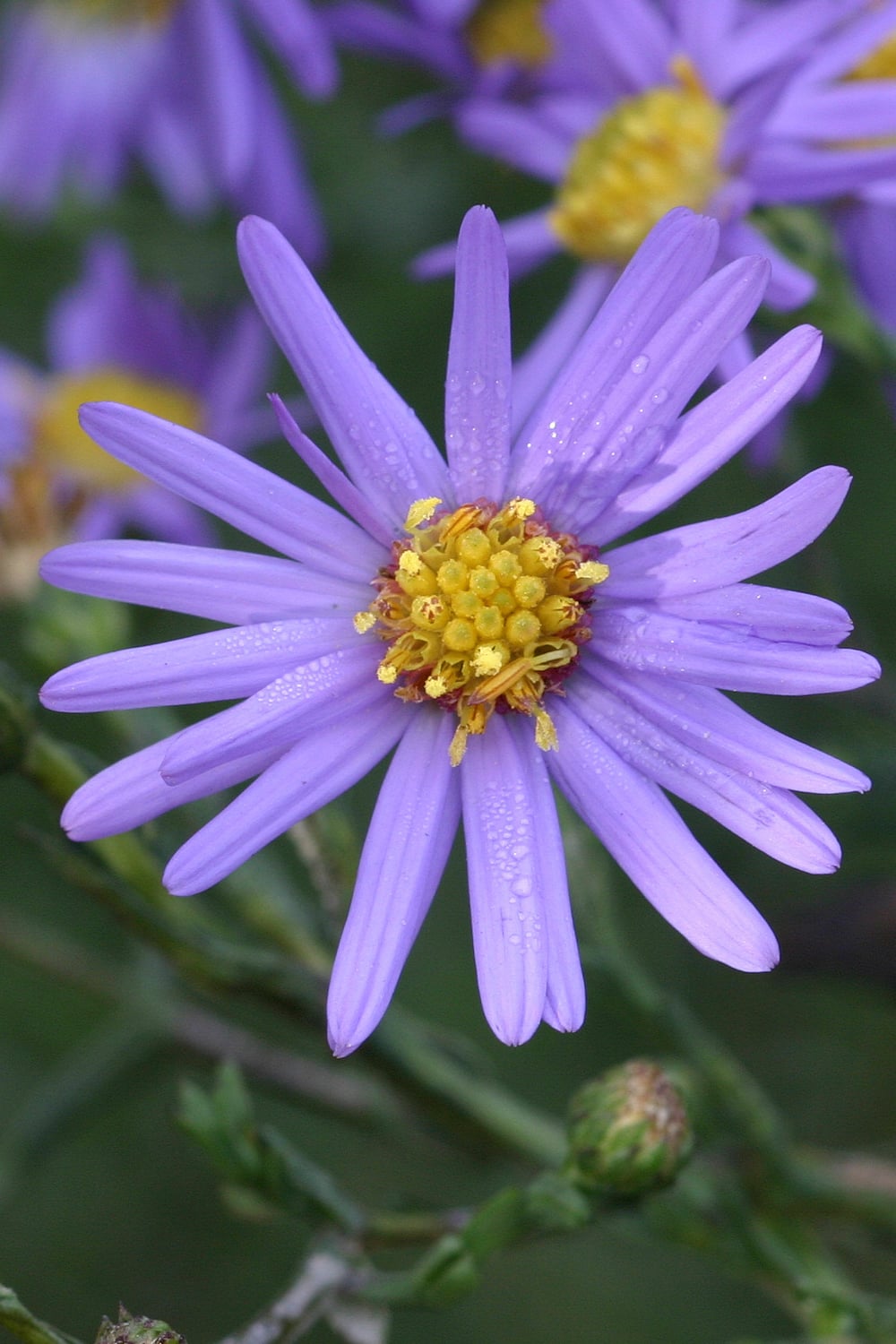
Symphyotrichum laeve (smooth blue aster). © John Hagstrom
There are also colors and patterns on composites that are not visible to us humans. We see combinations of red, blue, and green, while insects see other parts of the light spectrum. Bees, for example, see combinations of blue, green, and ultraviolet (UV). They can’t see red, but they can see yellow and orange. Because their vision includes UV light, they see iridescence, which occurs when the flower petal color changes depending on the angle it’s viewed. Patterns or colors that are invisible to us highlight sources for nectar and pollen.
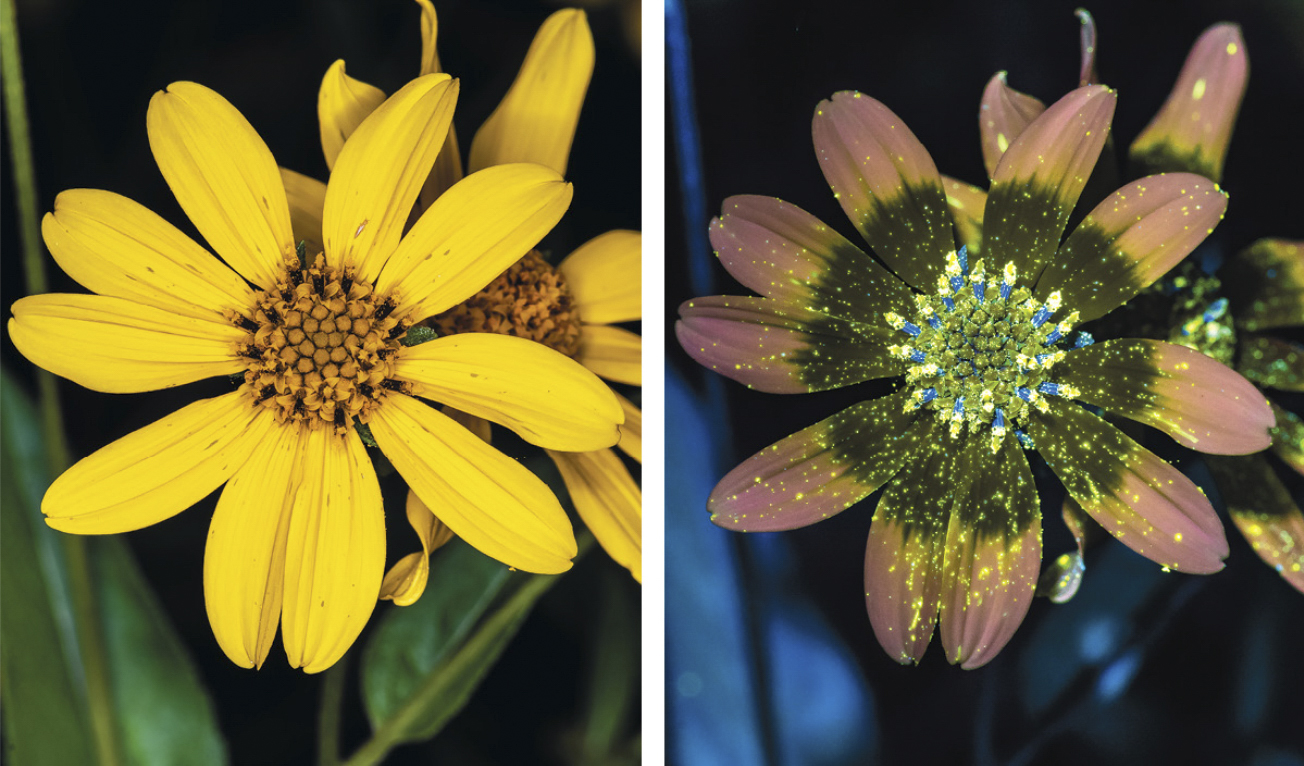
While humans see the yellow flowers of Viguiera dentata (plateau goldeneye) on the left, UV photography on the right reveals a bull’s eye pattern that guides pollinators to the source of nectar. © Michelle Wong
The patterns aren’t always about color, either. In some species, like Echinacea (coneflower) and Ratibida (prairie coneflower), the florets begin developing first in the outer ring of ray florets, followed by the outer disc florets at the base of the cone. The pattern continues upward like a spiral staircase, following the whorled arrangement of disc florets on the cone. This maturity pattern presents a ring of open florets around the cone, guiding bees to circle around and up as they feed on nectar or collect pollen.
Making Pollination Count
Attracting insects to its flowers serves the plant; its reward is pollination and eventually fertilization and production of seed. Generally, composites are self-incompatible, meaning individuals cannot fertilize themselves. They typically only produce seed if fertilized with pollen from a genetically distinct individual. This reduces inbreeding and allows for greater diversity in subsequent generations. It’s part of why there’s so much variety in the family.
Composites optimize their pollen with an interesting mechanism. Without venturing too far into more technical terms, here’s what happens. The male structures that hold the pollen are fused into a tube. When the pollen is mature, it drops down to the bottom of the tube, but it’s not yet accessible to insects. When the floret is ready for pollinators to visit it, the style (the narrow tube connecting the female structures) grows up through the pollen-filled tube. The style acts like a reverse plunger, sweeping the pollen upward to be presented at the top of the floret.
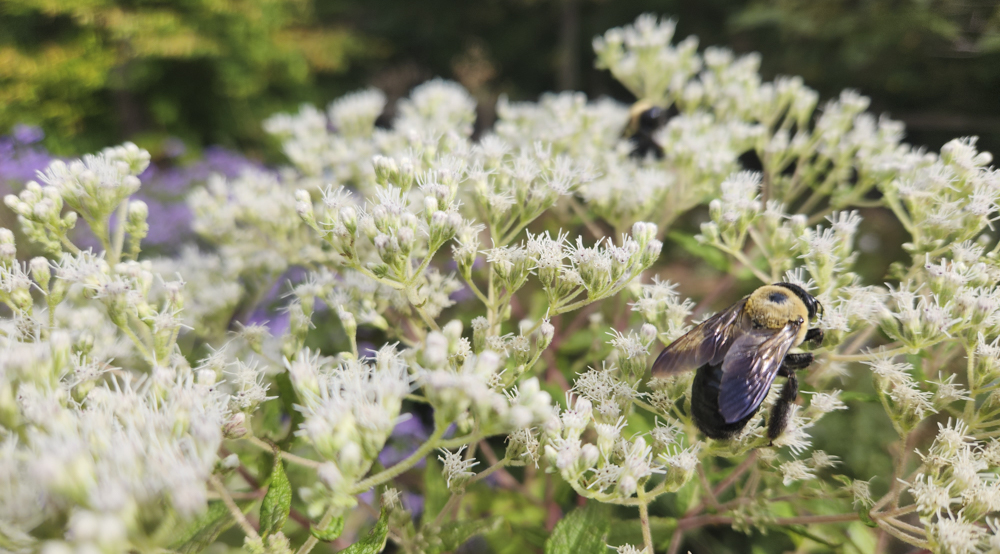
Although the composite flower structure allows for efficient foraging, it would be risky for a plant to give away all its pollen at once. Instead, Asteraceae species, such as this Eupatorium perfoliatum (common boneset), dole it out over time. © Izel Native Plants
The style’s elongation is gradual, so only a small amount is presented each day. That limits the amount any one pollinator can collect. If it were presented all at once, a bee crawling across the flower head could gather it all. That would limit the plant’s interaction with other insects and would entrust all its genetic material to a single individual. That’s a risky strategy. “Dosing” the pollen over a few days or a week allows the plant to interact with hundreds of different insects, maximizing its genetic potential.
This mechanism perfectly times the switch between giving and receiving pollen. The floret presents its own pollen first, while its own stigma remains closed and unreceptive. As insects forage, they sweep this fresh pollen away. Only later does the style’s stigma split open and expand its receptive surfaces, ready to receive compatible pollen brought from a different plant.
They Feed More Than Insects
The fruit from the individual composite florets (achenes) are packed with high-calorie fats, proteins, and oils. Because they don’t split open, achenes rely primarily on decomposition and animals to release the seeds over time. They provide food for birds and mammals, including humans. It’s one of the complex connections they have within ecosystems.
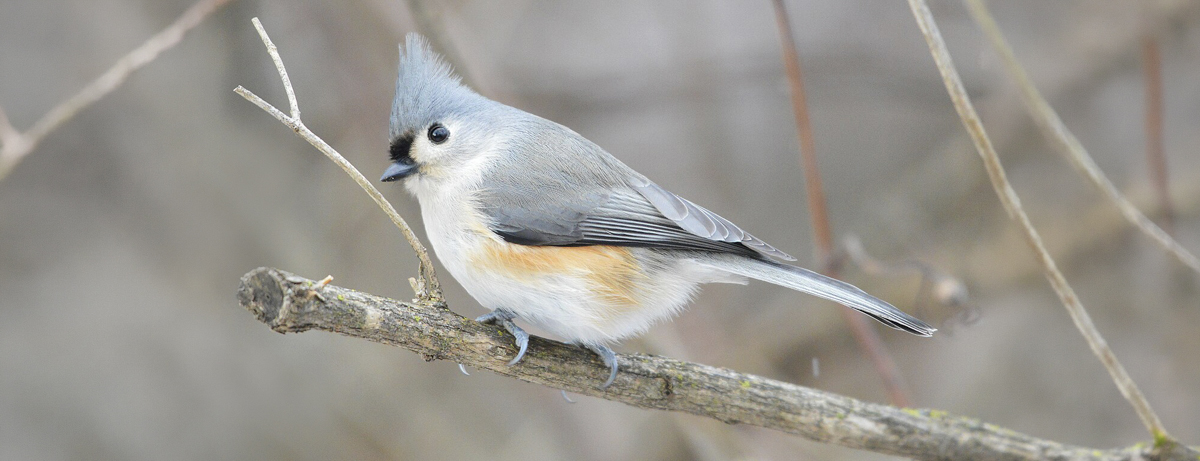
A Tufted Titmouse like this one will target Asteraceae species in fall, gathering and storing the seeds for winter food. Photo by: Jocelyn Anderson, CC BY 3.0
Finches, Chickadees, Titmice, and many other songbirds eat the seeds of Echinacea (coneflowers), Rudbeckia (black-eyed Susans), Helianthus (sunflowers), and Liatris (blazing stars). Goldfinches use the fluffy pappus of Cirsium (thistles) to line their nests and the tender, inner seeds to feed their nestlings. The achenes of composites are particularly valuable in fall when birds are provisioning themselves for migration or overwintering (see our blog post on Bird-Friendly Plants for Winter Forage).
Small mammals, like chipmunks, mice, voles, and squirrels eat and store composite fruits. The achenes usually have a tough, outer coating that resists molding and makes them handy for winter storage
The family also gives us food crops: lettuce, sunflower seeds, artichokes, sweeteners, coffee substitutes, and herbal teas. Several familiar medicinal and culinary herbs are composite flowers: chamomile, calendula, feverfew, yarrow, tansy, and chicory. There are over 40 economically important species of composites, which include food, oil, medicinal, and ornamental crops.
A Big Family Can Be Complicated
With thousands of species and high diversity, it’s no surprise that Asteraceae presents taxonomic challenges. They’ve been studied and documented for centuries, and species are still getting moved around. The most well-known, recent change was to the genus Aster.
Early botanists tended to take a broad view of Aster and included many, disparate species in the genus. Dr. Alan Weakley, Director of the University of North Carolina at Chapel Hill Herbarium, says developments in the late 20th and early 21st century led to new understanding of the genus and its relatives. Taxonomic work in the mid-90s suggested that some species traditionally included in Aster were different enough to warrant being in a different genus. It also revealed that none of the North American species of asters were closely related to the Eurasian asters. Taxonomic shifts ensued. The Eurasian asters had taxonomic precedence, so the aster name stayed with them.
Our North American species got transferred to other genera, including Symphyotrichum, Eurybia, Doellingeria, Ampelaster, and Ionactis. You’ll still see some of our North American species labeled as Aster in the nursery industry. Good names are hard to change.
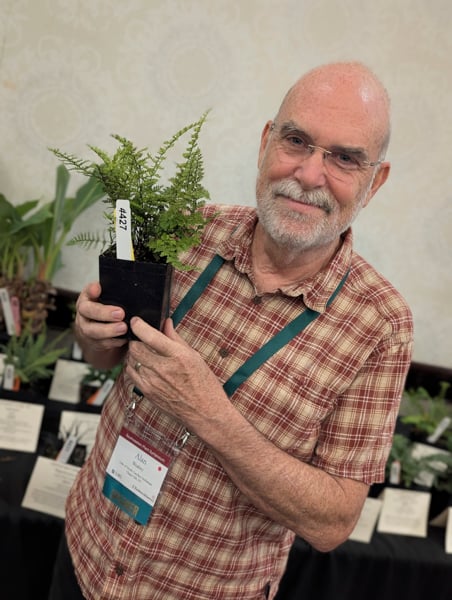
Dr. Alan Weakley, a helpful interpreter of taxonomic changes. © Izel Native Plants
Asteraceae in Disguise
The keystone genera noted earlier are probably familiar and recognizable as members of Asteraceae: Solidago (goldenrod), Symphyotrichum (aster), Helianthus (sunflower), and Rudbeckia (black-eyed Susan). They are must-haves. But there are many other species that deserve a place in your garden and may not announce themselves as composites.
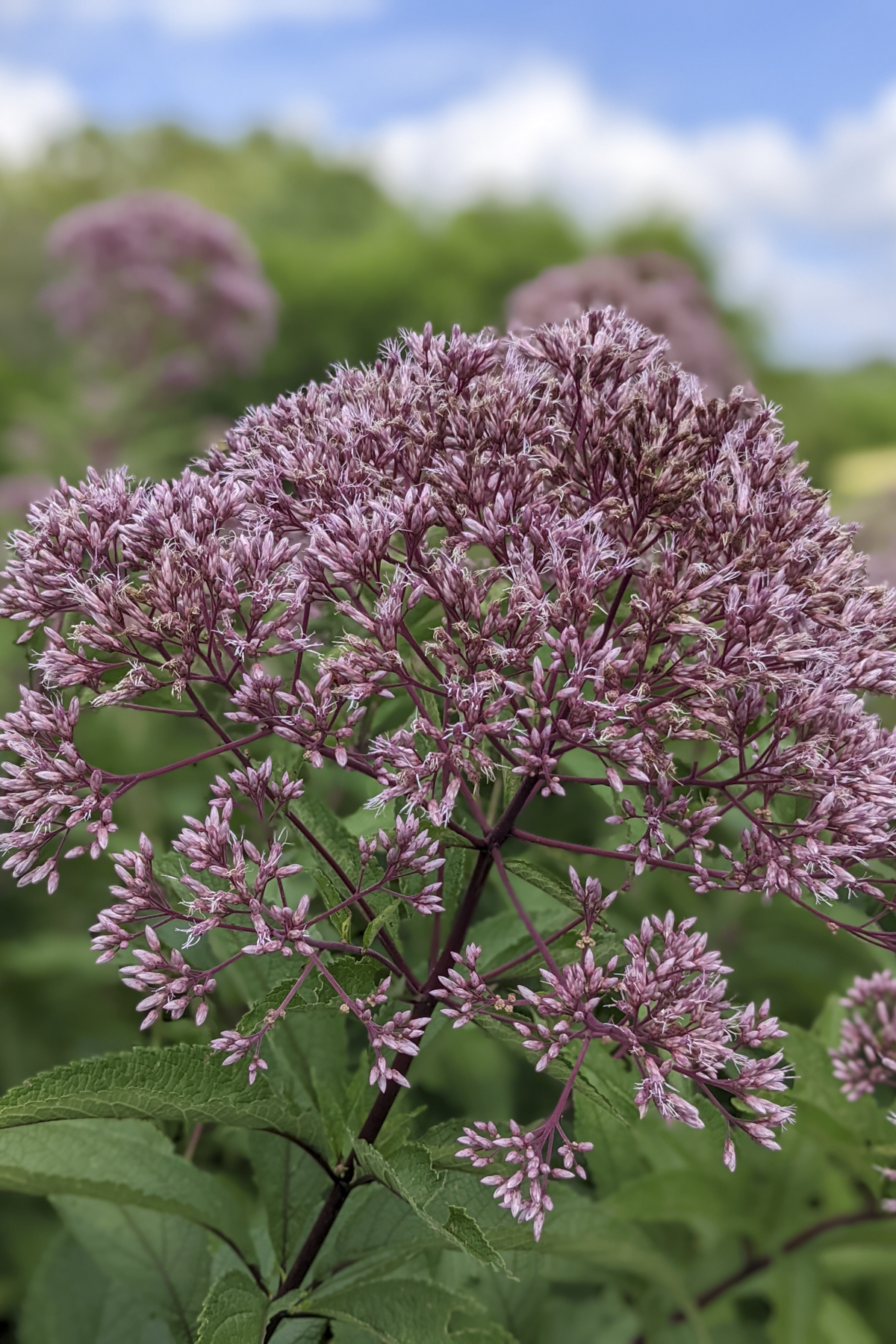
Eutrochium sp. (Joe-Pye weed) © Izel Native Plants
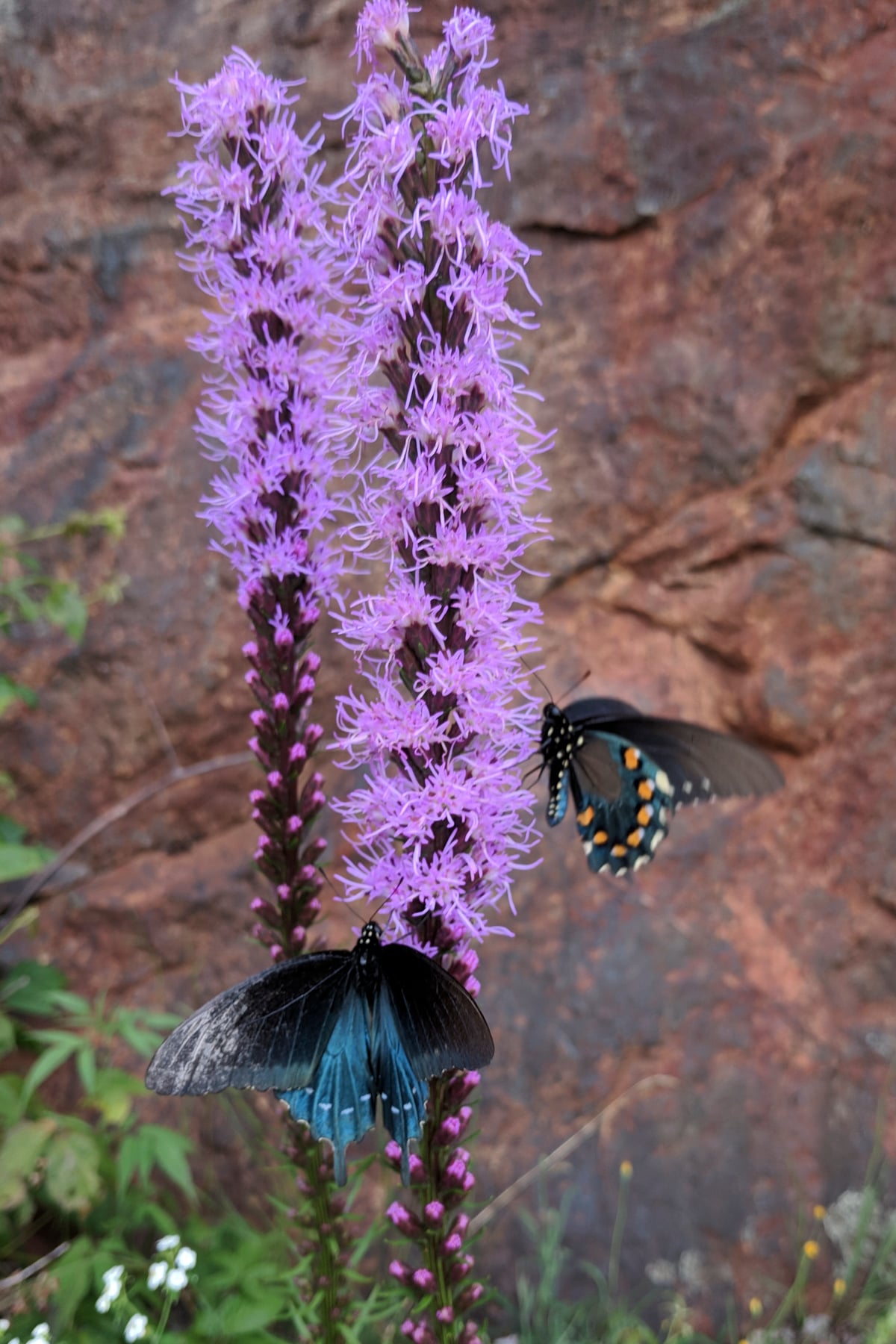
Liatris sp. (blazing star) © Izel Native Plants
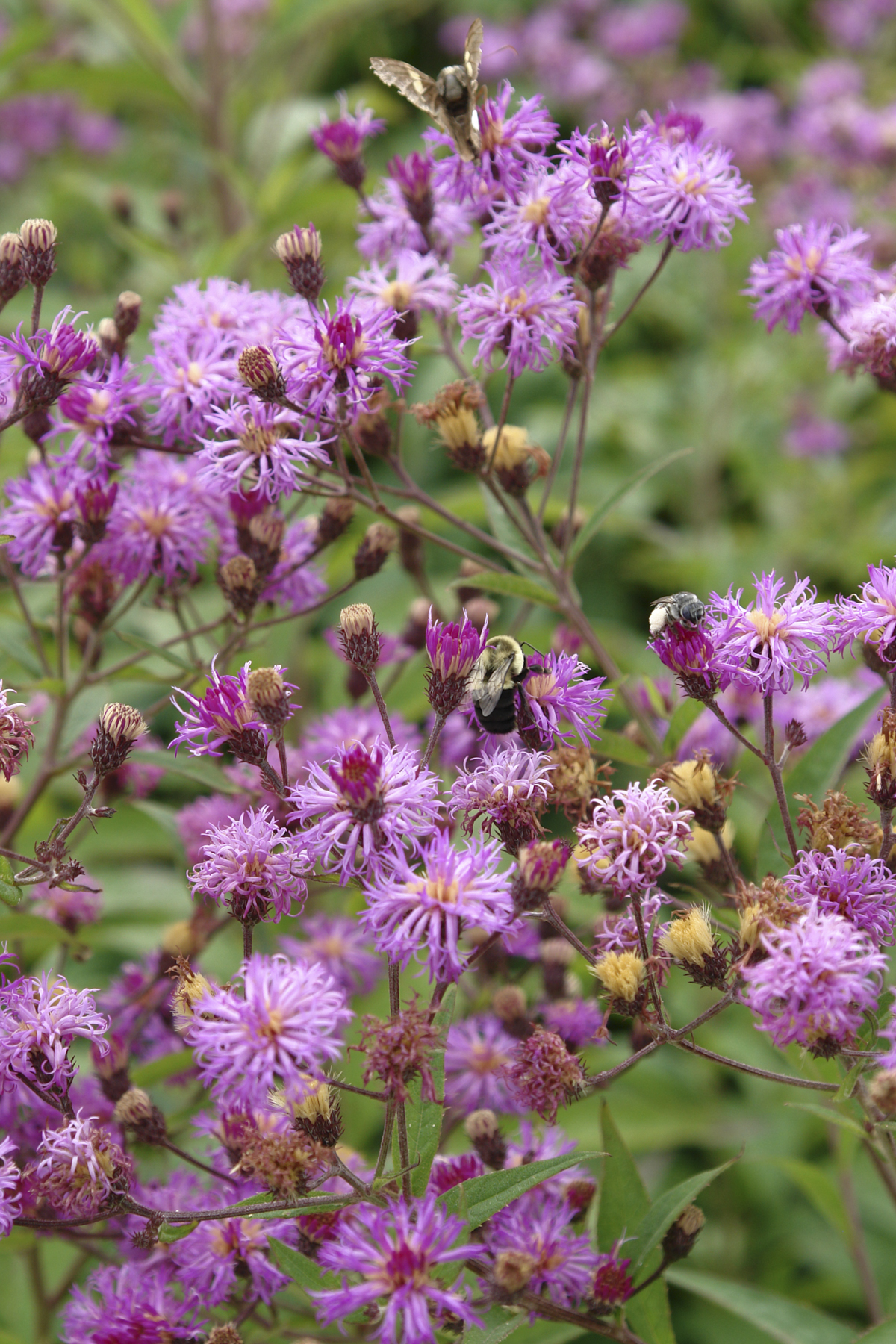
Vernonia noveboracensis (New York ironweed) © North Creek Nurseries
Joe-pye weeds (Eutrochium spp.) are a prime example. The flowerheads are made up of tiny disc florets that collectively offer tons of nectar. These species’ huge inflorescences, statuesque height, and wide whorled leaves hold powerful visual appeal for pollinators. Liatris spp. (blazing stars) and Vernonia spp. (ironweeds) are likely familiar but not necessarily as Asteraceae. Their flowerheads are composed of disc florets only. They produce pollen and nectar, but most visitors are primarily interested in the nectar.
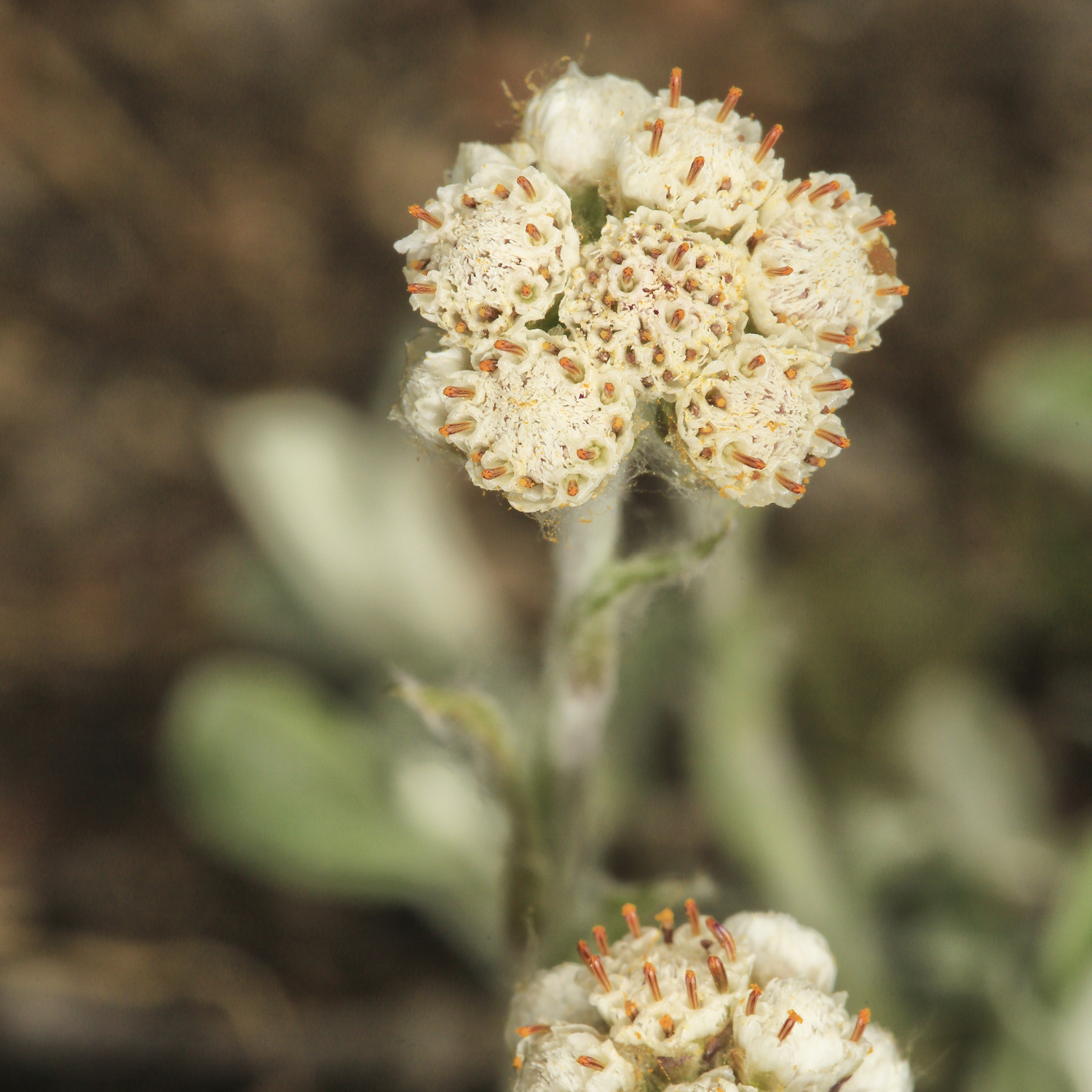
Antennaria plantaginifolia (plantain-leaf pussytoes) © Alan Cressler
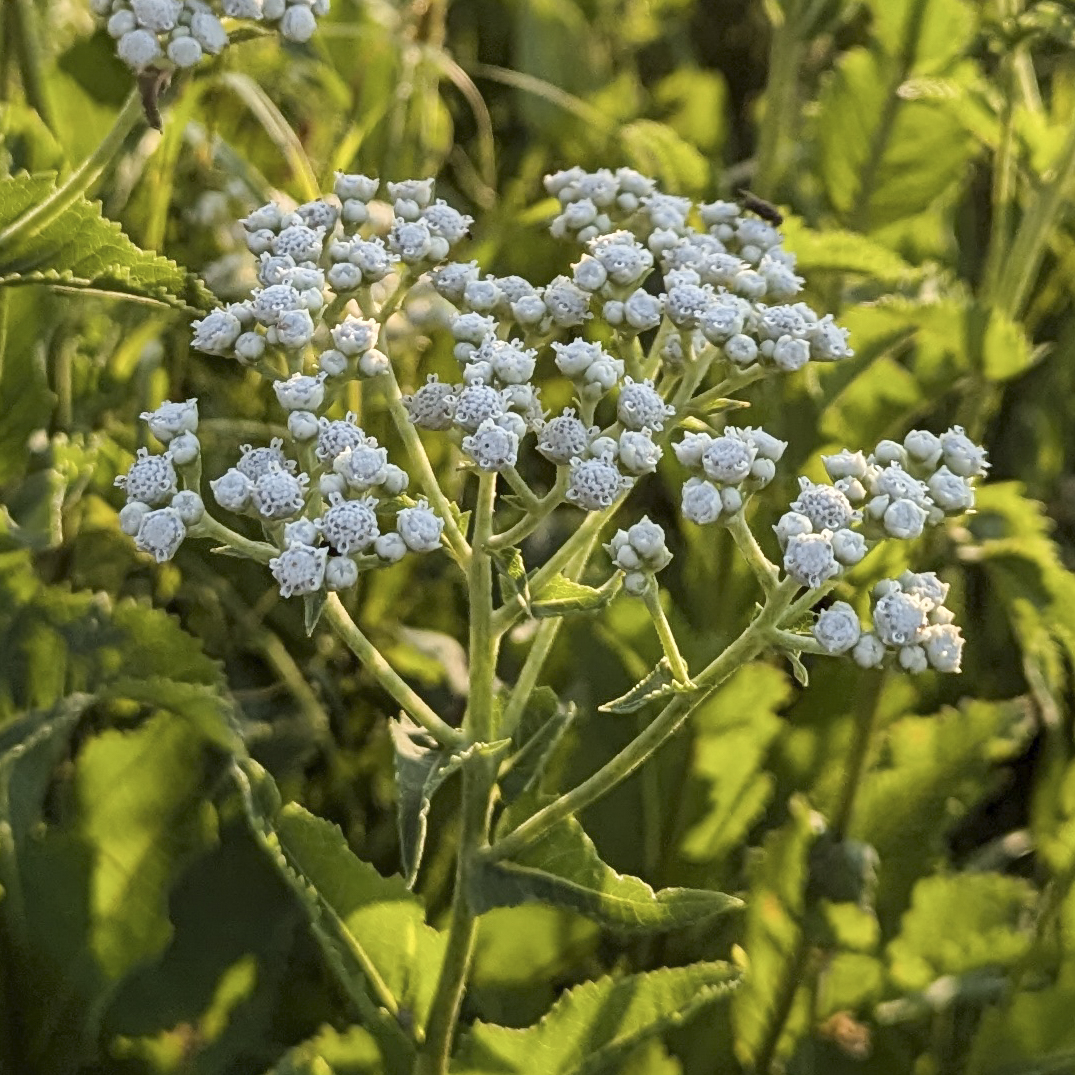
Parthenium integrifolium (wild quinine) © Izel Native Plants
Parthenium integrifolium (wild quinine) is even less obvious as a composite. Its flowerheads are quite small and look soft and fuzzy. Each head has five, tiny ray florets surrounding a cluster of disc florets. The ray florets produce nectar, and the central disc florets produce white pollen, which contributes to the soft appearance of the heads.
Antennaria plantaginifolia (plantain-leaf pussytoes) is not at all what you’d expect from a composite family species. It is dioecious, with male and female flowers on separate plants. The flowerheads are held in clusters and resemble soft, fuzzy, cat’s paws. The female florets produce a single brown seed with a pappus that’s most likely dispersed by wind. However, the male and female florets produce pollen and nectar, respectively, that attracts pollinators.
The Whole Composite
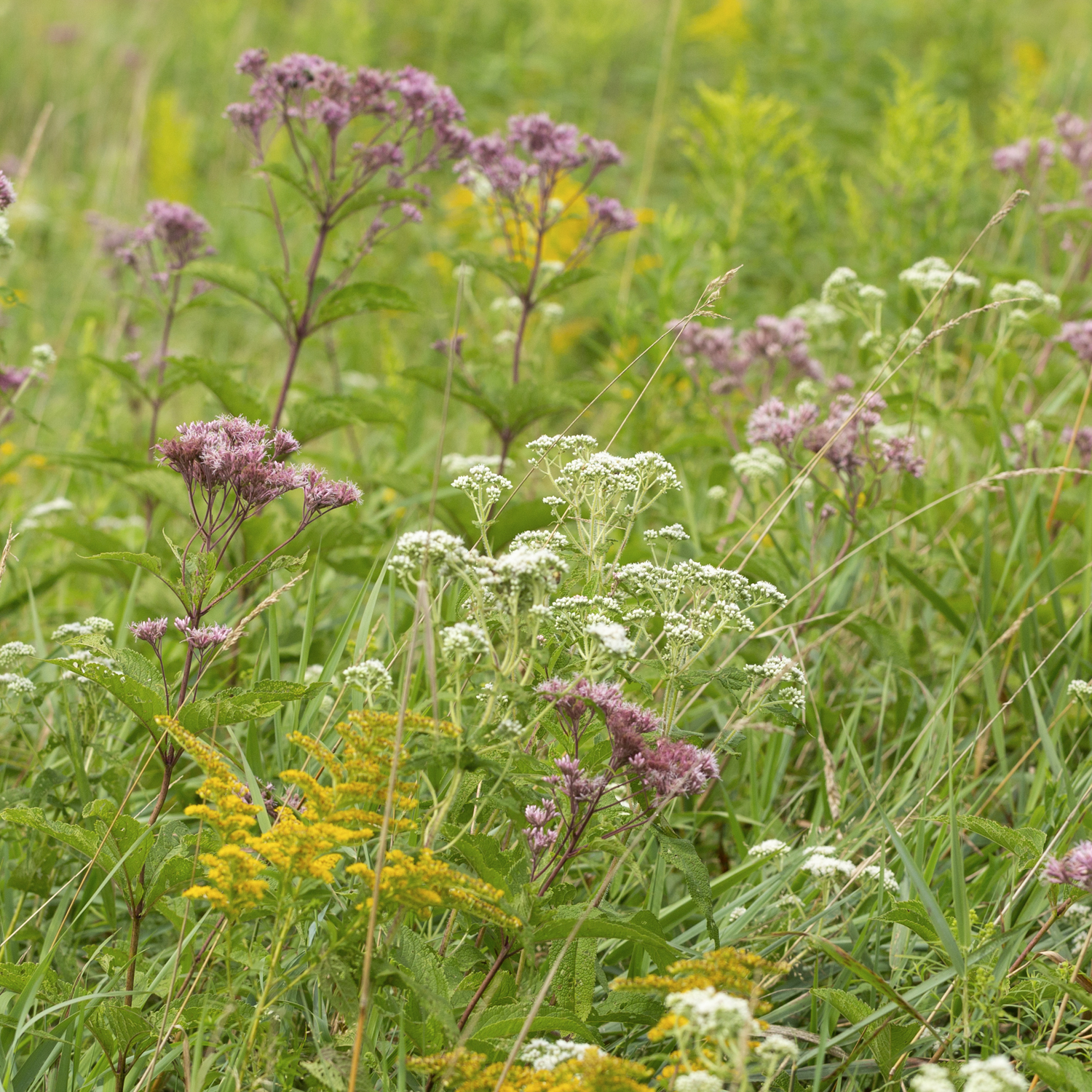
Including Asteraceae into your landscape is more than a design choice; it’s an act of ecological stewardship.
From the complex floral structures to the high-fat winter lifeline of their seeds, composites have coevolved with the wildlife that is in dire need of our support. Looking beyond the single "daisy" flower, we can see the complexity and understand their role in the wider food web. By planting a diverse tapestry of composites, we don’t just fill spaces in our gardens. We provide the powerhouses that support our local ecosystems.
Major sources consulted:
Gaskill, Melissa, "A Different Light," Lady Bird Johnson Wildflower Center website, accessed 6/11/26.
Holm, Heather, Pollinators of Native Plants, Pollination Press, 2014
Holm, Heather, Bees. An Identification and Native Plant Forage Guide, Pollination Press, 2017
Jeffrey, Charles, “Evolution of Compositae flowers,” Systemics, Evolution, and Biogeography of Compositae, pp. 131-135. Funk, V., Susanna, A, Stuessy, T Y R. Bayer (eds.)
National Wildlife Federation, Keystone Plants by Ecoregion webpage and regional PDFs, accessed 6/15/26
Ward, Scott, “What are the most diverse plant families and why? Part One: The Asters.” North Carolina Botanical Garden website, accessed 6/9/26
UC Davis, “A Brief Overview of the Compositae, Lettuce and Sunflower,” COMPOSITdb website, accessed 6/12/26
Weakley, A., “The Curious Case of the Disappearing Asters,” North Carolina Botanical Garden Newsletter, March-April 2004.

Shannon Currey is a horticultural educator with Izel Native Plants. She’s worked in the nursery trade since 2006, developing expertise in grasses and sedges and expanding her knowledge of native forbs. She currently serves on the North Carolina Plant Conservation Program Scientific Committee, holds advisory roles with several organizations, and served on the Board of the Perennial Plant Association. Shannon lives in Durham, North Carolina and loves exploring the local flora everywhere she goes!