
Rethinking Fall Cleanup: How to Leave the Leaves
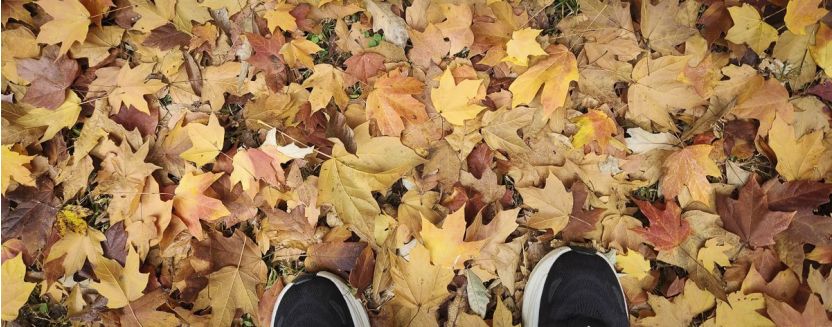
As the nights become longer and temperatures fall, trees begin to send carbohydrates and resources down from the leaves into their root systems. The top growth is left to naturally die back, often revealing brilliant colors that green chlorophyll has been covering during the growing season. That show is just a phase, and the leaves are on their way out.
It’s remarkable when you think about it. Trees purposefully drop their leaves every fall. They spend months growing a full crown only to give it all up at the end of the growing season. In natural habitats, those fallen leaves blanket woodland and forest floors, creating a natural, organic layer.
© Izel Native Plants
© Izel Native Plants
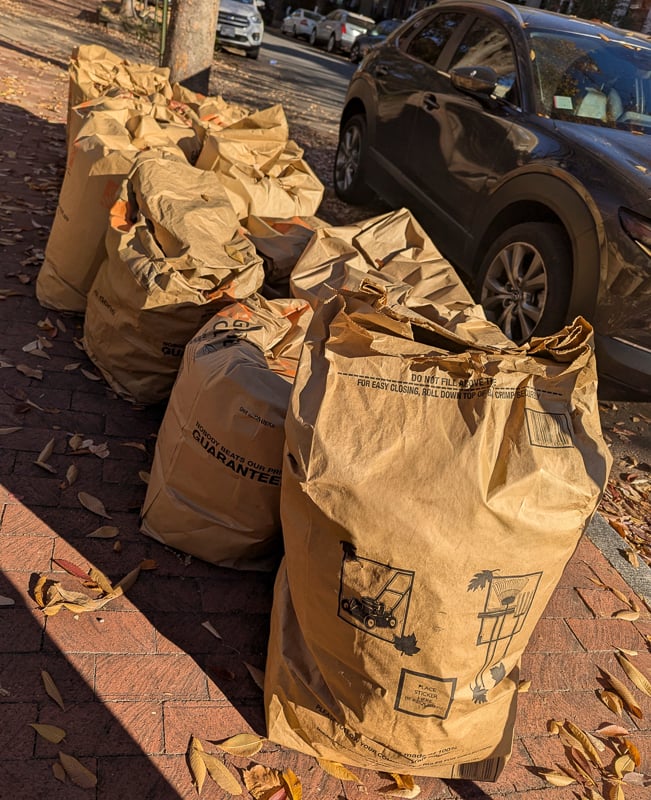
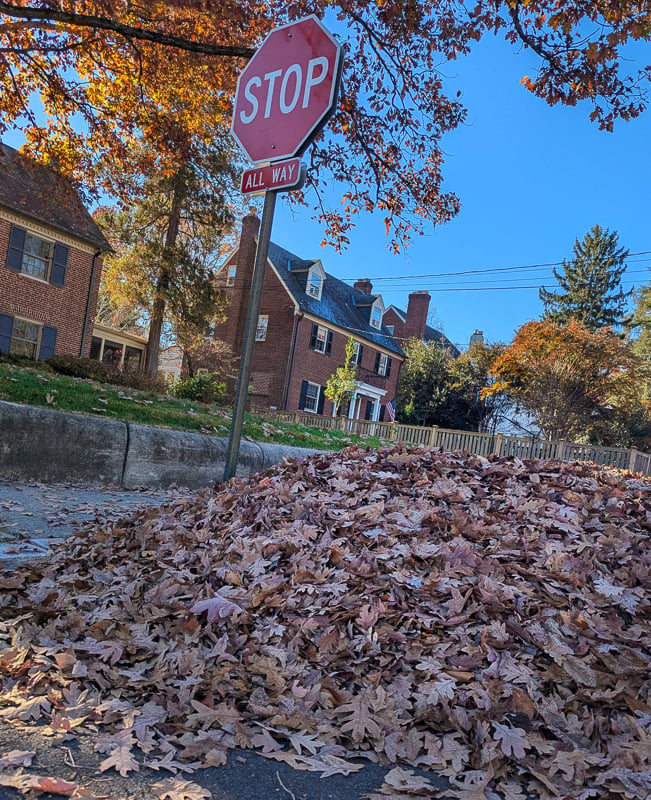
In cultivated landscapes, that leaf layer has been traditionally treated as something to remove. As litter. Leaves were raked or blown from where they fell, stuffed into bags, and put on the curb for municipal pickup. The area under the trees where the leaves were removed was mulched to make everything look neat and tidy, and to show intention.
If you’ve ever worried that leaving the leaves will smother your grass or look like total neglect, you’re not alone. The good news is that it’s not an all-or-nothing prospect. Knowing where to leave leaves and how to manage the excess allows us to support wildlife while maintaining a landscape that appears cared for and intentional.
A Shift in Perspective
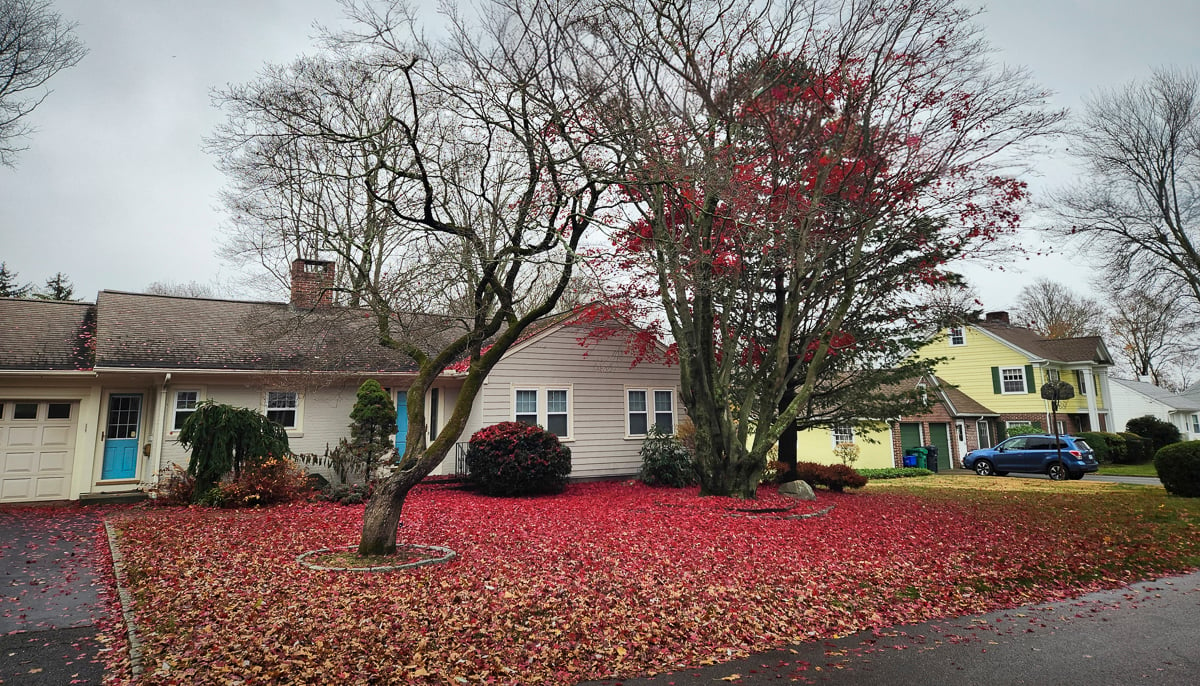
In recent years, there’s been a different approach to landscape practices—one that questions for whom we are gardening. One that prioritizes wildlife and defines landscape care and beauty differently. It’s an approach that recognizes fallen leaves (along with the stems, twigs, branches, and other dead plant materials) as part of the ecology of our system. Ecological landscape designer Kim Eierman urges us to treat our yards as ecosystems; as places that provide habitat and resources for the wildlife around us.
© Izel Native Plants
Thinking of our landscapes as ecosystems shifts our perspective, and it invites us to examine traditional management practices more closely. Gathering those leaves, moving or disposing of them, obtaining and spreading mulch—it’s a long chain of events that takes a lot of resources. It also removes a leaf layer that trees have evolved to produce. What happens when we do less? What’s going on in that layer of leaves?
There’s Life in the Leaf Blanket
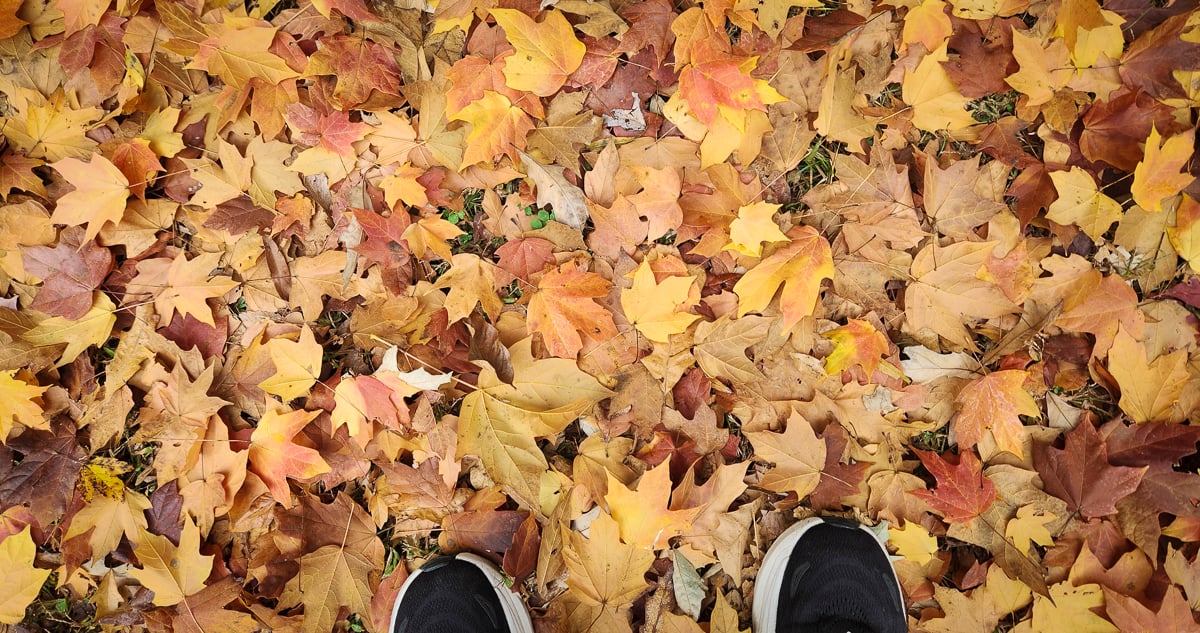
It turns out, there’s a lot going on in that leaf blanket. A study published in 2024 examined leaf management practices in pesticide-free, residential yards in suburban Maryland. In an article in The New York Times, lead author and entomologist Dr. Max Ferlauto stated, “In a square meter of yard where you leave your leaves, there’s on average almost 2,000 insects that will emerge over the course of the spring.” That’s a lot of life, and that count was only above-ground species that spend a portion of their life in the fallen leaves. It included moths, butterflies, wasps, beetles, flies, and spiders. It didn’t even include creatures that spend their entire life cycle in the soil or in the leaf layer.
© Izel Native Plants
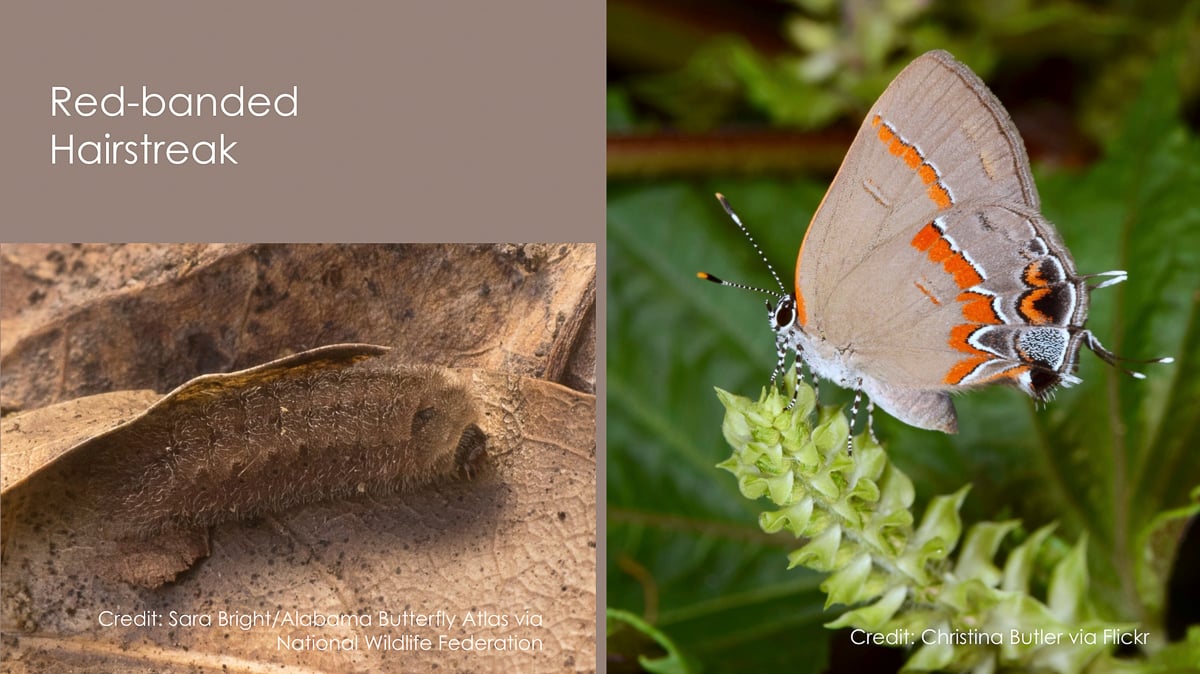
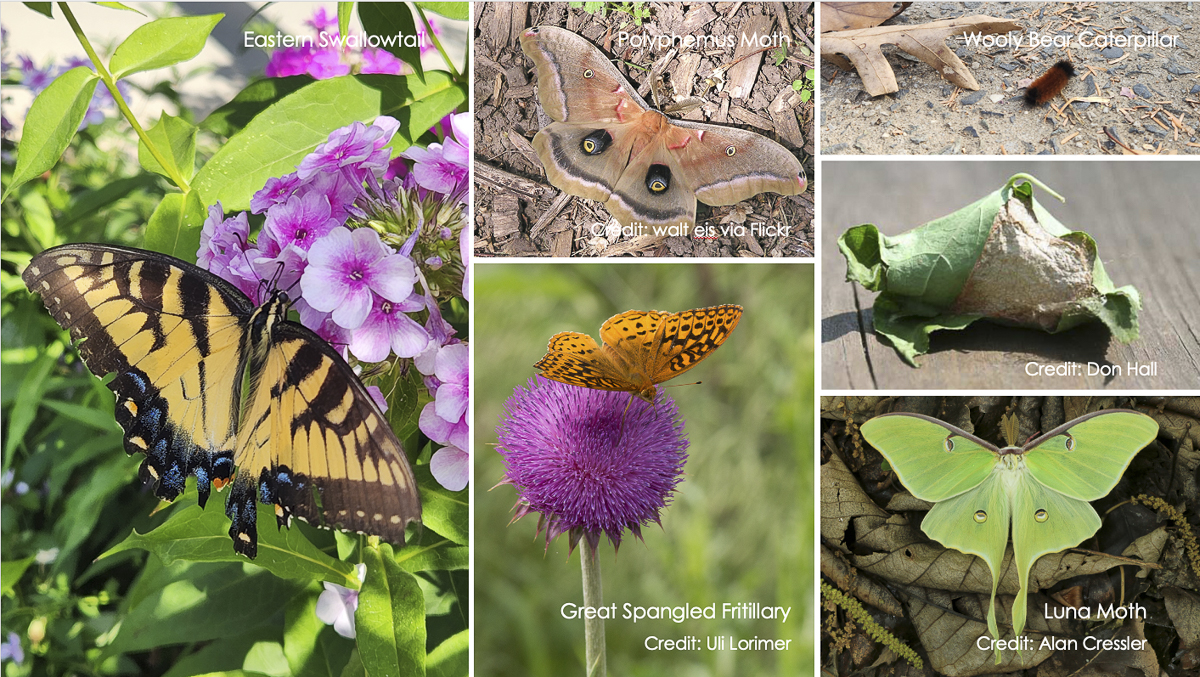
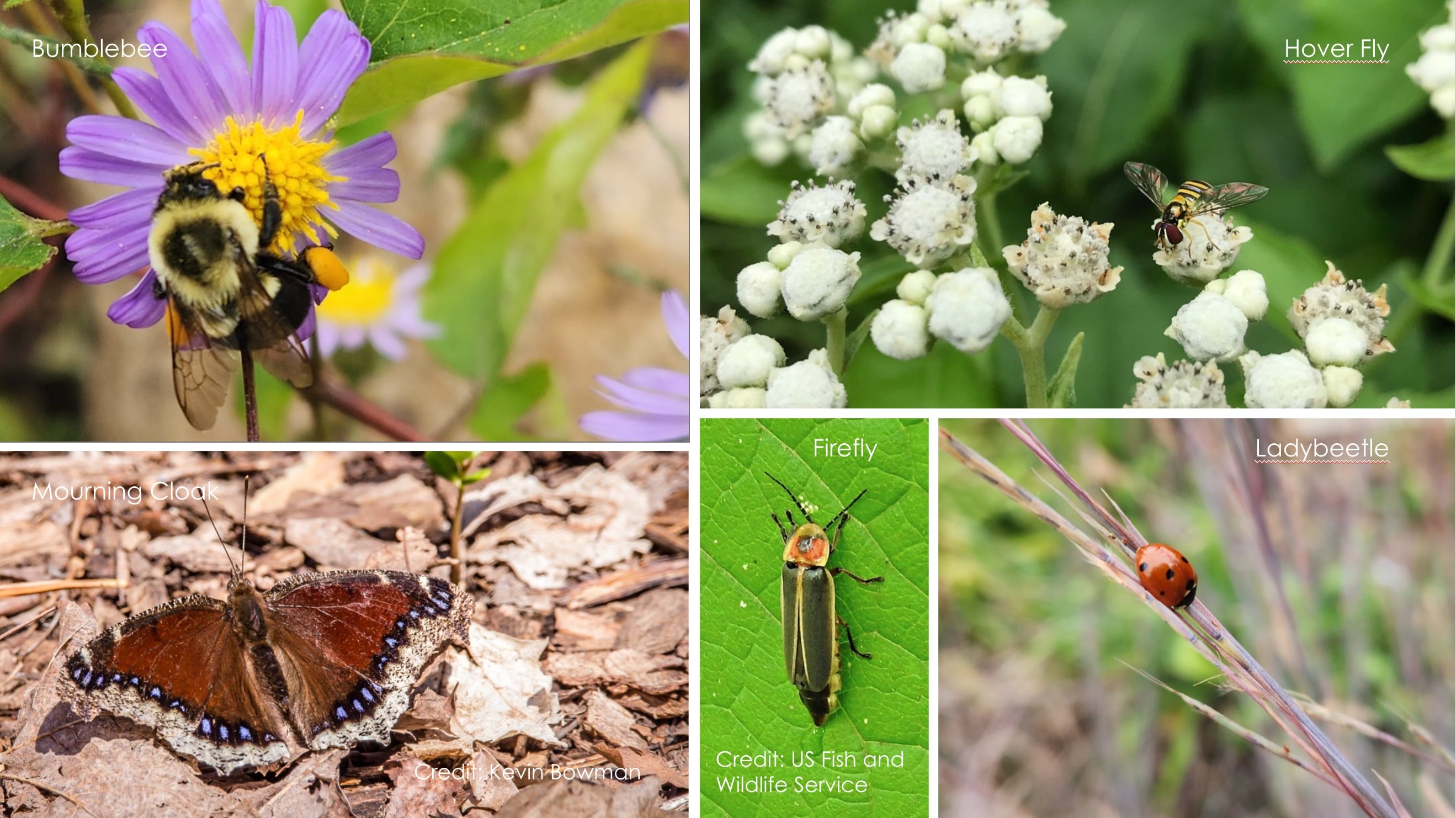
Most of us know about migrating Monarchs, but most butterflies and moths do not migrate. Species like Swallowtails, Polyphemus Moths, Great Spangled Fritillaries, Luna Moths, and Woolly Bear Caterpillars overwinter in the leaf blanket during their life cycle. Luna moths even make their cocoon with leaves. The Red-banded Hairstreak’s life cycle is intricately tied to fallen leaves. Unlike most caterpillars, which feed on living plant tissue, the larvae of this species primarily eat decaying leaf material, especially from sumac and oak trees. The caterpillars resemble fuzzy leaves, which conceals them from predators. The leaves are both food and shelter, protecting them from harsh weather and providing a safe space for growth and development.
Other insects get in on the leaf party, too. Queen bumble bees hibernate over winter to start colonies anew in spring. They snuggle down into the leaf blanket or dig in just below the soil surface. Firefly larvae overwinter in the leaf layer or just under the soil line. Beneficial insects like ladybugs, ground beetles, lacewings, and hoverflies shelter in the leaf layer and emerge in spring as pest controllers.
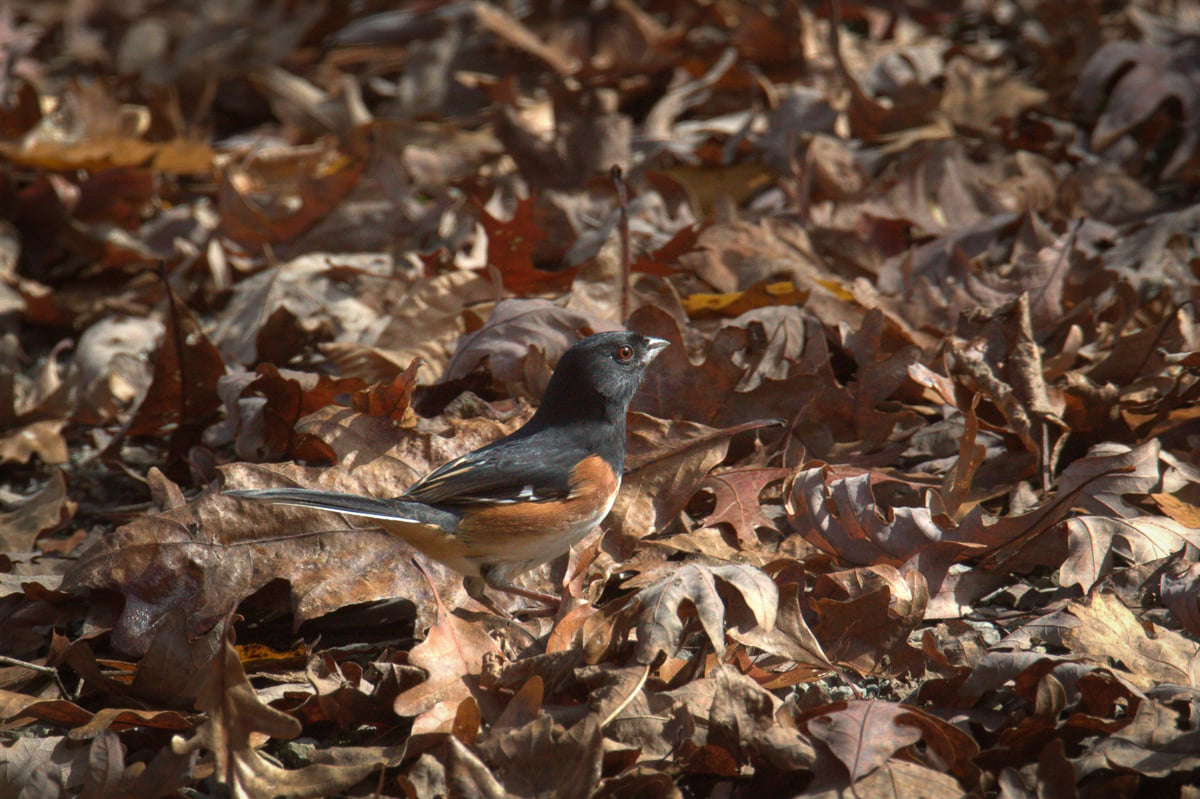
Eastern Towhee © Cathie Bird via Flickr
The leaf blanket is an important place for birds, too. They forage there, finding fallen nuts and seeds, along with the tasty insects and invertebrates that the moist leaf environment shelters. Birds use their feet to sift through the leaves and uncover food. Eastern Towhees and Brown Thrashers are commonly seen (and heard) rustling around in the leaves. The leaf blanket also offers camouflage from predators for species like Thrushes, Sparrows, and Juncos while they are searching for food. Many bird species use fallen leaves and twigs as nesting material, and some species, like Kentucky Warblers, Eastern Towhees, and Ovenbirds, will even build their nests down in the leaf layer. They get camouflage and warmth out of the deal.
Even birds who don’t directly visit the leaves still benefit from it. The insects that use the leaf layer during their life cycle are an essential part of the food web, and birds are especially dependent on them. About 95% of terrestrial birds rely on insects to some extent as food for rearing their young.
It’s not just birds that need insects. A recent literature review examined the importance of insect biodiversity for vertebrates, and the results were enlightening. Across studies, the reviewers assembled diet information for 19,750 species of terrestrial and freshwater vertebrates. According to the lead author, ecological scientist Dr. Jeff Ollerton, “Of those for which data are available, 73% eat invertebrates and 44% eat them exclusively. That alone ought to give us pause when thinking about the consequences of insect declines.” The relationship between insects and vertebrates reaches far beyond food, too. Among other functions, insects remove waste and debris, pollinate plants, recycle nutrients, and create structures that provide shelter. Providing habitat for insects helps maintain healthy populations, which in turn, helps maintain healthy vertebrate populations.
Leaves Build Soil Health
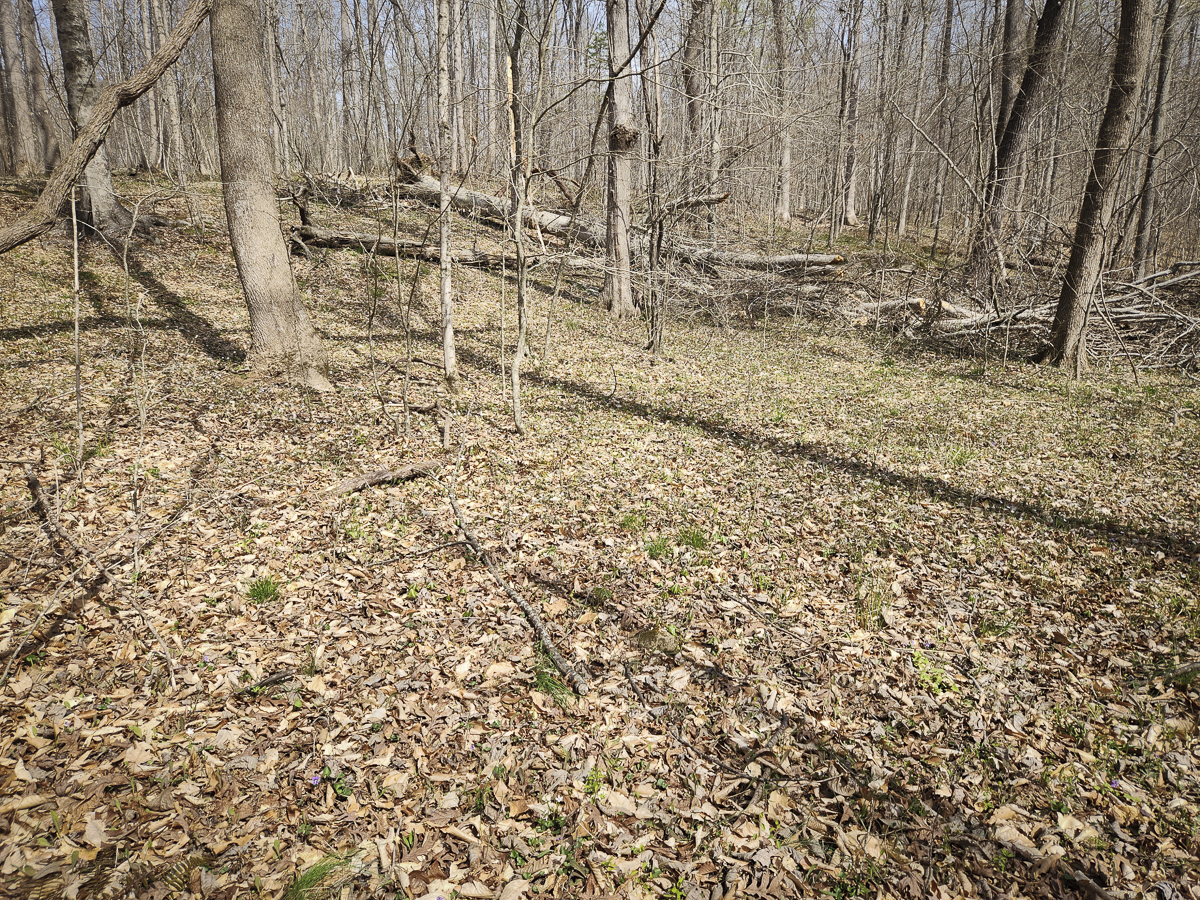
In addition to the above-ground benefits, leaves contribute to healthy soils. Fungi, bacteria, earthworms, and micro-arthropods break down the leaves, transforming them into rich leaf mold. That allows the nutrients that are absorbed by tree roots during the growing season to be recycled back into the soil food web. Adding those nutrients back into the soil means there’s little need for supplemental fertilizers.
© Izel Native Plants
Leaves on the trees capture atmospheric carbon during photosynthesis. Allowing them to decompose in place transfers organic carbon directly into the soil profile. Soil carbon and decomposition rates are important measures of soil health that can affect the health of the ecosystem. Soil carbon affects plants’ access to nutrients and the soil’s moisture-holding capacity, which impact plant health. Soil that holds more moisture also helps reduce stormwater runoff. Dr. Ferlauto looked at decomposition rates and organic matter in areas where fallen leaves had been regularly left to accumulate. Compared to areas where leaves had been removed, areas with long-term leaf accumulation had 21% faster decomposition rates and up to 32% more soil organic carbon.
The leaf layer also acts as a protective blanket, reducing soil erosion from heavy rain, protecting soil structure, reducing moisture evaporation, and buffering soil temperature fluctuations. And in areas where a leaf blanket takes the place of lawn or mulch, there’s no need for mowing or replenishing mulch, which reduces foot traffic and soil compaction.
What if the Leaf Blanket Goes Away?
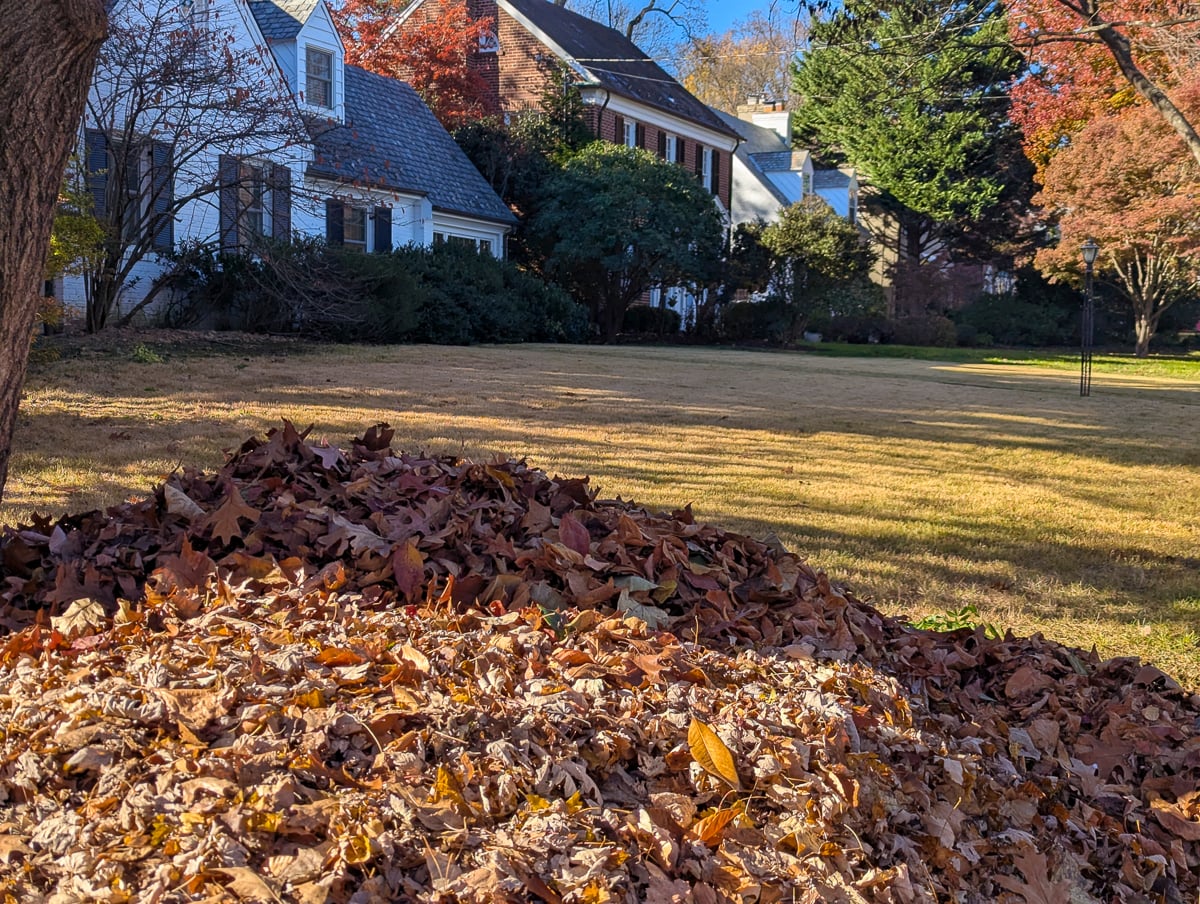
Dr. Ferlauto’s study of pesticide-free, residential landscapes in Maryland found that removing the leaves decreased the total number of arthropods by 17%. The effect was even more pronounced with butterflies and moths, whose numbers dropped by 45%. Not only did their numbers decrease, the diversity of butterflies and moths was reduced by 44%. They also found that shredding or mulching the fallen leaves was just as damaging to insects as removal. Removing or shredding the leaves directly destroys insects or alters their habitats to such extent that they cannot survive.
© Izel Native Plants
Another scientist and her students looked at the contents of leaf bags in Buffalo, NY to see what insects were present. They found species at every stage of life (eggs, larvae, pupae, adults) across 25 different insect families—everything from bees to hoverflies to lacewings, and more. Bagged up and taken away, the insects and the leaves are no longer contributing to the local ecosystem.
Those bags of leaves (and other yard trimmings) are often picked up by municipalities. Nationally, our communities generate over 35 million tons of yard trimmings each year, which is 12% of all municipal solid waste. About 60% of those yard trimmings are composted, which does at least capture the carbon and other essential nutrients. However, the insects won’t make it through that process. 30% of yard trimmings go directly into landfills and 10% are incinerated. That’s a tremendous amount of energy spent moving around and getting rid of what could be a valuable resource if left in place.
If We Do Less
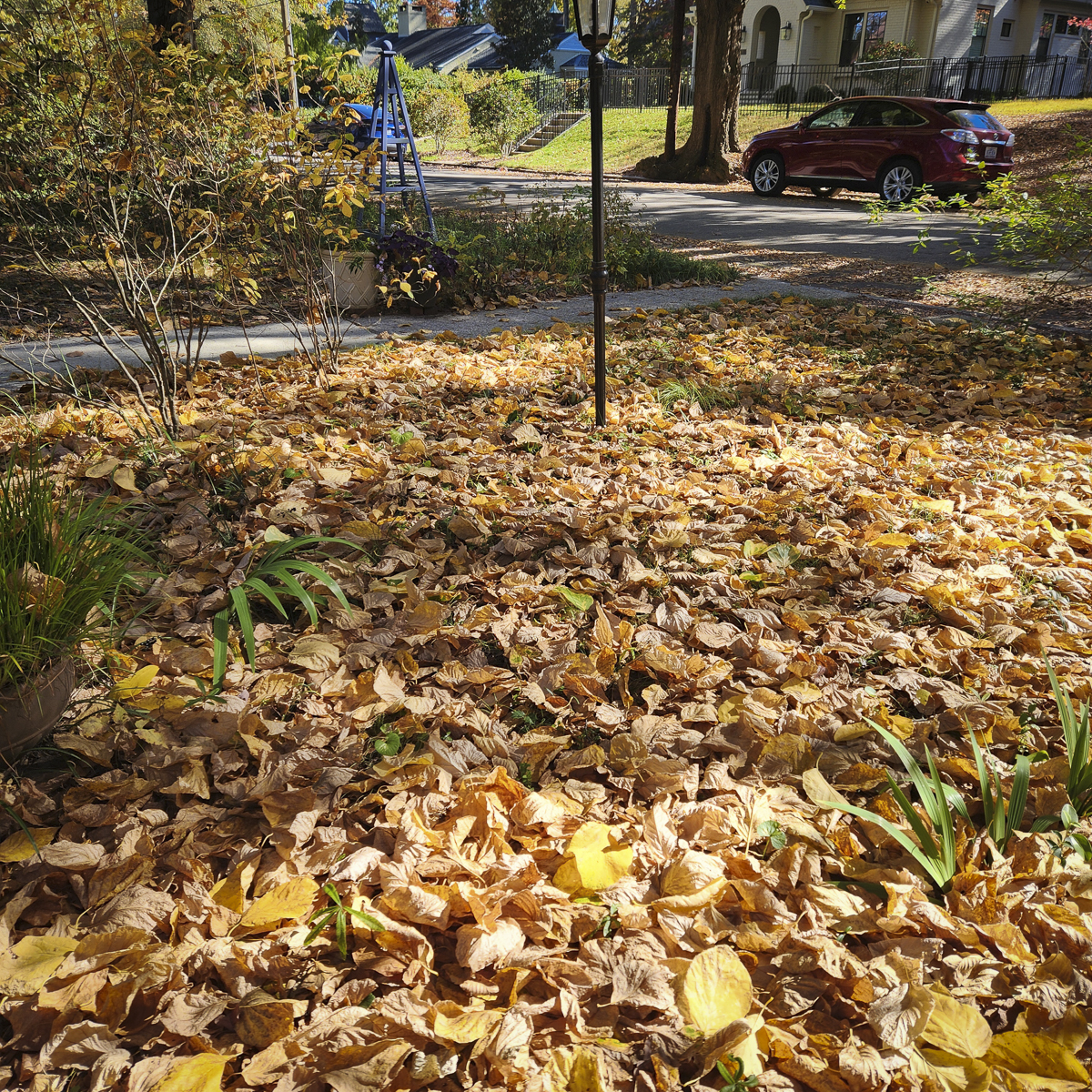
Returning to our premise of doing less, we know now that the leaf blanket has significant purpose. From providing habitat for insects to supporting the food web and improving soil, it’s critical to the ecosystem (and if you’ve read our blog posts, you know that fallen leaves are an essential part of soft landings under native trees). Leaving the leaves also saves time, effort, and money. There’s less raking and blowing, and no bagging or hauling to the curb. There’s less weeding because the leaf blanket reduces germination. And there’s no need for supplemental fertilizer or mulch.
© Izel Native Plants
Doing less takes advantage of the leaf bounty, treating them as habitat and resources in our ecosystem. However, most of us don’t live in natural ecosystems, and there’s the reality of caring for our landscapes. We may be buried under mountains of leaves—cultivated landscapes often include trees from habitats where leaves are broken down by fire or harsh conditions that we don’t have. How much is too much? Are we endangering our plants by piling on leaves? Or maybe leaving the leaves is just too messy—for us or our neighbors.
So, we’re going to talk about seasonal cleanup with wildlife in mind while keeping it real and reasonable. You might want to provide as much support for wildlife as you can and don’t care much about tidiness, or you might want to help wildlife but find the natural look too much to handle. Or maybe you live in an HOA and face penalties for not maintaining a manicured look. Whatever your situation, we’ll try to find a balance between your landscape goals and priorities.
Seasonal Practices and Priorities
To maximize habitat for insects and other wildlife, the best practice is to leave fallen leaves intact where they drop in garden beds and under tree canopies. Maintain a 3- to 5-inch leaf layer under native trees and in woodland beds. If you’re prioritizing wildlife, you’ll also want to leave standing stems, seedheads, twigs, and branches through the winter and late spring (see our post on when to cut back dormant plants).
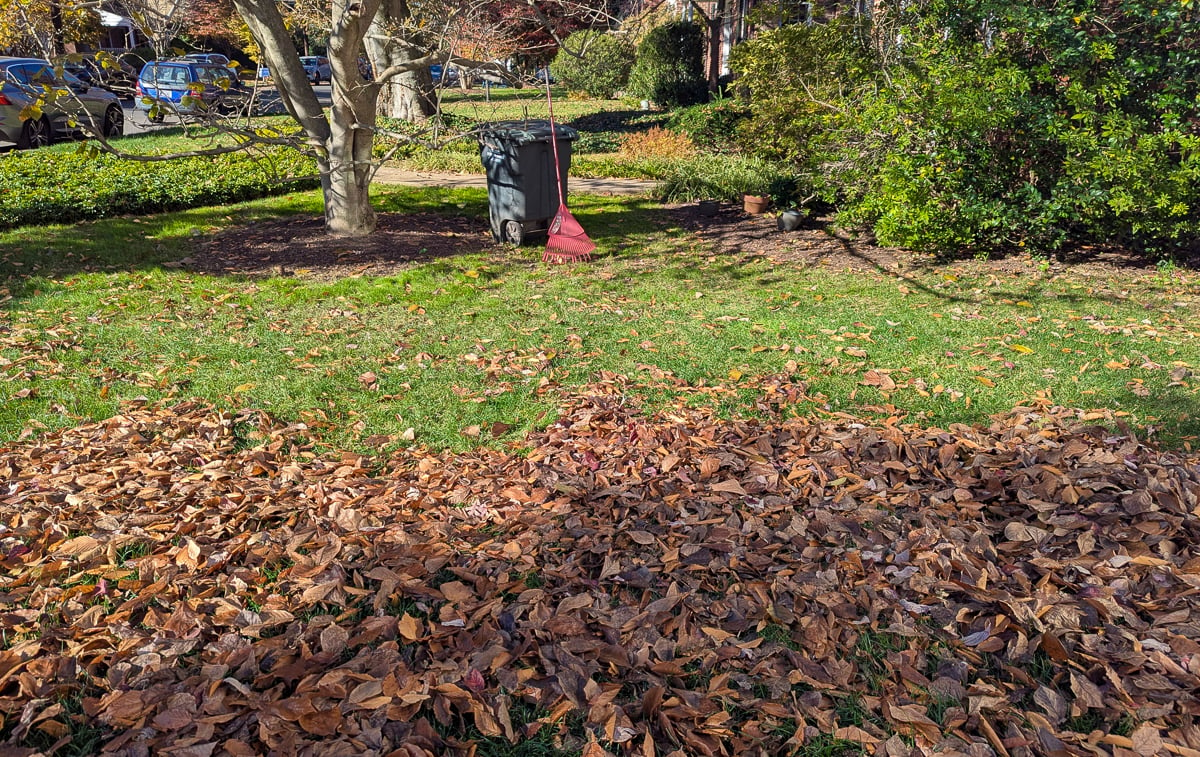
There are some smart practices to complement leaving the leaves. For safety and for cues that your practices are intentional, keep pathways, driveways, and high-traffic lawn areas clear of leaves. You can leave a thin layer of leaves on the lawn in lower-traffic areas. The leaves will decompose over time without smothering the lawn and add organic matter, eliminating the need for fertilizer.
In cultivated landscapes, keep an eye on the depth of the leaf blanket. Perennials from open habitats may be sensitive to heavy cover. Moreover, with prairie or other grassland-style planting that shares space with deciduous trees, leaves may accumulate in a way they wouldn't in a natural setting. The dynamics are different in open habitats where there are few deciduous trees. Prairies and savannas, where fire and disturbance are major factors, rarely develop a thick leaf layer. Or on a limestone barren, the underlying geology limits plant growth. Deciduous, woody species are scarce, and herbaceous plants are adapted to low organic matter in the soil.
If you have sunny landscape beds with species from sunny, open habitats, you’ll probably want to rake heavy leaves off into shadier, woodland beds or under tree drip lines. You can also keep an eye on your perennials to see who’s struggling with the leaf blanket and manage the depth around them accordingly.
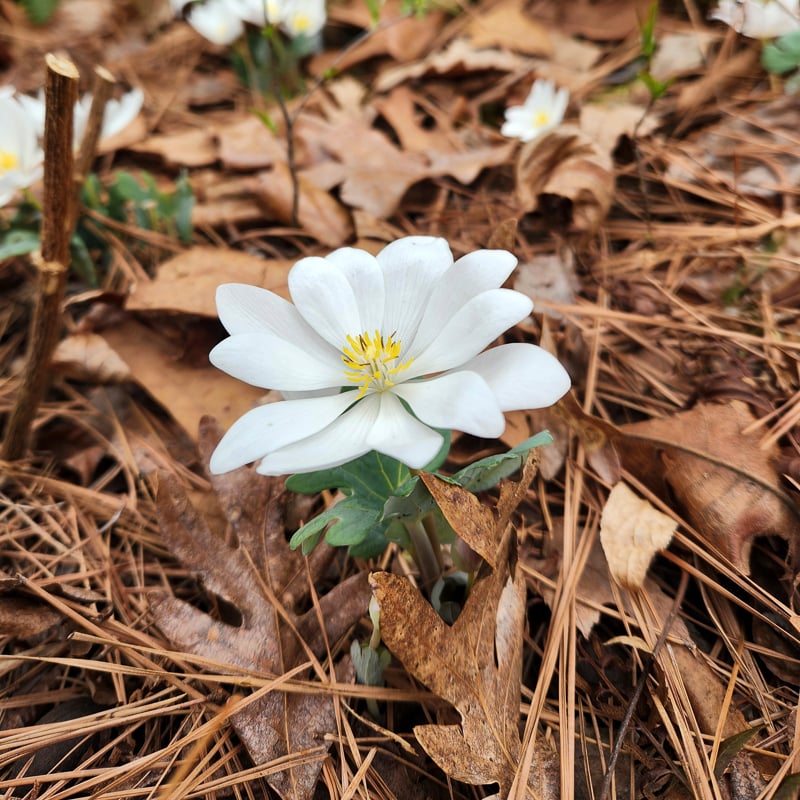
© Izel Native Plants
Herbaceous perennials that naturally grow in woodland or forest habitats usually manage a 3-5-inch leaf layer just fine. Over winter, the leaves will settle and start to break down. Spring ephemerals, like bloodroot, trillium, spring beauties, and Mayapples will find their way up through the layers. You may wonder about species with evergreen foliage that lies underneath the leaf layer. Those that grow in woodlands are likely to be fine. Species like foamflower, golden ragwort, and common blue violet will bide their time and poke up new growth when they’re ready.
Too Many Leaves?
What if you have mounds of leaves that are way too deep? The best option is to move intact leaves to another spot. Adopt a zone strategy, where there are some areas where you can mound up leaves and others where they need to be moved. For example, you might have recreational areas that you keep usable, pollinator plantings that take a light layer, and other areas designated as storage for leaves and other organic materials. You can also see those extra leaves as an opportunity! Use them to smother existing, unwanted plants and start a new garden bed. Or add soft landings under a native tree. Take care not to pile the leaves up around the trunk of the tree. That creates an environment that can foster diease and harm tree health. If the leaves blow around too much, you can lightly spray them with water to help keep them in place.
But what if there are still too many leaves? Or you’re uncomfortable with the look of all those big leaves blanketing your yard. Another option is to pile up those extras and turn them into leaf mulch or compost. Compost is decomposed leaves that are no longer recognizable as leaves and is commonly used as a soil amendment. Leaf mulch, sometimes called leaf mold, is still recognizable as leaves but has broken down considerably. It’s typically used as mulch.
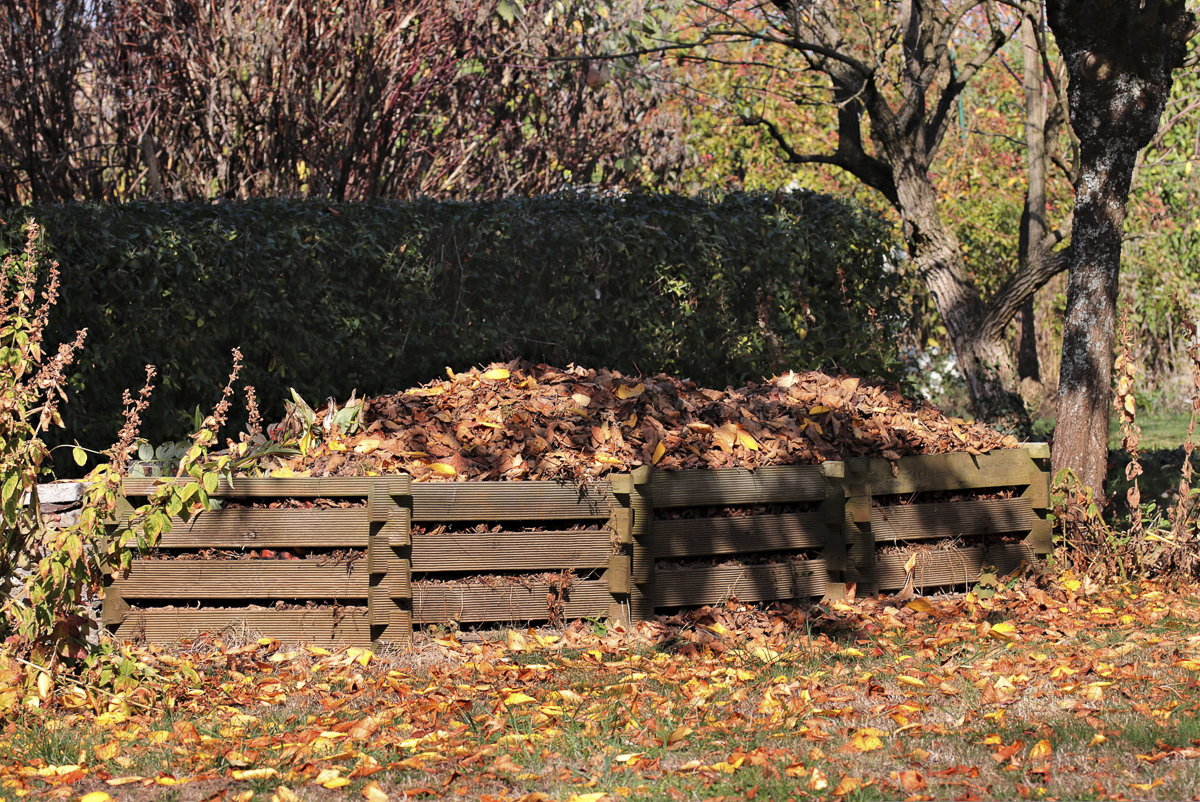
© pixel2013
If you shred the leaves, they will decompose and add nutrients to the soil more quickly. Freshly shredded leaves or leaf mulch also make a neater-looking cover on beds compared to layers of intact leaves. The obvious downside is that moving the leaves, composting, and shredding them destroys insects and disrupts their habitat. However, it keeps the organic matter in your local ecosystem. It can be a reasonable trade-off for areas where tidiness is a priority or where the volume of leaves overwhelms the space.
If you are going to move leaves, and particularly if you plan on shredding or composting them, try to do so early before insects settle in for the winter. Get them promptly as they fall, while daytime temperatures are still mild and before hard frosts set in. Many caterpillars, eggs, and cocoons drop with the leaves themselves, so moving intact leaves early gives mobile insects a chance to adjust before cold weather keeps them in place.
A Couple of Caveats
If you’re piling up leaves, keep them away from play spaces and heavily used paths. Ticks can hang out in those leaf piles. There’s some evidence that having a more diverse landscape and healthy soils can reduce tick populations. The leaf piles also support spiders, fireflies, and other tick predators, and tick larvae are so small that invertebrates in the soil can eat them. However, many of the factors that contribute to the spread of tick-borne diseases are broad and systemic. It’s a fact of modern life—ticks are present and dangerous. Working outdoors means taking personal precautions, like wearing protective clothing and tick repellant, and checking for ticks each time you come inside.
© Izel Native Plants
In wildfire-prone areas, keep leaf piles and other combustible materials at least five feet away from structures. Beyond that distance, there might be recommendations for establishing cleared zones and managing landscape areas. It’s best to check with your local authorities about wildfire risk and safety measures.
Show That You Mean It
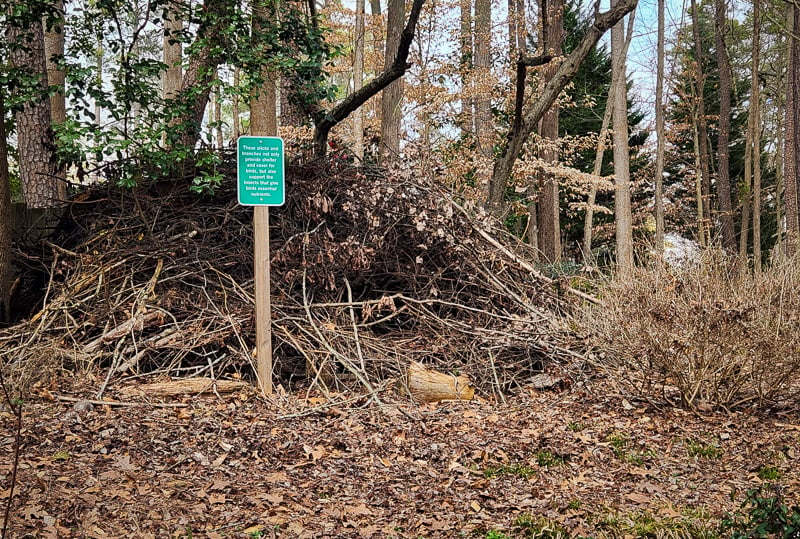
It can be hard to leave the leaves, especially if your inclination is toward tidiness. It can feel messy, and you might be worried your neighbors will think you’re neglecting your yard. There’s a lot of baggage associated with how we tend our spaces and the attributions people make about those practices and about us. We won’t delve into that too far, other than to note that showing intentionality can make it more acceptable to leave those leaves. There are cues to care that signal you’re doing this with intention—that you mean it.
© Xerces Society
© Izel Native Plants
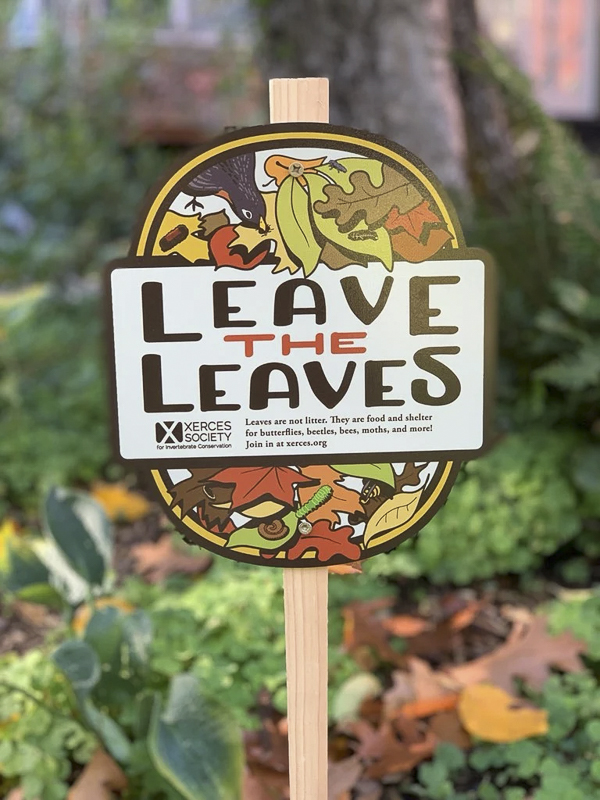
Signs are an obvious way to explain what you’re doing. They’re a signal and a tool for sharing information. The Xerces Society has “Leave the Leaves,” and local conservation-minded organizations may offer signage. Make your own sign and get creative. We’ve seen chalkboard signs where gardeners adjust the message depending on the season and what’s happening in their landscape.
© Izel Native Plants
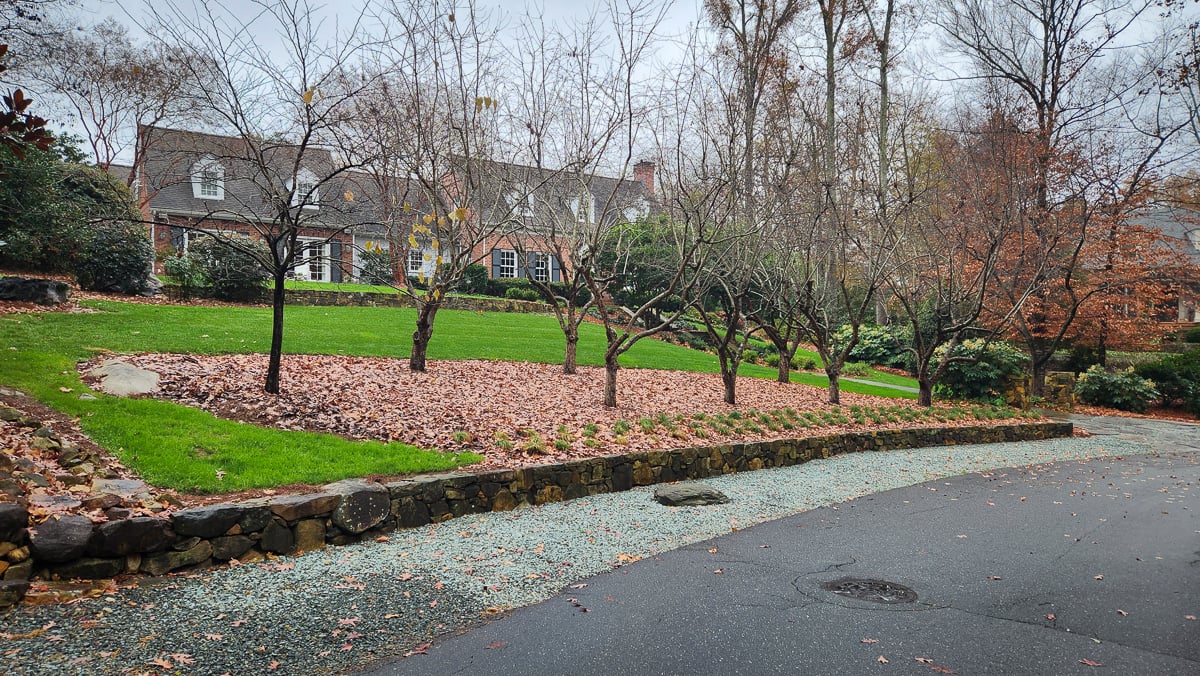
Another option is to adopt a zone strategy, treating areas of your yard differently based on your priorities. Neatness might be more important in high-visibility areas like the front yard. It’s what Erin Presley of Olbrich Botanical Gardens calls, “Business up front, party in the back yard!” You could use leaf mulch there and move intact leaves to less visible spots. If having a pristine lawn throughout the yard is your thing, move all the leaves from the turf into bed areas. If you want to add organic nutrients to your lawn, shred the leaves with a mulching mower and let them decompose naturally. As noted earlier, it’s a good idea to keep leaves off pathways, drives, and gathering spots. It makes them safer and it’s another signal you’re attending to your landscape.
Doing Less, Growing More
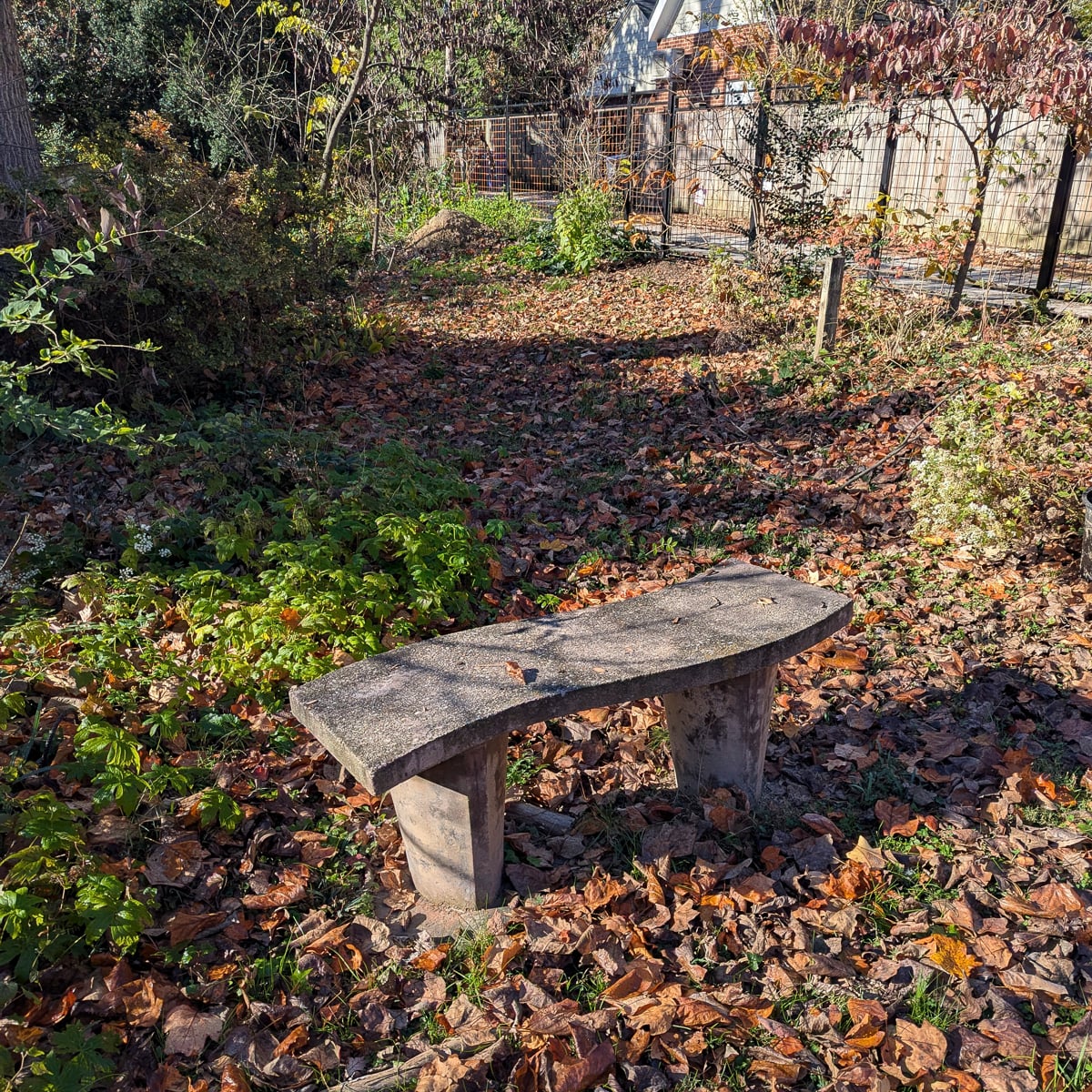
Leaf drop in your landscape doesn’t have to be a choice between doing everything and doing nothing. We think often of what our friend Uli Lorimer of the Native Plant Trust urges us to do: garden for abundance and diversity. It is easier to find middle ground when we’re growing a wide variety of native species in great numbers. We can move leaves from tended lawns to underneath native trees, knowing the insects those trees support will have habitat below to complete their life cycles. We can clear leaves from high visibility areas knowing we have ample resources in other parts of our landscape.
© Izel Native Plants
Rethinking seasonal cleanup isn’t about letting your yard go—it’s about working smarter with what nature already provides. Every bag of leaves you don’t haul to the curb makes a difference. Every bed where you leave the leaves supports life. Start where it makes sense for your space, and maybe you can leave a little more behind each year. Because when it comes to leaving the leaves, doing less really is more!
Editor’s Note:
Friend-of-Izel and horticulturist Rebecca McMackin recently polled her followers for a term that would recognize the beauty and value of fallen leaves and replace “leaf litter.” The overwhelming favorite was “leaf blanket,” and we agree! It’s cozy, sheltering, and has all kinds of positive connotations.
Sources:
- “Rake Less, See Butterflies More” - Dept. of Entomology, University of Maryland - Nov. 7, 2024
- “Removing autumn leaves in residential yards reduces the spring emergence of overwintering insects” - Max Ferlauto, Karin T. Burghardt, Science of The Total Environment, Volume 970, 2025
- “Leave the Leaves” - Xerces Society for Invertebrate Conservation
- “Nesting and Overwintering Habitat” - Xerces Society for Invertebrate Conservation
- “Leave the Leaves” - National Wildlife Federation webpage
- “7 Fall Yard Habits That Help Pollinators Survive Winter” - Time, Sept. 24, 2026
- “How to Cash in on Autumn’s Fallen Leaves” - The New York Times, Oct. 10, 2026
- “Why Leaving the Leaves is Better for Your Yard” - The New York Times, Oct. 8, 2025
- “Life in the Leaf Litter” - American Museum of Natural History, Center for Biodiversity and Conservation

Shannon Currey is a horticultural educator with Izel Native Plants. She’s worked in the nursery trade since 2006, developing expertise in grasses and sedges and expanding her knowledge of native forbs. She currently serves on the North Carolina Plant Conservation Program Scientific Committee, holds advisory roles with several organizations, and served on the Board of the Perennial Plant Association. Shannon lives in Durham, North Carolina and loves exploring the local flora everywhere she goes!

