For those interested in native plants, the work Sarah P. Duke Gardens in Durham, NC is doing will inspire you. Izel enjoys a warm partnership with the gardens, especially the team from the Blomquist Garden of Native Plants that’s housed within the gardens. Curator Dr. Annabel Renwick oversees the Blomquist, which focuses on species native to the Southeastern U.S. She collaborates with Horticulturist Maegan Luckett and their team of helpers and volunteers. The Blomquist treats visitors to several different habitats and garden features, including a Piedmont prairie and classroom, a carnivorous plant and bog garden, a fern ravine with boardwalk and bridge, a trillium walk, a millstone pond and pavilion, and a bird viewing shelter.
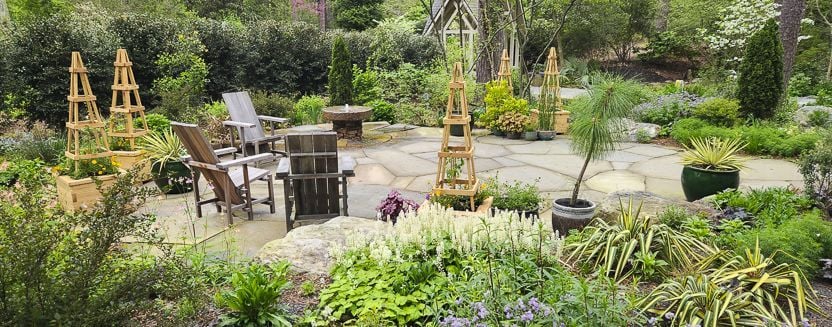
Among their projects, one that particularly intrigues us is their "backyard" wildlife garden. This space is aimed squarely at home gardeners. It’s meant to appeal not only to those familiar with native plants, but also to those who don’t have a clue. Annabel anchored the design with a stone patio seating area and fountain. It’s a space where people can gather, relax, and enjoy being outside—a garden you might see in an urban or suburban back yard.
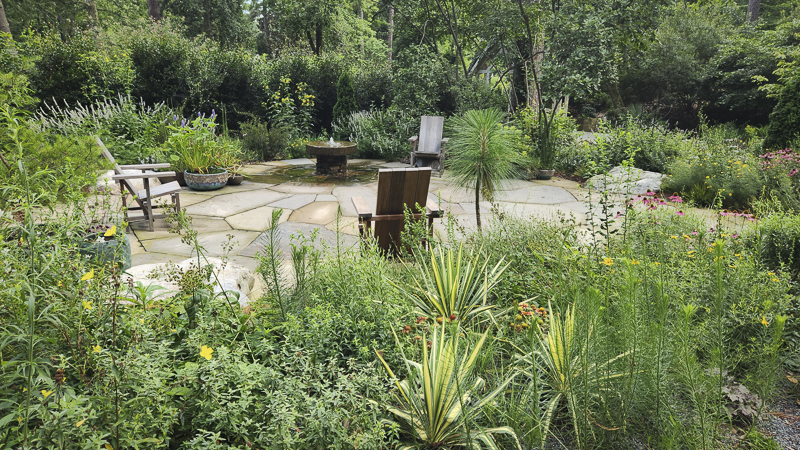
While the beautiful stonework and fountain in the wildlife garden may be beyond most homeowners’ means, the basic garden elements of a place to sit, moving water, stones, and plants are familiar. The garden sparks ideas and shows visitors how beautiful and “garden worthy” native plants can be.
The patio area is surrounded by a palette of native species and cultivars. It’s lush and filled with plants, but you won’t see towering perennials or wild prairie plantings here. It’s meant to be tidier and more contained; to be something that your average homeowner would see as familiar and accessible. It’s a gateway for introducing people to native plants, and it’s one of the most popular spots in the Blomquist. And importantly, the plants support wildlife. They’re there not only for people, but also for pollinators, other insects, birds, and small mammals (they do try to keep the deer out).
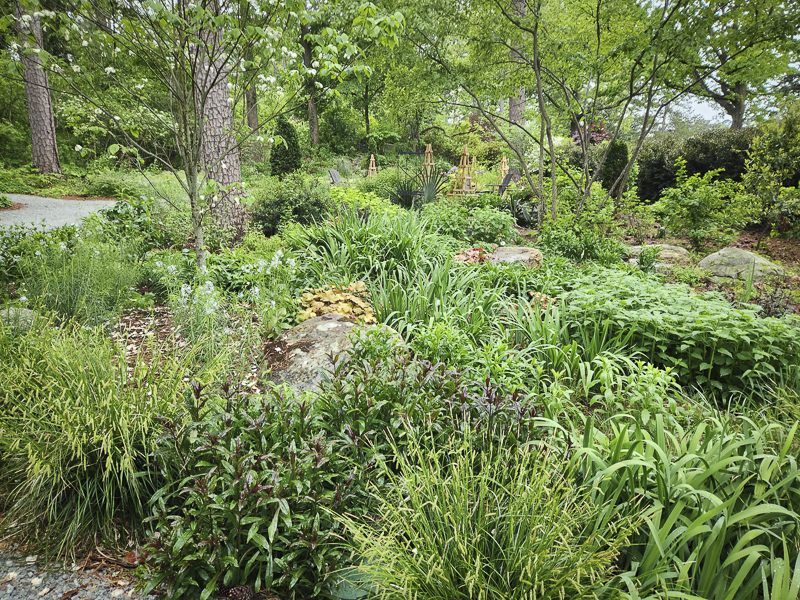
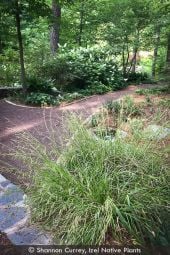
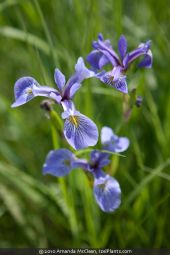
The wildlife garden in April is already lush and full. Carex cherokeensis (Cherokee sedge) in the foreground is in full bloom and mingles with the purple-tipped foliage of Penstemon ‘Dark Towers’ (‘Dark Towers’ beardtongue) and the broad blades of Iris versicolor (harlequin blue flag).
To the center right, Monarda ‘Raspberry Wine’ (‘Raspberry Wine’ scarlet beebalm) is already filling in its space and may be a candidate for editing if it becomes too dominant.
As the wildlife garden evolves, Annabel and her team try out different species and cultivars. Some work, and some don’t. It’s an informal trial process, and a way for them to identify wild-type species and selections that will fill roles in the gardens. If plants don’t perform well in this garden, they get the boot. Annabel and her team want plants that will be easy to manage, support wildlife, and fit in a cultivated garden setting.
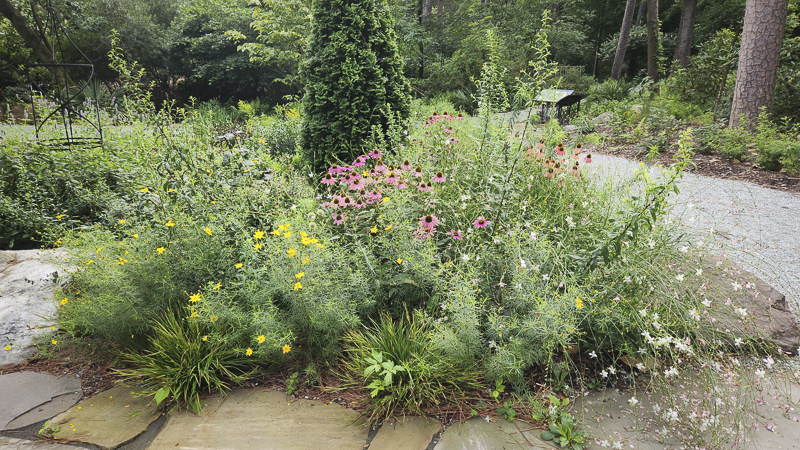
The wildlife garden mingles cultivars with wild-type species. Growers often choose cultivars for attributes that make them more at home and easier to manage in garden settings. They may offer disease resistance, a compact habit, heavier flower set, colorful foliage, or more intense fall color.
Coreopsis verticillata ‘Golden Gain’ (‘Golden Gain’ whorled tickseed), blooming on the left of the berm, Echinacea ‘PowWow Wild Berry’ (‘PowWow Wild Berry’ purple coneflower) in the center, and Oenothera lindheimeri ‘Siskiyou Pink’ (‘Siskiyou Pink’ Lindheimer’s beebalm) on the right, are more compact and floriferous than their parent species.
One of our local “Izelians” (yours truly) visits Duke Gardens regularly and has been admiring the wildlife garden since its installation in November 2022. I check in with Annabel periodically about what’s happening there. Recently, I spoke at an event at Intrinsic Perennial Gardens in northern Illinois. When Intrinsic’s owner and plant breeder, Brent Horvath, gifted me with several cultivars of native species, I knew immediately where they needed to go. The new cultivars, some of which are more compact or showier than the wild type, would be right at home in the wildlife garden.
When I dropped off the plants, Annabel and I talked about how they manage the Blomquist garden in fall and what’s on their agenda. Many of the tasks Annabel and her team do in the fall are in preparation for planting and involve planning for spring. Fall in the Southeast is long and mild, so there’s a wide window for planting. Their prep includes editing existing plantings, weeding out problematic plants, and tidying up in high visibility areas.
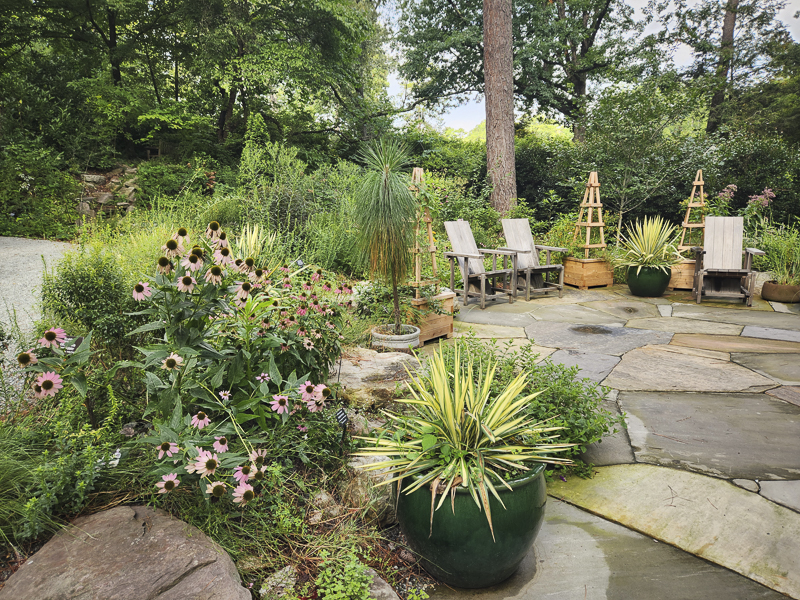
The patio area of the wildlife garden aims for interest across the growing season that appeals to visitors. Plants in bloom now in July, like this Echinacea purpurea (Eastern purple coneflower) cultivar in the foreground and Eutrochium purpureum ‘Atropurpureum’ (‘Atropurpureum’ sweetscented Joe-Pye weed) on the far right, are surrounded by foliage and textural contrasts that make the composition compelling.
The team’s plans, especially in the wildlife garden, are relevant outside the public garden setting. We’ve pulled out a few key points you can use in stewarding your landscape.
Fall for Editing
Because plantings are dynamic, editing what’s there is an important part of their management in the garden. They assess what has worked and what hasn’t in the current growing season. There may be places where a plant hasn’t thrived or has given up the ghost. They know it takes time for some plants to mature (think Baptisia australis or Sporobolus heterolepis). However, if a plant isn’t gaining bulk and establishing roots after a couple of seasons, and they can’t change the conditions, then it’s time to move it or pull it out altogether.
Editing might also mean removing or thinning a plant that’s doing too well. Are the plant combinations working? Do plants grow well together, providing checks and balances? Or do some dominate and overtake their neighbors? The plants aren’t bad, it’s the arrangement that needs tweaking. A dominating plant could be cut back early in the season to reduce its vigor. They could add another vigorous grower that will compete better with it, or the zealous plant could be moved to another location in the garden.
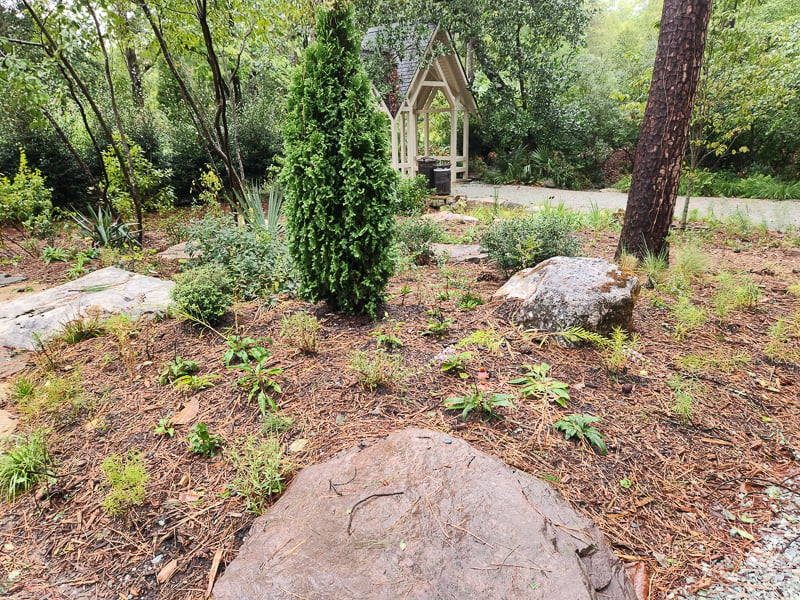
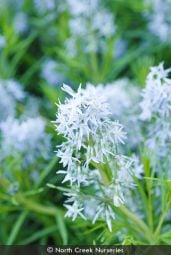
When this part of the garden was installed, Annabel wanted to see how Amsonia hubrichtii would do in this dense planting scheme. She massed several together, which are visible at the right side of the image.
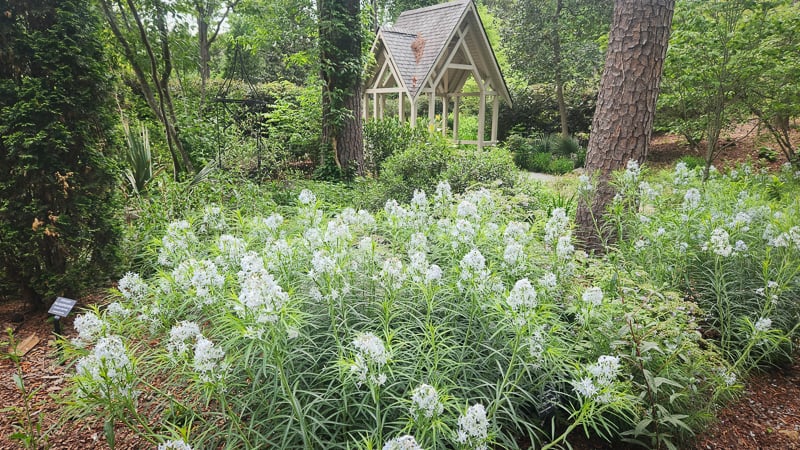
Just a few years later, the Amsonia hubrichtii was beautiful and thriving. So much so that it overwhelmed adjacent perennials. The original planting became too big for the space.
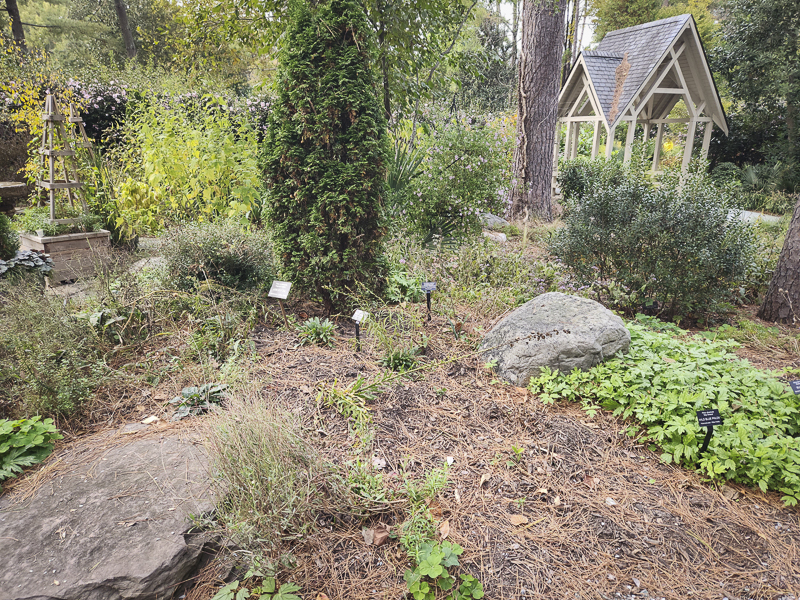
This fall, Annabel removed the Amsonia closest to the larger boulder. That opened up space for the Heuchera, Oenothera, and other perennials underneath. Looks like there could be a spot for one of the new plants!
Moving and subtracting plants opens up space. With a critical eye, Annabel looks for holes she’s created or that emerged naturally in the plantings. Should they be filled? Most will be, but others she leaves. There are areas with dense coverage in spring and early summer that recede into the background by fall. She leaves some of those alone, opting for a light covering of mulch to discourage cool-season weeds and to make it look tidier for visitors. Other areas get new plants. Much of the time, she’s already got a plan for what comes next because she’s been watching that spot throughout the season. Or, in the case of new, unexpected options (e.g., Intrinsic’s cultivars), she’ll adjust the plan.
Are there plants that aren’t thriving in your landscape? Are there vigorous growers that can be too assertive or large for the spot where you’ve put it? You’ve got options, and figuring out which works best and what plants grow well together is part of getting to know them. Fall is a good time to assess what to move, remove, or add. You can still see the planting arrangements before everyone has gone dormant, and depending on where you are, you still have time to plant. Or, if it’s too late to plant where you are, it helps to plan for spring planting while it’s still fresh on your mind.
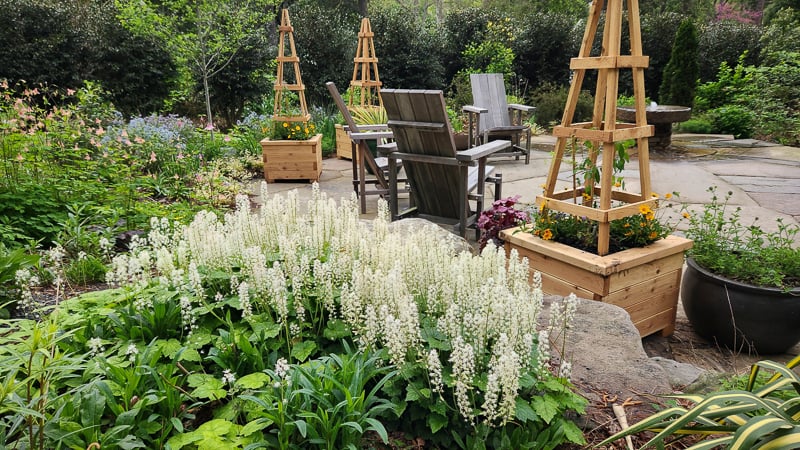
Spring is prime time in the Blomquist, and everyone’s busy. To have an impressive display in spring, like this Tiarella cordifolia (heartleaf foamflower) with Aquilegia (columbine) and Phlox divaricata (wild blue phlox) cultivars nearby, Annabel and her team do a lot of their editing, planting, and planning in fall. They may add plants in spring, but they try to have those plans in place and plants ready before the rush begins.
Tidy Up Strategically
Across the Blomquist garden, Annabel strives for spaces that mimic natural habitats but also look cared for and intentional. In a public garden like theirs, a bit of tidying up is called for in the fall. The team will cut back plants that have encroached heavily on pathways and apply a light mulch to areas that need coverage. Cool-season weeds start popping up, and those are tackled before they get a hold. In an effort that’s both editing and tidying up, they may remove or thin woody native species that have moved into areas where they’ll become too dominant, like Aesculus parviflora (bottlebrush buckeye), Cercis canadensis (redbud), Magnolia grandiflora (Southern magnolia), and Callicarpa americana (beautyberry).
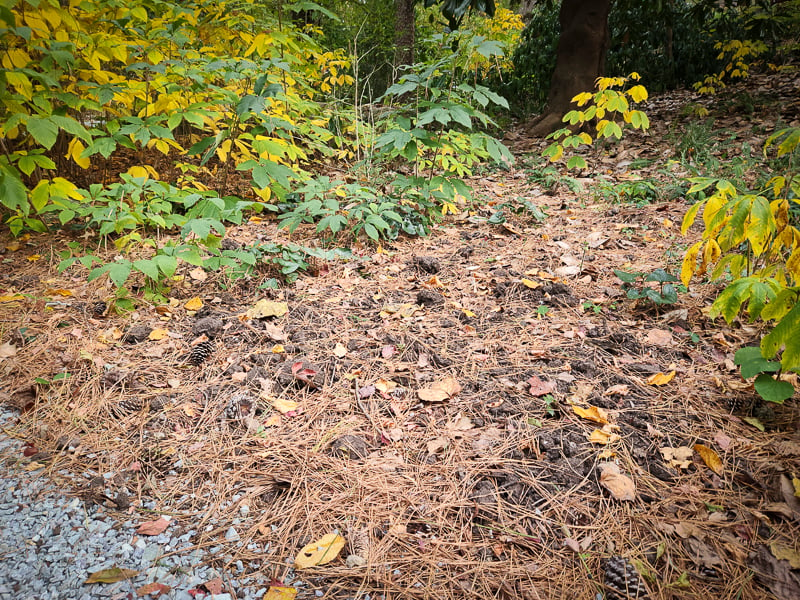
Aesculus parviflora (bottlebrush buckeye) forms thickets, and near this main pathway, Annabel wanted to reduce its footprint. The team digs out sections, merging editing and tidying up.
They also tidy up areas where they will be planting. In those spots, they cut back taller perennials and apply a light layer of mulch. This allows them to see the layout and access the planting spots more easily. It also signals the area is getting attention, which is important in high visibility areas.
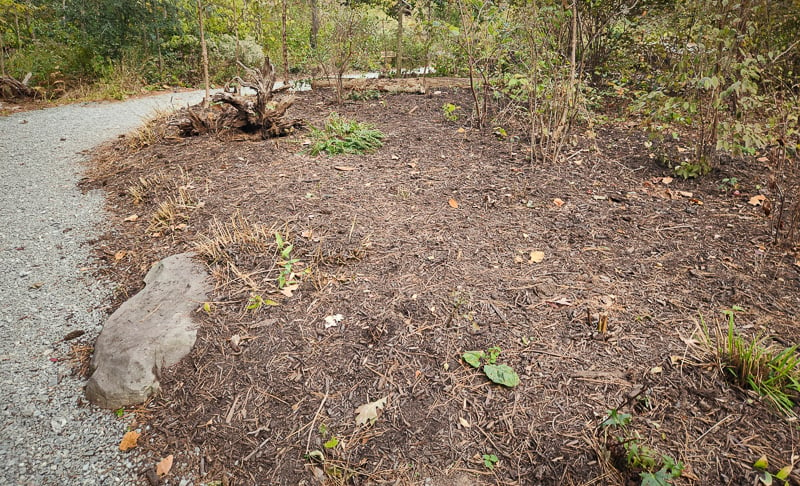
Before planting this bed, the team cleared it out so they could put down a layer of mulch and lay out the plants. Like the wildlife garden, this bed is near an entrance, so she wants to keep it neat for visitors.
The team in the Blomquist must balance ecologically sound horticulture with public expectations for aesthetics. They educate visitors about conservation of natural habitats, gardening for wildlife, and using native plants in managed landscapes. They recognize that people are more open to the message when it’s packaged in a landscape they find appealing. In the wildlife garden, the scale tilts a little more toward aesthetics than it does in other parts of the Blomquist garden.
Sound familiar? It’s a balancing act many of us know well. Most of us have “front of the house” areas that we pay more attention to because they’re visible. It makes sense to treat them a little differently. As Erin Pressley, a horticulturist at Olbrich Botanical Gardens in Wisconsin, says, “Business up front; party in the back yard!” Keeping the more public areas tidier and neater and letting private areas be looser and less constrained is a good balance of resources. Plus, having an ecologically focused landscape that people can see and admire is convincing!
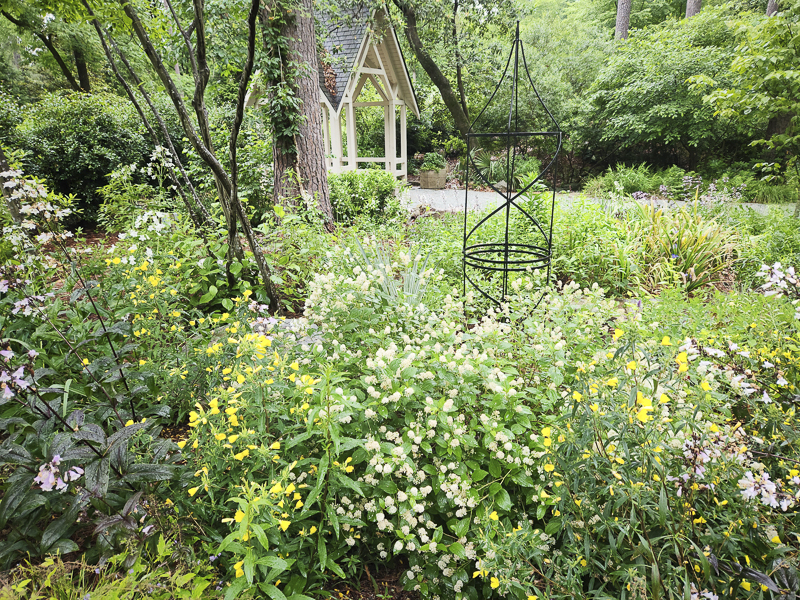
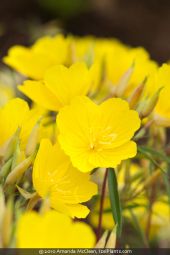
The wildlife garden has exuberant plants like the yellow-flowered Oenothera fruticosa (narrowleaf evening primrose) that fill in space quickly when it opens up. Penstemon ‘Dark Towers’ (‘Dark Towers’ beardtongue) will reseed and fill in gaps, too. They boost the blooms while other perennials like Ceanothus americanus (New Jersey tea) in white mature and expand.
If you’re wondering how to handle fall tidying and cutting back dormant plants take a look at our earlier post.
Double Down on Decoration
With the onset of dormancy, the landscape is more sparse. Adding visual interest in late fall and into winter keeps visitors engaged. Annabel and her team create container plantings of native perennials and woodies that keep their good looks throughout the fall and winter. The plants are a mix of evergreen and semi-evergreen. They update containers with fresh plants in the fall, while others were chosen originally for their staying power and are rearranged around the patio.
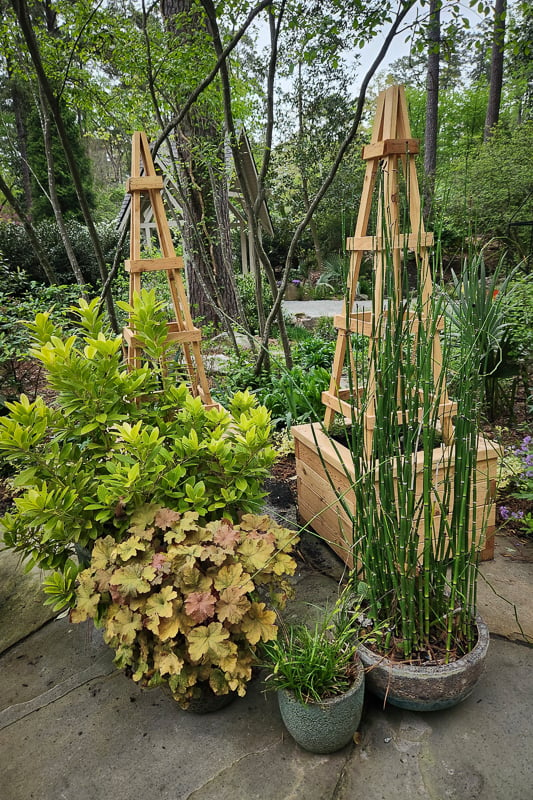
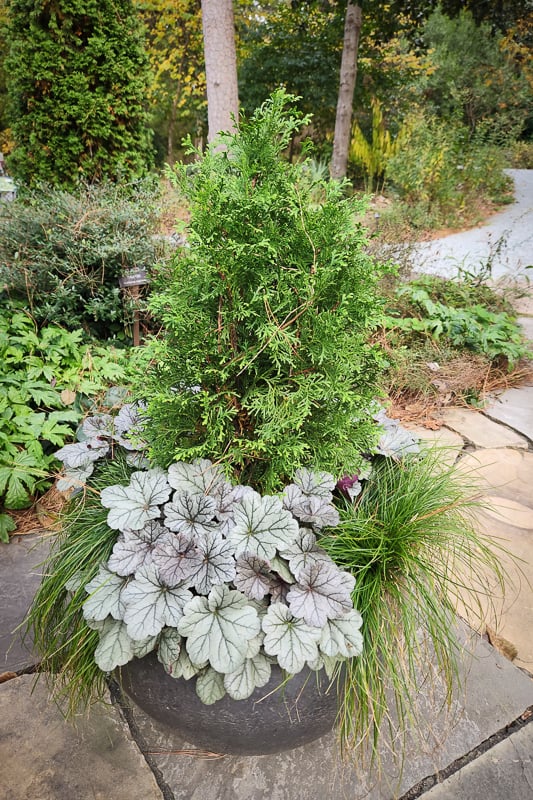
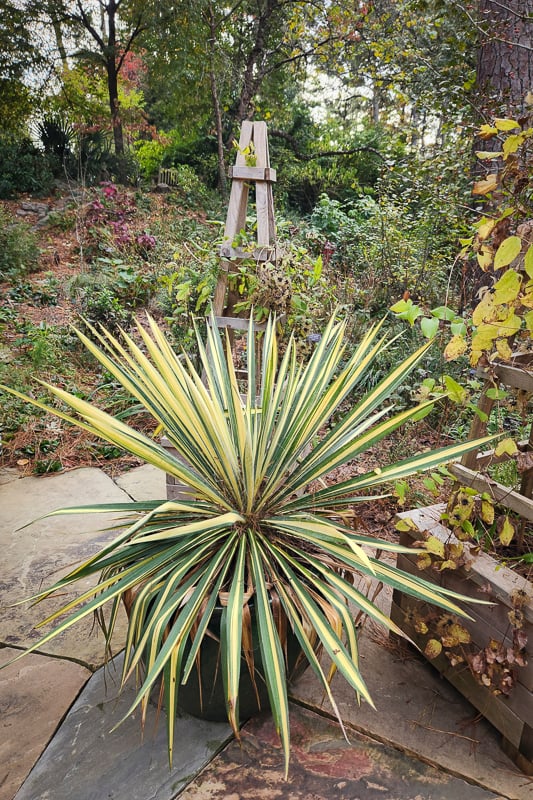
Containers arranged in groups on the patio highlight the versatility of native species. Fall containers are important for adding interest when the landscape is sliding into dormancy.
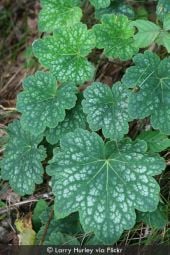
If your climate allows for winter containers, you can follow Annabel’s lead. She has great luck with Heuchera americana (American alumroot) cultivars in containers, where they’re much more long lived than they are in the landscape (they struggle here in central NC). Other favorites include Yucca filamentosa ‘Color Guard’ (‘Color Guard’ Adam’s needle), Illicium parviflorum ‘Florida Sunshine’ (‘Florida Sunshine’ yellow anisetree), and Sarracenia species and cultivars (pitcher plants). Evergreen and semi-evergreen species like Dryopteris marginalis (marginal wood fern), Polystichum acrostichoides (Christmas fern), and Carex (sedges) make wonderful fillers. Once the weather warms up, you can tuck in or swap out some spring and summer bloomers to carry the container into the growing season.
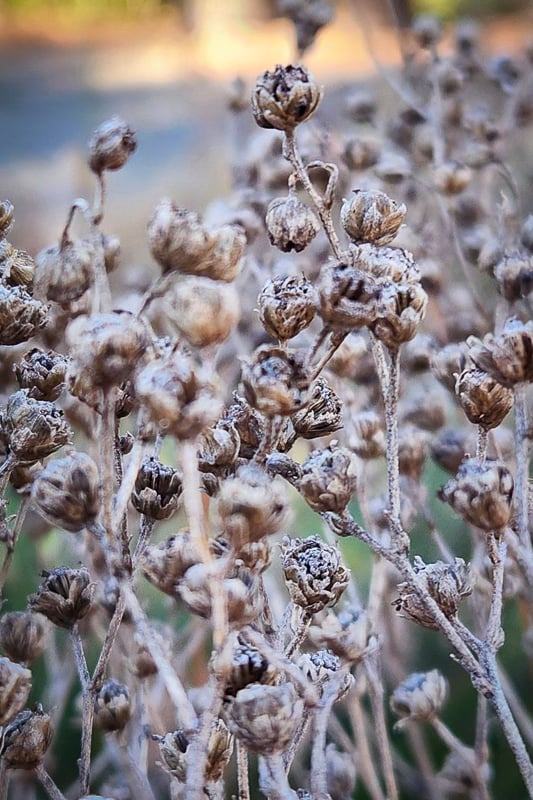
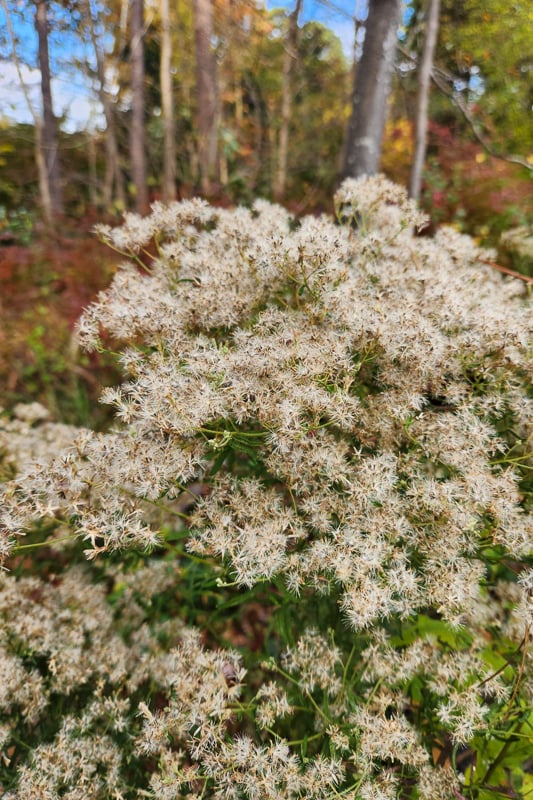
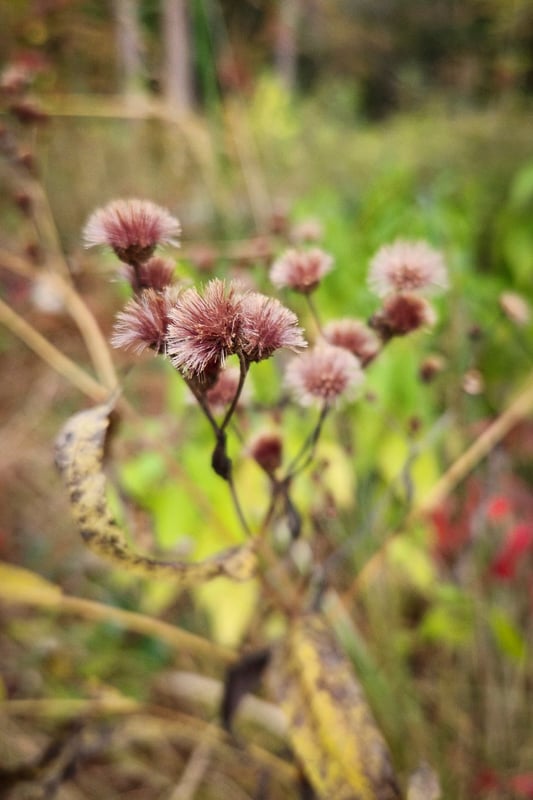
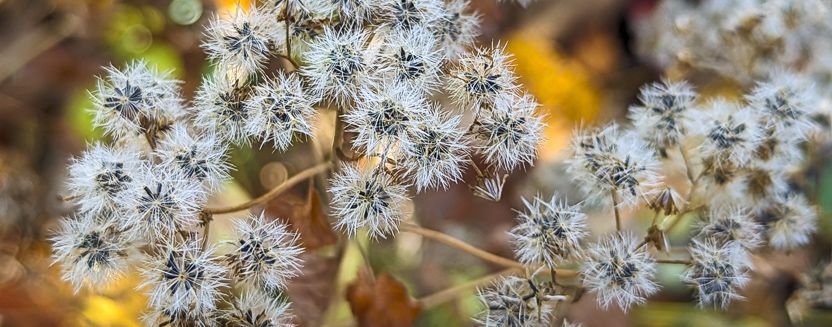
Walking through the garden, it’s easy to find seedheads that can be put into arrangements or just appreciated on their own. (L to R): Parthenium integrifolium (wild quinine), Eupatorium hyssopifolium (hyssopleaf thoroughwort), and Vernonia noveboracensis (New York ironweed)
Annabel also loves scouting the gardens for seedheads in fall. She collects not only for propagation, but also for flower arrangements. She’ll use the dried seedheads in arrangements inside the buildings and outside in gathering areas. It’s a fun way to get people to notice the plants beyond the flower. They leave plenty of seeds for birds and small mammals—it is the wildlife garden, after all. But putting the natural beauty of seedheads front and center is another way to appreciate the season.
Looking Ahead
Visiting the Blomquist Garden in fall is a good reminder of the value of planning ahead. While they’re managing the garden for visitors in the present, many of their preparations are about what’s next. They’re editing and planting for next season. They’re planning what they’ll plant in spring and how they’ll be managing it. And they’re extending visual interest into the dormant season. Like most of us gardeners, they have multiple priorities, and keeping the next goal in sight makes managing those a little easier.

Shannon Currey is a horticultural educator with Izel Native Plants. She’s worked in the nursery trade since 2006, developing expertise in grasses and sedges and expanding her knowledge of native forbs. She currently serves on the North Carolina Plant Conservation Program Scientific Committee, holds advisory roles with several organizations, and served on board of the Perennial Plant Association. Shannon lives in Durham, North Carolina and loves exploring the local flora everywhere she goes!