Unplanted ground in a landscape is an invitation for something to grow there.
Often, what grows is a plant we don’t want (i.e., a weed). In a new planting, space exists between plants until they have matured. That’s the case even if you’re planting densely. In established plantings, disturbance creates gaps. Trees fall, we pull out weeds and disruptive plants, wild (and tame) creatures dig up or browse plants. Whatever the reason for the gaps, leaving them open can increase weed pressure and your garden workload. It also makes it tempting to fill in with mulch, which adds only minimal ecological benefits. Plants are the best way to fill gaps.

Part of the solution lies in using plants whose survival strategies give them an edge when there’s open space. Often referred to as dynamic fillers, these plants fill gaps quickly, reducing weed pressure and the need for mulching down the line. They’re also an opportunity to give plantings a visual boost until slower-maturing species fill the space.
Where Fillers Fit
Dynamic fillers are most often associated with a naturalistic planting style. They can be used in more traditional or formal styles, too. But to use them well, it’s helpful to understand them in a naturalistic context first.
Naturalistic plantings typically mimic the layers that are found in natural plant communities. Many experts have written about this approach, and in their 2015 book, Planting in a Post-Wild World, Thomas Rainer and Claudia West synthesized several theories into what they call a designed plant community. Here, we’ll use their language because it’s straightforward, and their book was one of the first to bring these concepts to planting design in the U.S.
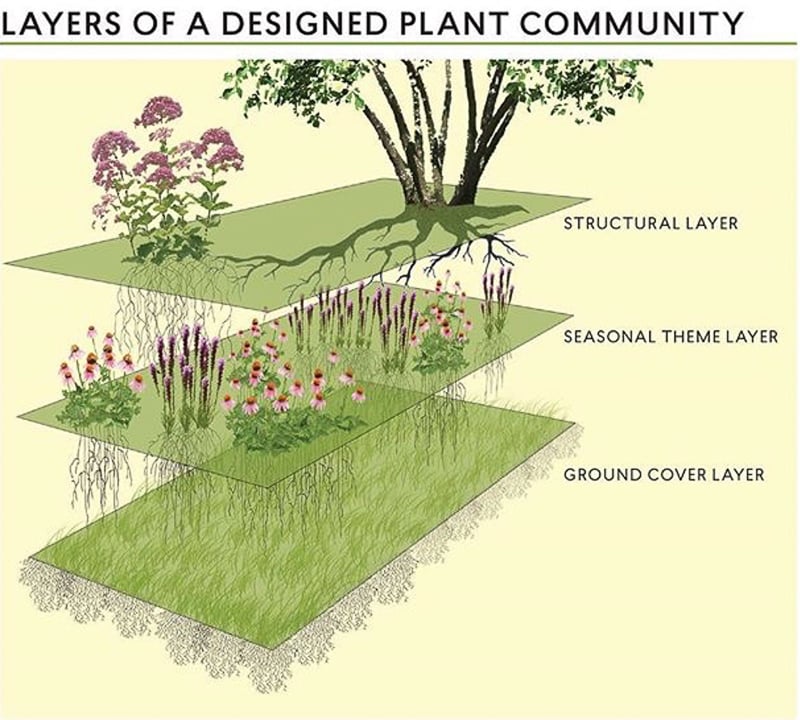
Rainer and West’s designed plant community consists of several vertical layers. The top layer uses structural plants that emphasize form. They define the space and provide a framework for the planting. The structural layer relies on long-lived plants that can take years to mature. Next, there are seasonal theme plants at mid-height that are companions to the structural plants. This seasonal theme layer creates temporary patterns of color across the growing season that give the planting intentionality and make it more readable. Plants in this layer strut their stuff visually at various times and then recede into the background while maintaining a long-term physical presence. The structural and seasonal theme plants are considered design layers because they are what you see when you look at the landscape, and they shape your impression of it.
Then there is a ground cover layer that serves primarily functional goals, like treating and managing stormwater, suppressing weeds, and protecting soil health. This functional layer also creates habitat at ground level where many creatures find food, shelter, cover, and spots for overwintering. It consists of low-growing plants that readily cover ground and maintain it. They often bloom early in the season before the taller plants around them have leafed out.
Those two design layers and the functional ground layer feel like they’d cover it, but there’s another functional layer that’s more dynamic. You guessed it—the fillers! In new plantings, the design layers (structural plants and seasonal theme plants) and the functional ground cover layer take time to mature. Fillers are used to quickly cover the soil between slower plants and provide visual interest. They are a dynamic and temporary way to hold space until the other layers close the gaps.
Using Fillers
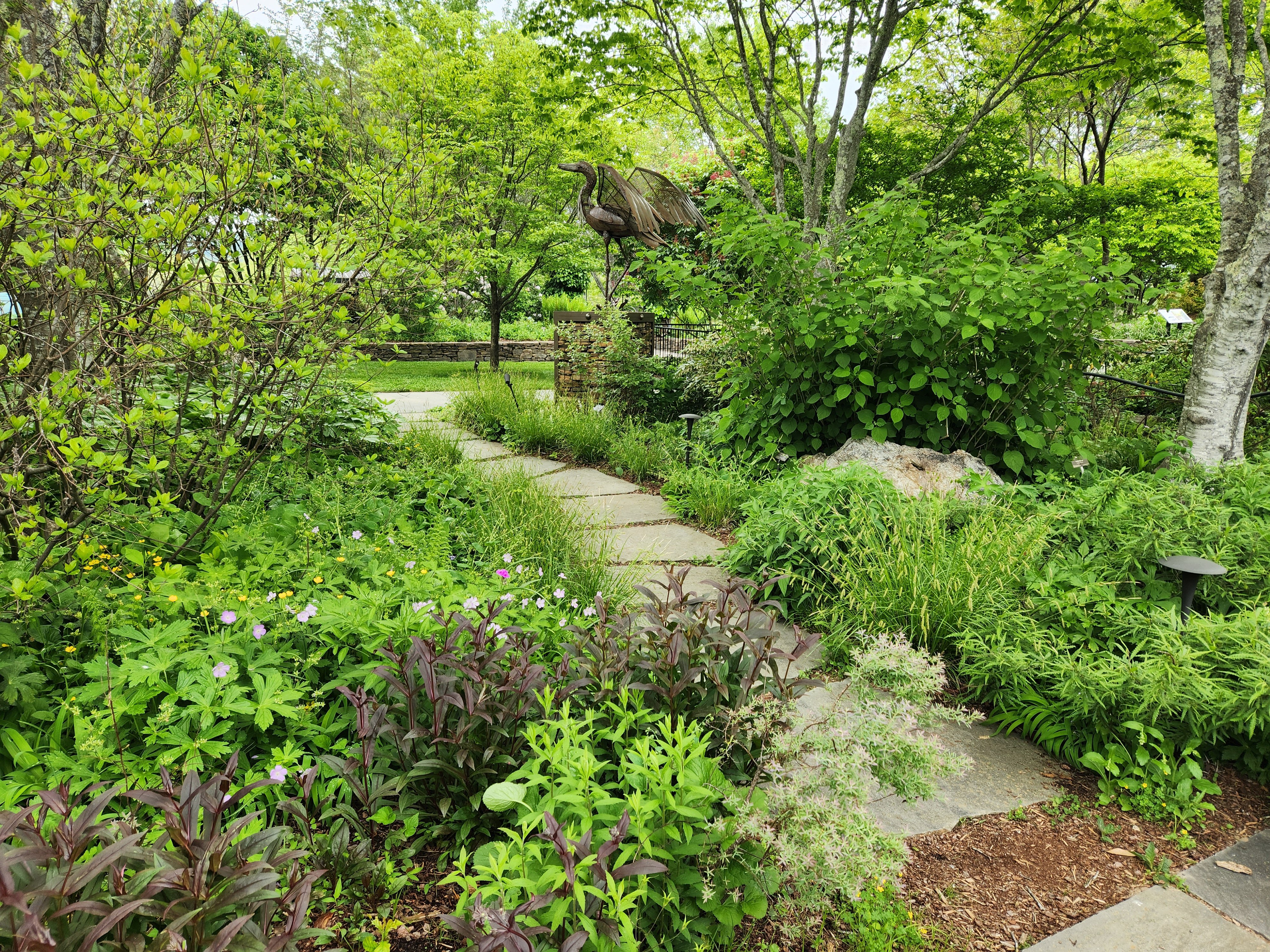
In a new planting, having 5-10% of plants as fillers is plenty. Ideally, you’re planting densely, so the other species will be doing most of the work. The fillers are there as insurance. Scatter them throughout the planting so that any gaps that open up will have a filler nearby. Many of these fillers are very floriferous and give a rousing color display. But because they tend to be shorter-lived and jump around the planting, it’s best to think of them as bonus accents rather than relying on them as a seasonal theme layer.
In an established planting when disturbance causes gaps, dynamic fillers are a great solution. Plant them and let them fill in until existing plants take over. Or if you’d like to add new perennials or woodies that are slower growing, use fillers as companions until your longer-term plants mature.
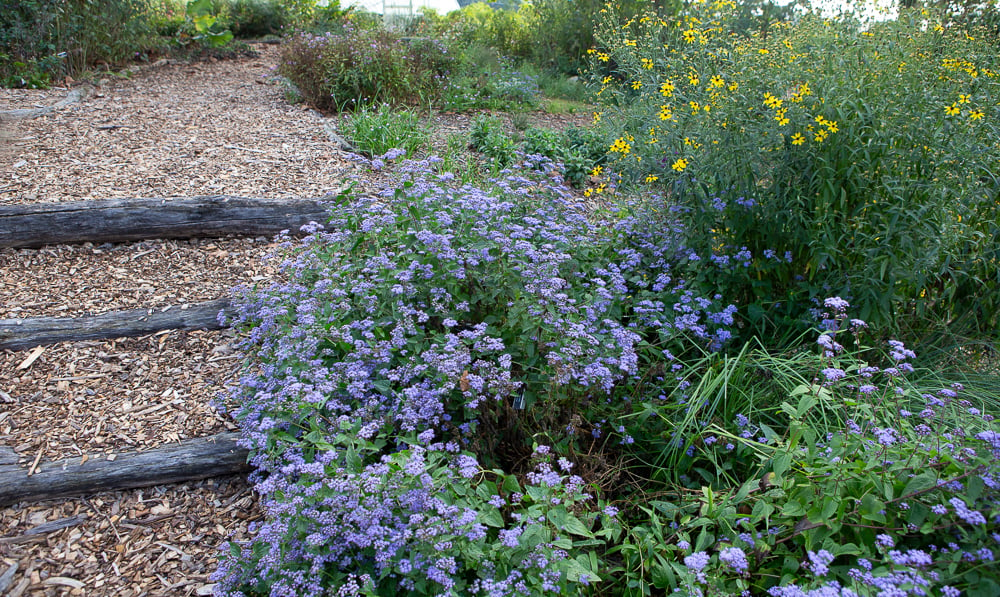
With a traditional or more formal design, fillers still make a lot of sense. Bare ground is very inviting for weedy species. With fillers, you can hold a space with beautiful flowers until you’re ready to fill it with something more permanent. You can also use dynamic fillers a little differently and capitalize on their transient nature. They become bold sweeps of seasonal color that you replenish every few years. It’s an opportunity to mix it up and give your landscape a fresh look.
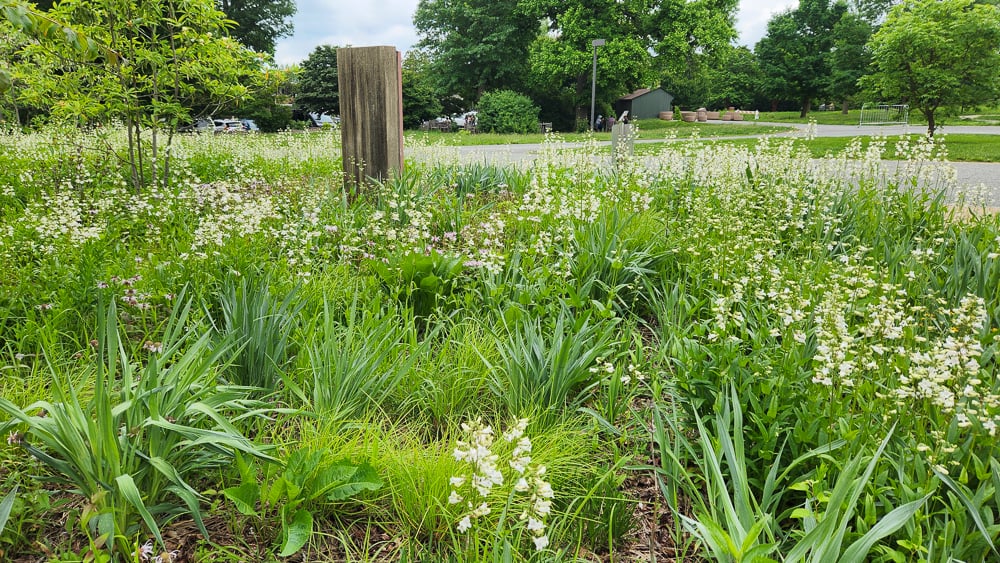
Some of you may be noting that bare ground has advantages. Roughly 70% of our native bee species create nests in the ground, and they need that habitat. The good news is that they’re looking for loose, undisturbed soil without a lot of vegetation or sod. They can usually access the soil around clumping grasses and perennials if there’s not a dense layer of mulch and the soil is not heavily compacted. And we know you’re not using mulch if you’re planting densely and using fillers, and we know you’re reducing soil compaction by adding plants and not mowing, right? The bees will thank you.
What Makes a Good Filler?
Many of the best fillers have ruderal tendencies. Ruderal species have evolved to thrive in disturbed conditions. The term “ruderal” comes from the Latin rudus, meaning “rubble.” Ruderal species appear in disturbed habitats, such as the base of slopes, on roadsides, where trees have been uprooted, or on newly cultivated soil. They take advantage of temporarily favorable conditions to grow and reproduce rapidly. Ruderal species are typically short-lived and produce copious amounts of seed. Over time, as other species enter the picture and shade them out, ruderals may be outcompeted. Yet, their seed lies dormant, waiting for disturbance to provide another opportunity. Many annual and biennial species are ruderal and can be good fillers.
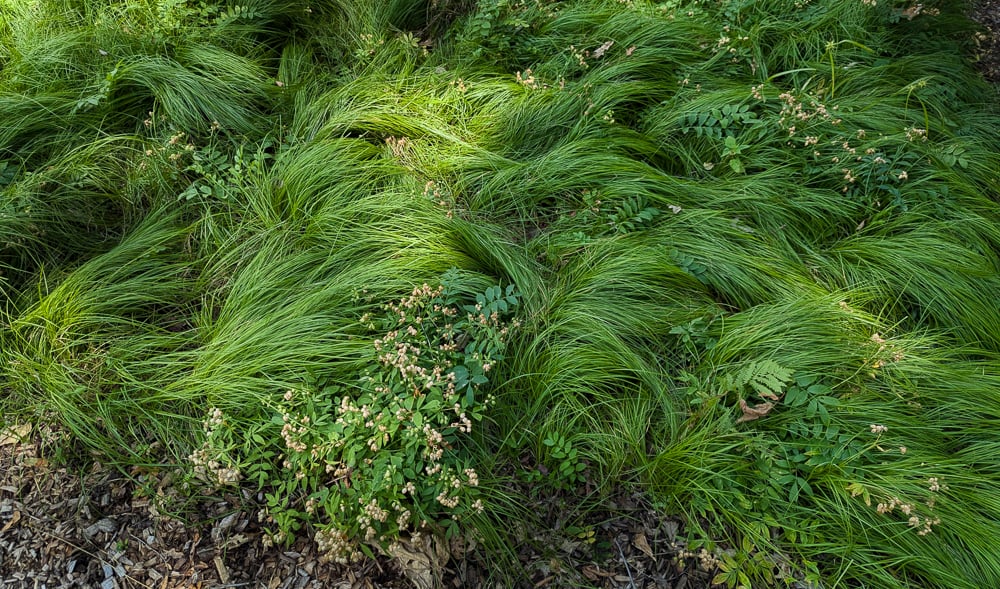
Looking into our perennial toolkit, many of the shorter-lived species are good candidates as fillers. We’re looking for fast growers that tend to re-seed. They may have different life cycles, timing, and mechanisms for spreading, but they’ll occupy the ecological niche that’s created by uncovered ground in plantings.
Plants that fill in gaps:
Let’s dig into a few examples that cover the bases (so to speak) in different ways and that offer seasonal color at different times.
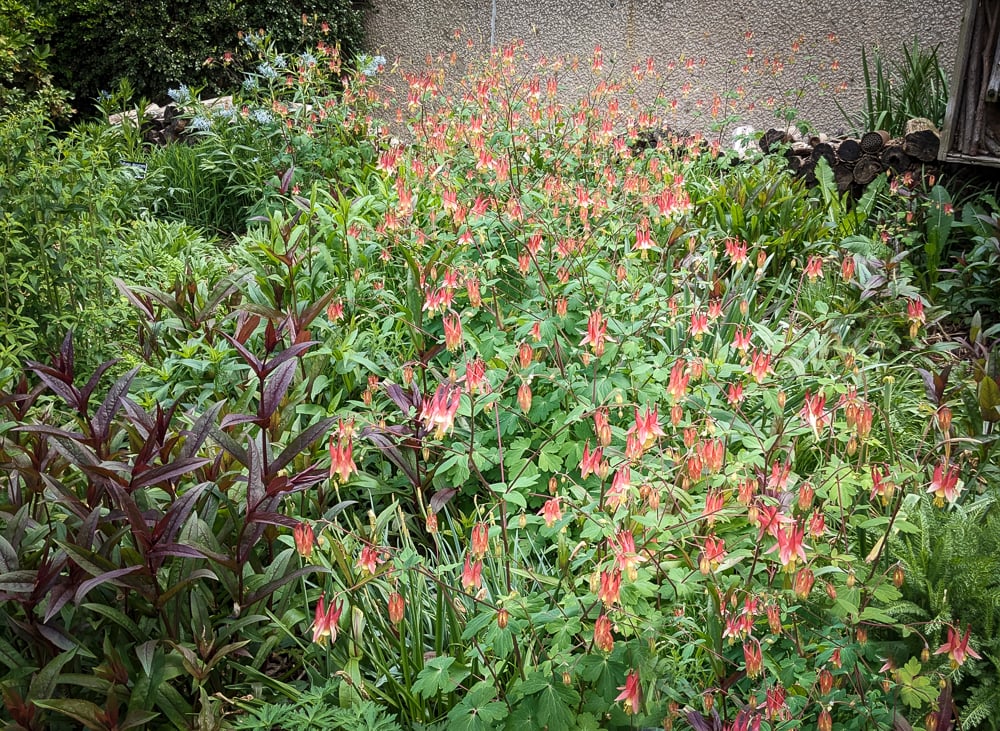
Aquilegia canadensis (American columbine)
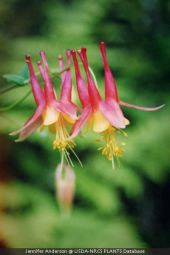
Most gardeners know American columbine’s distinctive foliage and sculptural flowers that hang from arching stems. Its foliage persists and emerges in late winter in warmer climates, providing nice coverage early in the season. The spring flower display is impressive. American columbine takes part-sun to part-shade and tolerates a range of soils and moisture levels if it has good drainage. The flowers give way to capsules filled with tiny, shiny black, round seeds that drop, bounce, and even roll. One designer we know likes to put several at the top of a slope and let nature bring them down to open spots where they’re happy. Aquilegia canadensis is a heavy spreader in optimal conditions. Oh, and hummingbirds love it, but deer don’t!
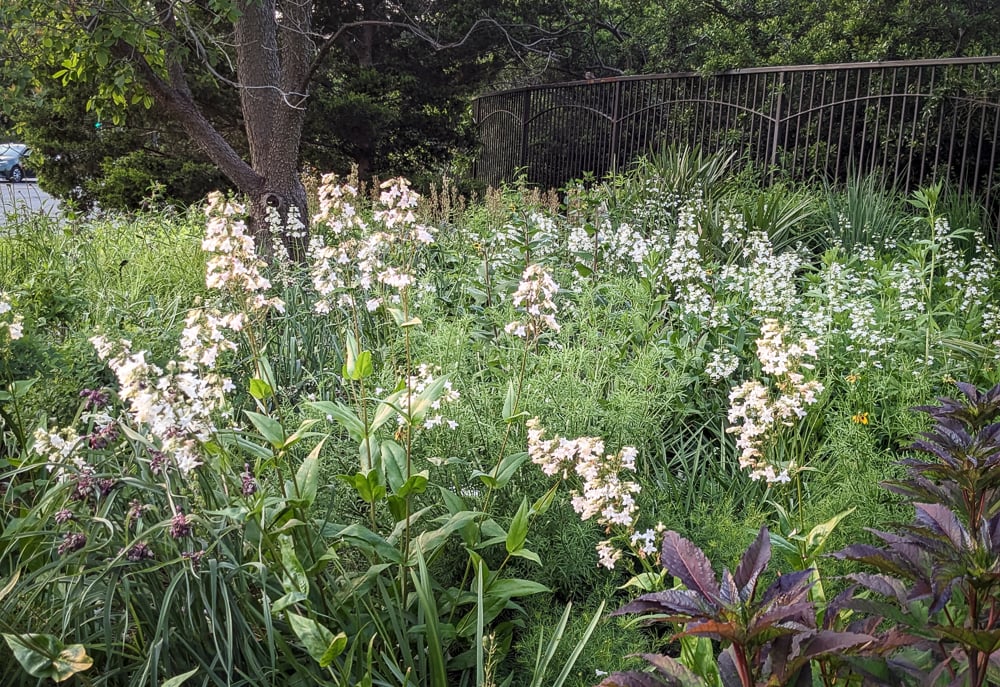
Penstemon digitalis (foxglove beardtongue)
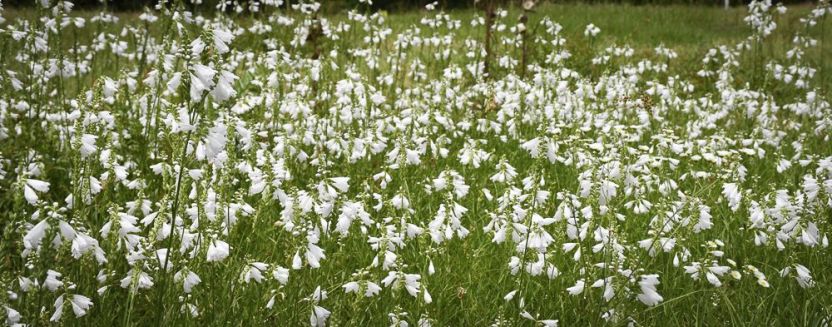
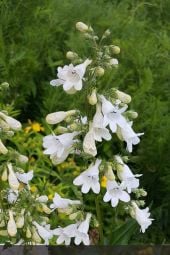
Foxglove beardtongue is a showy spring bloomer with panicles of tubular, white flowers that sometimes have pinkish or lavender hues. Pollinators, and bumblebees in particular, love the blooms. The flowers are borne on stiff, erect stems that rise above a rosette of basal foliage. The flowers produce capsules that are filled with seed, and foxglove beardtongue will spread prolifically where there’s open ground. It’s lovely en masse and will enliven a planting until more competitive species crowd it out. The basal rosette persists year round, helping suppress weeds, slow runoff, and hold soil. Penstemon digitalis grows naturally in forests along rivers, in moist fields, and in disturbed areas and ditches. It is adapted to average, well-drained, moist soils, yet handles dry spells with ease and will tolerate all but the most poorly drained clay. On a slope, it often finds its way downward toward the moister conditions at the bottom. It is not particular about light levels and will perform admirably in full sun to filtered light. It is highly resistant to deer and other herbivores.
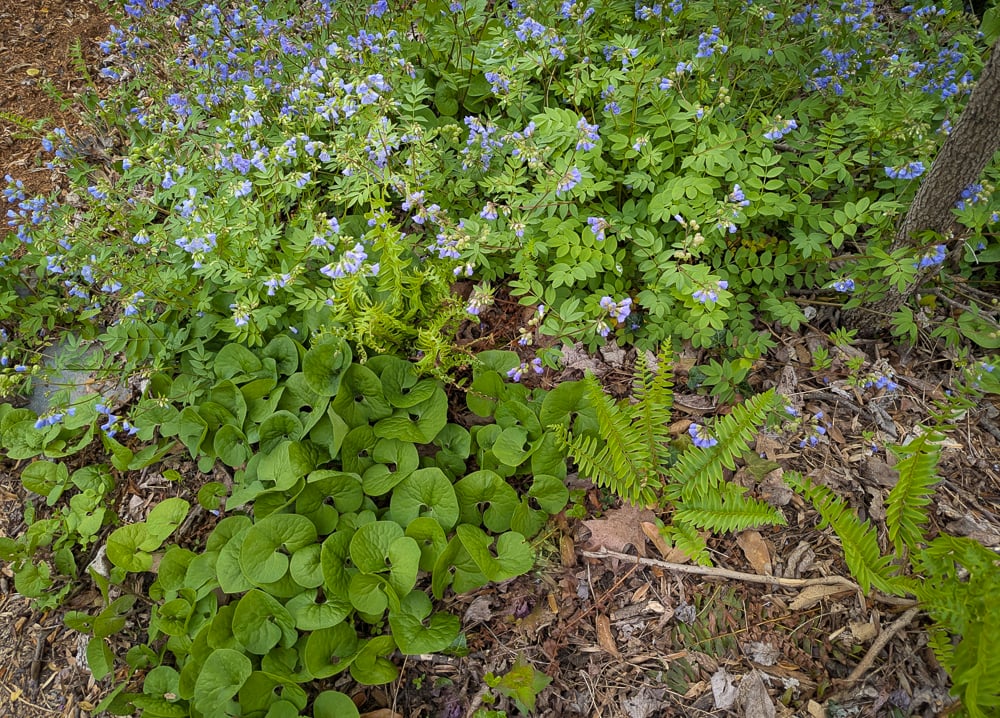
Polemonium reptans (Jacob’s ladder)
Jacob’s ladder earns its common name based on its leaf arrangement. The small leaves are arranged like the rungs of a ladder. The foliage droops over gracefully; the effect is both delicate and lush. In spring, clusters of blue, bell-shaped flowers hover above the foliage. Polemonium reptans is low growing and spreads primarily via seed. The flowers produce capsules that contain just a few seeds, but there are many flowers on each plant. Jacob’s ladder will pepper itself around where there’s open ground. It’s best where soils are moist and there’s a layer of organic matter. It’s a nice choice for shade gardens underneath deciduous trees. Its nectar and pollen attract bees primarily; deer, not so much.
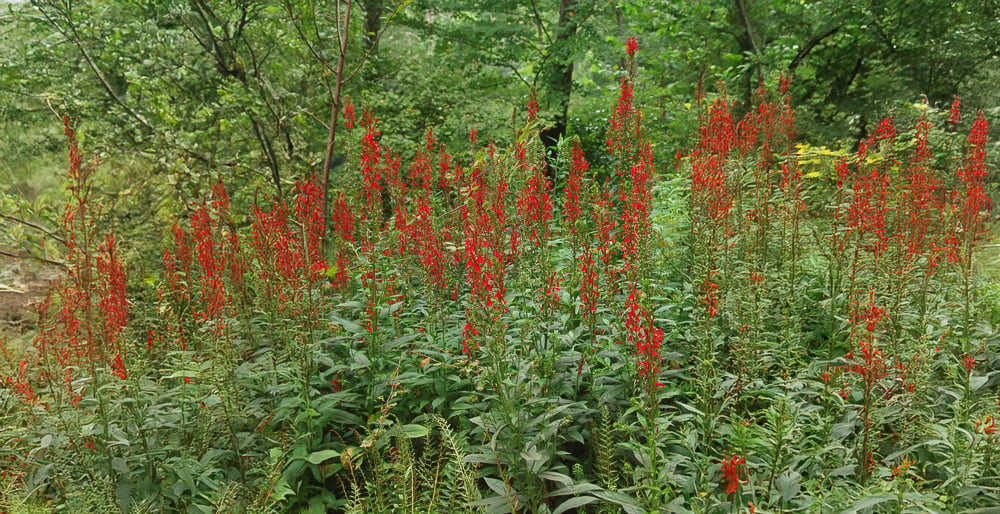
Lobelia cardinalis (cardinal flower)
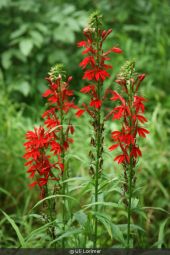
Cardinal flower is a hummingbird favorite, with spike-like racemes of bright red flowers in late summer into early fall. It’s adapted to wetland environments but does well in average garden soils if they don’t dry out completely. It has tiny seeds, which are carried by wind and water. When they move with the water, they get deposited where it collects. If that happens to be an open spot, they’ll germinate and fill in. Cardinal flower pops up like a signal flag, adding a beautiful accent to plantings. It has a rosette of basal foliage that emerges in spring and then dies back once the flowers are spent. It produces offsets from that rosette that ensure a presence, at least until more competitive species overtake them. During winter, be sure to keep the rosettes free of leaves and mulch. The foliage contains compounds that make it less likely to be browsed by deer and other mammals.
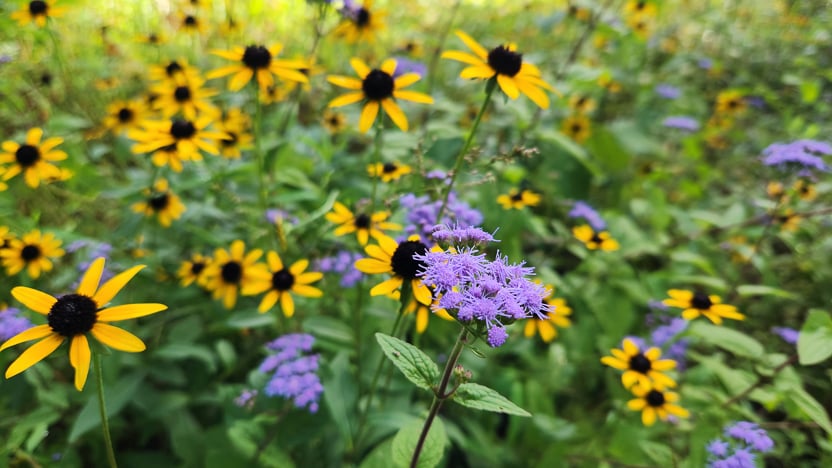
Conoclinium coelestinum (blue mistflower)
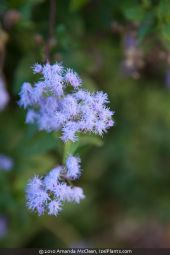
Blue mistflower blooms from midsummer into fall, with clusters of small, blue-purple flowers. It’s adapted to floodplain forests, wet meadows, and disturbed areas such as old fields and ditches. It spreads via rhizomes and fluffy seeds that catch the wind. It’s a formidable occupier of space, but in the right spot, it can work wonders and outcompete unwanted plants. If planted in drier soils, the spread is much less. We’ve also had good luck balancing its spreading tendencies with other, taller perennials nearby. The long bloom period and showy flowers late in the season are attractive to humans and to butterflies, long-tongued bees, and skippers. Its dark green, mint-like foliage contains compounds that make it unpalatable to deer.
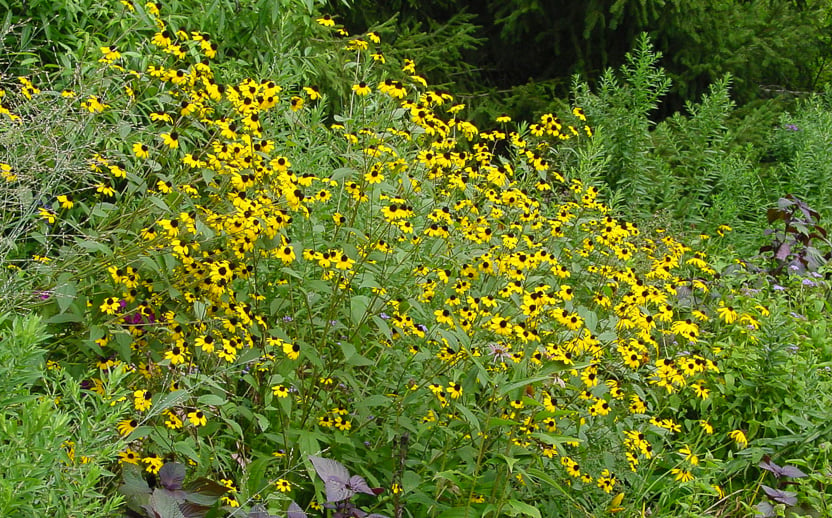
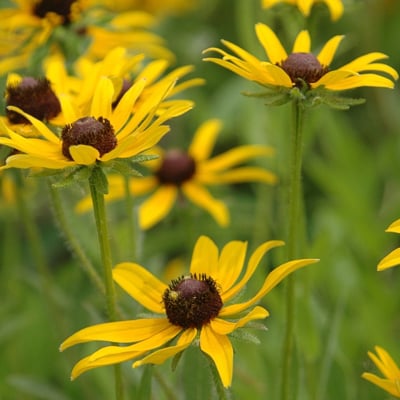
Rudbeckia triloba (browneyed Susan)
Browneyed Susan is a showy, self-seeding, short-lived perennial. Golden petals with a brown central disk brighten up landscapes. The flowers also produce wind-borne seeds that keep this species present when there’s open space to occupy. In its first year, it produces a dense basal rosette of leaves that look similar to other Rudbeckia species. In its second year, it produces the lobed leaves that earned it the specific epithet of triloba. It prefers sunny exposures and isn’t fussy about soils. Browneyed Susan blooms starting in late summer into fall, sometimes up to two months. This can be a big plant, often reaching up to 5’ in height. It makes a great focal point in a planting. As a keystone species, you know it will be serving pollinators, and it’s deer resistant, too.
A Fulfilling Endeavor
Filler plants are another tool for creating plantings that are dynamic and resilient. They help reduce the problems that disturbance and gaps can introduce, and they add desirable species to the existing seed bank. Better to add seeds of a dynamic filler than a disruptive species we don’t want. Fillers may disappear altogether once companion species take over, but they’re waiting to jump back in the next time an opening occurs.
The short-term nature of fillers is part of their strength, both in the wild and in managed landscapes. It’s also part of their charm. They add an element of surprise. We get to see how the fillers and the plants they share a community with change over time, and that experience makes us better gardeners.
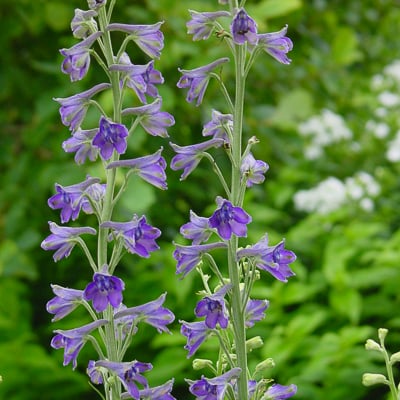
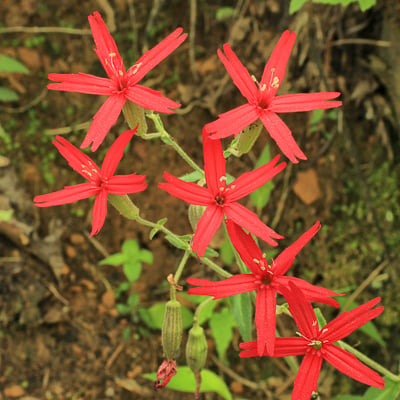
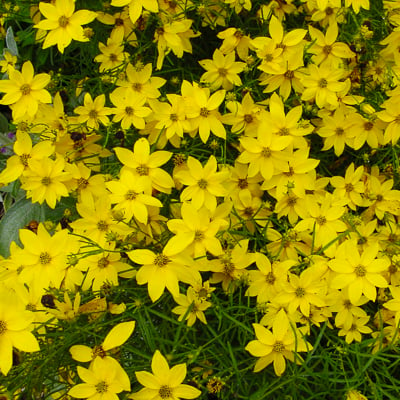
For more perennials that fill the gaps, try these:
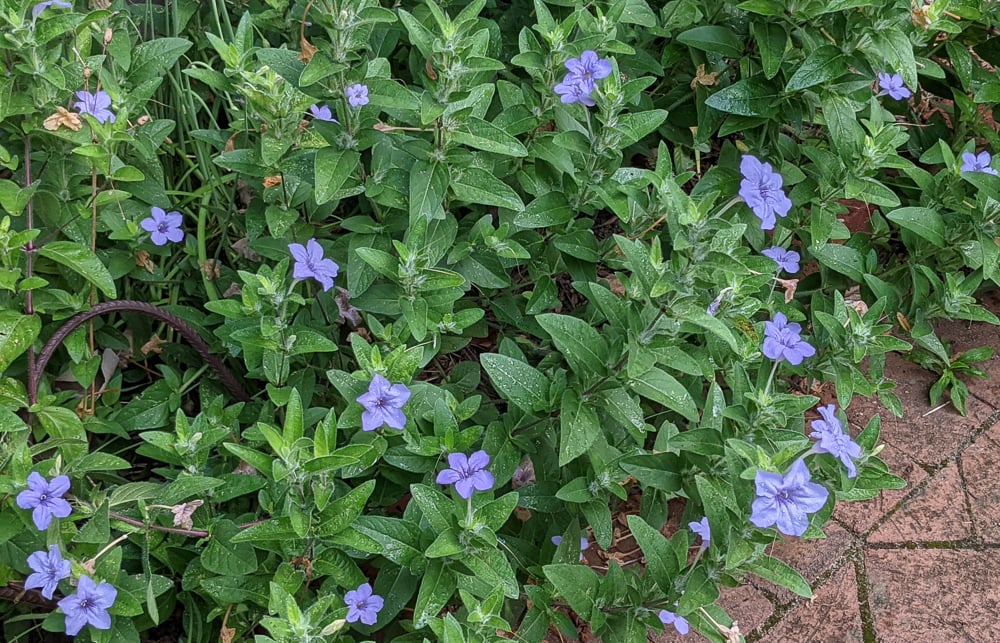
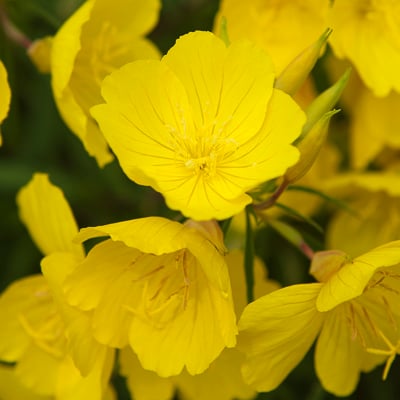
© Izel Native Plants
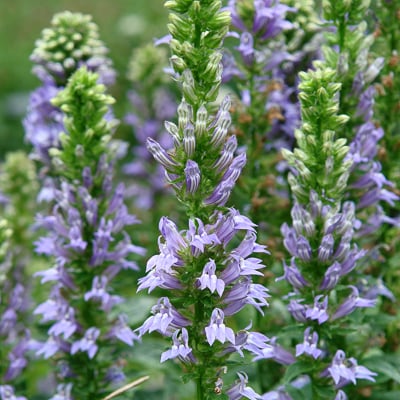
© North Creek Nurseries

Shannon Currey is a horticultural educator with Izel Native Plants. She’s worked in the nursery trade since 2006, developing expertise in grasses and sedges and expanding her knowledge of native forbs. She currently serves on the North Carolina Plant Conservation Program Scientific Committee, holds advisory roles with several organizations, and served on board of the Perennial Plant Association. Shannon lives in Durham, North Carolina and loves exploring the local flora everywhere she goes!