
Please check the average dates of last frost for your area before choosing your ship weeks.
Search
Rhododendron 'Bob's Choice Yellow' 'Bob's Choice Yellow' azalea
'Bob's Choice Yellow' azalea



As low as:
$25.50 per Quart - $25.50 each.
Other sizes may also be available.
Characteristics
Descriptions
Light Requirements
part-sun, part-shade
Soil Moisture
moist
Soil Description
acid, rich, average, loam, sand
Height
6'-10'
Recommended Spacing
5'-10'
Bloom Time
March, April, May
Bloom Color
yellow
Hardiness Zone
6, 7, 8, 9
Description
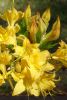
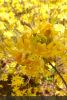
What do you get when two delightful native azalea species come together? In this case, it's Rhododendron 'Bob's Choice Yellow'. This cultivar is a hybrid, combining the yellow-orange hues of R. austrinum with the white-to-pale yellow colors of R. alabamense for flowers that are unique, gorgeous, and fragrant. The blooms, clustered at the tips of the branches, are light yellow and funnel-shaped. Each is accented by a darker yellow "bee guide"—the area that draws pollinators toward the reproductive parts of the flower. They open before or as the leaves are expanding. 'Bob's Choice Yellow' is from the garden of Robert Greenleaf, an azalea breeder and retired professor of music at Auburn University in Alabama. The habit is multi-stemmed, branching, and open, reaching a height of 6'-10' with a similar spread. It's a lovely addition to shade gardens and woodland gardens, and it looks quite snazzy in a shady, mixed perennial bed.
Cultivation
Being of Southeastern U.S. origin, both parents of ‘Bob’s Choice Yellow’ are heat and humidity tolerant. It’s a good choice for gardens in hotter climates where other species can languish. The parent Rhododendron austrinum has a narrow natural range, clustering primarily around the Florida panhandle and nearby counties in Alabama, Mississippi, and Georgia. It grows on wooded slopes, bluffs, and floodplain forests, often along streams. Rhododendron alabamense overlaps R. austrinum in a few counties in south Alabama and the Florida panhandle, but most of its range is further north throughout Alabama and into central Tenneessee. It grows in open, dry woodlands, on rocky slopes, and on moist slopes, bluffs, and streambanks. In cultivation, ‘Bob’s Choice Yellow’ is best grown in acidic, well-drained soils in part shade or dappled sun. The foliage may scorch in full sun.
Plants in the genus Rhododendron, like other members in the Ericaceae family, are well known for their propensity for growing in acidic soils. Most native azaleas do best with a pH between 4.5 and 5.5, and never above 6.0. They tend to grow in well-drained soils high in organic matter. They have shallow, fine, hairlike roots that are sensitive to disturbance, so resist cultivating the soil immediately around them. The fine roots also do not tolerate saturated soils well but do require consistent moisture. A layer of mulch will help protect the roots and conserve moisture during dry spells. Plants may be pruned to encourage a denser form and increased flower production. However, flowers appear on the previous year's growth, so any pruning should be done in spring after blooming. Rabbits love to nibble on native azaleas, especially tender new growth, so small specimens need protection until they are large enough to be beyond bunny reach or can withstand browsing.
Recommended Spacing
Space plants 5'-10' on center.
With a likely spread of 6'-10', it's challenging to know what spacing will work best. Go with the lower end of the range for more overlap and the higher end for just touching or space in between.
Additional Notes
‘Bob’s Choice Yellow’ was introduced by Robert Greenleaf, a retired professor of music at Auburn University and an accomplished composer. He had a deep appreciation of native azaleas and connected to fellow Auburn professors R. O’Neal “Smitty” Smitherman, Dennis Rouse, and Tom Corley. They introduced him to hybridizing azaleas, and the four men went on many adventures, documenting and collecting in the region. Greenleaf grew out 1000s of seedlings from his own crosses and those of his collaborators. He’d grow them in pots initially, evaluating them once they came into bloom. Those with the best flower forms and colors were planted in his garden. Being a musician and composer, he designed the garden like an opera, with blooms coming in on different acts. Greenleaf was encouraged by enthusiasts to share some of his best azaleas, most of which have been in the garden for decades and have proved themselves. ‘Bob’s Choice Yellow’ and other selections from Greenleaf’s garden are now being propagated and produced in limited numbers.
The genus name comes from the Greek words rhodo meaning rose and dendron meaning tree. The specific epithet for R. austrinum means southern, while that of R. alabamense means it is of Alabama.

Pricing & Availability
Advance orders for spring
BUY MORE,
SAVE MORE
$25 off orders of $500 or more
$100 off orders of $1,000 or more
$200 off orders of $2,000 or more
15% off orders of $3,000 or more
Orders placed now can ship as early as the week of April 5th.
When you add plants to your cart, you will be prompted to select your preferred ship week for each item you add to your shopping cart.
You may choose to have your plants shipped later than the first available ship week, and you may also choose to stagger the shipments to meet your planting schedule.
Note on spring shipping: Early spring shipments might include plants that have not yet broken dormancy, or have not been vernalized and will be frost-tender.
Please use your best judgment when selecting your preferred ship week: When you add plants to your cart, a link to the average dates of last frost will be included in the pop-up.
Did you know? When plants are available from multiple growers, we list growers closest to your location first.
Choosing the growers closest to you makes it more likely the plants are consistent with your ecoregion, and lowers the shipping carbon footprint.
Advance orders for fall
BUY MORE,
SAVE MORE
$25 off orders of $500 or more
$100 off orders of $1,000 or more
$200 off orders of $2,000 or more
15% off orders of $3,000 or more
Orders placed now can ship as early as the week of August 17th.
When you add plants to your cart, you will be prompted to select your preferred ship week for each item you add to your shopping cart. You can elect to stagger your shipments to meet your planting schedule.
Note on fall shipping: Plants that ship late summer through fall may have been cut back prior to shipping. This does not affect the health or viability of the plants.
Please use your best judgment when selecting your preferred ship week.
Did you know? When plants are available from multiple growers, we list growers closest to your location first.
Why choose plants from the nearest grower? Choosing a the grower closest to you makes it more likely the plants are consistent with your ecoregion and better adapted to your location. In addition, shipping plants shorter distances typically uses fewer resources, something we can all get behind!
BUY MORE,
SAVE MORE
$25 off orders of $500 or more
$100 off orders of $1,000 or more
$200 off orders of $2,000 or more
15% off orders of $3,000 or more
Orders placed now can ship as early as the week of April 6th.
When you add plants to your cart, you will be prompted to select your preferred ship week for each item you add to your shopping cart. You can elect to stagger your shipments to meet your planting schedule. Would you like your plants shipped later? You may choose to do so in the shopping cart.
Would you like your plants shipped earlier? Please check with us BEFORE placing your order so that we can verify that your requirements can be met.
Note on spring shipping: Early spring shipments might include plants that have not yet broken dormancy, or have not been vernalized and will be frost-tender.
Please use your best judgment when selecting your preferred ship week.
Did you know? When plants are available from multiple growers, we list growers closest to your location first.
Why choose plants from the nearest grower? Choosing a the grower closest to you makes it more likely the plants are consistent with your ecoregion and better adapted to your location. In addition, shipping plants shorter distances typically uses fewer resources, something we can all get behind!
Plant Sizes
Sizes Sizes
Sizes info