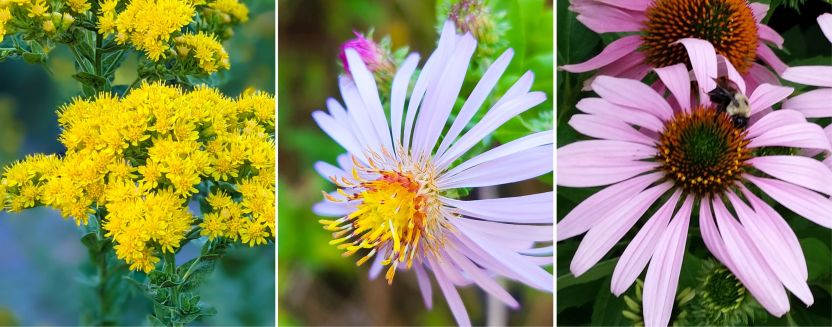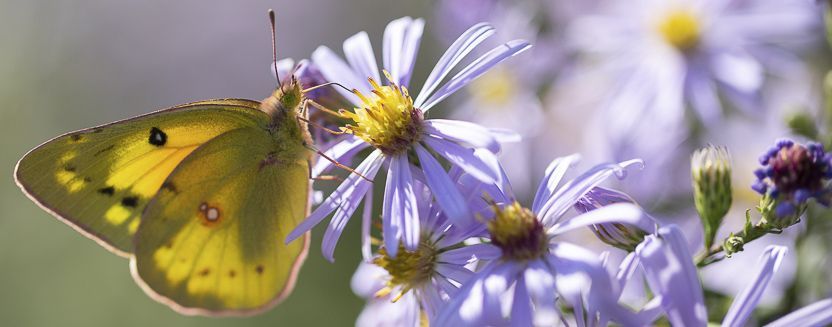
In our recent blog post, we took a deep dive into Asteraceae, a family that’s defined by its composite flowerheads. In this group of plants, what looks like a single flower is made up of multiple individual florets.
Asteraceae plays a key role in ecosystems, and in North America it dominates the ranks of keystone herbaceous perennials. Keystone plants are native species that are necessary for local food webs and allow wildlife species to complete their life cycles. These plants feed and support the insects that birds and other creatures rely on. One of those top keystone genera is Rudbeckia, commonly known as coneflowers and more generally referred to as black-eyed Susans.

Olof Rudbeck the Younger, Uppsala University, Sweden
Keying in on Rudbeckia
Linnaeus gets the credit for the genus name. He bestowed it in honor of his patron and tutor, Olof Rudbeck the Younger (1660-1740), a botanist at Uppsala University in Sweden. Linnaeus also intended the name to honor his tutor’s father, Olof Rudbeck the Elder (1630-1702), a polymath who founded Sweden’s first botanic garden.
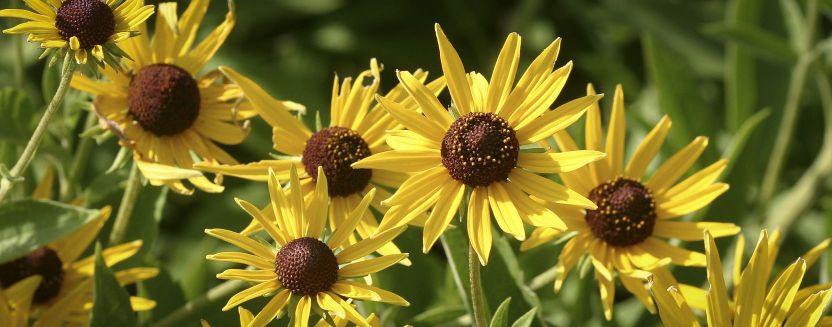
Although its name is decidedly European, all species of Rudbeckia are native to North America. There are somewhere between 23 and 30 species, depending on when you note it and who is counting, and there are a number of botanical varieties within those species. They include annuals, biennials, and perennials. All have yellow or gold ray florets (what we think of as petals) surrounding a raised cone of green, brown, or black disc florets. The color of the cone varies by species, and some are known as brown-eyed Susans rather than black-eyed. The Black-eyed Susan name is connected to a popular ballad written by English poet John Gay (1685-1732). It tells the story of Black-Eyed Susan, a woman who boards a ship to bid her sailor a sorrowful goodbye.
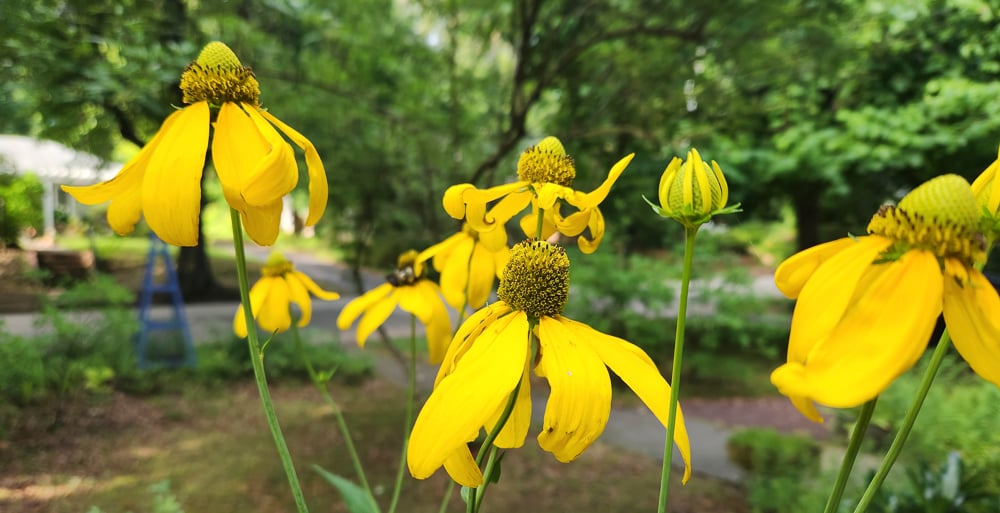
Disc florets, which make up the cones on composite plants like this Rudbeckia 'Autumn Sun', mature from the outer florets inward. The florets at the center are the last to flower and produce seed. © Izel Native Plants
Unlike some groups of composites that hybridize easily, Rudbeckia species tend to stay in their lanes. You don’t often find naturally occurring interspecific hybrids (crosses between species). What you do find is taxonomic uncertainty. Rudbeckia fulgida (orange coneflower), for example, varies widely in its appearance based on site conditions and region. Consequently, some taxonomists divide R. fulgida into subspecies, while others consider the variants separate species. The differences among Rudbeckia are often subtle, so some shifting is bound to happen.
There are other familiar genera that share the coneflower moniker, including Echinacea (purple coneflowers) and Ratibida (prairie coneflowers). However, Echinacea ray florets are usually purple or lavender and Ratibida cones tend to be more columnar than those of Rudbeckia.
Flowers That Provide
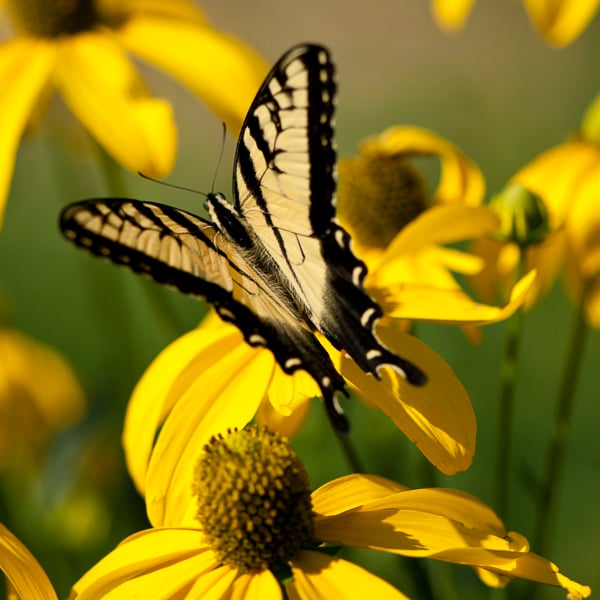
Their status as keystone species is based on solid support for pollinators. As a genus, they host over 28 species of pollen specialist bees, including mining bees, long-horned bees, short-tongued bees, leafcutter bees, and others. Twenty species of caterpillars use this genus as host plants. Once the flowers are spent, the seed heads are mini-buffets for chickadees, titmice, finches, and sparrows. Cardinals will seek them out in winter when other food sources are limited (that is assuming you leave the plants up all winter!).
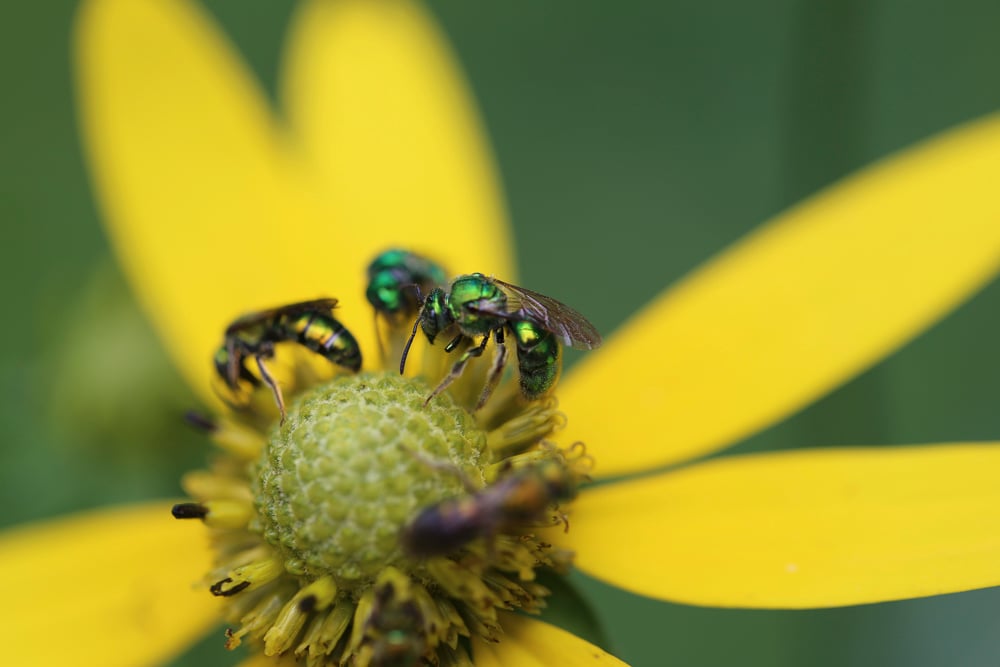
Each floret on the head of Rudbeckia laciniata offers visitors like these Green Sweat Bees the possibility of nectar and pollen. © Uli Lormier
When it comes to mammals Rudbeckia are less hospitable. Their foliage is often rough or hairy, which discourages browsing. Deer tend to leave them alone. Rabbits may munch on new, tender foliage, but they’ll back away once the leaves are tougher and more mature.
Easy Culture
Rudbeckia are denizens of summer, showing their bright flowerheads in all kinds of places—along roadsides, in disturbed areas like pastures and fields, along streams, in meadows and prairies, in glades and barrens, and even in bogs.
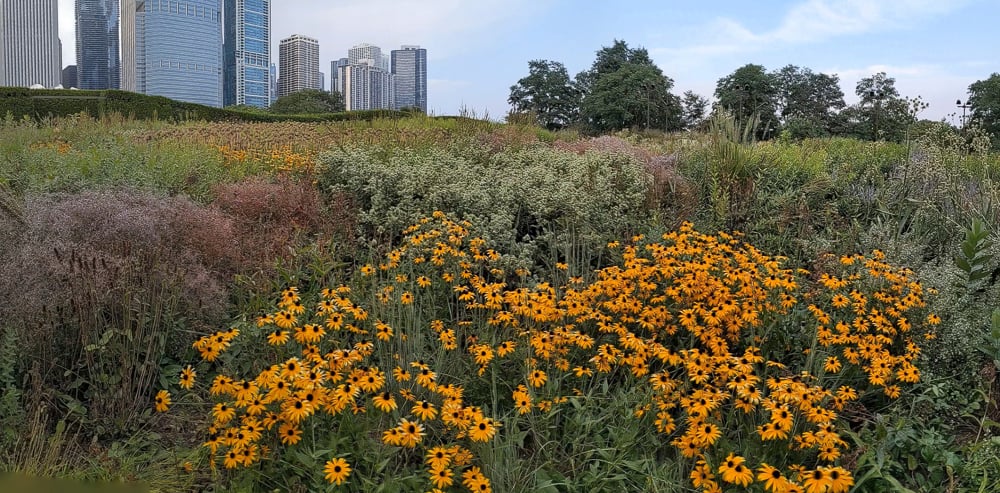
The Lurie Garden in Chicago's Millennium Park includes several species and selections of Rudbeckia. The plants' adaptability and low-resource use is a plus for busy gardeners and land stewards. © Izel Native Plants
Many of them grow in poor soils and do best when you don’t baby them. Most prefer full sun, although a few species will manage well with a bit of shade. They establish quickly in the first year and often produce flowers the first season when grown from seed.
Rudbeckia Rundown
Counting wild types and cultivars, our growers offer almost 20 different Rudbeckia. Here’s an overview to get you started:
Rudbeckia fulgida (orange coneflower)

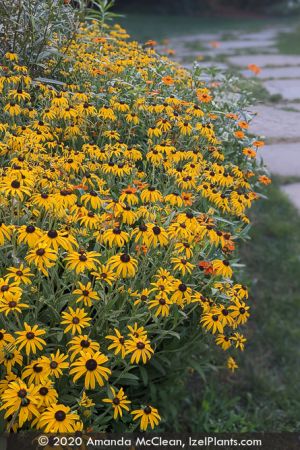
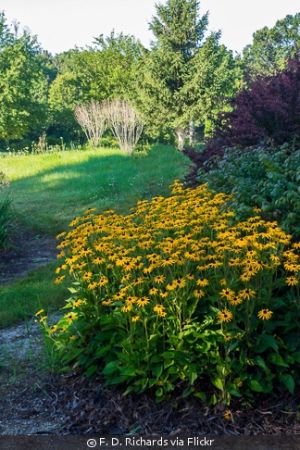
Rudbeckia fulgida (orange coneflower) and its posse may be taxonomically challenged, but they’re excellent garden plants that spread helpfully and are reliable performers. They’re a snap to grow, especially with consistent moisture, and have a high tolerance for heat and humidity. The natural variation in the species has allowed nurseries to select and propagate really interesting varieties. ‘American Gold Rush’ is a recent Perennial Plant of the Year® winner, and it has increased disease resistance in addition to appealing ornamental traits. If you’re open to using cultivars, you’ve got many great options.
Rudbeckia hirta (black-eyed Susan)
© Chris Evans, University of Illinois, Bugwood.org
© Uli Lorimer
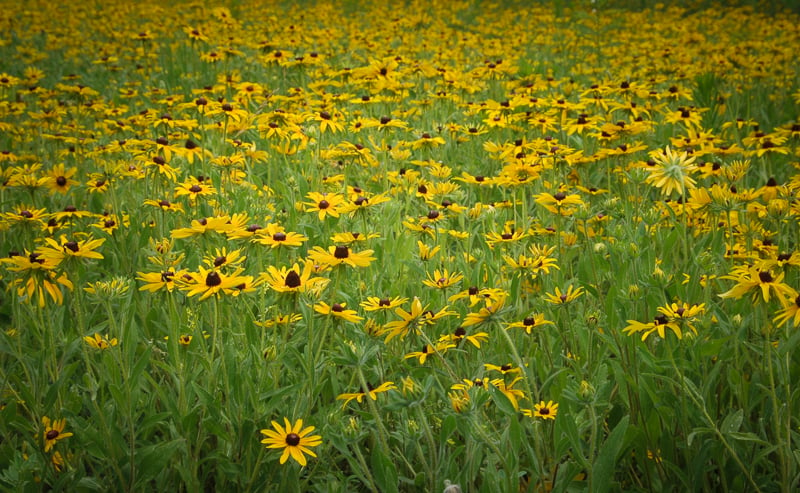
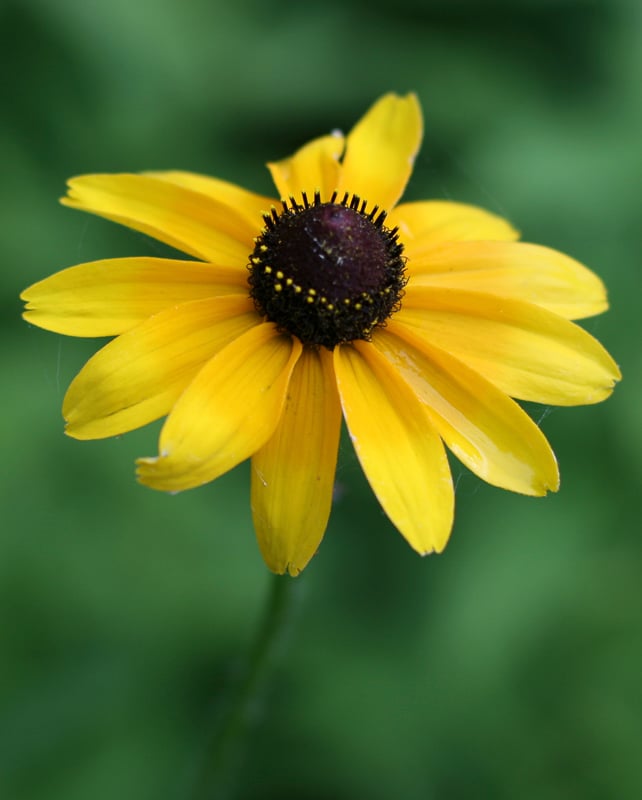
Rudbeckia hirta (black-eyed Susan) is the quintessential wildflower, with a brown cone and bright yellow to orange-yellow petals. The flowers are large and showy (up to 3” across). It tolerates drought and a range of soils but prefers good drainage. Its best role is to provide color early in the life of a planting, when it puts on quite a show. It will re-seed, but individual plants are short-lived and will be outcompeted as longer-lived species mature. If gaps appear in the planting over time, its seeds will sprout quickly, filling in until slower-growing perennials mature.
Rudbeckia laciniata (cutleaf coneflower)
© North Creek Nurseries
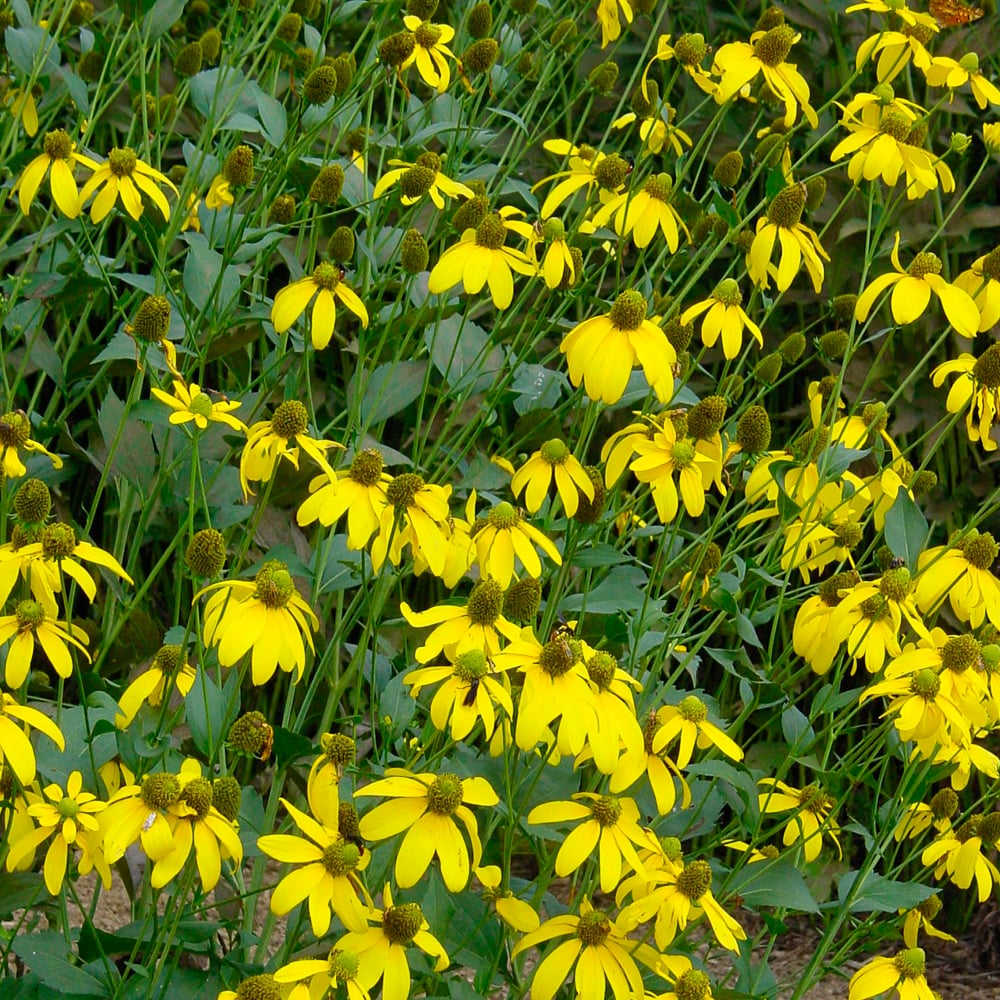
Rudbeckia laciniata (cutleaf coneflower) is tall, with striking greenish cones that age to a toasty brown. It grows in moist, rich soils and needs consistent moisture to do well. If you have wet or moist, clayey soils, this will grow in them happily. It will spread to form a colony and brighten up a garden with months of flowers. Its most well-known cultivar, ‘Autumn Sun’ (a.k.a., ‘Herbstonne’), is an outstanding garden presence.
Rudbeckia maxima (great coneflower)
© Izel Native Plants
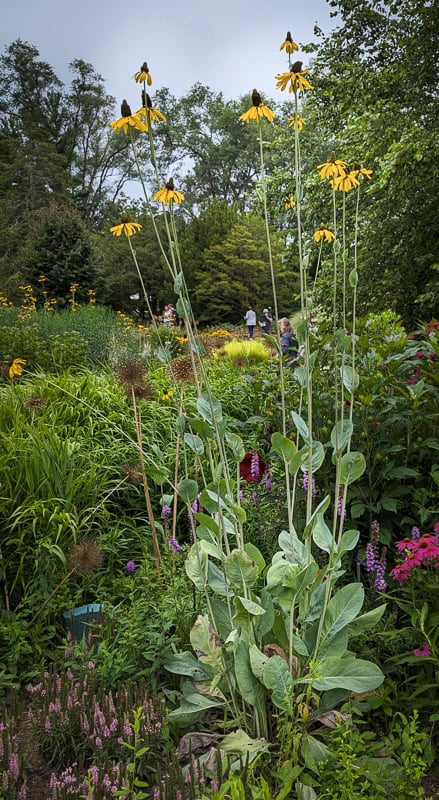
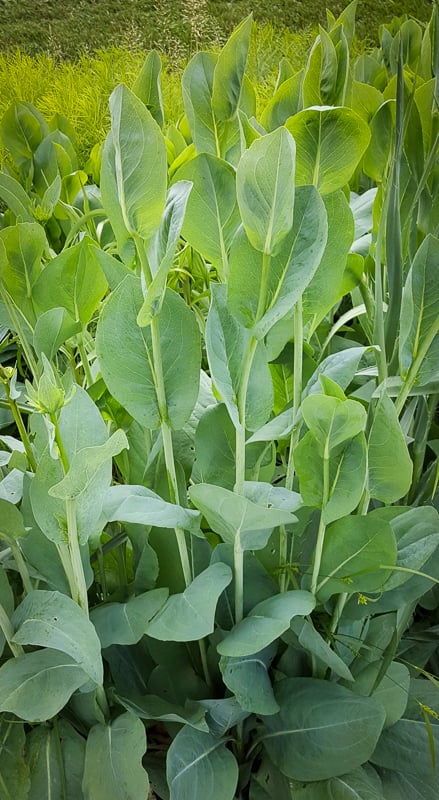
Rudbeckia maxima (great coneflower) lives up to its name, with flowering stems that reach up to 7’ tall. The brown cones on these flowers are tall, too, and the large, paddle-like foliage has a lovely bluish cast to it. It’s the foliage that really sets it apart; the leaves contrast beautifully with fine-textured perennials. Great coneflower’s natural range is limited to an area around the convergence of Texas, Oklahoma, and Arkansas, but it has proven to be a welcome addition to gardens elsewhere. It handles both wet and dry conditions and prefers full sun.
Rudbeckia subtomentosa (sweet coneflower)
© John Hagstrom
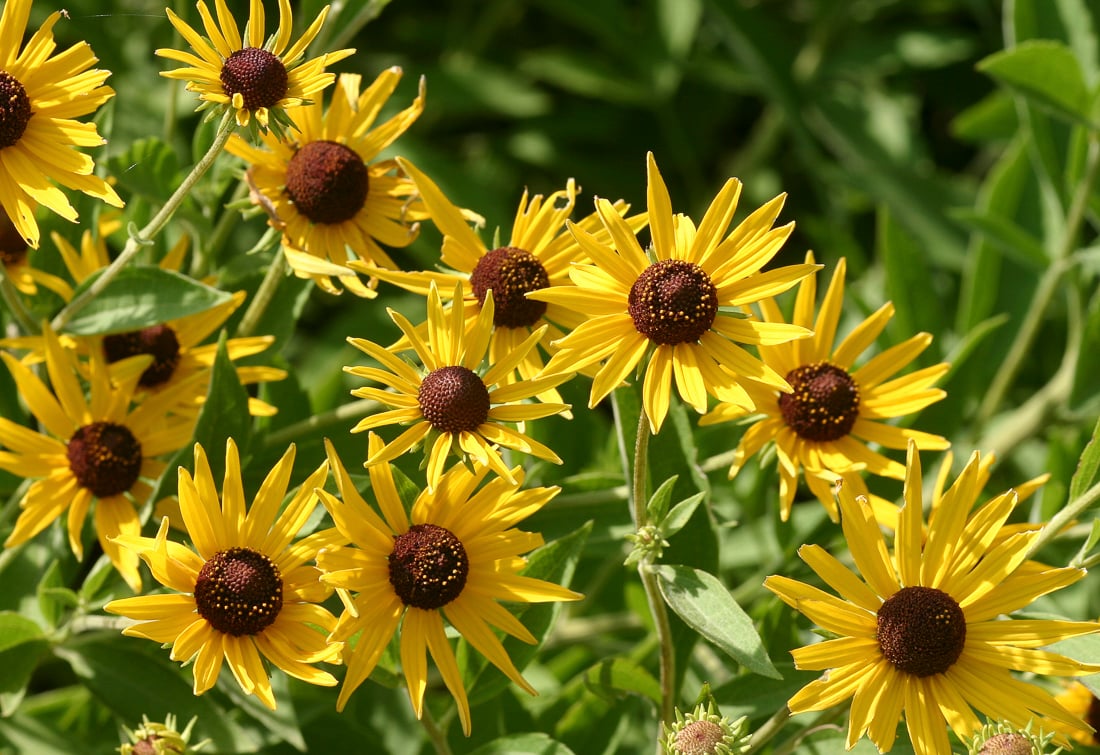
Rudbeckia subtomentosa (sweet coneflower) loves growing in moist conditions and will tolerate some light shade. It’s a tall coneflower (up to 5’) with purplish-brown cones that give off an anise-like fragrance. It’s native primarily to the central part of the U.S. but grows happily in other regions. The cultivar ‘Henry Eilers’ has quilled ray flowers that give it a unique, appealing look.
Rudbeckia triloba (brown-eyed Susan)
© Susan Minnemeyer/Nature Plus
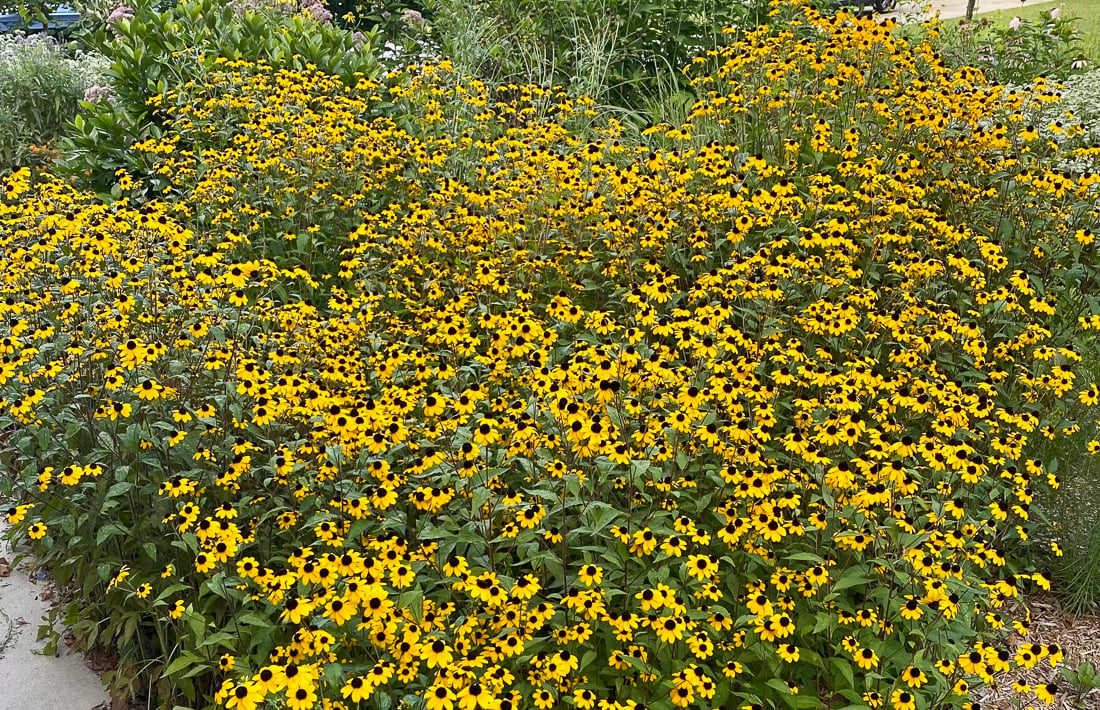
Rudbeckia triloba (brown-eyed Susan) is a biennial or short-lived perennial species that keeps a presence in the garden via reseeding. Each flowerhead has dark brown cones and short, golden yellow ray petals. The individual flowers are small for the genus, but the heavily branched structure of the plant makes for a profusion of blooms. What they lack in size, they make up for in numbers! Brown-eyed Susan will tolerate light shade but blooms best with full sun. It’s not picky about soils and can handle some dry spells. It’s great for naturalizing and as a filler. The cultivar ‘Prairie Glow’ adds a bright orange-red eye around the cone, for a punch of color.
© Uli Lormier
Bring the Sunshine Home
For any sunny spot in your landscape, there’s a Rudbeckia waiting for you. You’ll invite pollinators and birds in for a feast and give yourself a sunshine boost, too. Check out all the Susans and their kin and get them in the ground this fall.

Shannon Currey is a horticultural educator with Izel Native Plants. She’s worked in the nursery trade since 2006, developing expertise in grasses and sedges and expanding her knowledge of native forbs. She currently serves on the North Carolina Plant Conservation Program Scientific Committee, holds advisory roles with several organizations, and served on the Board of the Perennial Plant Association. Shannon lives in Durham, North Carolina and loves exploring the local flora everywhere she goes!