When planting anything in the ground, how much do you consider the soil you are planting into?
Hopefully, quite a lot! Maybe a bit more after reading this post. Soils support plant growth by providing an anchor. Plants spread roots out into soil to hold themselves upright, but soils provide so much more than just a substrate. Plants uptake water and nutrients from soil every day. Soils have structure, and this structure impacts porosity – the amount of air space and water holding capacity in soils. Building soil structure takes time, organic matter, and a whole lot of microbes.
To begin, for any garden, I feel it’s important to get a basic soil test done so you know what nutrients, pH, percentage of organic matter, (and dare I say biological content) your soil holds buried within its sand, silt, and clay mineral particles. The nutrient content provided by microbes cycling organic matter into smaller and smaller particles is important and adds to the total amount of available nutrients in the soil profile.
Not only does this soil microbial community build soil carbon and provide nutrient cycling services, it also can provide other ecosystem services in soil. Beneficial soil microbes can outcompete pathogens and inhibit the growth of non-beneficial microbes. These modes of action are very defined in the scientific literature, and while we know a lot about how beneficial microbes function in soils, we still don’t know everything about soils. In fact, just a few years ago the process of rhizophagy was discovered by researchers looking at plant nutrient uptake.
Bacteria and soil health
Rhizophagy is a process where bacteria enter a growing root, lodging between plant cell walls. While plants are not consuming these bacteria in their roots, they are consuming nutrients extracted from these bacteria. The plant extracts nutrients from the bacterial cells in an oxidative process, but does not kill the bacteria. Bacteria are ejected via root hairs after they produce enough ethylene to initiate plant root hair development. Whoa! Enlightening info, and this is only the tip of the iceberg when it comes to understanding all soil microbe interactions with plants.
Plants need bacteria to thrive. For some this is intuitive. But the scientific pursuit of knowledge led us to this point. We understand soil health is microbial driven, and plants benefit from an abundant and diverse microbial community, so how can we lay the foundation to enhance microbial growth in our soils?
Enter organic matter, the banking system of the soil. With increasing amounts of organic matter we see positive correlations with water holding capacity, available nutrient content, microbial community growth, microbial diversity, and plant growth. Plants return organic matter to soils constantly through their root tips, releasing exudate compounds that feed soil microbes. Microbes are excellent nutrient harvesters, and they give back to plants by eating organic matter and helping cycle nutrients in soils.
Why should we consider applying organic matter? Organic matter provides resources for soil microbes and microarthropods. Organic matter increases cation exchange capacity—generally, the ability of soil to hang onto important nutrients—and supports biogeochemical reactions in soil, helping aggregate and build soil structure. The charges on organic matter suriofaces help to hold moisture in soil. For every 1% increase in organic matter content, one acre of soil can hold an additional 20,000+ gallons of water.
So, what are the best sources of organic matter?
The answers are (drum roll, please!) compost and/or biochar, preferably a mix of compost and biochar.
Can we apply too much organic matter? As gardeners we apply organic matter to increase resources to native microbes and improve soil structure, but yes, you can apply too much organic matter. The garden’s intended purpose dictates how much organic matter we should strive to achieve. 5% organic matter, as determined by a laboratory soil test, on average, is a sufficient amount to achieve soil nirvana in most ecological landscapes – plants are happy, microbes are happy, and soil is functioning as it should. While some soils thrive on less than 5% organic matter content (and vegetable gardens thrive on more than 5%), sadly, most soils need organic matter, especially urban, degraded soils. Why are these soils degraded of their organic matter? The answer is fairly complicated, but stems from the fact that soils are usually underappreciated, and lose their structure and beneficial biological content is reduced when topsoil is “harvested” and sold elsewhere from its origin.
Compost has been king of organic matter for decades, if not millennia. Biochar is a soil amendment that is very different from compost, but provides more soil benefit than adding compost alone. Compost has been part of the gardener’s lexicon for decades, and while biochar has been used for thousands of years it has been poorly understood until scientific research exploded over the last ten years on the topic of making and using biochar in landscape and agricultural soils. Most gardeners know and love compost. Let’s dive into biochar, shall we?
Biochar is a soil amendment, just like compost.
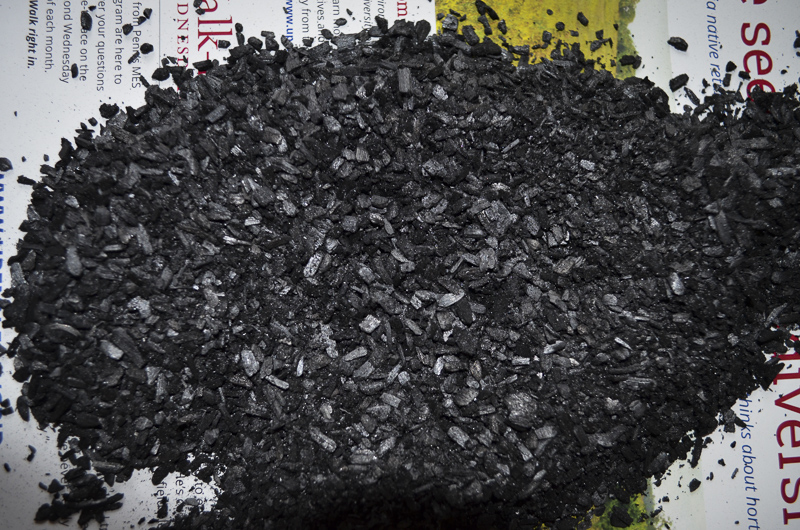
In its simplest iteration, biochar is carbon, produced by pyrolysis, burning organic matter in the absence of oxygen. Biochar is produced naturally in forest fire events, or during historical intense fire events on the open plains.
Biochar enhances soil water holding capacity, nutrient holding capacity, and serves as a home for beneficial microbes. Biochar can be made from any organic matter. It can be considered a "lifetime" soil amendment because the carbon structure of biochar degrades incredibly slowly over time. Once it’s added at the recommended rate, you don't have to add it again in terms of a human lifetime. Once added to soil, biochar improves soil structure with each passing season.
As a soil amendment, biochar increases infiltration rates and holds moisture - using it reduces the gardeners' need for watering. Biochar's cation exchange capacity allows it to hold nutrients in the soil profile, instead of them being washed away. Adding biochar into soil also puts carbon permanently in the ground as a carbon sink.
Should we all start adding raw biochar into our soils today? Not exactly. Raw biochar must be amended, inoculated, or charged before adding to gardens and most landscapes. Once blended with other soil amendments like compost and fertilizers, only then will biochar enhance the soil profile. If you add raw biochar to your landscape, it will "pull" the nutrients out of the soil, as it has readily available exchange sites that attract nutrients from the soil. Raw biochar should be reserved for Green Stormwater Infrastructure (GSI) projects with the intent to remove nutrients and pollutants from rainfall before infiltration allows the rain to be released to ground water or storm drains.
Not all biochar is made equally. Buyers should ask for testing results. Anything showing carbon content of less than 60% is technically not biochar according to the American Association of Plant Food Control Officials (AAPFCO). Further, gardeners should understand if they are looking at a raw biochar product, or a pre-amended, inoculated, biochar enhanced soil amendment. Big difference between the two, and we frequently see people getting confused on this topic. Biochar is exciting! We can utilize biochar as a tool to help build soil structure, with the understanding it’s not a silver bullet to solve all soil performance issues.
Using a ready-to-go biochar product
For most gardeners, the simplest approach to adding biochar is to use a fully inoculated, charged product because they’re ready to apply to any landscape, at any time of the year.
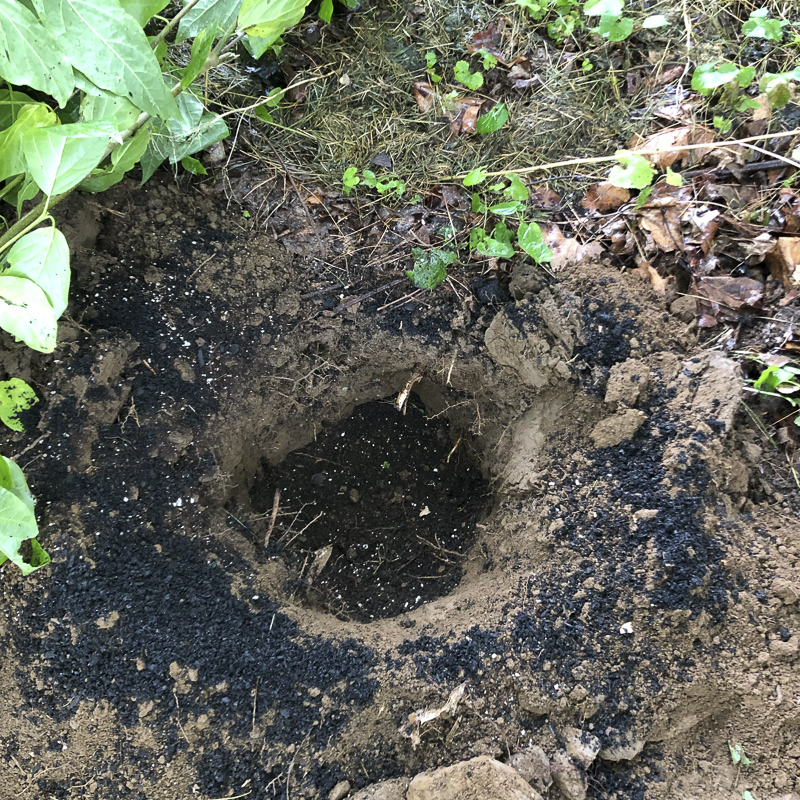
When using this type of product, it’s ideal to incorporate it into the soil profile. However, not every garden can be tilled or disturbed. If only a surface application is possible, we recommend adding a mulch layer (compost is the best mulch!) on top to hold it in place so it doesn't wash away in a rain event.
- Biochar works in all watering conditions, all landscape conditions.
- Biochar has cation exchange capacity and will hold nutrients in soil.
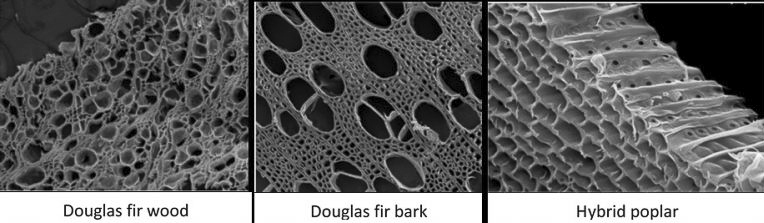
- Biochar has incredible pore space and serves as a home for soil microbes.
- Make sure the product is safe to use around kids and pets. Our Biochar Blend, for example, is tested for heavy metals, and the biochar is made from softwood pine wood chip. Biochar can be made many ways, from many different feedstocks, which is why we recommend people ask for a soil test report. Testing should include heavy metals, as companies are making biochar from many types of organic matter.
- Apply the product at our recommended rate. The rate for our Biochar Blend is 10% by soil volume (potting soil or topsoil). It’s a recommended application rate for a reason, based on years of testing and R&D. To get a 10% rate with our Biochar Blend, you would apply 1 cu. ft. per 24 sq. ft. of garden area, dug approximately 5"-6" into the soil.
- Overapplication can result in reduced yields, and you can spend that extra money on more plants!
You may not want to use biochar on Ericaceous plants (azaleas and other members of Ericaceae), as those plants prefer acidic soils. When our Biochar Blend is applied at our recommended rate, it can raise soil pH by 0.1-0.5 points, depending on starting soil pH.
Make sure you are buying biochar or an amended biochar enhanced soil amendment from a reputable supplier. If they won't provide test results, find another supplier. You want to see carbon level near 80% for quality biochar. Biochar costs have started to come down as more production ramps up and demand increases. We will see the cost of biochar continue to come down and be more economical, especially from the largest suppliers. Biochar can be used in any landscape, and is frequently prescribed as a soil amendment treatment in landscapes that need some TLC in the Plant Health Care department, since biochar enhances soil properties and plant growth.
Is biochar a magical soil amendment? No. Well, maybe. Does biochar represent a solution to declining levels of organic matter? Yes. Should we replace all compost applications with biochar? No. Should we use compost and biochar blended soil amendments to improve long term soil structure and resultant plant growth and health? Yes. Biochar has the potential to improve soil function and store long term carbon in the ground. We should consider using biochar as a source of organic matter for its functionality and persistence in soil. We should love it for its simplicity of action and impacts on soil quality. After reading this article, I hope you’re with me.
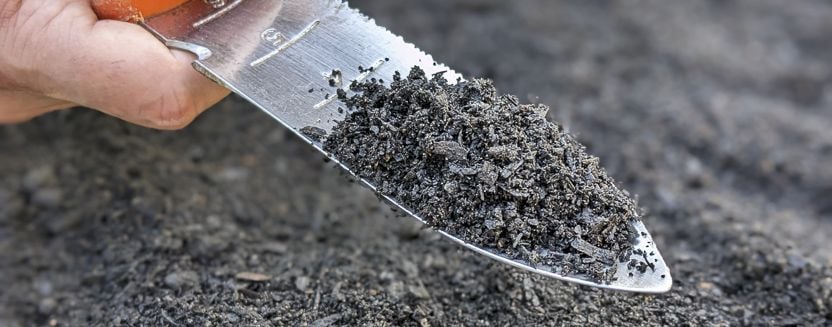
* Cover photo: Detail image of Organic Mechanics' Biochar Blend - © Izel Native Plants

From a young age, Mark Highland had his hands in soil, working on his family's farm. After focusing his M.S. degree studies in the Longwood Graduate Program on compost and potting soil, Mark started Organic Mechanics Soil in 2006. The mission: to bring peat free organic potting soils to gardeners everywhere! Mark currently serves as CEO and Head of R&D where he shares a philosophy that embraces environmental sustainability.