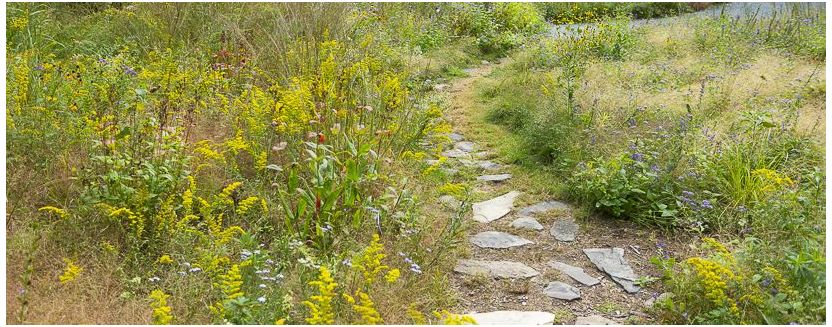
There can be a fine line between planting a collection of native plants and creating a plant community. They are not mutually exclusive, but the latter emphasizes combining plants that will support each other and help each other thrive.
The first step is to assess the characteristics of the area to be planted and find the plants that will be adapted to it. The second step is to narrow down the list to plants that will play well with each other. This includes taking into consideration plant overall height, habit, and enthusiasm. Of course, as in nature, rules are meant to be broken and the following should be considered as guidelines rather than unalterable recipes. This is not baking, after-all.
For this installment, we will focus on medium-size plants adapted to full sun and dry conditions. There will be some exceptions that we will justify as examples of the flexibility that should always be kept in mind.
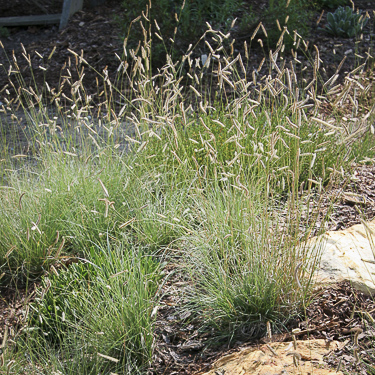
Photo courtesy of Hoffman Nursery, Inc.

Photo courtesy of Hoffman Nursery, Inc.
First off, we will start with grasses. These are too often overlooked when creating pollinator gardens, yet they should play an integral part of any plant community. How often do you see a natural plant community that is devoid of grasses and other gramminoids, and consists solely of flowering herbs and forbs? Although the vast majority of grasses are wind pollinated, and do not benefit pollinators in that regard, they are host plants to a variety of insects and provide shelter for even more. The following grasses are of medium height, ranging from 3 to 5’ when in seed, and with a bunching habit. The exception (I mentioned there would be some) is Bouteloua gracilis (blue grama) is included should you want a shorter option for the front, sunny side of the planting.
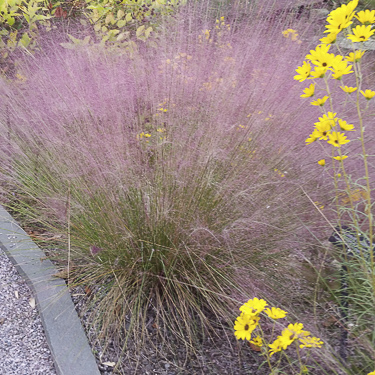
Photo © Izel Native Plants
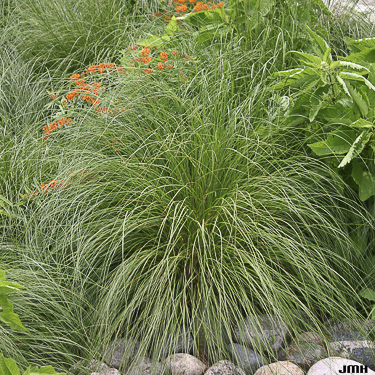
Photo © John Hagstrom
Once we have created a matrix and anchored the layout with grasses, we can move on to flowering perennials (herbs and forbs).
For early season interest penstemons are always a safe bet. Most have evergreen/semi-evergreen basal rosettes that do double duty as a groundcover.
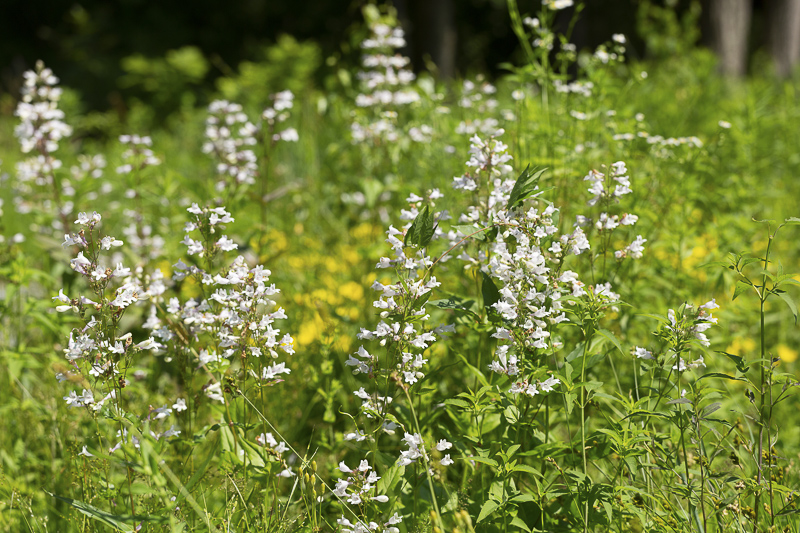
For a shorter option to use in the front, sunny (south facing) side, Penstemon pallidus is a good choice.
For mid-season interest, Rudbeckia fulgida 'Goldsturm' ('Goldsturm' coneflower) is a garden classic as is Asclepias tuberosa (butterfly milkweed) which needs no introduction. Heliopsis helianthoides var. scabra 'Burning Hearts' ('Burning Hearts' heliopsis) is also a good choice for a medium-size, sunflower-like perennial.
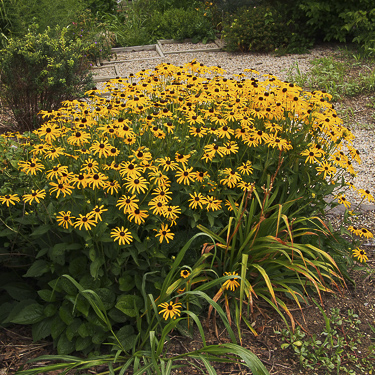
Photo © F. D. Richards via Flickr
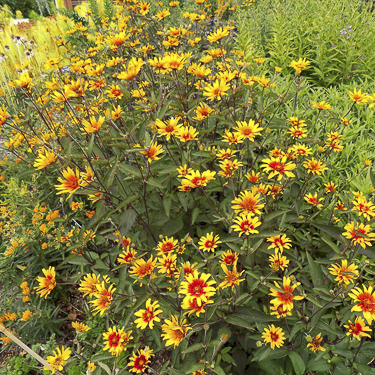
If you're looking for a pollinator powerhouse, Pycnanthemum virginianum (Virignia mountainmint) is a must. Or how about a touch of pink? There aren’t many summer options in that color range, but Oenothera lindheimeri 'Siskiyou Pink' ('Siskiyou Pink' beeblossom) is an excellent choice for dry sun.
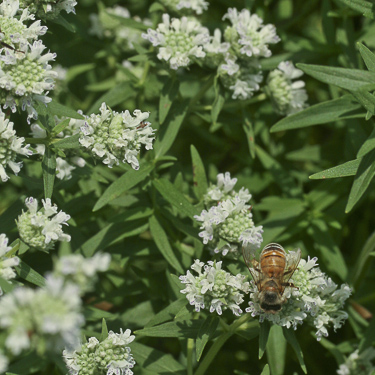
Photo © Uli Lorimer
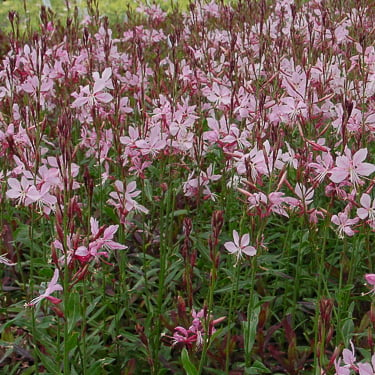
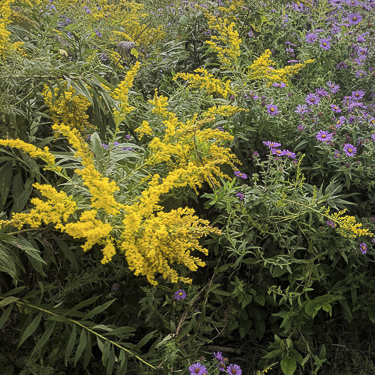
No fall garden can be complete without its share of asters and goldenrods. Pollinators would agree and be thankful for the following additions:
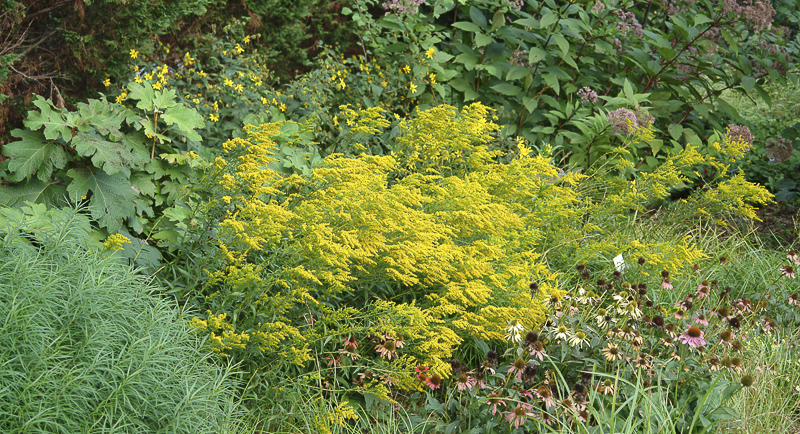
Photo © North Creek Nurseries
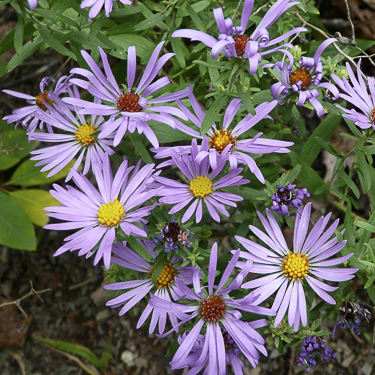
Photo © Amy McIntire
We mentioned breaking the rules. How about trying sedges or alumroots as a groundlayer on the shady (north side) of the planting? They do their thing early in the season, and by the time hot weather is in full force, the taller plants should provide them with enough protection to thrive.
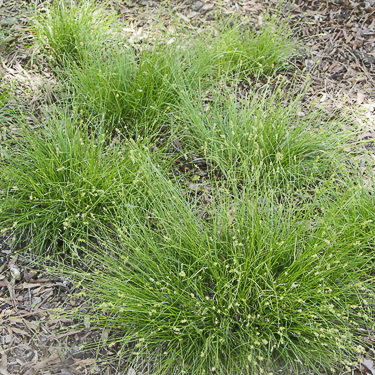
Photo © Hoffman Nursery, Inc
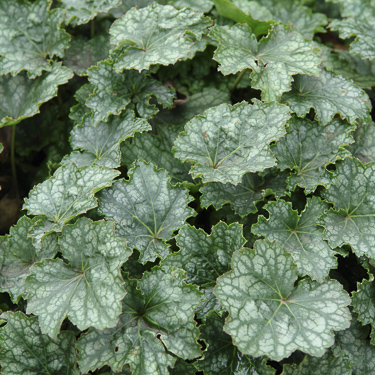
Photo © North Creek Nurseries
Again, this is not a steadfast recipe. Our plant list also focuses on species that we know are currently available (which is always a moving target). Play around with these guidelines and recommendations and use them to create your own resilient plant community.

Claudio Vazquez co-founded Izel Plants in 2009 to fill the gap in online information about native plants that was pervasive at the time. With an initial focus on describing horticulturally available native plants, Izel Native Plants has since evolved into one of the top destinations for purchasing native plants online.

