Are you baffled by botanical names? We can help.
<ring, ring>
Me: “Hello, Izel Native Plants, how can I help?”
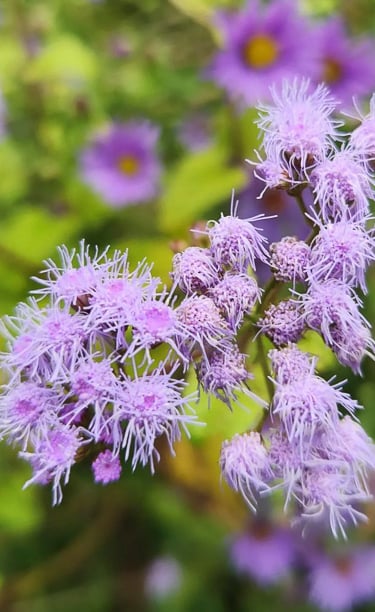
Them: “I have a question about Co…cono…cono-cleam co-est. Actually, I can’t even guess how to pronounce this. Blue mistflower”
Me: “Oh, I think you mean Conoclinium coelestinum, and you were really close. You know, there’s no one right way to pronounce botanical names…”
We’ve all been there, confronted with a new-to-us botanical name we’re trying to pronounce. We get it! Some customers will try their best to pronounce those hard names, while others never attempt it and just refer to everything by common names (which can actually make it harder for us to help!) So let’s talk about why botanical nomenclature (using scientific names) is important, why the spelling can be so odd, why the names keep changing and, yes, how to pronounce them.
What are botanical names?
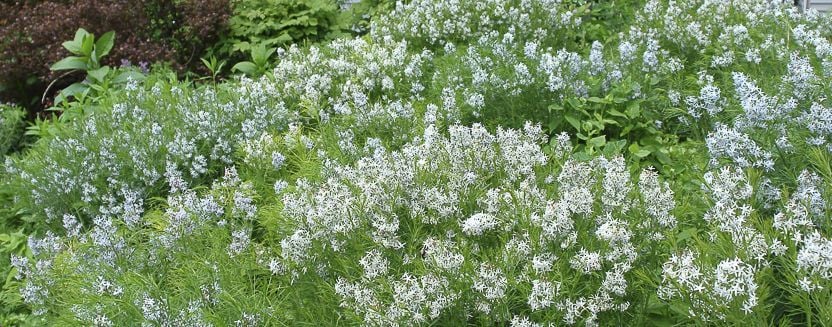
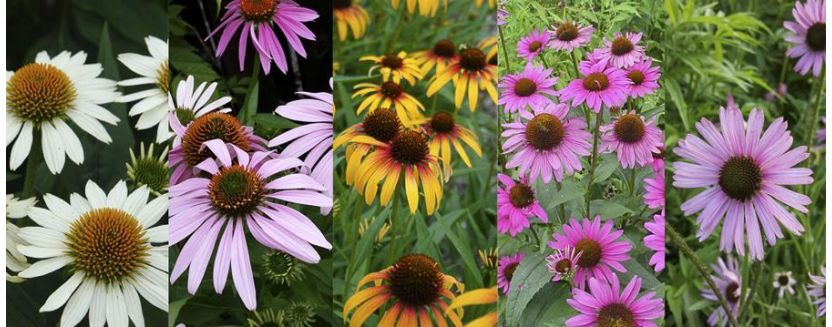
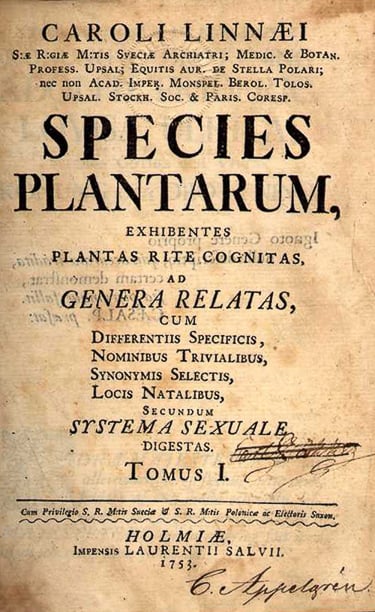
They are the scientific designations for plant species, and they consist of two parts: the genus and the specific epithet. The genus is the basic group to which the species belongs, and the specific epithet is a descriptor. With Echinacea purpurea, the genus is Echinacea, and the specific epithet is purpurea. To take an even more familiar example from the animal kingdom, try out Homo sapiens. Some genera (the plural of genus) have thousands of members, such as Carex (sedges), while others may have only a single member (I’m looking at you Conoclinium). Species can be further divided into subspecies, varieties, and such, in which case they may have additional names attached to the species (e.g., Amsonia tabernaemontana var. salicifolia). Plant taxonomists (professional plant-namers) have used Latinized binomial nomenclature (the current standard for all living things) ever since the naturalist Carolus Linnæus first published Species Plantarum in 1753, which was at a time when Latin was the academic language of Europe. And no, that wasn’t his real name, Carl Linnaeus Latinized himself too, not just the plants in his book!
The names themselves may offer clues about the plant, and sometimes about a person associated with it. For example, a specific epithet that ends in “ii” often means it was named after a person, such as Amsonia hubrichtii. This species was formally indentified in 1942 by Leslie Hubricht of the Missouri Botanical Garden. Boltonia asteroides (white doll’s daisy) is a two-fer: the genus is named after English botanist James Bolton (1735-1799), and its specific epithet refers to its aster-like flowers. Specific epithets ending in “oides” often indicate the plant looks like another species. Similarly, the suffix "opsis", which can be applied to genera, also indicates that the plants resemble something. The next time you have trouble falling asleep, try unraveling these botanical names: Heliopsis helianthoides and Thalictrum thalictroides.
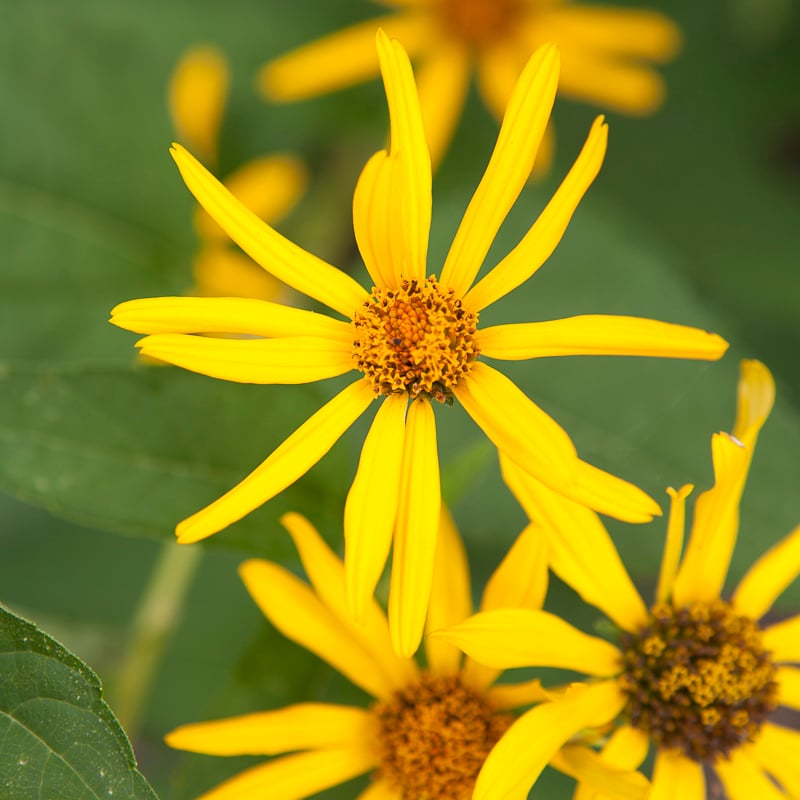
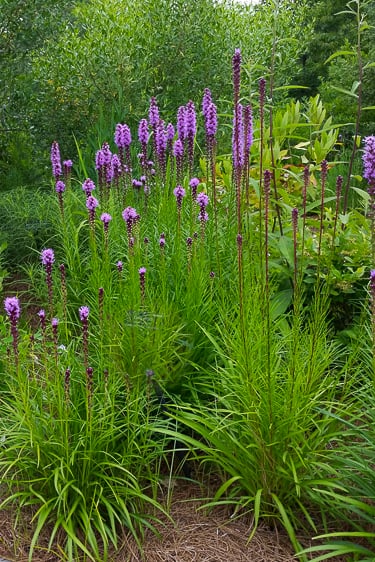
Other characteristics of the plants also emerge in the specific epithet, like with Asclepias tuberosa (butterfly milkweed). According to the Dictionary of Botanical Epithets, tuberosa has the root meaning of “tuber,” and the suffix “osus” indicates a plentitude or notable development. Anyone who has transplanted an established Asclepias tuberosa will agree its tuberous root is notable! Other specific epithets like hirsuta (hairy), glabra (smooth), pallida (pale), aurea (golden), and spicata (in spikes) key you in on distinctive aspects of the stems, foliage, or flowers.
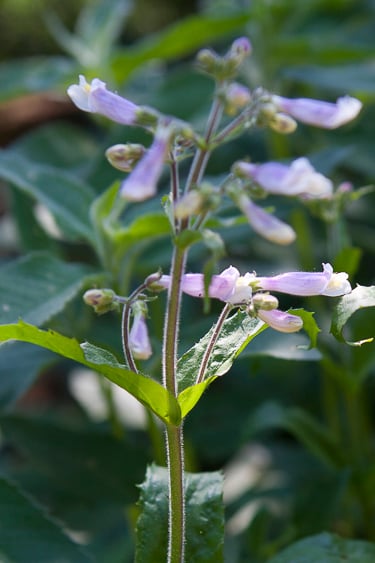
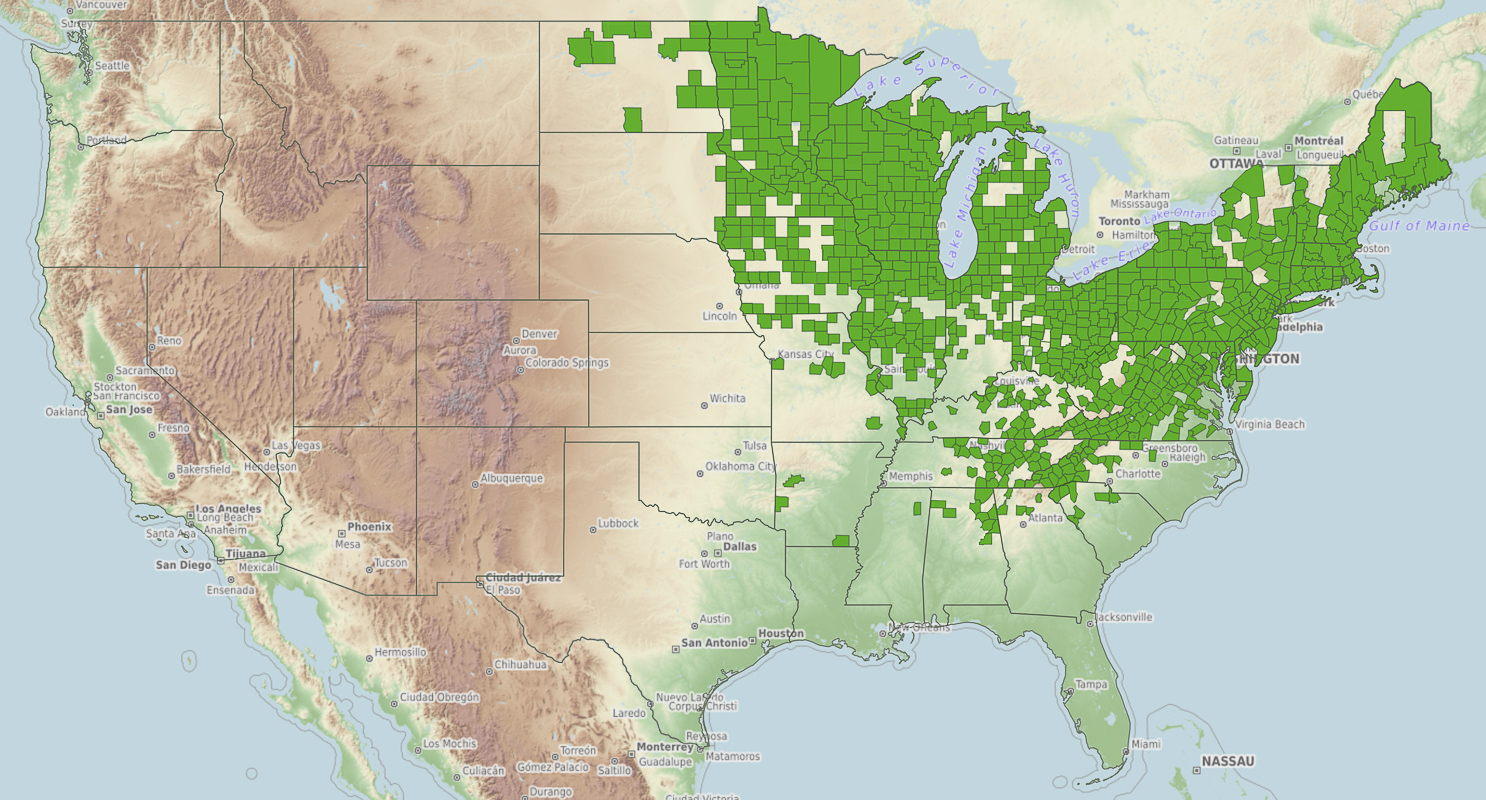
The specific epithet can be geographical, as in Carex pensylvanica (Pennsylvania sedge). Interestingly, when you view a map of the native range of C. pensylvanica, you’ll notice its range far exceeds the Pennsylvania boundaries. This species was first described in 1792 in the Encyclopedie Methodique Botanique. It’s not known exactly why it was named after the state of Pennsylvania, but that may be related to how far the original explorer traveled in the US, or it may be that Pennsylvania is where it was first described. Similarly, Asarum canadense (Canadian wild ginger) was first discovered in Canada, but it is relatively rare there as compared to further south. Other geographical specific epithets like australis (southern) and borealis (northern) give environmental clues. Then sometimes it’s tricky—Spigelia marilandica (Indian pink) does not naturally occur anywhere near Maryland.
Why do botanical names change?
Because botanists like to mess with us. There are several reasons, the most common is that the same species was described, under different names, by more than one botanist. The rule states that whoever is the first to describe a species gets naming dibs, so corrections may be necessary. Historically that happened quite a bit. All other botanical names remain associated to the species as synonyms. And let us tell ya’, some species have a lot of them. Campanula rotundifolia would give any sleuth a run for their money. We count over 15 synonyms!
Another reason for name changes is that a species may move from one genus to another because botanists determine they are incorrectly placed. The genus Aster has had a bunch of changes, both being lumped in with other genera and split into separate ones. As an aside, botanists are also categorized: they are either lumpers or splitters, which is kinda funny, especially when they debate. Our native asters were originally lumped in with the European ones under the genus Aster, but it was later concluded they were fundamentally different from their European cousins and needed to be split apart and renamed .
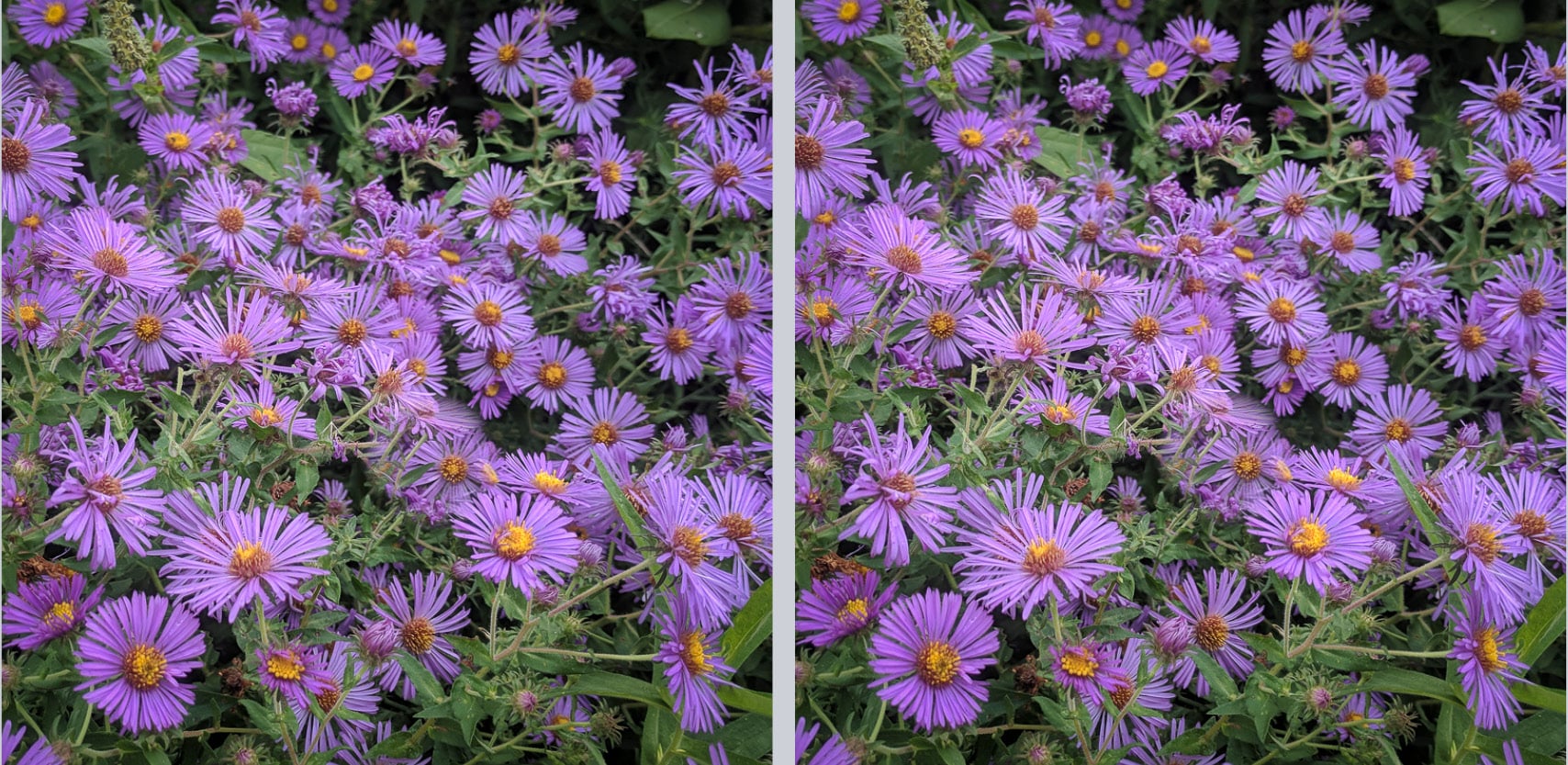
Sample name changes from the genus Aster:
Aster carolinianus ⮕ Ampelaster carolinianus
Aster divaricatus ⮕ Eurybia divaricata
Aster novae-angliae ⮕ Symphyotrichum novae-angliae
Aster umbellatus ⮕ Doellingeria umbellata
Isn’t that botanical name misspelled?
The way botanical names are named, written, and used follows a specific set of guidelines which is codified in an international rulebook called: International Code of Nomenclature for algae, fungi, and plants (ICNafp). A funny thing about the name of this rule book, is that the lowercase portion of this title "algae, fungi, and plants" indicates – get this – that these terms are not yet formally accepted names but historic names for groups of organisms. Basically, you get the sense these taxonomists argue about everything. But I digress. Onward dear reader to capitalization: one of the rules set forth by ICNafp is that the genus should be capitalized, while the specific epithet and any descriptors that follow it should be lowercase. So Carex pensylvanica is correct, but Carex Pensylvanica is not. Eagle-eyed readers will also note that “pensylvanica” seems misspelled. After all, there are double “n”s in Pennsylvania. True! However, ICNafp dictates that a plant’s accepted name has to be the name under which it was first described (published), even if it doesn’t conform to normal rules of spelling.
Common names, such as blue mistflower, follow the capitalization rules that govern words that aren’t proper nouns: you only capitalize them when they begin a sentence or when they include a proper noun. For example, if a customer emailed me to say: “I’m having a plant emergency, is there any way you can ship me some spotted Joe Pye weed today?” The answer would likely be no because we can't turn orders around that quickly, but you would get points for proper common name capitalization. You would also get bonus points for correctly capitalizing black-eyed Susan.
You’ll also notice we use italics when writing botanical names. That’s also part of the code. The genus and specific epithet are always in italics, or underlined if written by hand (an ancient technique still practiced by some subcultures). The words that introduce a variety or subspecies are not italicized, like "var." in Amsonia tabernaemontana var. salicifolia.
Why not just use common names?
Izel Native Plants is a bit unusual in how we list our plant species online. Our catalog is alphabetized by botanical name, not by common name. There’s a problem with only learning plant common names. They’re imprecise: what if you like the pale pink, daisy-like flowers your neighbor is growing and ask them the name. And they say, “Oh, those are purple coneflowers”. Then you go to your favorite online source for native plants (Izel!) and input that name in the search box and get a bunch of results: Echinacea pallida, E. purpurea, E. simulata, and E. tennesseensis. Which one was your neighbor referring to? The answer matters because E. tennesseensis is the only one that can grow in part-shade, and E. pallida and E. purpurea are the only two from that list that are hardy to zone 4. And don’t get us started on bluebells. Oh, we forgot to mention—another rule is that if the same genus is mentioned several times in a row, you can abbreviate it by listing just the first initial of the genus followed by a period.
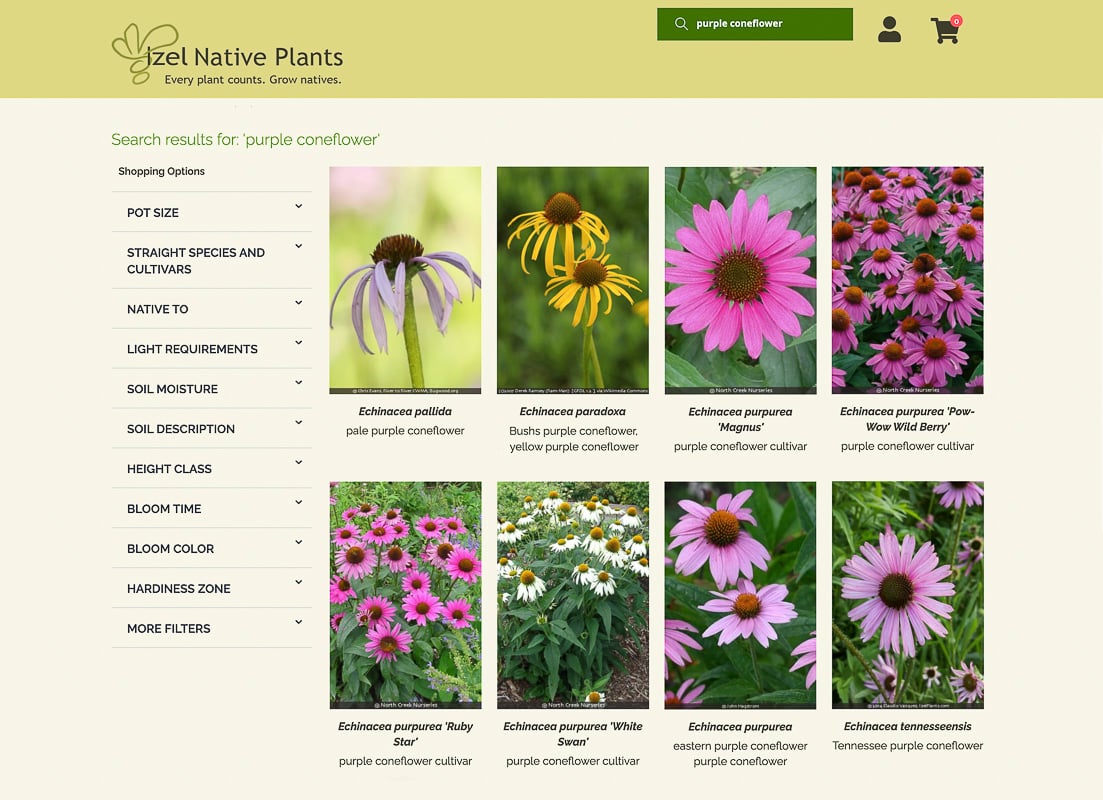
Why do some botanical names include non-Latin words, and why does that non-Latin part not follow the capitalization and italicizing rules you mentioned?
Are you thinking of something like, Echinacea purpurea 'Ruby Star'? The non-Latin portion ‘Ruby Star’ denotes that this is a cultivar, which is short for cultivated variety. (Some people call them nativars, but that has always seemed to us like a marketing term that breeds confusion, so we don’t use it here at HQ). Plant propagators and breeders take notice when a particular specimen has outstanding characteristics. They select that specific plant for propagating in a way that ensures its distinctive characteristics will remain, and they give it a cultivar name.
Guess what? These cultivated plants have their own set of guidelines for naming: International Code of Nomenclature for Cultivated Plants. As part of the code, the cultivated variety name (cultivar)—in this case, ‘Ruby Star’—is enclosed in single quotation marks, uppercase, and not italicized. Explore the debate between cultivars and straight species further in our blog post: Cultivars...Don't shoot the messenger!
As a side note: one of the services Izel Native Plants provides to our customers is that we research all the cultivars we sell to ensure they are cultivars of native species and do not include plants that have been crossed with exotic species. – Crossing is a tool plant breeders can use to substantially change a plant's form, bloom color, leaf venation etc. We research the cultivars before we list them, and we stay abreast of any new information about cultivars as it becomes available. We have both added and removed cultivars from our catalog based on new scientific findings.
How do you pronounce botanical names?
Here’s a simple answer if you like to learn by ear: The Missouri Botanical Garden has a speaker icon next to most species names in their plant database. From this page, you can search for the species whose pronunciation twists your tongue, then click the speaker.

However, Susan Mahr of the University of Wisconsin Horticulture, makes the point that maybe gardeners shouldn’t sweat pronunciation in her essay "What's in a Name?" Read an excerpt below:
“Most languages evolve over time, so there really can’t be any truly ‘correct’ pronunciation, just different pronunciations at different times (and places). And with an increasingly mobile and global society, interactions with other cultures influence the way we speak. Thirty years ago, few Americans would say ‘CLEM-atis,’ but now so many have heard English garden lecturers say it that way, that they reject ‘cle-MAT-is’ as substandard – despite the fact Americans have been saying that for 150 years.
“There are ‘official’ ways to say Latin words. You can read the rules, but memorizing them may end up being more work than it’s worth. For gardeners, I think the most important rule is to pronounce every letter and in the correct order. Unlike English, with all those silent vowels and diphthongs and whatnot, just separate the word into syllables and say it like it sounds. You might want to say each syllable separately, then string them together so you don’t leave anything out or mix up the sounds (as people do when they pronounce ‘anemone’ as ‘anenome’). As long as you say all the letters, the listener should be able to figure out what you mean, even if your pronunciation differs from theirs…
Also, even if you’re following the rules of Latin pronunciation, be aware of what the word might sound like. I doubt many Americans would pronounce the genus for pine (Pinus) as “Pee - nus” — even though this is technically the correct pronunciation in Latin — for the embarrassing coincidence with male anatomy. So sound it out, use some common sense, and start saying those botanical names!”
REFERENCES:
- Dictionary of Botanical Epithets
- Missouri Botanical Garden - Plant Finder
- What's in a Name? - Susan Mahr of the University of Wisconsin Horticulture (article out of publication)
- The Curious Case of the Disappearing Asters - Alan Weakley
- The Shifting Science of Botanical Nomenclature— I - Scott Mori
- International Code of Nomenclature for algae, fungi, and plants

Amanda McClean is the co-founder of Izel Plants and the technological powerhouse behind its trailblazing innovations. Her dedication to the promotion of native plants has helped move them to the forefront of horticulture pursuits. Outside of her professional pursuits, Amanda enjoys spending time in nature, hiking, and capturing the beauty of plant life through photography. Through her endeavors, she strives to inspire others to appreciate and protect the incredible diversity of plant species essential for the health and vitality of our planet.