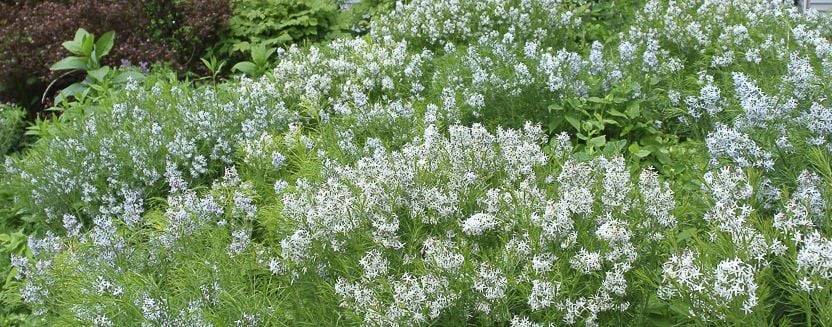
With multitudes of cool, blue flowers in spring, and transforming into fiery, billowing mounds in fall, few herbaceous perennials provide such a visual bang on both ends of the growing season.
Originating from only a limited area in Arkansas and Oklahoma, Amsonia hubrichtii - AKA Hubricht’s bluestar, Arkansas bluestar, threadleaf bluestar - was adopted by the horticultural and landscaping trades with open arms, and has proven to be a species that has it all:
Visual interest:
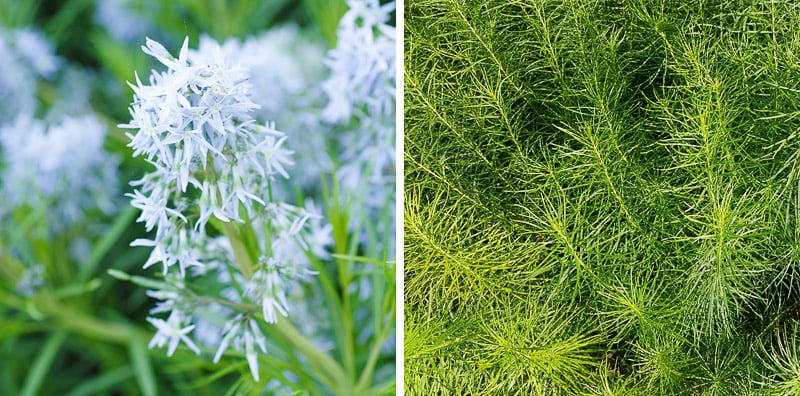
Growing into a symmetrical, dense mound up to 3’ tall, threadleaf bluestar looks more like a shrub than a herbaceous perennial. It is an early season bloomer that produces showy clusters of pale blue flowers with the shape of a five-point star. The foliage is very fine, needle-like, and pleasingly light green, giving the plants a delicate appearance. That is, until fall when the foliage will turn fiery shades of yellow and orange in a show that will likely stop traffic. Hyperbole, you might ask? Not really. It is truly stunning.
Versatility:
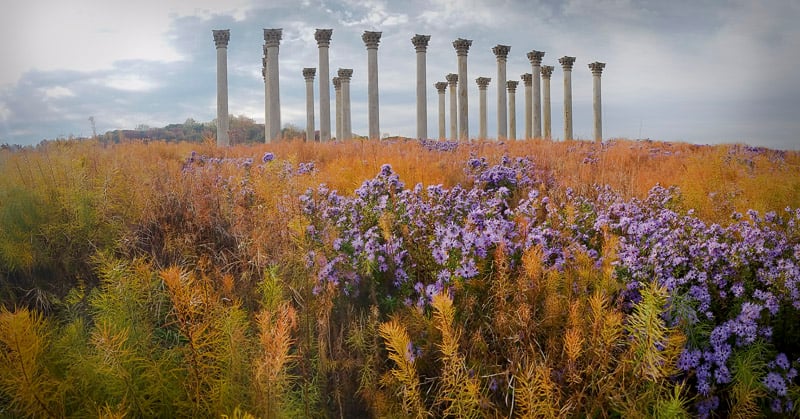
Amsonia hubrichtii's visual appeal is strong enough for it to be used as a stand-alone specimen (or grouping of 3 so that it’s not too lonely) in a small garden. If you have more space, the options increase exponentially. Threadleaf bluestar can be used for the structural layer of a garden design, in the same way you might use shrubs, or large, clumping, upright grasses and forbs. It is also extremely effective when planted in large groups or waves where it will create dominant seasonal themes: sky blue in spring, to lime green in summer, then golden yellow in fall, and finally muted brown through winter or until you choose to cut it back.
Adaptability:
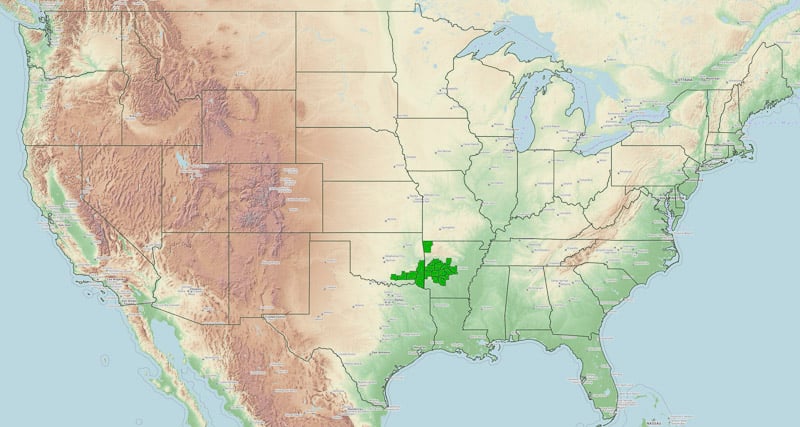
Primarily found growing in the Ouachita Mountains (EPA Ecoregion 36), in hardiness zone 7b, an area with hot and humid summers, A. hubrichtii is remarkably adaptable. It can be grown worry free in zones 5 through 8, with some sources indicating that it will even tolerate zones 4 and 9. It is not particular about soil, performing well in average garden conditions and in less-than-ideal ones. The species is drought tolerant, and performs admirably under full sun and in dry soil where it will develop a more compact habit. Its natural habitat includes open woodlands and stream margins. However, those conditions result in a plant that is leggier than we are used to seeing in cultivation.
Spotted in the Wild:
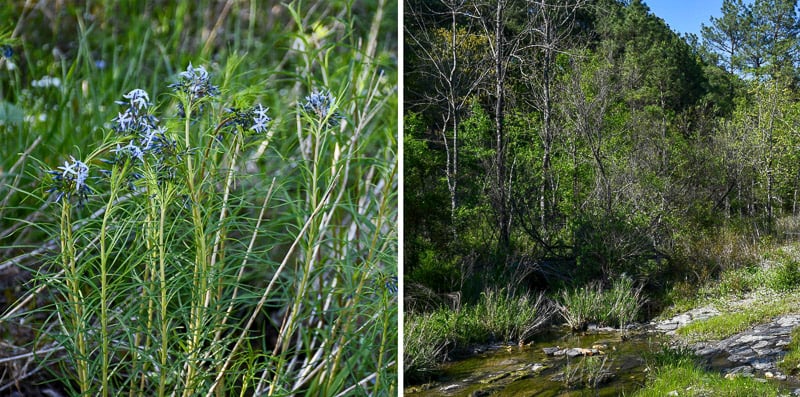
Dr. Jared Barnes, of Stephen F. Austin State University, Texas, and Thomas Rainer, co-author of Planting in a Post-Wild World, set out to Arkansas in search of wild populations of Amsonia hubrichtii in an effort to better understand the species’ growing requirements. What they found was a surprise, at least to us. Within horticulture and garden design circles, we think of A. hubrichtii as a plant for full sun and dry to moist conditions. However, the only population that Barnes and Rainer found was growing along a stream (some plants were actually in the stream) and under the open shade of a woodland margin. That is a true testament to the species’ adaptability.
Read more about the journey of discovery on Dr. Jared Barnes’ blog.
Function:
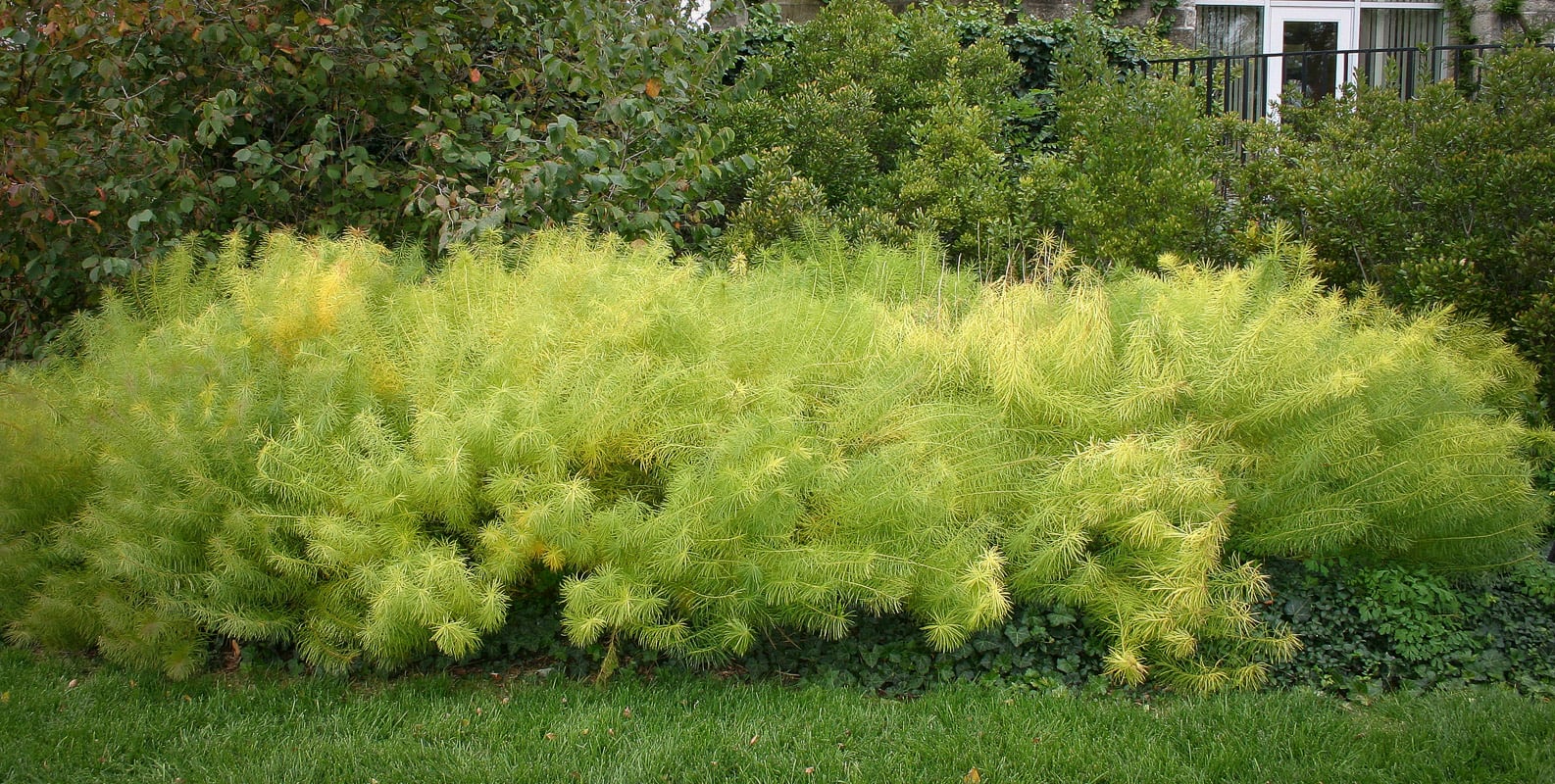
Forming dense masses, with robust root systems, the plants effectively suppress weeds while stabilizing the soil. Threadleaf bluestar's adaptability and versatility make it a good selection for use in green infrastructure projects, such as rain gardens and bioswales, that require plants that can withstand the extremes of periodic drought and inundation. Although native to a limited range, where it is rare at that, it will provide the same wildlife and ecological services as congener species that benefit from a broader distribution, such as Amsonia tabernaemontana. The nectar will attract hummingbirds and long-tongued insects including various butterflies, bees, and hummingbird moths. The class of wildlife it will not appeal to is mammalian herbivores, such as rabbits and deer, that are deterred by the plant’s milky, latex sap typically present in members of the dogbane family (Apocynaceae).
Cultivation:
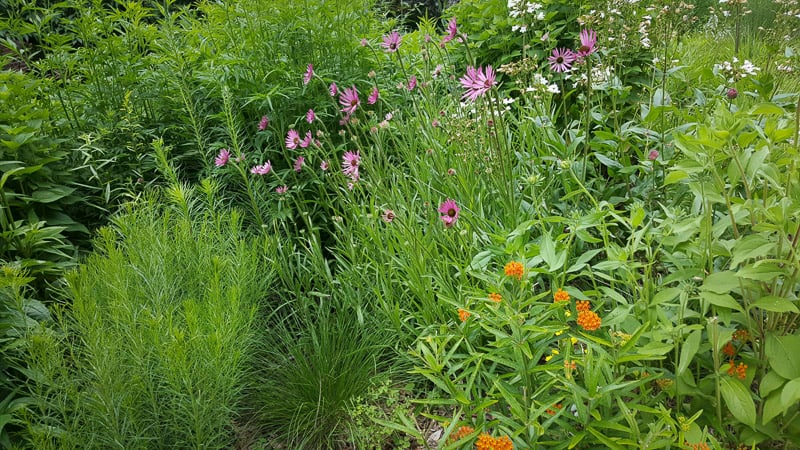
We often talk about low-maintenance plants. So much so, in fact, that the description is losing meaning. But, I’m not going out on a limb when I say that Amsonia hubrichtii is a low-maintenance plant. It might take two to three years to reach its mature size, but once reached, the plants are reliable and stable. They will weather periods of drought or flooding with ease and grace. Starter plants are deceptively small, so resist the temptation to cram them together. We recommend spacing plants a minimum of 24” on center, preferably 30” or even 36”. You should also keep a similar clearance between the plants and any paths, driveways, or sidewalks. Plan on a permanent location. This bluestar will not produce offshoots and is difficult to relocate once established. Plants do produce viable seeds; however, they seem reluctant to spread. It can be combined with more species than we could possibly name, but here are a few favorites:
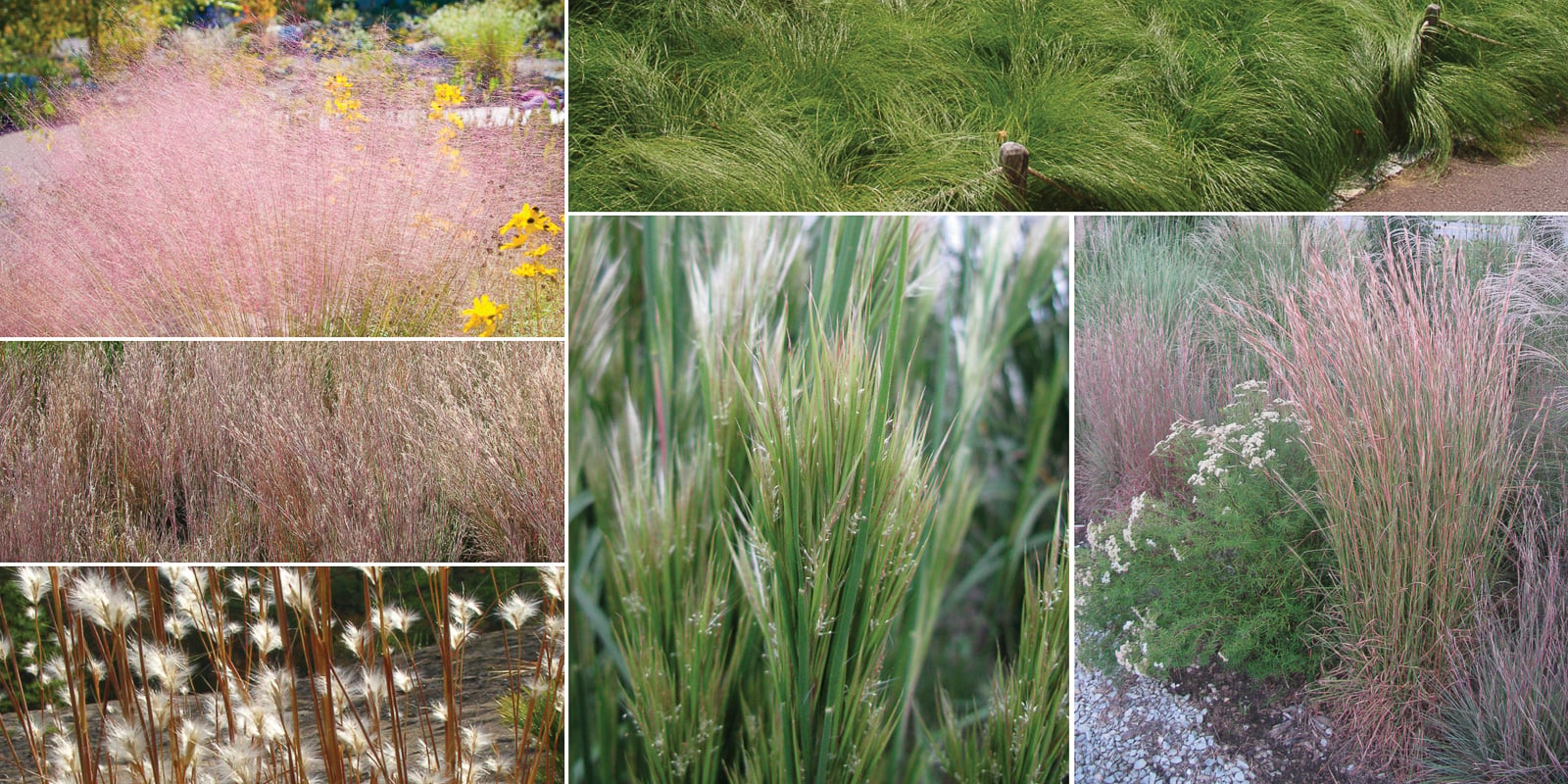
Grasses:
Schizachyrium scoparium (little bluestem), Andropogon glomeratus (bushy bluestem), Andropogon ternarius (splitbeard bluestem), Andropogon virginicus (broomsedge bluestem), Muhlenbergia capillaris (pink muhlygrass). Piet Oudolf likes to combine it with Sporobolus heterolepis (prairie dropseed) if you’re patient enough to wait 3 to 4 years for this grass to reach mature size.
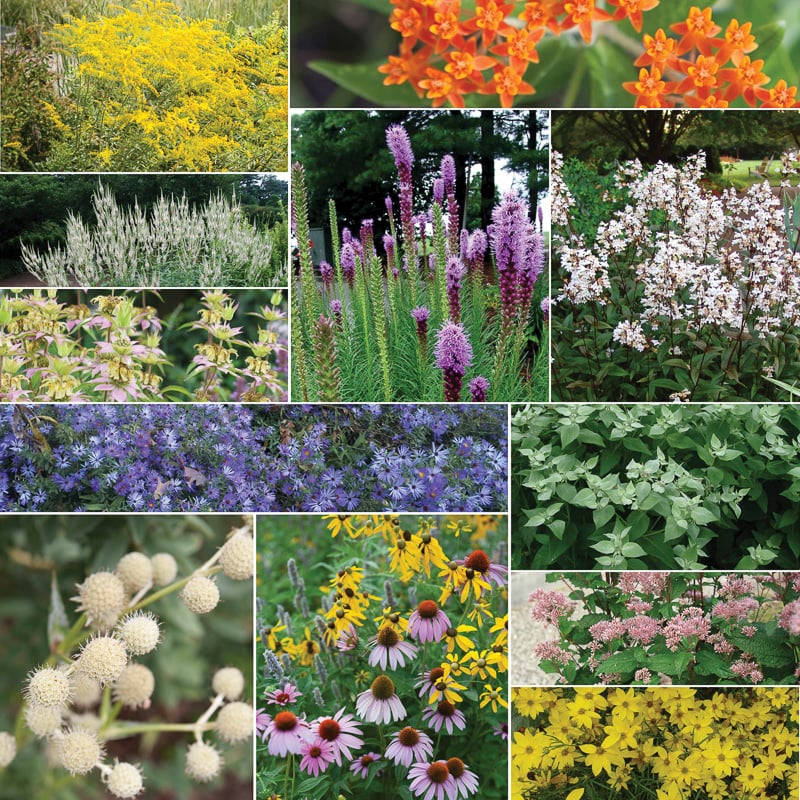
Forbs:
Asclepias tuberosa (butterfly milkweed), Coreopsis spp. (tickseed), Echinacea spp. (purple coneflower), Eryngium yuccifolium (rattlesnake master), Eutrochium dubium 'Little Joe' (‘Little Joe’ Joe-Pye weed), Liatris spp. (blazing star), Monarda punctata (spotted beebalm), Penstemon digitalis (foxglove beardtongue), Pycnanthemum spp. (mountainmint), Rudbeckia spp. (coneflower), Solidago spp. (goldenrod), Symphyotrichum spp. (aster), Veronicastrum virginicum (Culver’s root), and more.
Fun facts:
In a field where the majority of species in the U.S. were identified and cataloged in the 18th and 19th centuries, Amsonia hubrichtii is a relatively recent addition and wasn’t formally identified until 1942 by Leslie Hubricht of the Missouri Botanical Garden.
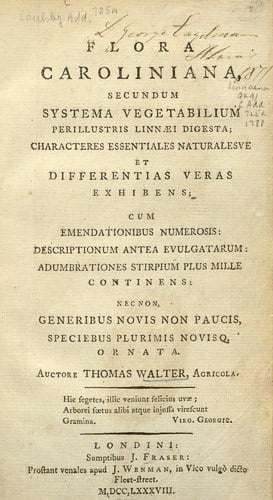
The genus, Amsonia, published in 1788 by Thomas Walter in his book Flora Caroliniana, which was the first flora set in North America to utilize the Linnaean system of classification. The genus was named in honor of John Amson (1698 - circa 1765), a British physician and amateur botanist who moved to Williamsburg, Virginia.
The genus includes 16 species native to North America, one species in eastern Asia, and one species in the eastern Mediterranean.
The common name for the genus is bluestar, due to the fact that all species within it have blue flowers and are shaped like a five point star.
Amsonia hubrichtii was named 2011 Plant of the Year by the Perennial Plant Association. A well-deserved accolade for a species that has charmed its way into so many gardeners’ hearts.

Claudio Vazquez co-founded Izel Plants in 2009 to fill the gap in online information about native plants that was pervasive at the time. With an initial focus on describing horticulturally available native plants, Izel Native Plants has since evolved into one of the top destinations for purchasing native plants online.