Named after the Greek Goddess of the Rainbow, and the emblem of kings, the Iris genus is one of the most iconic groups of plants there is, has permeated cultures far and wide, and inspired gardeners for millennia.
Indigenous to North America, Europe through Asia, and Africa, there are about 300 species, countless cultivars and naturally occurring hybrids. They range in habit from diminutive ground covers mere inches tall to the statuesque reaching heights measured in feet. Their range of habitats is equally impressive with species adapted to high or low elevations, deserts, hillsides, meadows, wetlands, and everything in between.
Characteristics shared by all Irises are their blade-like foliage, rhizomatous root systems, and easily recognizable flower structure that consists of three upright petals called “standards” and three downward-facing sepals called “falls.”
Vying for pollinators’ attention amid intense competition among flowering plants has led to unique adaptations common to the Iris genus:


“The falls are recurved in such a manner to provide a landing pad for bumblebees. The standards are upright and colorful, adding to the overall attractiveness of the flower to bumblebees. The striking and colorful veining on the sepals directs bumblebees down into a tight space between the sepal and style arm. The style arm is a highly modified pistil that connects the stigmatic lip to the ovary. While crawling down toward the nectar glands, pollen rubs off the back of the pollinator and attaches to the sticky stigmatic lip. Moving ever forward, the bumblebees’ backs come in contact with the pollen-producing anthers on the stamen where they pick up additional pollen. Botanists believe that this relatively large and colorful modified pistil adds to the overall attractiveness of the blossom to bumblebees.” -- USDA
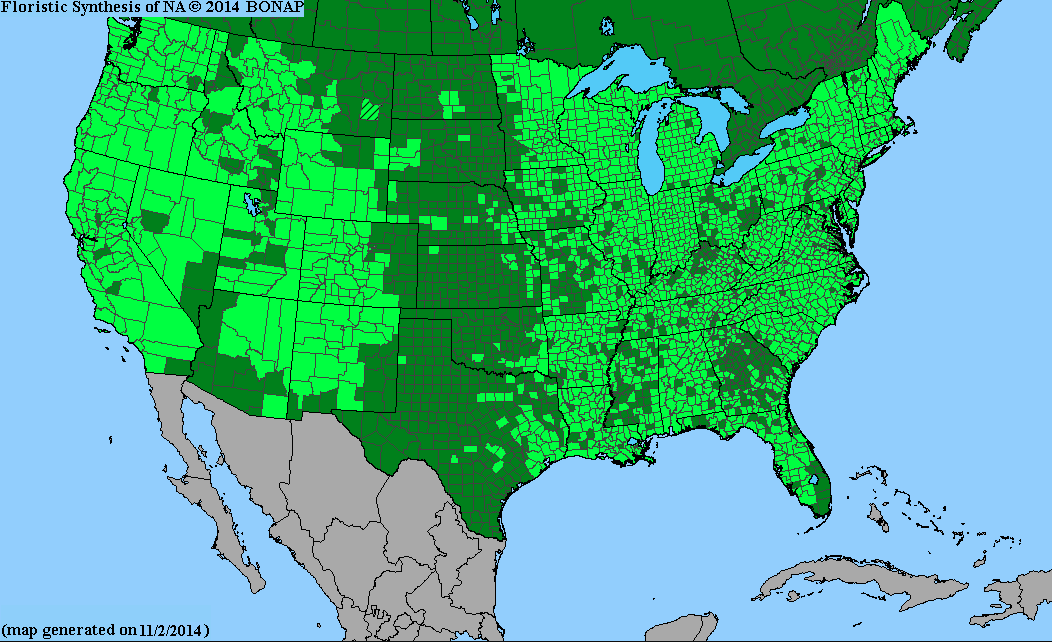
Of the hundreds of species worldwide there are approximately 25 Iris species native to the U.S. Their distribution is conspicuously divided into a western group and an eastern one. Between the two, are the Great Plains that include only a few sparse and widely disjunct populations.
There are roughly 11 native irises that belong to the eastern group - numbers are always approximate because taxa are always a moving target in botany:
- Iris brevicaulis
- Iris cristata
- Iris fulva
- Iris giganticaerulea (rare)
- Iris hexagona (rare)
- Iris prismatica
- Iris savannarum
- Iris verna
- Iris versicolor
- Iris virginica
Of these species, we will focus on those with the largest natural distribution, some of their botanical varieties and cultivars, and those that are the most readily available through the horticulture trade.
Iris cristata (dwarf crested iris)
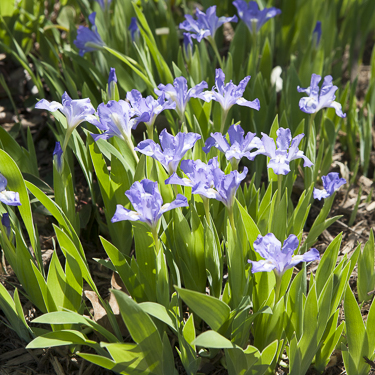

Iris cristata is the better known of our native dwarf irises. It has a short stature, with leaf blades rarely exceeding a length of 6”, and with flowers that are large relative to the size of these small plants. There are a few features that make this species stand out among other irises: The flowers are all but stemless and emerge within the foliage or hover right on top of it. This is a woodland species, so it is perfectly adapted to the shade of deciduous trees. It is more tolerant of dry conditions than most, although consistently moist soils rich in organic material are best. And, lastly, plants do not require regular division to remain healthy. If anything, it is best to let the rhizomes creep along undisturbed to form colonies and a dense ground cover.
Iris cristata Cultivars
Iris cristata 'Eco Bluebird' (‘Eco Bluebird’ dwarf crested iris)
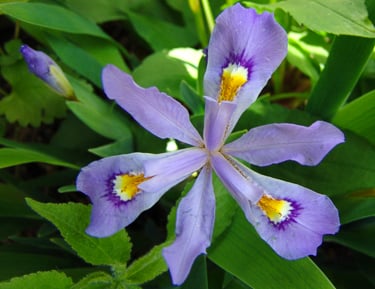
‘Eco Bluebird’ was introduced by Don Jacobs, a noted plantsman from Decatur, Georgia. This naturally occurring selection was made in 1976 from a population of plants found growing in Fannin County, Georgia. It was introduced to the trade in 1979. It differs from the species for having denser foliage, a more prominent white crest, contrasting orange inner signal and deep purple outer signal, and a more vigorous habit.
Iris cristata 'Powder Blue Giant' (‘Powder Blue Giant’ dwarf crested iris)
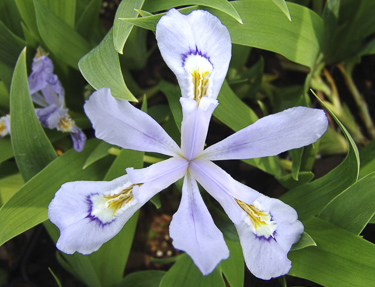
'Powder Blue Giant' is the perfect name for this cultivar: at up to 3” across, the flowers are exceptionally large for these diminutive plants. Their pale blue color is lighter than that of the species, which makes the outer blue signal on the falls stand out prominently. It was discovered by Samuel Norris in the 1960s, growing among a large natural population growing in Litchfield, Kentucky. The cultivar was named and registered in 1998 by Joe Pye Weed Gardens in Massachusetts.
Iris cristata 'Tennessee White' ('Tennessee White' dwarf crested iris)
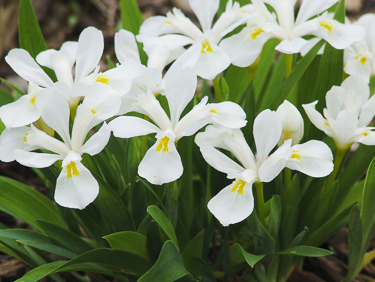
There can be wide, naturally occurring variations in bloom color within a given species, and this is certainly true of Iris cristata. One such botanical variety is Iris cristata var. alba, even though there is a current debate among botanists arguing that a change in bloom color alone is not sufficient cause to have a named botanical variety. Nevertheless, ‘Tennessee White’ is a selection of the species with pure white flowers. If that won’t brighten a spot in a shaded garden, nothing will!
Iris fulva (copper iris)
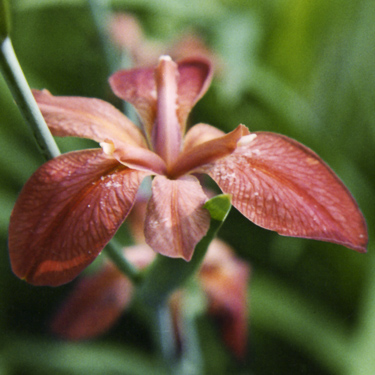
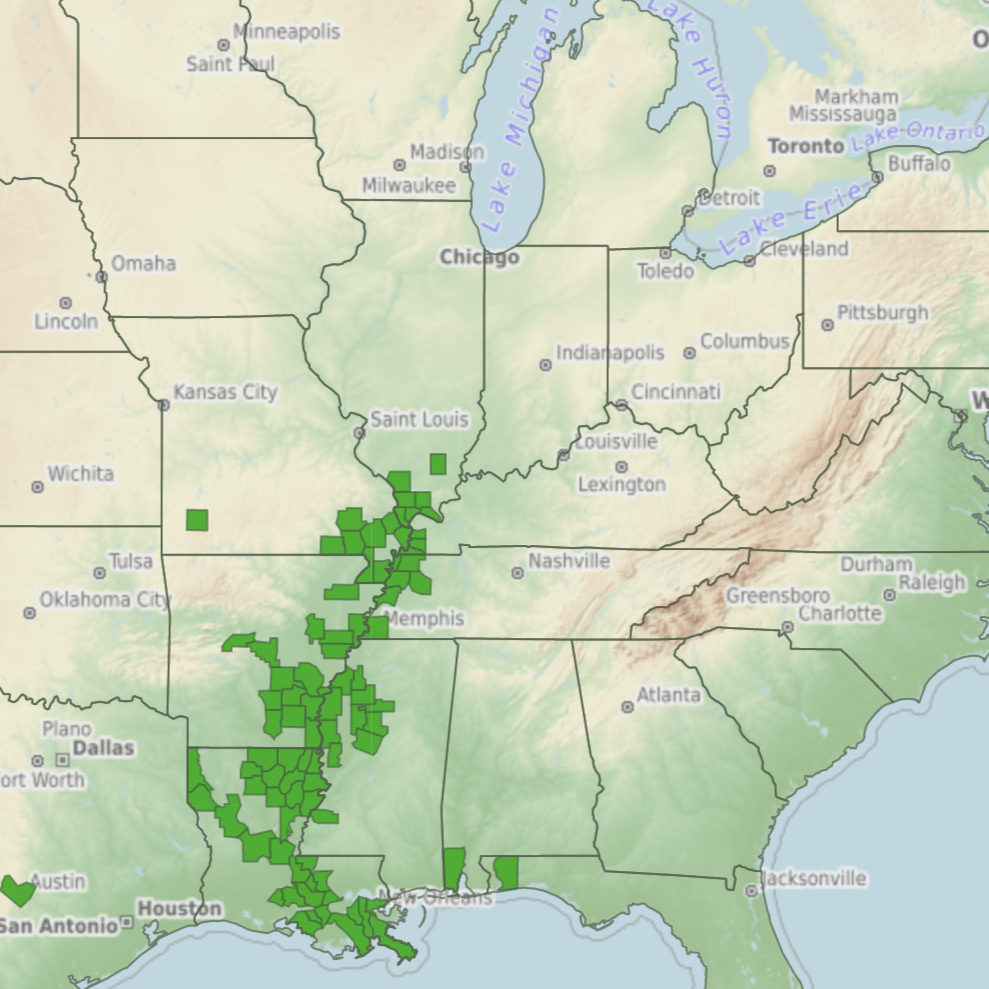
Iris fulva is a splendid species, if you have the right spot for it. It will tolerate consistently moist soil, but is most comfortable with wet feet. Its native range is throughout the Mississippi alluvial plains, from southern Illinois to Louisiana and is well-adapted to seasonal flooding and extended periods submerged in up to 6” of water. Ideal for poorly-drained clay soils, in and around water features, it will spread via rhizomes to create dense colonies topped with stunning orange and coppery flowers. Should you not have the right spot but would like to enjoy the strong vertical accent provided by the 2’ to 3’ tall foliage, it performs very well in container gardens if you divide the plants every couple of years to maintain their vigor.
Iris prismatica (slender blue iris)
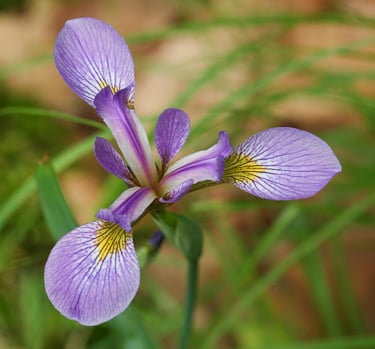
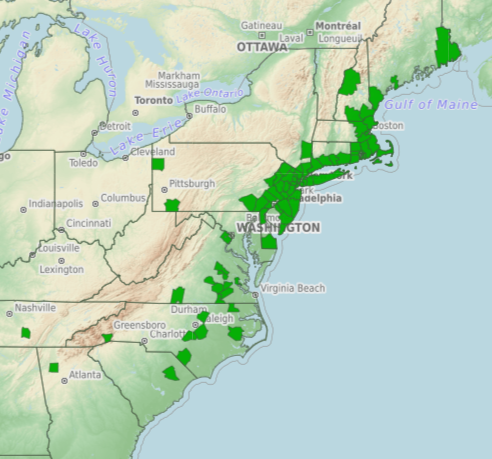
Iris prismatica is a coastal species with the densest distributions found growing from New England to the Midatlantic. Further south, the species is becoming rare and its populations disjunct. It earned its common name because of its slender, grass-like foliage. And although individual blades are merely ¼” to ½” across, the foliage remains erect. The pale blue flowers are relatively large for such slender plants and can grow up to 4” across. Iris prismatica appreciates wet feet and is at home and can be found along the margins of both brackish and freshwater wetlands. It does well in moist to wet soil, in and around water features, and in container gardens if divided regularly.
Iris verna (dwarf violet iris)
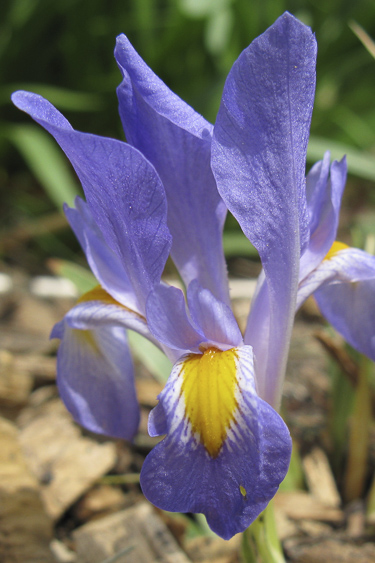
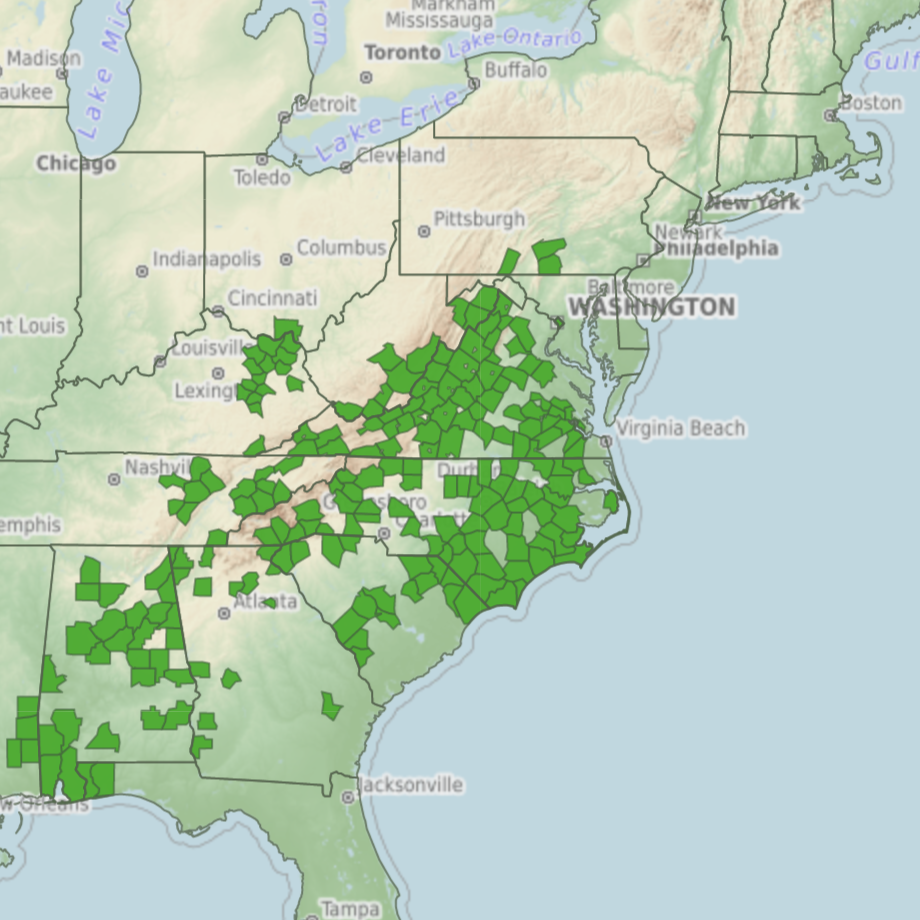
Iris verna is another one of the native dwarf irises, and lesser known than Iris cristata. It is also the smallest one of the lot, topping off at barely 6” tall. It is found growing in mesic to dry woodlands - as is Iris cristata - but is better adapted to nutrient-poor soils and higher light levels. Bloom color is highly variable, ranging from violet, to light blue, and almost white. One consistent trait, however, is the prominent bright orange inner signal.The most distinguishing features are that the flowers emerge before the foliage, and that they are noticeably fragrant The species is divided into two botanical varieties: Iris verna var. verna, and Iris verna var. smalliana.
Iris verna var. verna (Coastal Plain dwarf violet iris) is the southernmost of the two varieties with natural populations centered around the coastal plains of North Carolina and South Carolina. Bloom colors are on the lighter side of the spectrum. The natural distribution of Iris verna var. smalliana (Upland dwarf violet iris) is centered around the Appalachian mountains, extending from southern Pennsylvania to the Gulf Coast of Alabama. Its bloom colors are on the deeper side of the spectrum. A more reliable trait, than bloom color, to distinguish the two varieties is their growing habit: the former grows in loose colonies, whereas the latter grows in dense clumps.
Iris versicolor (harlequin blueflag)
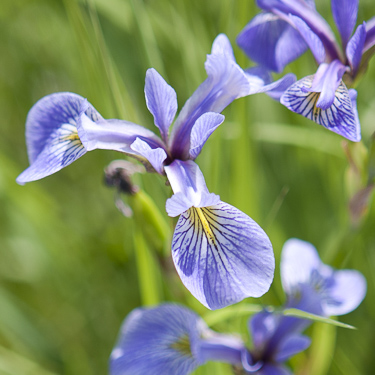
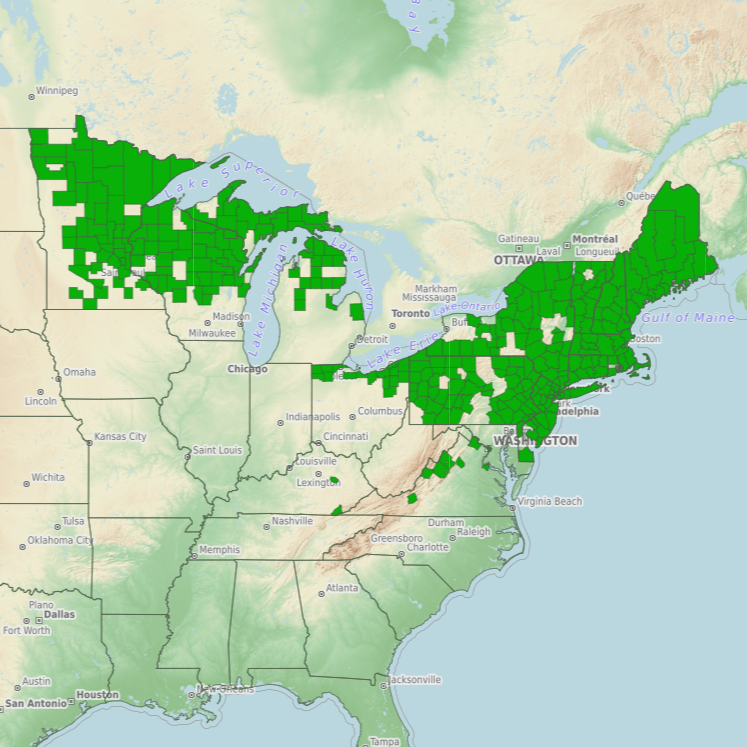
Iris versicolor is a northern, and hence, very cold hardy species that is widely distributed in New England, and from Michigan to Minnesota. It is an emergent species - it can remain under permanent inundation in up to 6” of water - but will adapt to soils that are consistently moist. It is an elegant species that can grow up to 3’ tall with showy deep blue flowers. Best grown around water features and margins, it forms dense colonies and is effective at controlling erosion. It also adapts well to container gardening. The rhizomes of this species are more toxic than those of other irises and their sap can cause dermatitis in sensitive people. Use gloves when dividing!
Iris versicolor 'Purple Flame' (‘Purple flame’ blue flag)
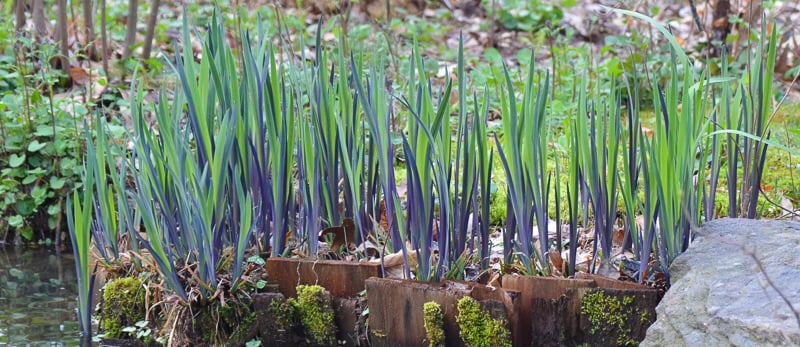
‘Purple Flame’ is an exciting introduction by Mt. Cuba Center in Hockessin, DE. The cultivar is the result of a chance mutation discovered in their gardens and features striking foliage that emerges with purple hues that gradually fade to green as the flowers set to bloom. Although it is adapted to wet feet, this cultivar is more versatile and tolerant of moist garden conditions than is the straight species. It is open pollinated and comes back true from seed. With such exceptional features ‘Purple Flame’, is rapidly gaining popularity within the horticulture trade.
Iris virginica (blue flag iris)
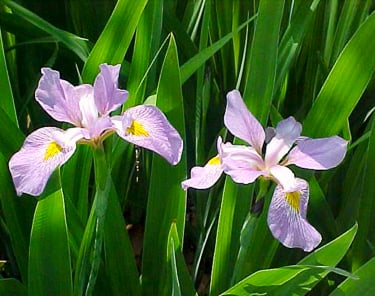
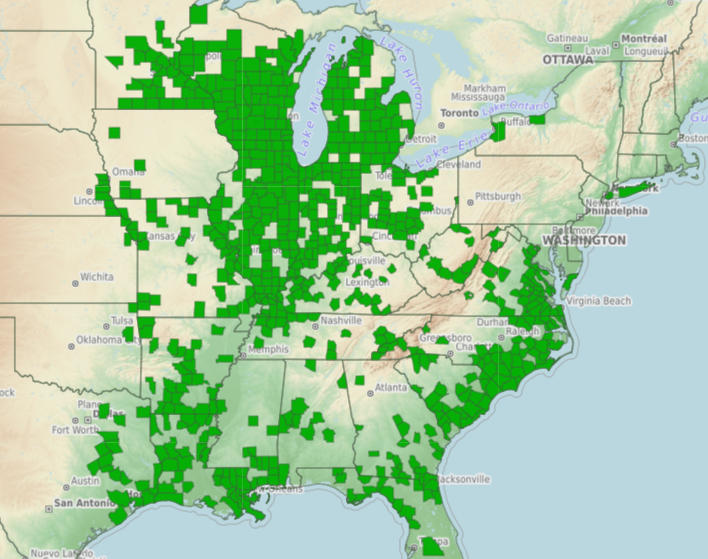
Similar in many ways to Iris versicolor, but with a more southern range and greater heat tolerance, Iris virginica sometimes goes by the common name southern blueflag. As compared to Iris versicolor, the flowers of Iris virginica have a bright yellow signal versus one that is pale and greenish. The other distinguishing trait is that the leaves extend above the foliage. The cultural requirements, however, are similar.
The species can be divided into two botanical varieties: Iris virginica var. shrevei and Iris virginica var. virginica. The former has the northernmost and westernmost distribution and can be distinguished by its branched flowering stems. The latter is found from Virginia southward into Florida and typically bears unbranched flowering stems.
ADDITIONAL NOTES
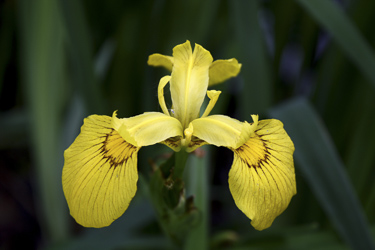
Beware of Iris pseudacorus (yellow iris, yellow flag). This is an exotic invasive species. It is very attractive and the yellow flowers stand out among our native color palette. However, it has invaded natural wetlands across the country and is displacing wetland plant species. You should never collect wild specimens for personal use, but in this case, it is a critical no-no. Don’t even collect the seeds!

Claudio Vazquez co-founded Izel Plants in 2009 to fill the gap in online information about native plants that was pervasive at the time. With an initial focus on describing horticulturally available native plants, Izel Native Plants has since evolved into one of the top destinations for purchasing native plants online.