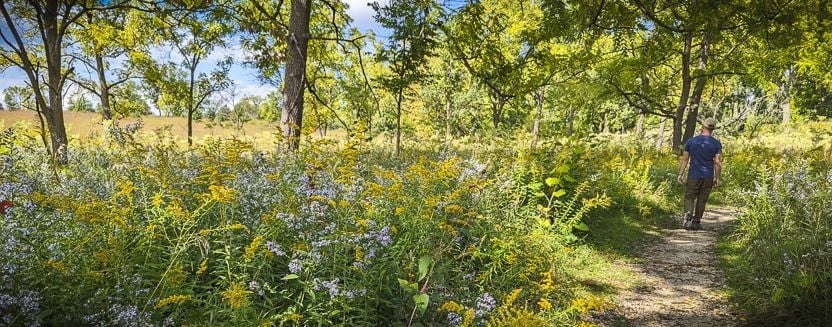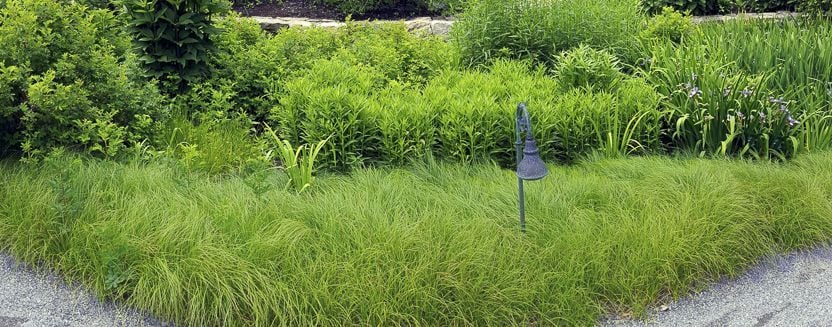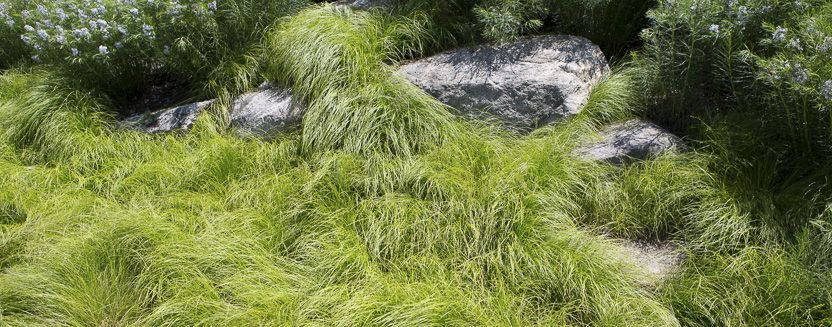

Just add Carex: Sedges make valuable companions for showier perennials.
Sedges have enjoyed unprecedented attention the last few years. Articles in The Washington Post (2017), Horticulture (2022) and Landscape Architecture (2023) introduced many gardeners to plants in the genus Carex, which are commonly referred to as sedges. Colorful, variegated selections from Asia have been in cultivation for decades, but it’s the North American natives getting the press. And Mt. Cuba Center’s 2023 sedge trials report put them squarely in the spotlight.
The attention is notable given native sedges’ low-key appearance. Their flowers tend to be small, and only a few species have showy blooms. Rather, their strength lies in their grasslike foliage and unfussy nature. They are perfectly suited to a supporting role in the garden.
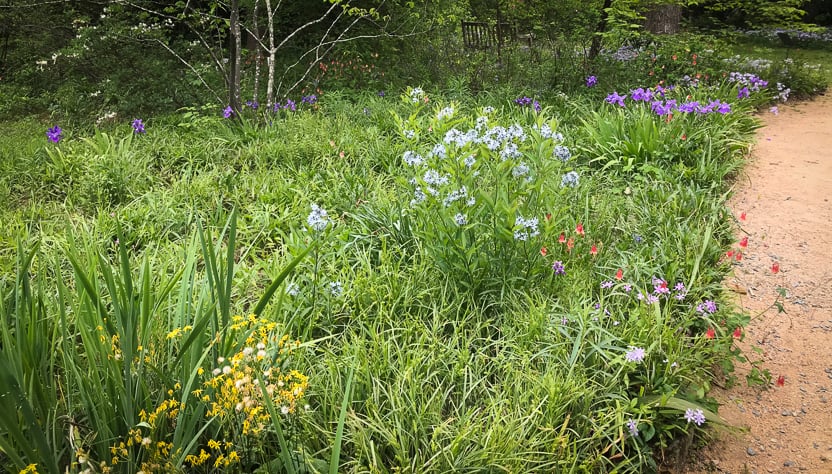
Sedges’ varying shades of green provide a backdrop for flashier flowering companions. The narrow blades lend visual texture that contrasts beautifully with broader-leaved perennials. They’re relatively easy to grow and don’t require a lot of attention. They’re also go-to plants for partial sun to shade, where turf and warm-season ornamental grasses struggle.
Although they’re beautiful in their own right, I think of sedges as the backup singers of the plant world. They’re not usually the stars of the show, but they tie it all together and make the performer in the spotlight shine. They’re the foundation for successful combinations.
Carex, Carex Everywhere
Carex is a versatile genus, offering species adapted to a range of natural and constructed environments.
Kathryn Ancaya, of Living Roofs, Inc., is a landscape architect based in North Carolina. Her sedge combinations survive the tough conditions on green roofs, which are designed to capture water and drain quickly. Plants there must withstand periodic inundation by rainstorms and long periods of dryness in between. They need to stand up to the daytime heat in Southeastern summers and to the high nighttime temperatures that can zap plants’ reserves.
On the ground, one of Ancaya’s favorite combos—Carex texensis (Texas sedge), Allium cernuum (nodding onion) and Penstemon hirsutus (hairy beardtongue)—translates well to hot, dry spots like the edges of pathways and the upper edges of rain gardens.
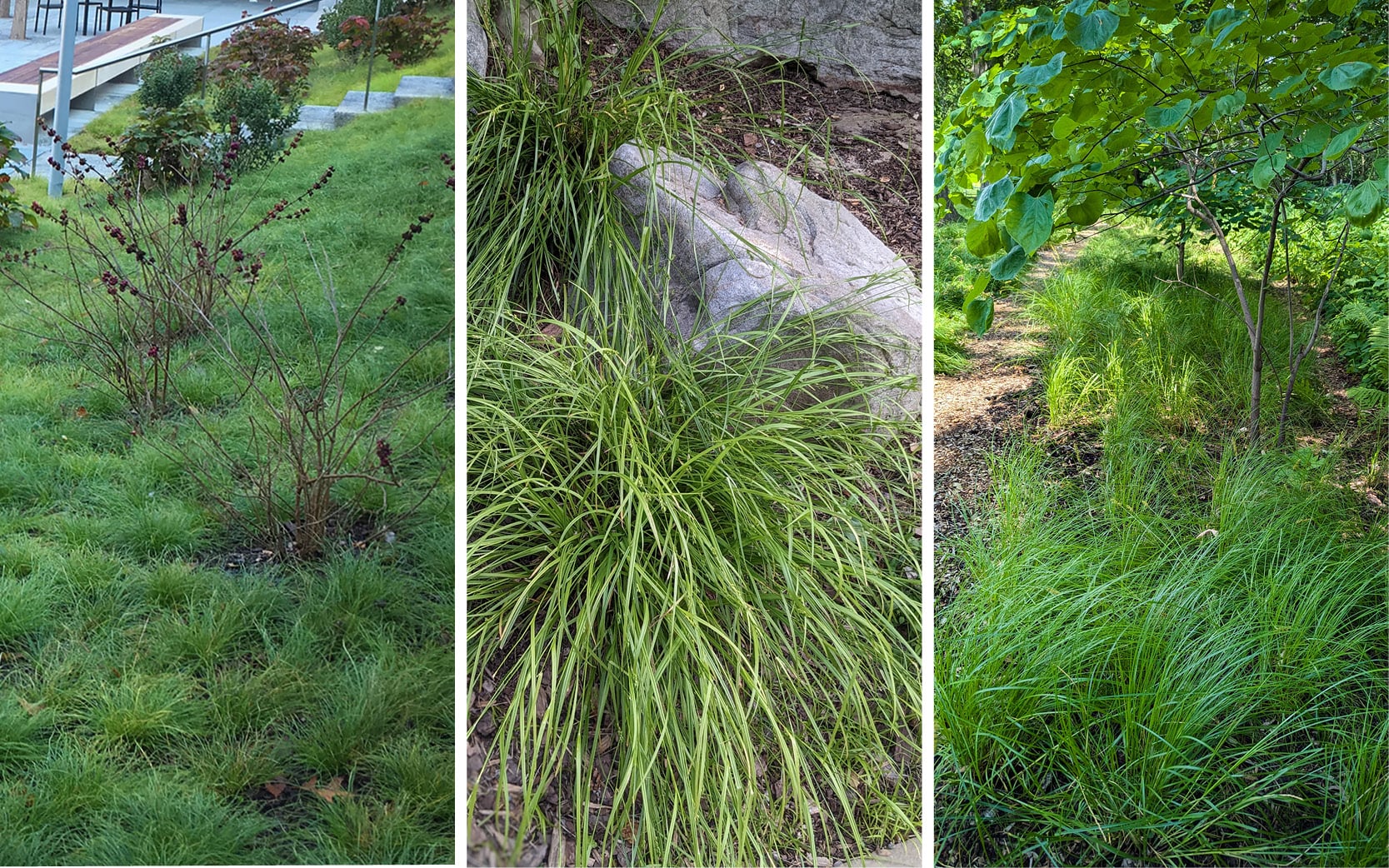
A large proportion of Carex species occur naturally in moist or wet environments. Bentley Ruggles, a landscape architect also based in North Carolina, uses Carex amphibola (eastern narrowleaf sedge) on wet sites in combination with the upright architectures of Juncus effusus (soft rush) and Iris versicolor (blue flag iris).
Ruggles looks for plants that will thrive in saturated, low-oxygen soils. These and other moisture-loving species are useful at the edge of a pond or stream, in a drainage ditch or near the base of a downspout. When there are large areas to cover or plant bullies to counter, some of the larger, colonizing species like Carex vulpinoidea (fox sedge) can give gardeners an edge.
Friends in Low Places
Most of the sedges readily available to home gardeners are short—usually three feet or lower in height. These can be combined with low-growing perennials to provide benefits beyond what mulch or turfgrass offer. They help suppress weeds, slow and clean stormwater, increase water infiltration and support wildlife. Many species of sedges host caterpillars and provide food, cover and nesting sites for birds and small mammals.
When it comes to gardening for wildlife, sedges help create “soft landings” for pollinators and beneficial insects. According to pollinator conservationist Heather Holm, who developed the soft landings concept with environmental education group Neighborhood Greening, many insect species spend part of their life cycle in trees and then drop to the ground to continue their development. Landing on a barren hardscape can be the end for them. Diverse native plantings under native trees provide critical habitat and shelter—a soft landing that gives them the environment they need to survive.
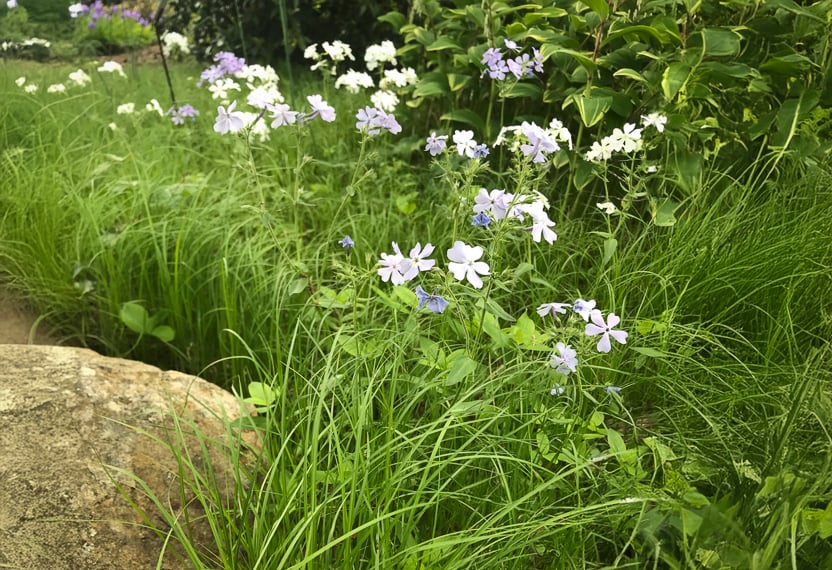
With sedges anchoring the ground layer, other perennials fill in and get a chance to show off their flowers. Chrysogonum virginianum (green and gold), Packera aurea (golden ragwort), Aquilegia canadensis (eastern columbine) and Iris cristata (dwarf crested iris) are colonizers that have persistent basal foliage. They flower in spring, and that basal foliage holds ground across the entire year. I use these ground-covering perennials—along with Phlox divaricata (wild blue phlox) to ramp up the spring floral display—in combination with favorites Carex cherokeensis (Cherokee sedge) and Carex rosea (rosy sedge). The combinations adapt well to mixed sun and shade, a big deal when gardening under mature trees.
Someone to Look Up To
In sunnier habitats, sedges tend to grow in climates where temperatures are cooler, where there’s consistent moisture, or tucked beneath shrubby plants and taller perennials. Whether it’s sun or shade, Carex are expert minglers. That’s why they’re well suited as the underplanting for taller perennials.
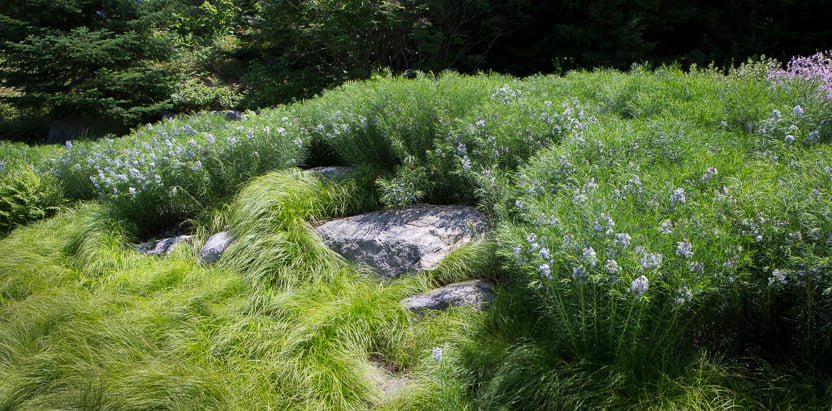
Amsonia hubrichtii (Arkansas bluestar) and Baptisia australis (wild indigo) have a big presence in the garden. Carex blanda (eastern woodland sedge) and Carex amphibola (eastern narrowleaf sedge) are all excellent fillers for underneath these taller perennials, especially in mixed sun-shade areas. These sedges spread readily by seed, so make sure you put them where you want more.
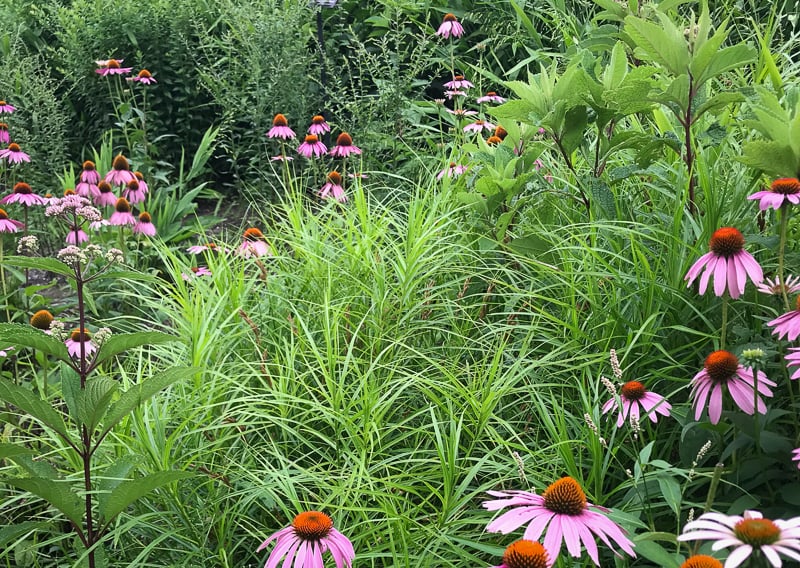
Carex muskingumensis (Muskingum sedge) is at home in consistently moist areas and has a gentle, spreading habit. Its palm-like foliage contrasts beautifully with the broad foliage and bright flowers of Echinacea purpurea (eastern purple coneflower) and compact cultivars of Eutrochium (Joe-Pye weed), such as Eutrochium dubium ‘Little Joe’.
Foliage Flex
Sedge combinations are also an opportunity to focus on foliage. A mix of textures—fine foliage, bold foliage, different leaf shapes and sizes—provides visual contrast and allows you to create compositions with layers of interest beyond flowers and colors. Plantings that are primarily foliage driven retain their appeal throughout the growing season. They also give the viewer’s eye a place to rest; they’re soothing, and yet interesting enough to be engaging.
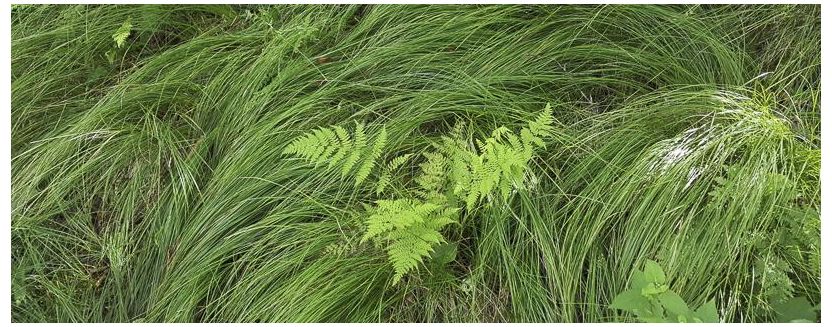
Ferns are classic foliage plants and excellent companions for sedges. The delicate fronds of Athyrium filix-femina (lady fern) play beautifully with the narrow blades of Carex appalachica (Appalachian sedge), and both do well in rich, moist, well-drained soils. For drier sites, try Carex albicans (white-tinged sedge) and evergreen Polystichum acrostichoides (Christmas fern). Adiantum pedatum (northern maidenhair) has intricate foliage and thin, black stems. It forms a lovely mélange of texture growing with the broad, bluish leaves of Carex laxiculmis ‘Hobb’ (Bunny Blue® sedge) and the plump rosettes of Sedum ternatum (woodland stonecrop).
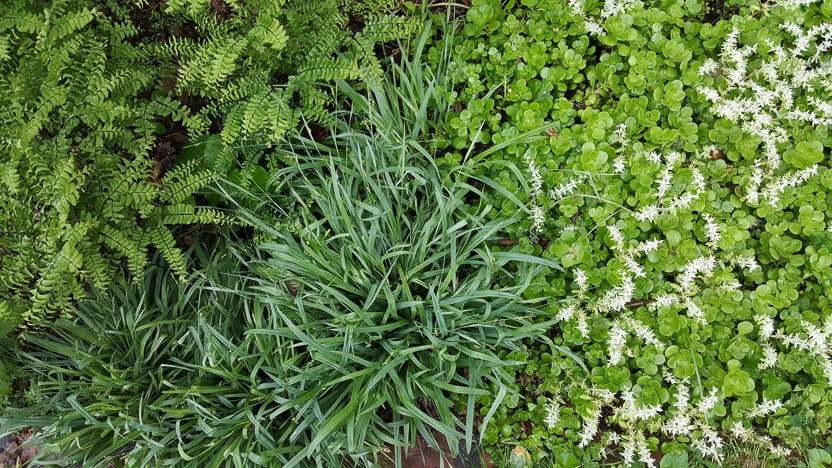
In a foliage-heavy combo, the broader bladed sedges contribute linearity with a visual boldness that feels lush. Like Bunny Blue® sedge, Carex flaccosperma (thinfruit sedge) has wide, bluish leaves, and it is tougher than it looks. Carex plantaginea (plaintainleaf sedge) is one of my favorites. Wide, dimpled leaves earn it the alternative common name of seersucker sedge. Mix these bold-textured sedges with the showy foliage of Heuchera (alumroot) or Tiarella (foamflower). Add Eurybia divaricata (white wood aster) for quick coverage and late season blooms.
An Easy Harmony
Finding good companions starts with matching a sedge to the site and your landscape goals—right plant, right place, right purpose—and then branching out. Whether you’re creating soft landings, filling in around taller perennials, or building foliage combinations, the backup singers will be there to tie it together and help your garden shine.
Carex Combinations:
Try these two- or three-plant mixtures in a challenging spot.
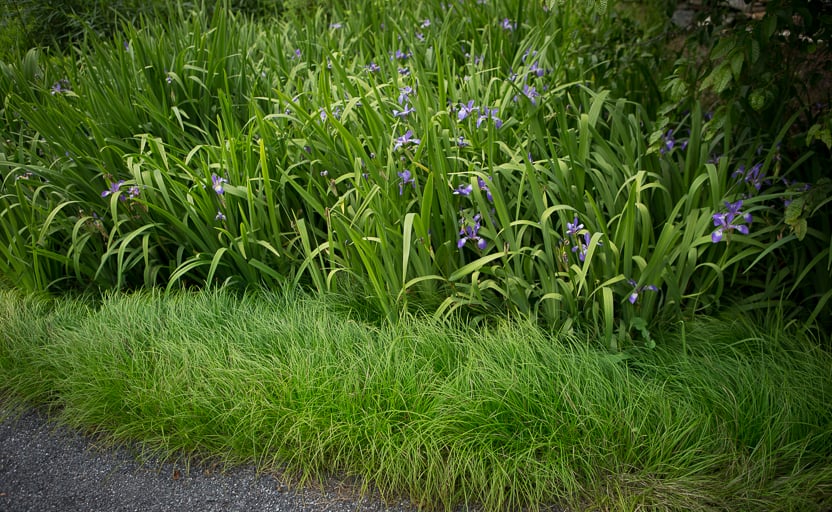
FOR FULL SUN TO PART SHADE & WET SOIL

Carex cherokeensis (Cherokee sedge)
A 10- to 12-inch species with rich green foliage
+ Packera aurea (golden ragwort)
A semi-evergreen groundcover with dark, heart-shaped leaves and tall stalks of yellow flowers in spring
+ Fragaria virginiana (wild strawberry)
A cool-season groundcover with spring flowers and early-summer fruits
FOR SUN OR SHADE & DRY SOIL
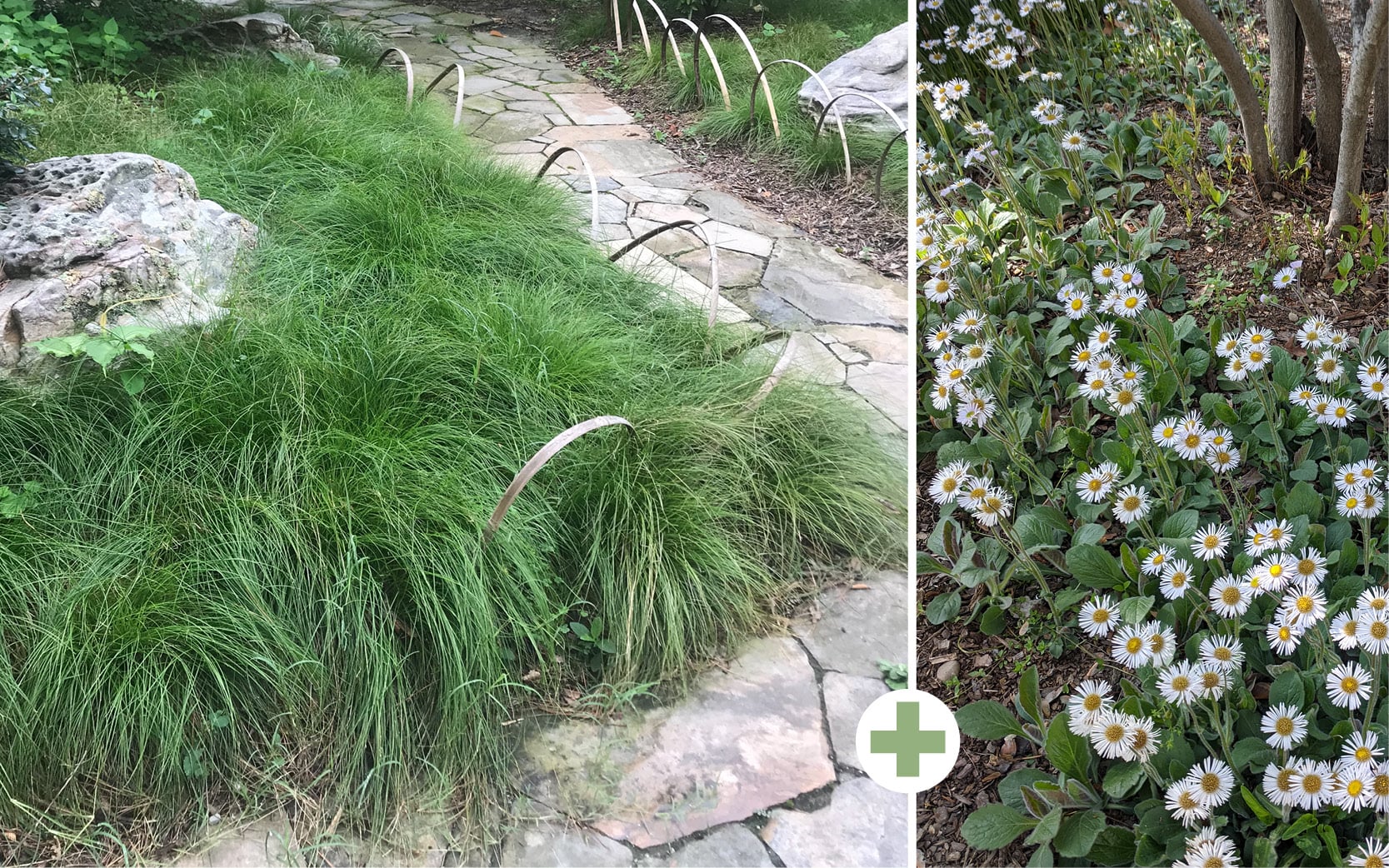
Carex rosea (rosy sedge)
A compact species that grows as a tidy tuft of bright green leaves
+ Erigeron pulchellus (Robin’s plantain)
An aster-like perennial with white flowers rising above a clump of paddle-shaped leaves in spring
FOR SHADE OR WET SOIL
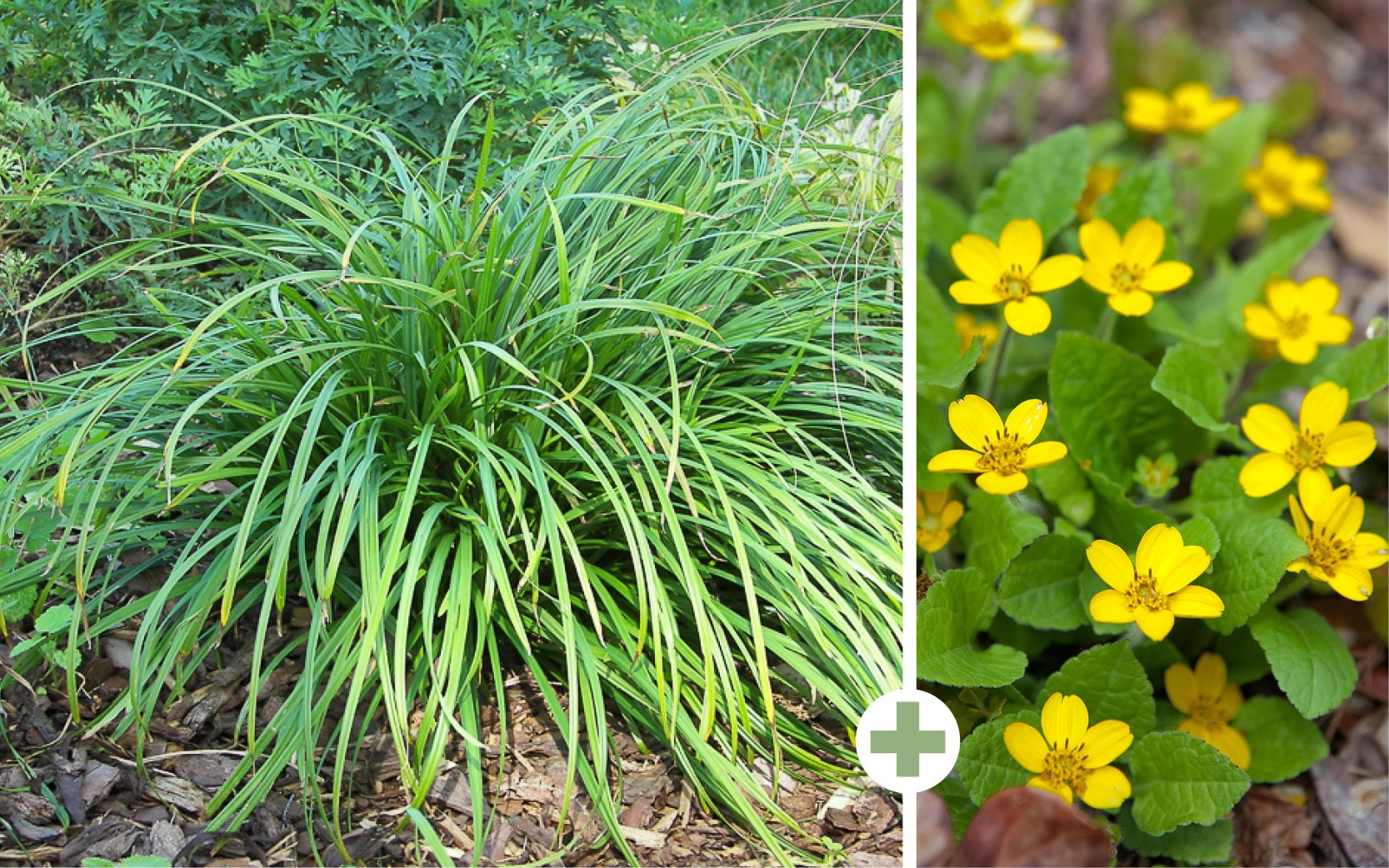
Carex amphibola (eastern narrowleaf sedge)
A foot-tall species with a decidedly fountainlike habit
+ Chrysogonum virginianum (green and gold)
A mat-forming perennial with daisy-like yellow flowers that repeat from spring to fall
FOR SHADE & DRY TO MOIST SOIL
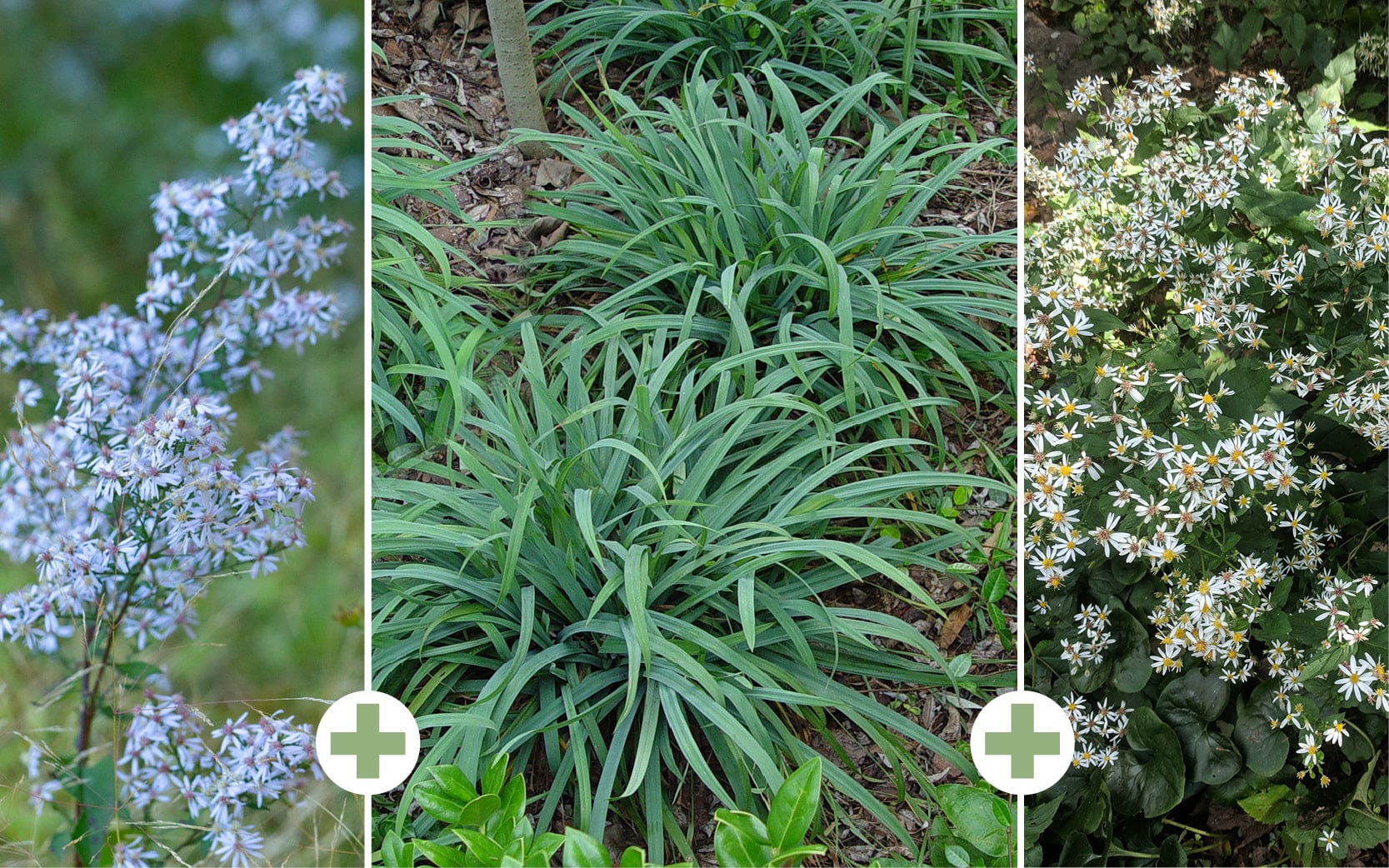
Carex laxiculmis (spreading sedge)
An evergreen species with straplike blue-green leaves
+ Symphyotrichum cordifolium (common blue wood aster)
An upright plant with purple-blue flowers from late summer to fall
+ Eurybia divaricata (white wood aster)
A sprawling perennial with heart-shaped leaves and abundant whitish flowers in late summer
Editorial Note: This post is adapted from the article, "Just Add Carex," that first appeared in the March/April 2024 issue of Horticulture magazine.
For more about sedges, check out the articles mentioned at the top of this post:
- Washington Post (2017): “Sick of buying mulch for the garden? The pros have a different idea.”
- Horticulture Magazine (2022): “Super Sedges: Using North American Carex in the Garden”
- Landscape Architecture (2023): “The Sedge Insurgency” (full article only available behind a paywall)

Shannon Currey is a horticultural educator with Izel Native Plants. She’s worked in the nursery trade since 2006, and has established herself as an expert on graminoids, including native grasses and sedges. She serves on the North Carolina Plant Conservation Program Scientific Committee and the board of the Perennial Plant Association. In 2022 she joined our team to expand our outreach efforts. Shannon lives in Durham, North Carolina and loves exploring the incredible plant diversity around her.