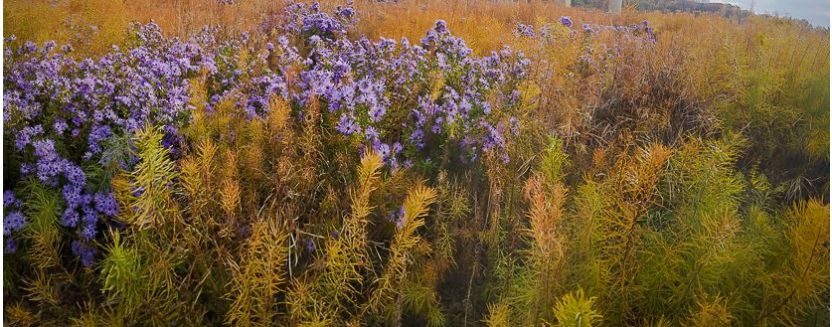
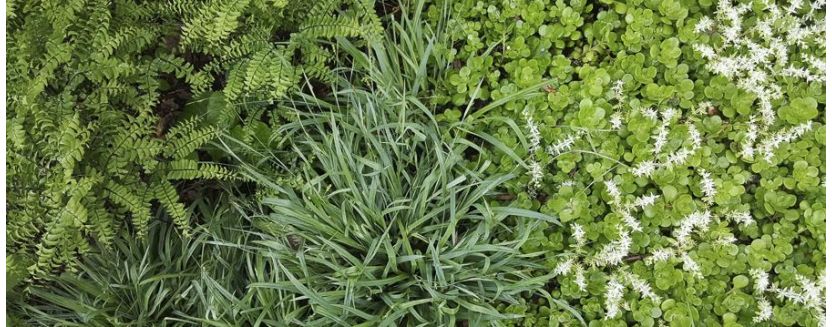
We’re in the dog days of summer now. The Dog Days of Summer are between July 3 to August 11 and refer to the period when the sun occupies the same part of the sky as the star Sirius, part of the constellation known as Canis Major or the Greater Dog. These days in the northern hemisphere are defined by the potent combination of heat and humidity that makes even the most seasoned gardener need to psych themselves up to go outside to work.
During these hot, humid summer days, the plants in our gardens show signs of stress. To ensure gardens are looking their best, gardeners use their eagle eyes to assess the issues in the landscape and troubleshoot how to fix them now, prevent them for next year, or cut their losses.
A lot of times, when people see problems in the garden, they immediately attribute all sorts of issues to lack of water, and just water the mess out of it. In the heat, it may seem like more water will be the solution, but sometimes, it can make a problem worse. So, we’re going to run through common summer issues we see in the garden and what they look like to help you solve your plant problems.
WHAT'S GOING ON? PROBLEM AND DIAGNOSIS
WILT
Floppy foliage and dry soil
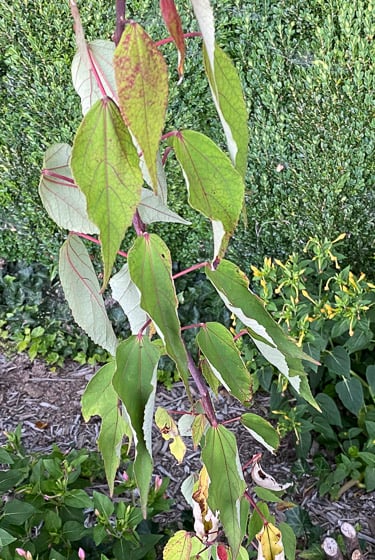
If you see floppy foliage and stick your finger in the soil and it feels bone dry, then it’s a straight-forward issue. The plant is thirsty - give it a good drink.
Water the plant at the base to ensure water goes where it’s needed. It is best maintenance practice to give plants a concentrated watering infrequently rather than quick spritzes frequently. Concentrated soaking will penetrate the soil and encourage deep root growth. Most garden plants appreciate about 1” of water a week during the summer but keep an eye on a plant’s specific moisture needs (found in the plant description). Do not spray the foliage with water otherwise you can spread disease. If you can see space between the plants, ensure that there is a 1”-2” layer of mulch applied to hold moisture in the soil. Even “drought tolerant” plants need consistent water when they’re establishing in their first year, so make sure you’re giving them what they need to thrive.
PERMANENT WILT / DROUGHT STRESS
Wilting foliage and leaves have turned gray-green in color
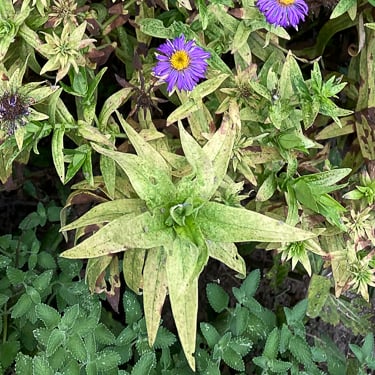
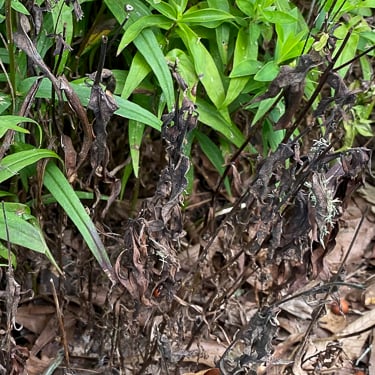
This plant was pushed beyond wilt and is moving into permanent wilt territory. Permanent wilt is hard to recover from. Once a plant gets to this point, no amount of watering will bring it back to a lush appearance. Give the plant a deep drink and continue to regularly irrigate to try and restore it. Depending on the species, you could give it a hard cut back and the plant will reflush with new growth. Warning: plants that undergo severe wilt will be more pest and disease prone. Other issues may pop up because the plant’s health was compromised (we will explore this later).
The best way to prevent permanent wilt is three-fold:
- In a dry site, choose the right plant: one that can tolerate dry conditions with little or no interference (i.e. watering).
- Apply at least 1”-2” of a natural mulch (pine straw, straw, bark, wood chips, etc.).
- In unusually dry conditions, water deeply and regularly to prevent plant death.
THE PLANT BOUNCED BACK AFTER DROUGHT STRESS
Burnt leaves or a splitting canopy in a mounded plant
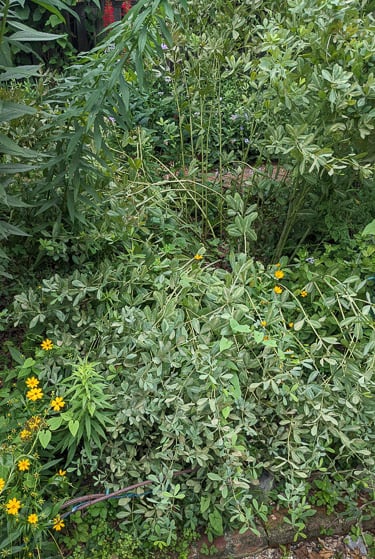
A sign that a plant is recovering from drought stress? The leaves are mostly green with crispy or burnt margins and the usual bushy habit of the plant is now spread open and splayed. This is a plant that went through a dry period but with some good watering or rain, bounced back. How do you take care of the plant after it has flopped all over the ground? Crispy leaves can be removed and composted. Other than cutting a plant all the way back to the ground and having it reflush (read article Taming the Wild for details), this open splayed habit is what it’s going to look like for the rest of the season.
A landscape professional could weigh if giving the plant garden supports is worth the effort, but it will not look as natural as it would if the supports were preventively placed earlier in the season. If a plant tends to splay every year after a drought, evaluate the plant to see if it’s a good match for the location. You could find an improved cultivar with a better growth habit to replace the floppy one, you could do a preventive cut back in late spring/early summer to manage growth (aka the Chelsea chop) or you can plan to provide plant supports early in the season before the plant splays in high summer.
HIGH HEAT AND HUMIDITY
Flagging foliage with moist soil
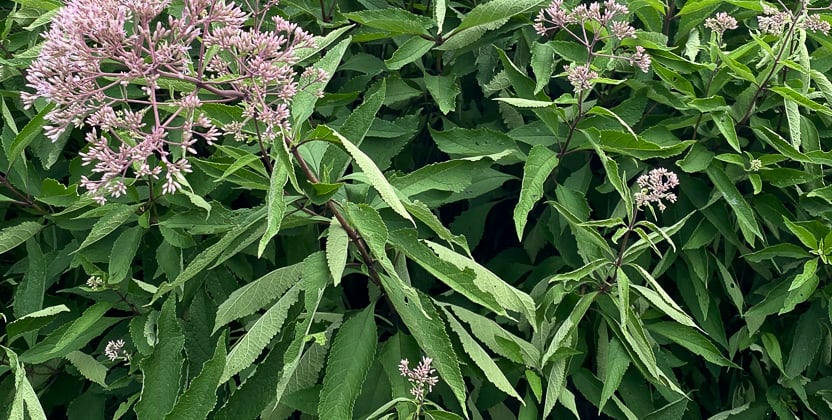
What’s the difference between wilting foliage and flagging foliage? This may sound like semantics, but wilting foliage is what happens when the plant doesn’t have enough access to water and loses turgidity in the leaf cell structure as the moisture evaporates from the leaves faster than it can be taken up from the soil.
Flagging foliage is when a plant is responding to rapidly changing environmental conditions such as differences in light, humidity, or heat. The plant is closing its stomata and resting, hardening its cell walls to withstand increasing light levels, humidity, and heat. Flagging plants usually occur when there is a rapid change in the weather, like spring’s gentle warmth to summer’s harsh heat, or the change of a week of cloudy skies and mild temperatures to full blistering sun and high temperatures. Flagging is a temporary plant state. If the soil has moisture and adequate nutrition to complete metabolic processes, the plant will bounce back right as rain. If the soil doesn’t feel moist to the touch, give the plant a drink of water. But if the soil feels moist, leave the plant be.
SUNSCALD
Burnt leaf margins and yellow foliage
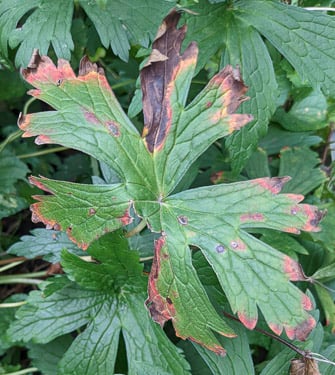
If the foliage is yellowing and it looks as if parts of the leaves were burned with a magnifying glass, then you’re right – there is too much sun on this plant. Try to move it to another area where it will receive less intense light, or you could provide supplemental irrigation. Some plants can tolerate increased light if it is compensated with increased soil moisture. Other times, a plant that is labeled as full to part-sun loves full sun in cooler climatic conditions but in warmer conditions, the sun’s rays are too strong. In areas that are warm and have mild winters, it is best to site these tender plants in part-sun areas with reprieve from strong afternoon sunlight. In cooler or cold climates, you can situate the same plants in full afternoon sun without foliar damage.
POWDERY MILDEW
White or gray blemishes on foliage with lower leaves dropping off

Powdery mildew is a fungus that is host specific. An infected plant has white or gray fuzzy spots covering the top portion of leaves. Infected leaves may eventually twist or distort and then shrivel up and die. Conditions that favor powdery mildew are low relative humidity during the day and high relative humidity at night with temperatures above 75-80F. Powdery mildew does not generally kill plants – it merely makes them unsightly. Some common powdery mildew susceptible perennials are Monarda spp., Phlox spp., Rudbeckia spp., Coreopsis spp., and Symphyotrichum spp. The best thing you can do to prevent powdery mildew is to ensure proper air circulation around susceptible plants, provide consistent soil moisture (drought stress makes plants more susceptible to disease), and if that all fails, select plants that are bred to be powdery mildew resistant.
In the landscape industry, if a professional notices powdery mildew dotting a few plants, they first work to improve environmental conditions by increasing air circulation around the plants, providing consistent soil moisture, raking up and taking away infected plant material, and weeding any nearby potential host weeds to lessen the chances of it spreading. If it looks like it’s spreading, they will apply soft chemistry, spraying a horticultural oil on infected plant material and onto other plants that are susceptible. If the plant is too far gone with the disease and is very unsightly, it can be cut back all the way to the ground and reflushed if it hasn’t been too weakened by disease. Because powdery mildew doesn’t generally kill the plant, you can decide how much you want to do to alleviate or remedy the issue.
LEAF SPOT
Leaf spots with yellow edging and lower leaf drop
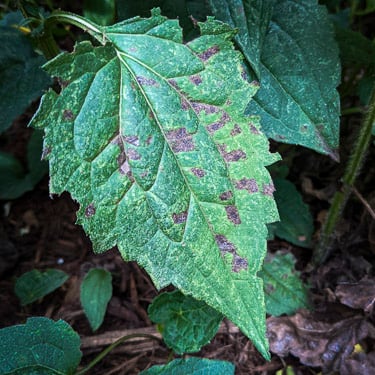
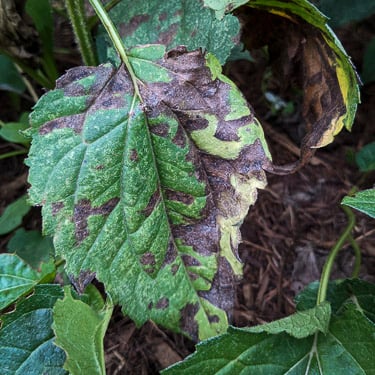
Leaf spot diseases are host specific and are generally caused by different fungi, but a few kinds are caused by bacteria. Leaf spot diseases weaken the plant by interrupting photosynthesis in the leaves. Most of the time, if it's on a few leaves, it will not kill the plant, especially larger plants. Though if a plant is completely covered, it can weaken the plant to the point of death. Leaf spot symptoms vary widely depending on the pathogen, but it will generally have different colored spotting on lower leaves first. Like powdery mildew, leaf spot disease becomes more prevalent with high humidity and irregular, dry conditions. It spreads by fungal spores splashing onto the leaves by water ,or by blowing in by the wind.
Similar to preventing powdery mildew, you can decrease the chances for leaf spot diseases by increasing air circulation around plants, removing diseased plant material (DON’T put it in your compost!), remove host weeds, and ensure that there is consistent soil moisture to limit plant stress.
This is the 3rd year with the pictured Rudbeckia hirta increasing in infection rate to an alarming level. The garden location and plant palette appear to encourage foliar diseases. It is in a highly visible area where such disease prevalence is not tolerated by the garden client. Sometimes, the best laid plans can go astray. The R. hirta will be cut to the ground, the foliage removed, and the area replanted with foliar disease resistant native plants.
FUNGAL/ VASCULAR WILT
Appears as if in permanent wilt, foliage rapidly browning and dying even with moist soil
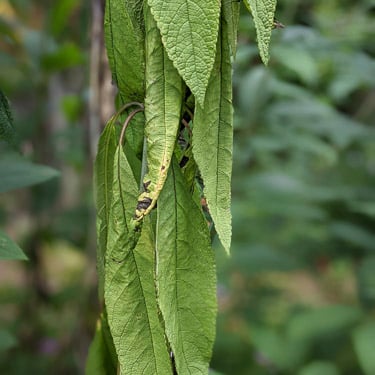

Fungal wilts are caused by soil borne pathogens that infect the xylem (water uptake) of a plant’s stem and then colonizes and rapidly spreads through the vascular system to the entire plant. Fungal wilt is opportunistic, already in the plant material, or hiding in the soil waiting for its moment to strike. In times of high heat and humidity, and prolonged drought, the stress weakens the plant and triggers the fungal spores to multiply and colonize the host.
Fungal wilts are host specific and symptoms can vary from plant to plant, depending on the type of the pathogen and type of host. The foliage will turn yellow and droop while still holding on, small branches will brown and die off, growth will be stunted, and the plant will defoliate prematurely. It can happen suddenly, or parts may steadily die off. The best way to handle vascular wilt is to prevent it. Only purchase plant material from reputable growers that know how to keep their nursery stock clean, keep soil moisture and nutrition consistent to minimize plant stress, choose disease resistant plant material, and don’t replant the same genus of plants in soil that has led to fungal wilt (these pathogens can persist in the soil for years).
If a plant has vascular wilt, there is no recovery. The plant should be removed and destroyed: either bagged up and trashed, or burned.
INSECT DAMAGE i.e. JAPANESE BEETLES
Leaves turning brown/skeletonized and losing lower leaves
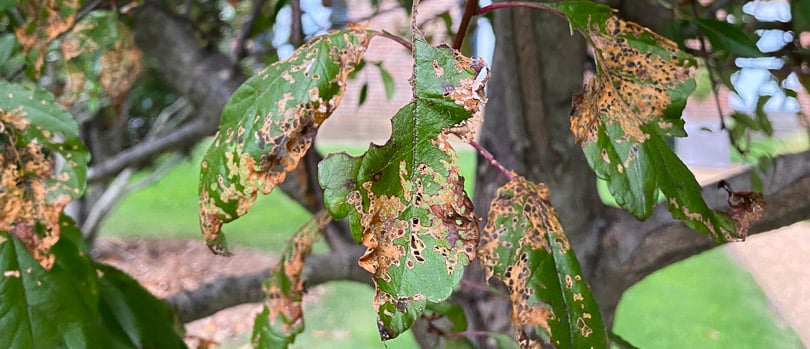
Japanese beetles (Popillia japonica) are a ubiquitous pest east of the Mississippi River and have been spreading to the Midwest. It is a generalist foliage consumer and can devour the flower buds and leaves of its favorite plants. The leaves can appear skeletonized and, in some cases, will drop off as if it’s going through drought damage. Japanese beetle damage doesn’t usually kill a plant. The foliage drop can be a case of mixed signals for the gardener: are you looking at drought stress or something else? Always inspect a plant closely before deciding on a course of action.
While a pain in the neck, the best recommendation for Japanese beetles is to plant a wide diversity of plant material in the garden. Japanese beetles have a boom-and-bust cycle and if you have a wide variety of plant material, some items may suffer damage, but the plants will recover while unaffected plants shine.
In my experience, spraying or treating your lawn for grubs isn’t terribly effective and can cause unintended environmental harm. Japanese beetles are flying insects that travel a fair distance, and unless your entire neighborhood is in on the effort, it won’t really matter if you treat your ground with various biological controls or chemicals. The best bet is the old standby of planting a wide diversity of plant material.
In my own personal garden, I keep three roses for sentimental reasons, and as they are a Japanese beetle favorite, I will take the time to pick off the scoundrels and drop them into soapy water. When I’m digging in my garden and come across Japanese beetle grubs, I put them on a plate for the hedgerow birds to eat. This is a half-hearted effort, and generally I just sigh and accept the damage on certain plants at certain times of the year as long as the plant isn’t damaged to the point where its health is compromised.
For the last four plant issues, knowing how much pest and disease you can tolerate will help determine your plan of action. If the area is highly visible, and the pest and disease makes you not enjoy your outside space, or if you live in an area with a strict HOA, implementing a preventive plan of action will be best. Preventive actions like providing adequate space between plants for air circulation, ensuring consistent moisture levels in your soil, or choosing plants that are not as susceptible to foliar diseases or certain prevalent pests, will be your surest path forward. For those of you who can tolerate the presence of disease and pests and only have your own standards to meet, you can decide how much interference you want to run and if it's worth it.
As we drag through the dog days of summer, we encourage everyone to stay hydrated out there and be safe. Keep an eye on your plants, don’t worry too much, and enjoy your gardens. The hot, hazy days of summer provide the contrast to the glorious cool days of autumn. All life has its seasons, and we take the time to appreciate each one in turn.
All photographs are © Chelsea Ruiz unless otherwise annotated. Opening photo of powdery mildew on Monarda © Izel Native Plants.
Chelsea Ruiz is a horticulturalist and garden writer based out of Virginia. She received her bachelors from University of Wisconsin Madison and cut her teeth at Chicago Botanic Garden and Longwood Gardens in research and plant trials. She trialed native plants for a wholesale native plant nursery using her research background to communicate truth over tropes to customers on how their plants grow in a wide variety of challenging settings. The goal of her garden writing is to provide the facts and hard-won experience to empower gardeners to make informed decisions in their landscapes.