
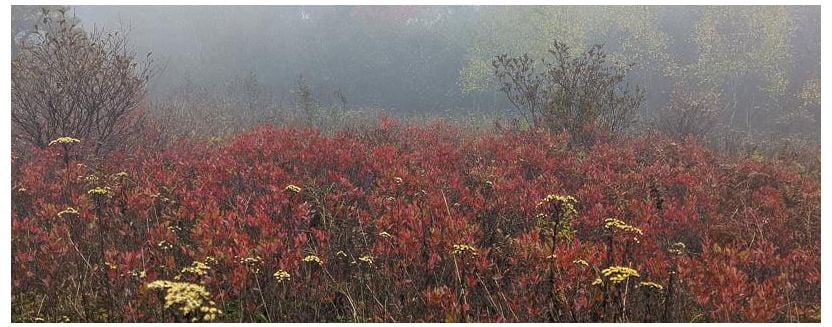
My first visit to Dolly Sods was in early spring a few years ago; it was an awe-inspiring experience and I knew right away this would be the first of many.
Wherever I looked there were plants I had never seen before, in cultivation or otherwise, and plant combinations that would make the best designers blush. It was like seeing masterpieces in a museum, visiting ancient ruins or celebrated castles having only previously read about them.
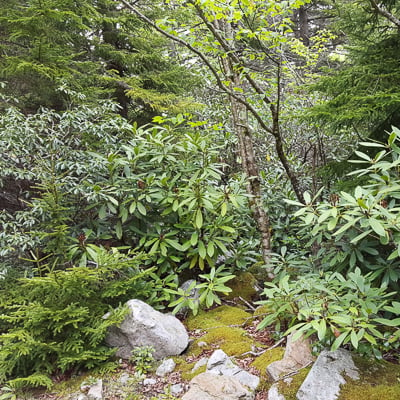
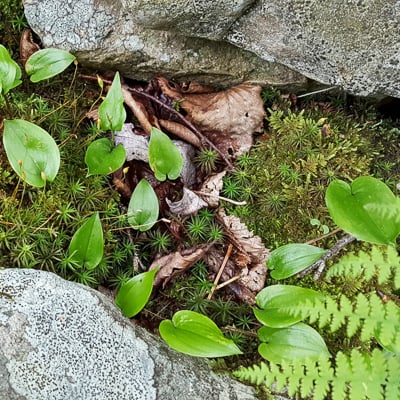
There were rooms framed by various conifers where you could let your eyes wander through the layers, past rhododendrons and mountain laurels, sedges and ferns, down diminutive Canada mayflowers peeking through beds of luscious moss carpeting the forest floor.
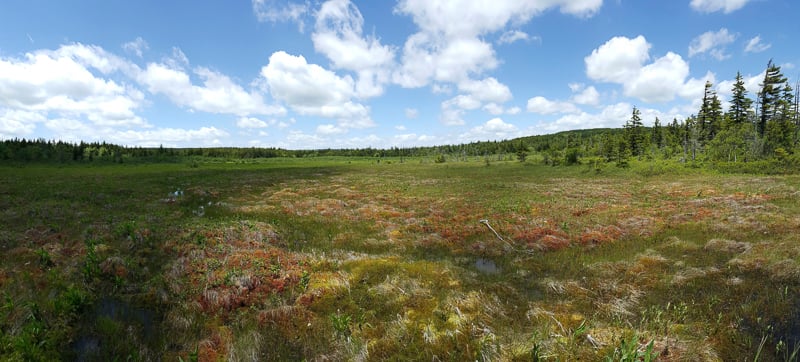
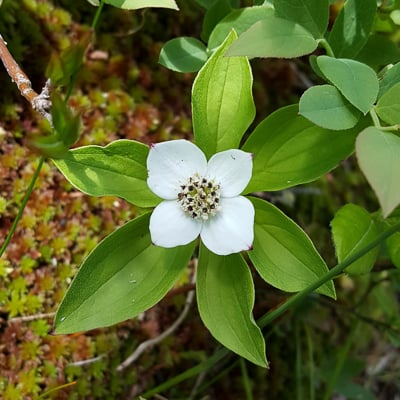
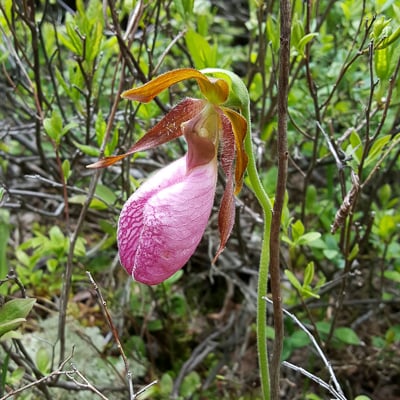
The short Northland Loop trail leads to a boardwalk that juts out into a bog. It was like a Claude Monet landscape; a floating expanse of unidentifiable patches of color. But, getting down on my knees, the intricacies of this ecosystem started to come into focus with tiny carnivorous plants, colorful sphagnum moss, and countless other species of specialized plants. Back on terra firma and completing the loop there were lady slippers; among the showiest of our native orchids. Colonies of bunchberry; a species of dogwood, rare this far south but more common in northern latitudes, that forms a groundcover no more than 9” high.
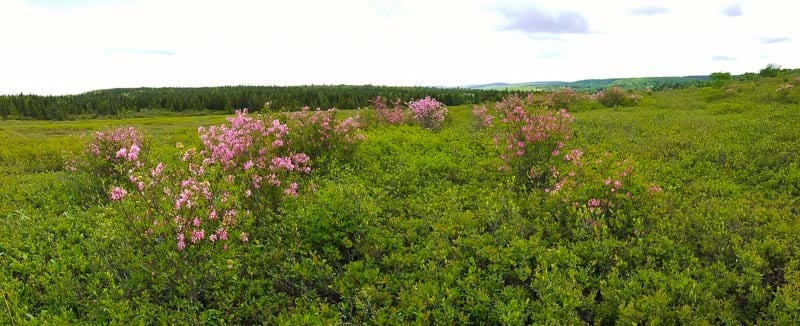
The most popular area in Dolly sods is the Bear Rocks trail. It leads to sweeping vistas through meadows of herbaceous plants as well as shrubs from the Heath family including blueberries, huckleberries and azaleas so fragrant that you will smell them long before you see them.
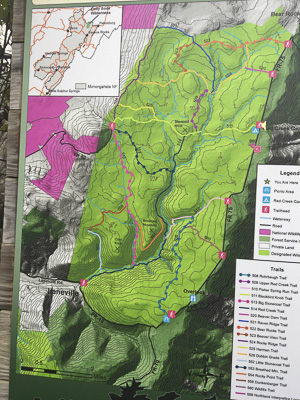
Dolly Sods Wilderness, in the Allegheny Mountains, is located in the panhandle of West Virginia. It is a high elevation plateau ranging from 2,700 to 4,000 feet above sea level that sits across the Eastern Continental Divide with the eastern side draining into the Chesapeake Bay and the western side into the Mississippi Basin. The name is derived from the Dahle family; German homesteaders in the 1800s who were attracted to the area by its upland meadows known as sods.
From then on the history of Dolly Sods is one of human ravages and nature’s resilience. Intensive logging operations began in the late 1800s and within a few years the forests of mighty spruce, hemlock and black cherry were stripped bare. The exposed and drying layer of organic matter combined with the vast amounts of slash from logging turned the upland plateau into a tinderbox. Successive fires further destroyed the ecosystem and ensuing erosion was so extensive that it exposed the fields of sandstone rocks and boulders that are now characteristic of the area. In 1943 the US Army began a training program for troops preparing to go to the European Theater during World War II, with Cabin Mountain and Blackbird Knob being designated targets for artillery practice. Extensive surveys and clean up efforts were initiated in 1997, but live ordinance is still suspected to persist in and around these sites. Stay on the trails!
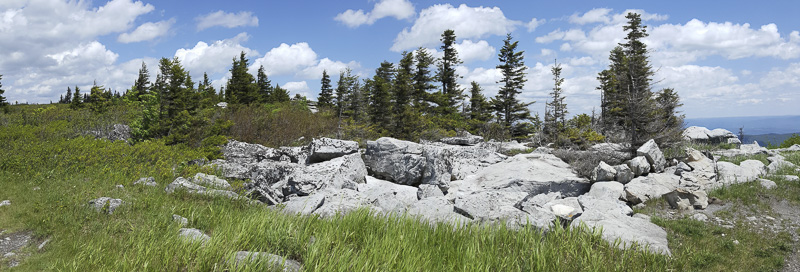
What was left in the wake of a half century of destruction is a landscape like no other in the contiguous states. The harsh weather conditions, frigid winters combined with high winds, abundant rainfall, shaped a resurging flora that is more typical of Northern Canada or even Alaska. And, as the environment heals, Dolly Sods has become a textbook example of plant succession, whereby in the aftermath of severe alteration the first plants to establish will be herbaceous, followed by shrubs, and lastly trees. Bear Rocks trail is among the best areas to be able to observe the various stages of succession in a single view.
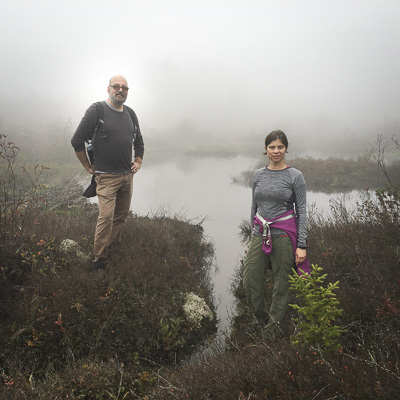
Immediately following that first trip, I vowed to return as soon as possible, preferably at a different time of year to get a more complete picture of the Dolly Sods Wilderness area. It took years, but I finally made it this year in early October, in the company of Izel Native Plants co-founder Amanda McClean and our respective spouses - and Lola, Amanda's adventurous pooch.
The plan was to hike the Blackbird Knob trail. An 8.5 mile trail that culminates at 3,947 feet and offers some of the most impressive vantage points of the wilderness area and of Canaan Valley below to the south. This was to be a moot point because the fog, a common occurrence, rolled in a couple of hours before we were to reach the trailhead. Although we knew the visibility would be compromised, we decided this would still be the best trail for us. Dolly Sods is becoming an ever more popular hiking destination and we suspected Blackbird Knob would be less crowded. We were right. The Bear Rocks trailhead was more gridlocked than downtown DC during rush hour.
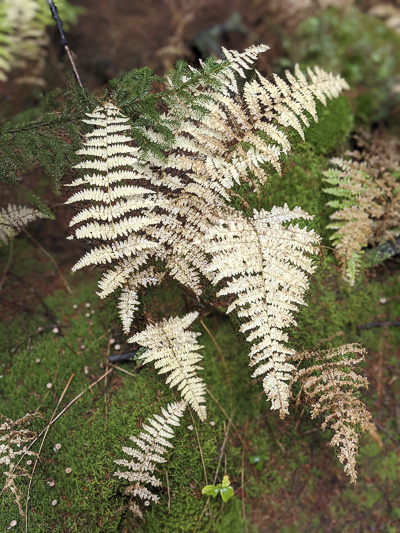
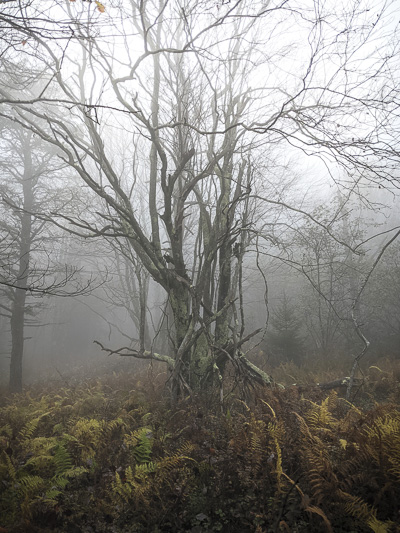
We set off under a light drizzle and limited visibility, but giddy with excitement. The forest was magical. The fog created an ethereal atmosphere with senescing ferns and silvery tree trunks glowing like so many ghosts in an illustrated fable. We found ourselves referencing the Brothers Grimm so often as to become a mantra.
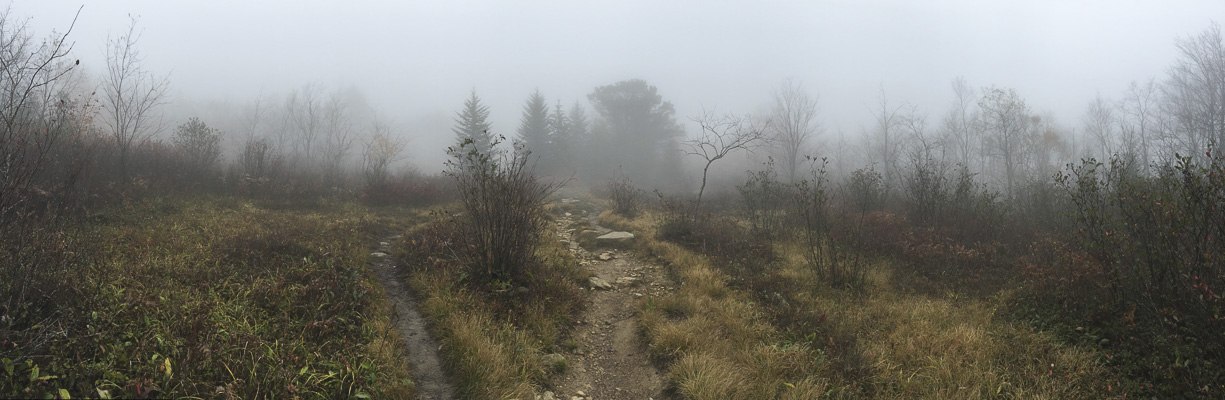
However, the going was slow. The trail was muddy and relatively crowded. Much of our focus was on hopping from stone to stone and trying to avoid slipping and sinking ankle-deep into the mud. Why did I leave my Wellies in the other car? By the time we hit the 2 mile mark, averaging 1 mile per hour, it was clear that we would not be able to complete the 8.5 mile trail in daytime. Moving on to plan B, we opted to choose alternate, less-traveled secondary trails to complete our loop.
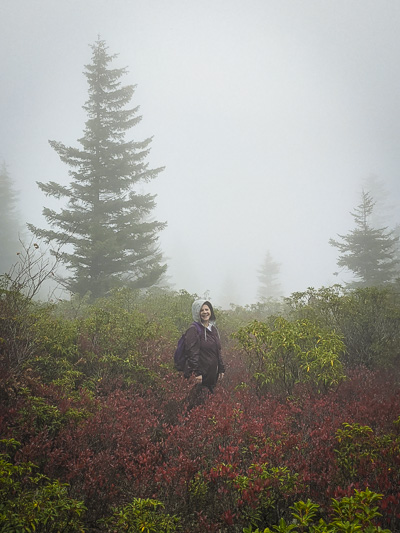
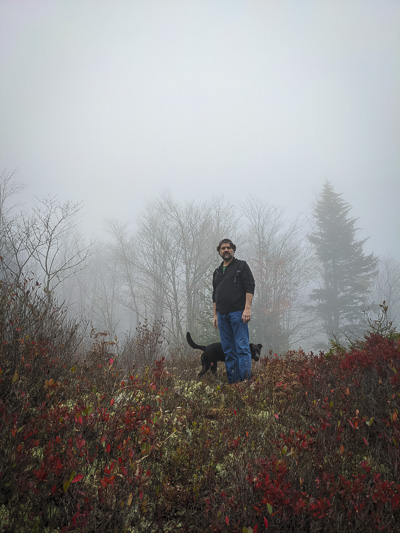
This did not speed things up. If anything, it slowed us down considerably. Some sections were so rarely used as to be easily confused with wildlife tracks. What seemed like a well-trodden, defined trail would vanish into a meadow like a stream into a marsh. The course we took, as recorded with GPS, looked like an attempt to write cursive using an Etch A Sketch.
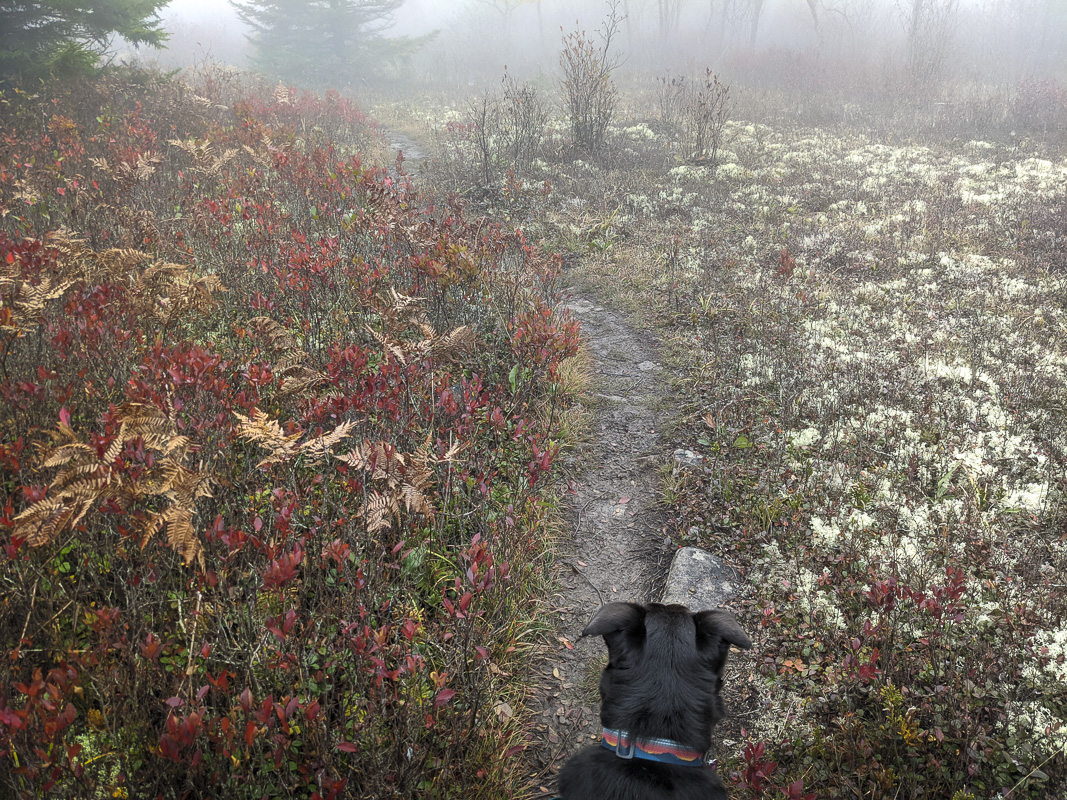
The detour(s) was well worth it. This was not a race, after-all. Not knowing exactly where we were at all times, combined with the limited visibility, added a sense of adventure and discovery. Within a few steps, shadowy silhouettes transformed into coniferous forteresses. Waist-high, fiery-red heath meadows would lead to tundra-like barrens carpeted with snow-white deer lichen. The only indication of a nearby pond was the muffled gurgling of the feeder stream cutting through the fog-enhanced silence.
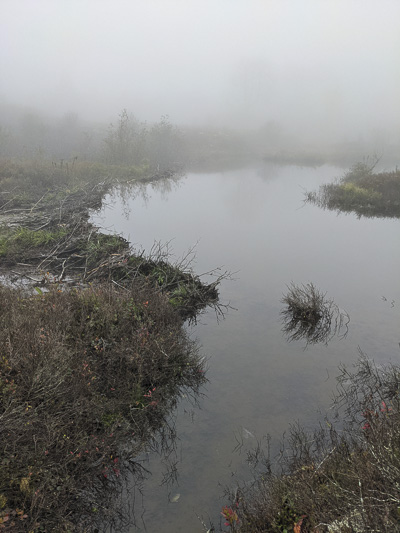
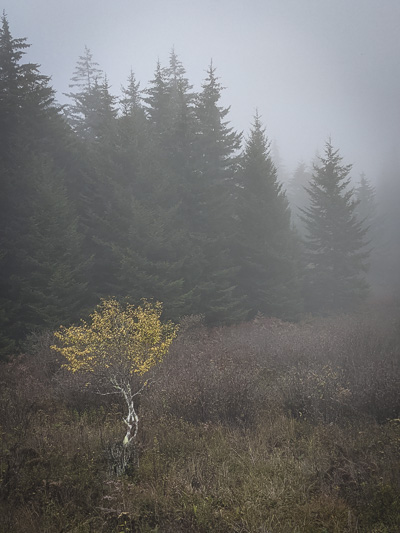
This outing was a magical and mystical experience, very different from my first visit. Yet, once again, the one thing on my mind now is to go back, and hopefully not wait years to do so. There’s nothing like a nature hike to remind us of why we do what we do. Not all of nature’s plant combinations can be easily recreated, or recreated at all. Some ecosystems are so unique and dependent on so many intricate relationships that they can only be admired. They are nonetheless a valuable source of inspiration to all of us who are dedicated to native plants and are akin to viewing masterpieces in an art museum. And Dolly Sods is a masterpiece among masterpieces. My batteries are fully charged.

Claudio Vazquez co-founded Izel Plants in 2009 to fill the gap in online information about native plants that was pervasive at the time. With an initial focus on describing horticulturally available native plants, Izel Native Plants has since evolved into one of the top destinations for purchasing native plants online.

