Exploring the Devil’s Racetrack: Plants for Hot, Dry Sites
What’s a good place to look for plants that tolerate hot, dry, full-sun conditions? The Devil’s Racetrack, of course. We know the Devil brings the heat, and when you throw in shallow, rocky soils in full sun—well, it’s not quite the underworld, but it is a challenging environment.
The Devil’s Racetrack lies on the top of Wade Mountain in northern Alabama. It includes an uncommon natural habitat that offers inspiration for cultivated spaces. Looking at this functional plant community, I saw resilient plants that can be great helpers in difficult landscapes. But first, a little background.
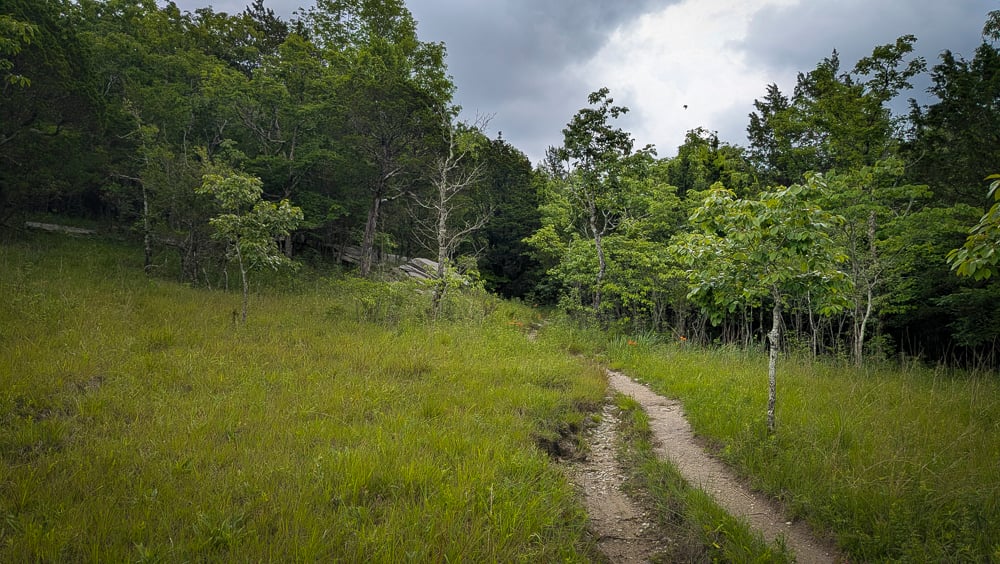
The Devil's Race Track trail in Wade Mountain Nature Preserve takes visitors through a limestone glade, where the underlying geology greatly limits what can grow here. © Lauren Linder
Home State Perspective
I grew up in Northwest Alabama in a town on the Tennessee River. We wandered along the streams that fed the river and swam in the creek that ran in front of our house. Even though I spent a big chunk of my childhood outdoors, the plants that surrounded me didn’t capture my attention. They were just the background to my adventures.
Fast forward to my adulthood in North Carolina, where I discovered a deep love of plants and a stronger connection to the natural world. One of the joys of this discovery has been seeing my home state of Alabama through a different lens. It turns out the state is a hotbed of plant diversity, packed with rare natural communities and endemic plants that I’m delighted to meet.
For the past two springs, I’ve attended the North Alabama Native Plant Symposium in Huntsville, Alabama. Hosted by the Alabama Cooperative Extension in partnership with other organizations, it was held this year on the campus of the University of Alabama at Huntsville. Connecting with fellow attendees and hearing the educational sessions was wonderful. It’s a fantastic group of enthusiastic, dedicated native-plant people. But what struck me most on a “plant” level was the field trip I took.
Our excursion took us to Wade Mountain Nature Preserve, a 1,010-acre area in north Huntsville stewarded by the Land Trust of North Alabama. It’s a steep landscape made up mainly of highly eroded limestone topped with a layer of sandy soil.
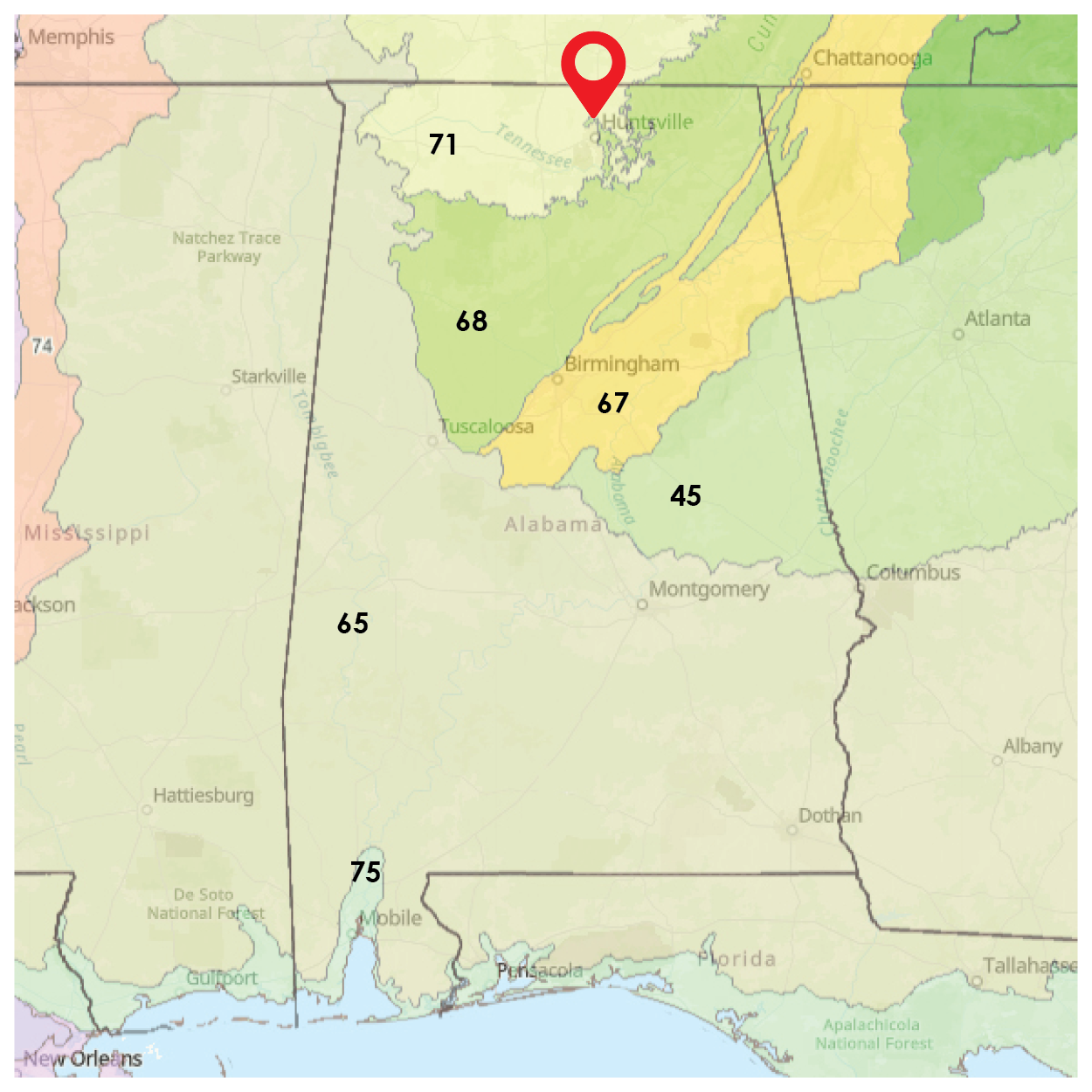
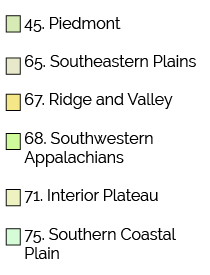
Alabama Ecoregions - EPA Level 3 Map. The red marker is on Wade's Mountain.
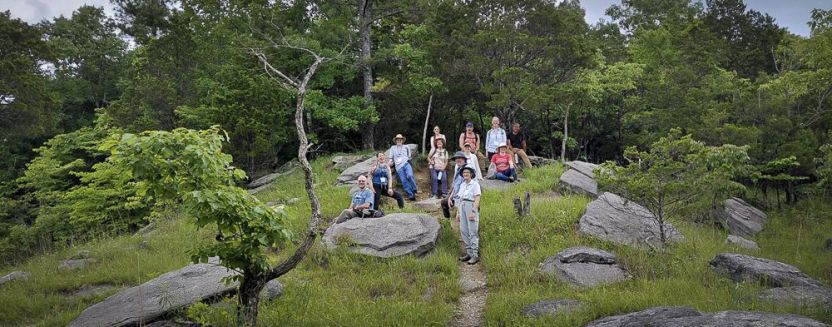
We hiked the Devil’s Racetrack trail, which starts near the base of the mountain and climbs upward through a closed-canopy forest. Sara Johnson, a conservation biologist with the North American Land Trust, was our fun and knowledgeable guide. As you’d expect with a bunch of self-identified plant nerds, we made slow progress, stopping every few yards (or feet, in some cases) to examine lovingly each new discovery.
A Special Ecosystem
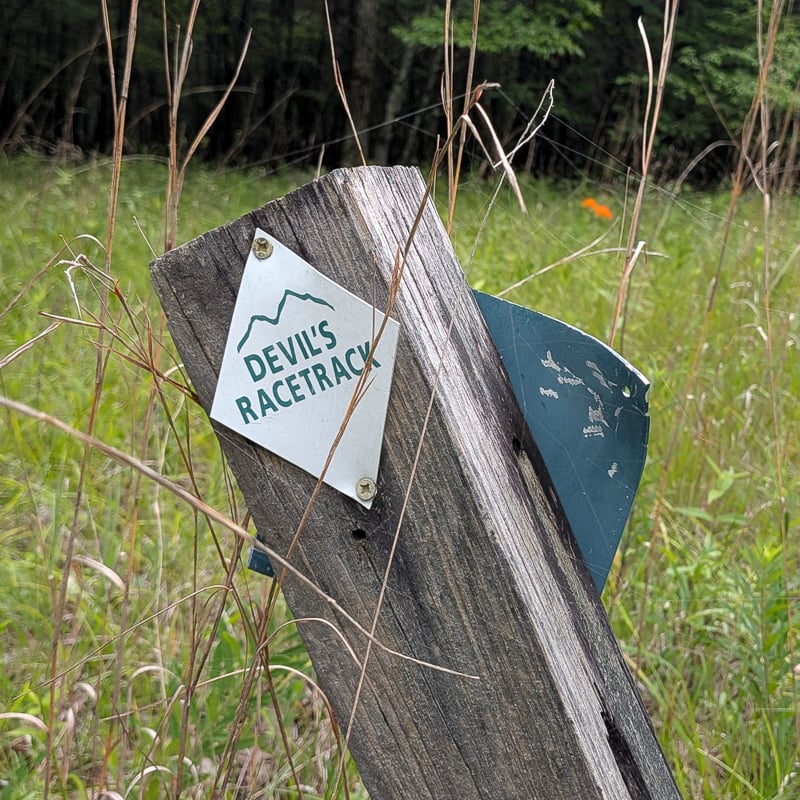
© Lauren Linder
After making our way up the trail through the woods, we emerged onto a bright, open glade. The top of Wade Mountain is mostly flat, with a rocky outcropping of Monteagle limestone encircled by a loop called the Devil’s Racetrack.
Local folklore claims the Cherokee raced horses atop the mountain. Early settlers, seeing cleared land where nothing but grass and stunted cedars would grow, attributed it to supernatural forces. Hence, the name.
The underlying limestone of the Devil’s Racetrack weathers quickly, creating areas of chalky, exposed rock that reveal intricate fossils. These fossils date primarily from the Mississippian Period (roughly 359 to 318 million years ago), when most of North America was covered by a shallow, warm, inland sea. Over millions of years, sediments on the seafloor were buried and hardened into stone. During the Paleozoic Era (spanning 541 to 252 million years ago), the Earth was changing dramatically. Tectonic plates crashed together to form the supercontinent Pangaea, and what is now North America and Africa collided. That collision formed the Appalachian Mountains to the east. The Cumberland Plateau, which includes North Alabama, was raised up more gently as a massive, elevated block.
All that tectonic plate movement shifted ocean levels globally, and the shallow inland sea drained away. It left the plateau high and dry and permanently terrestrial. As time passed, rain and flowing water dissolved the softer surrounding rock and exposed the flat limestone underneath.
While there are small pockets of soil in this glade, they are shallow and have a near-neutral to alkaline pH (6.5 to 8.0). They’re also high in clay content, the result of the insoluble residue left behind as the limestone weathered. Water drains off the glade rapidly or evaporates in the baking sun, creating a semi-arid microclimate right in the middle of humid North Alabama.
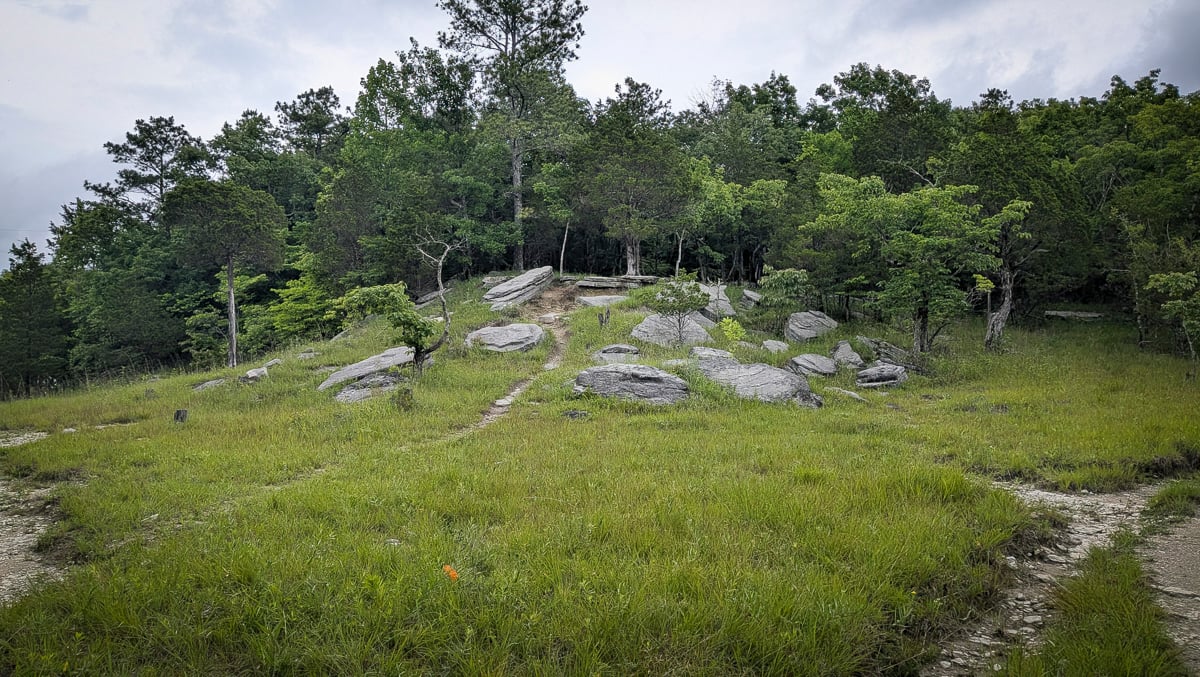
Boulder outcroppings like this one at the top of the mountain occur throughout the preserve. Underground, millions of years of acidic rainfall have filtered down and dissolved the limestone, creating sinkholes and a network of caverns. © Lauren Linder
This is a typical Southeastern limestone glade, and their unique geology profoundly shapes the plant communities. Rather than experiencing typical ecological succession like the surrounding region, the underlying rock limits what can grow, allowing specialized plant communities to persist. Soil temperatures soar in the summer, and moisture levels hit extremes—heavy rains in winter and early spring, followed by bone-dry weather in summer and fall. Because of these harsh conditions, limestone glades are dominated by low-growing herbaceous species. Juniperus virginiana (eastern red cedar) can grow here, but the trees are often stunted, which is why these areas are also referred to as "cedar glades."
Climate history also plays an interesting role here. During past glacial periods, ice sheets further north pushed cold air and Midwestern plains plants down into the Southeast. Once the climate warmed, those plains species were largely overtaken by plants thriving in Southeastern humidity. However, because the glades were too hot, dry, and harsh for surrounding hardwood forests to reclaim, they acted as tiny, climate refuges for these relic plains species.
For example, Euploca tenella (delicate heliotrope) grows primarily in the lower Midwest and Texas, but isolated populations persist in Southeastern limestone glades. Dalea gattingeri (Gattinger’s prairie clover) migrated southward ahead of the glaciers and stayed; it is now found exclusively in the Southeast as a cousin to the prairie clovers prevalent out West. Other plants, like Leavenworthia species (glade cresses), grow only in these limestone glades.
Exploring the Plants at Devil’s Racetrack
On the loop trail, we saw several classic glade species in bloom, like Hypericum frondosum (cedarglade St. Johnswort) and Asclepias viridiflora (green milkweed). There was a collective, delighted giddiness in our group as we spotted fossils and saw the wildflowers thriving in this unforgiving environment.
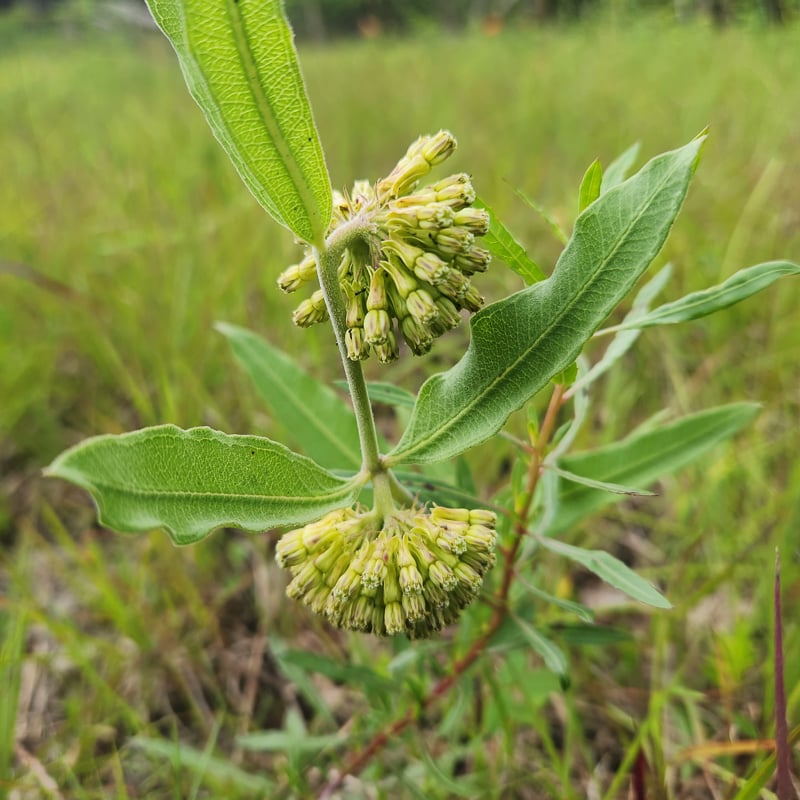
Asclepias viridiflora (green milkweed) © Izel Native Plants
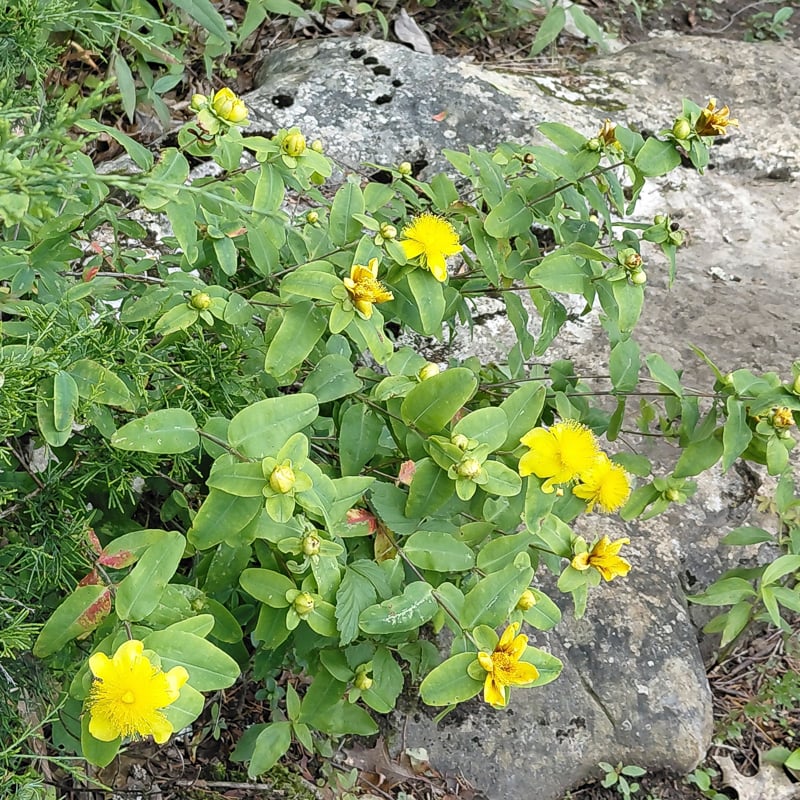
Hypericum frondosum (cedarglade St. Johnswort) © Charles Pannell
The trail also passes along a powerline right-of-way that is kept clear of canopy trees and maintained as a meadow. The soils here are deeper than in the limestone glade, allowing for a more diverse mix of native wildflowers, grasses, and small shrubs. You could see miles into the distance, and even with massive electrical towers looming overhead, it was a glorious spot. Ratibida pinnata (pinnate prairie coneflower) dominated the view, blanketing the landscape in yellow-gold. A vine with fascinating burgundy flowers mingled with the coneflowers at the path's edge; our group consensus was that it was a milkvine, a milkweed relative in the genus Odontostephana (syn. Matelea).
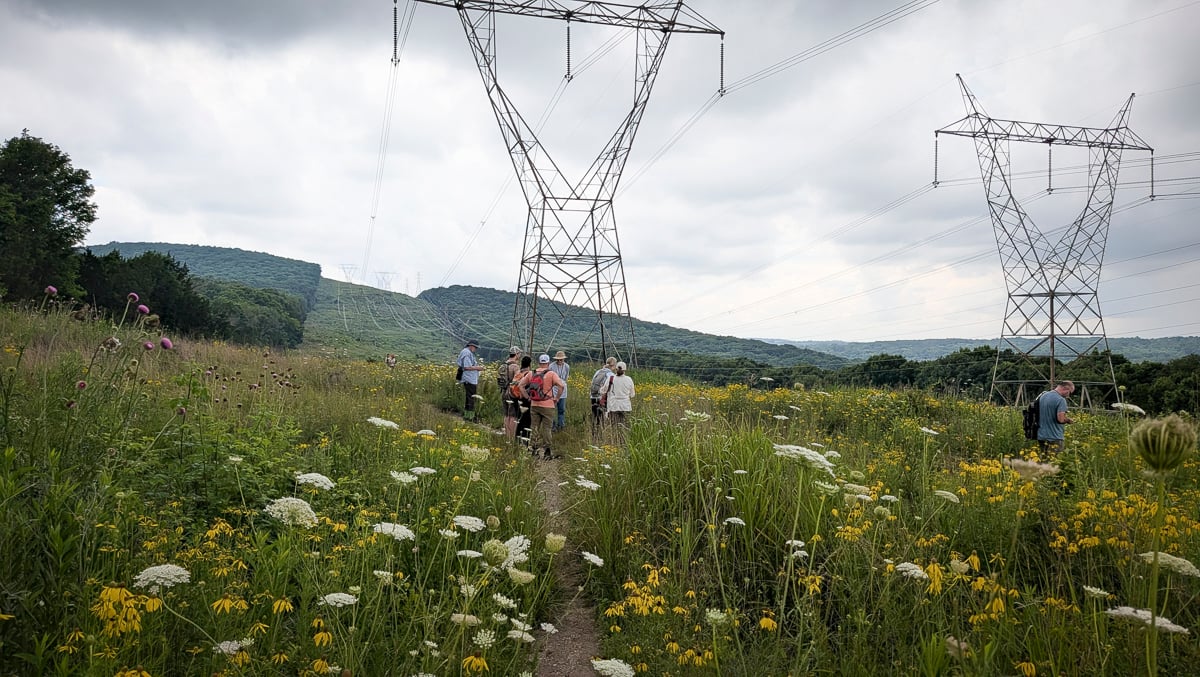
Powerline rights-of-way like this one can be managed to meet the goals of the utility while providing critical habitat for grassland species. © Lauren Linder
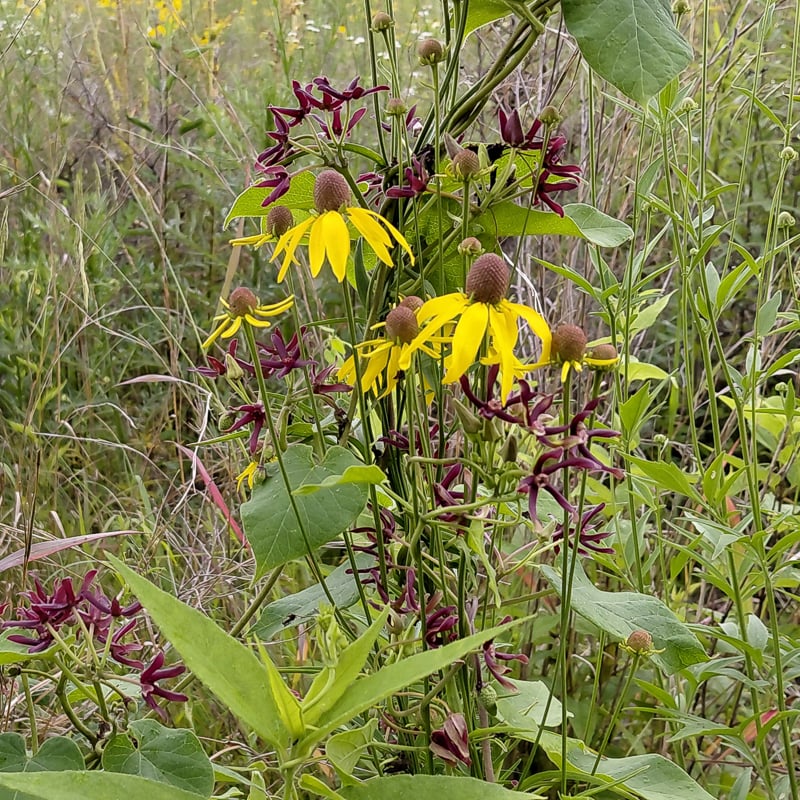
Milkvine scrambles up the sturdy stems of Ratibida pinnata (pinnate prairie coneflower). © Lauren Linder
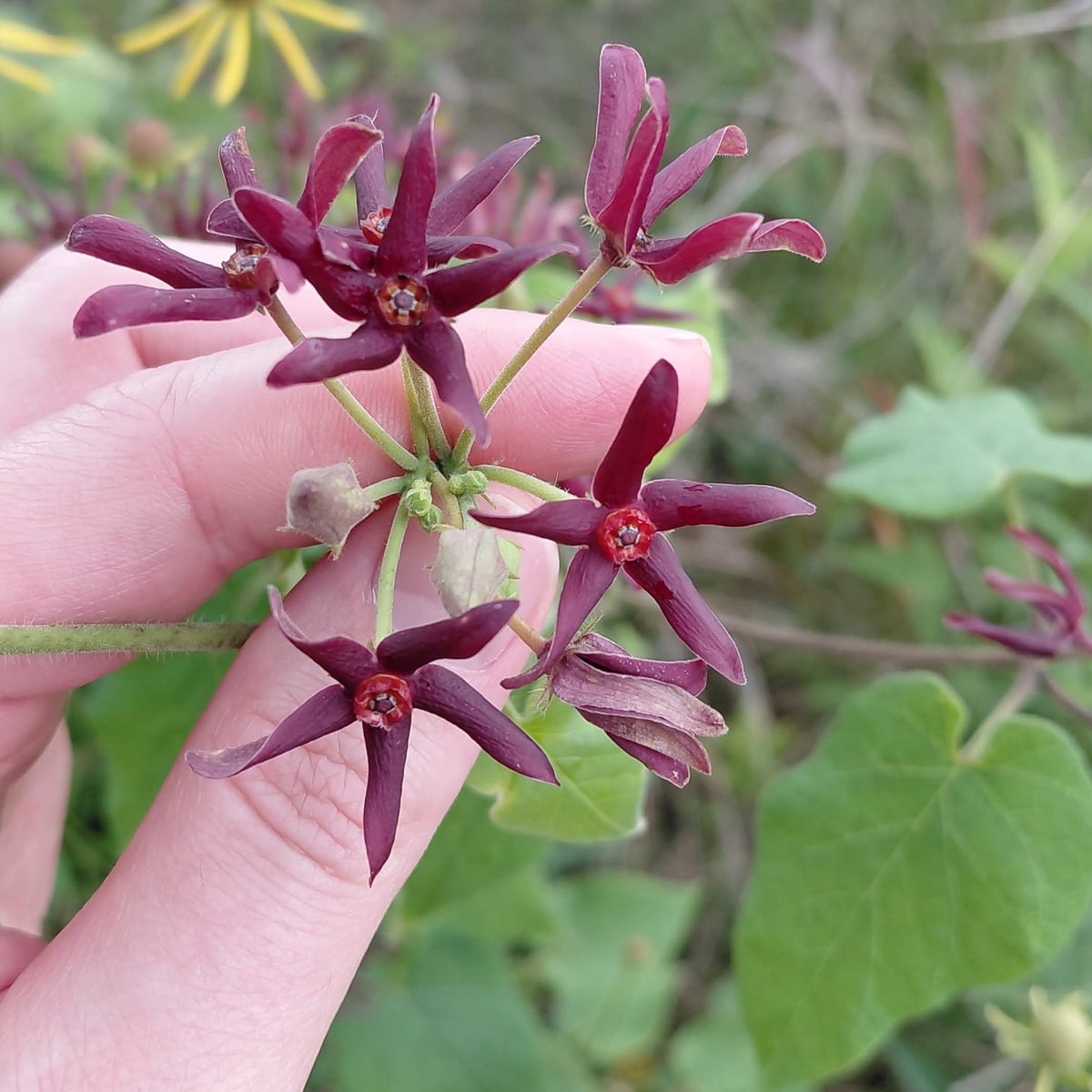
Milkvines are in Apocynaceae, the same family as milkweeds (Asclepias) © Charles Pannell
A Diverse Plant Community
While the rare species were fascinating, it was the more familiar plants that really caught my eye. These specimens weren’t as full or tall as they would be in a rich garden bed, but their resilience was impressive.
© Izel Native Plants
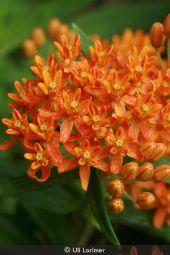
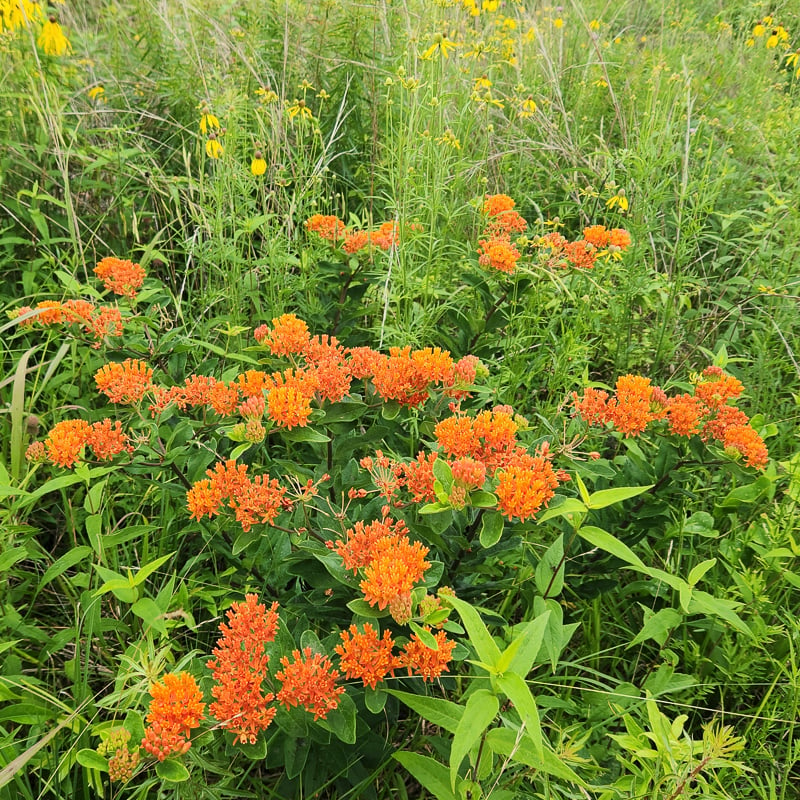
Asclepias tuberosa (butterfly milkweed) stood out beautifully with its bright orange flowers, growing happily in both the open glade and the power right-of-way.
© Alan Cressler
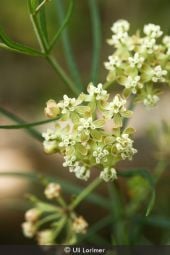
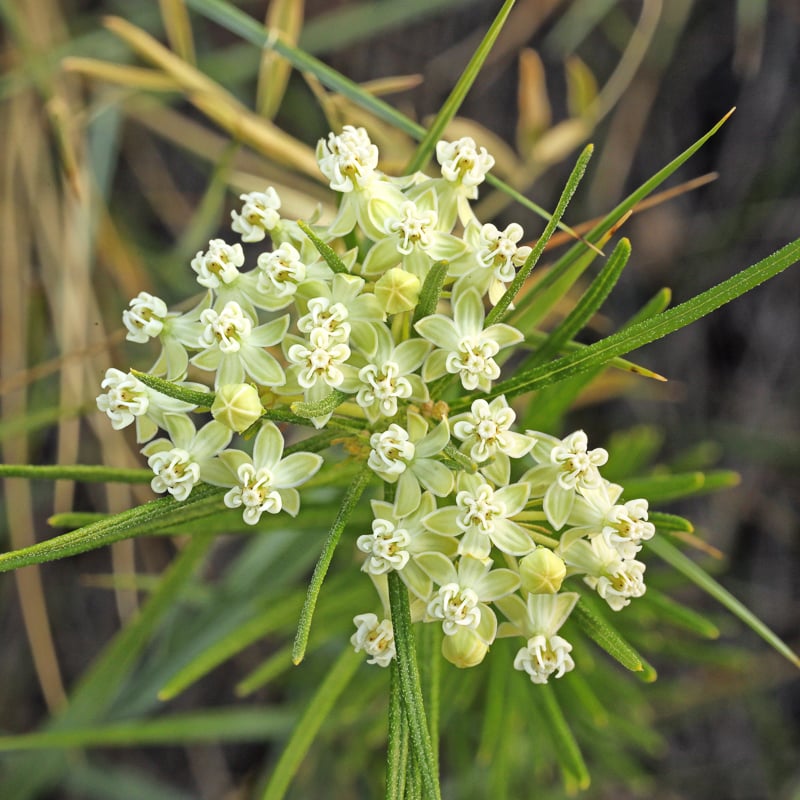
Asclepias verticillata (whorled milkweed) is a more delicate milkweed with fine foliage and small white flowers. It grew in the glade where competition from taller species was limited.
© Izel Native Plants
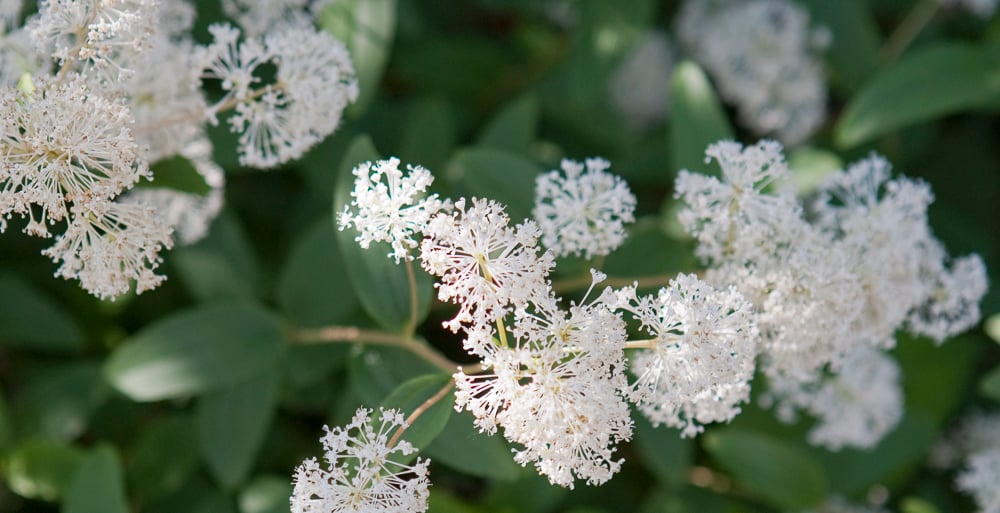
Ceanothus americanus (New Jersey tea) was easy to spot with its clusters of white flowers. This low-growing shrub relies on a deep taproot to withstand drought conditions.
© North Creek Nurseries
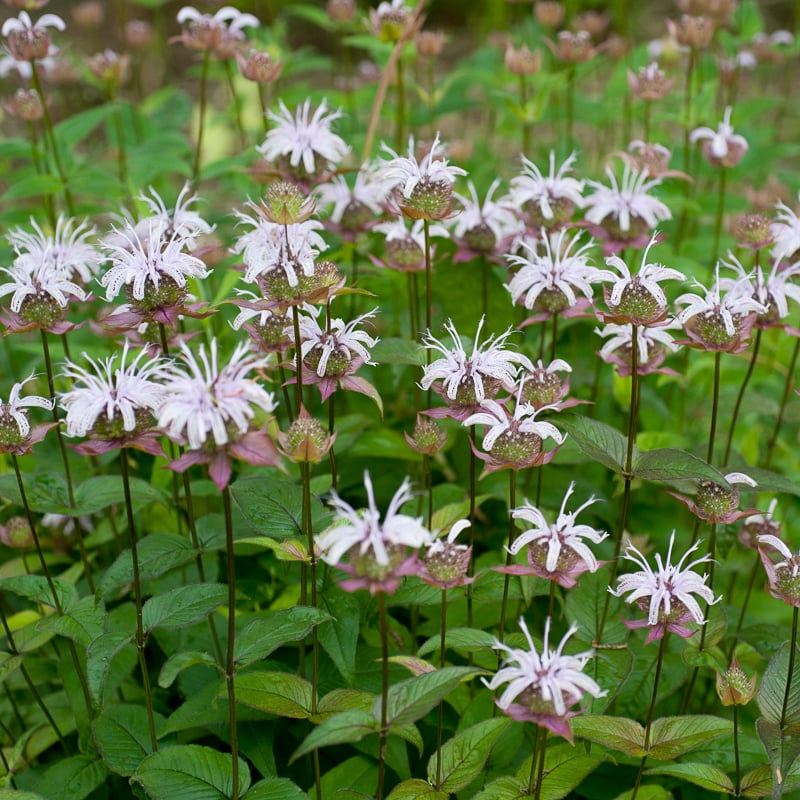
Monarda bradburiana (eastern beebalm) showed off its soft pink flowers. In the shallow glade, it grew as scattered, single-stemmed plants, but expanded into larger clumps near the deeper soils of the right-of-way.
© Izel Native Plants
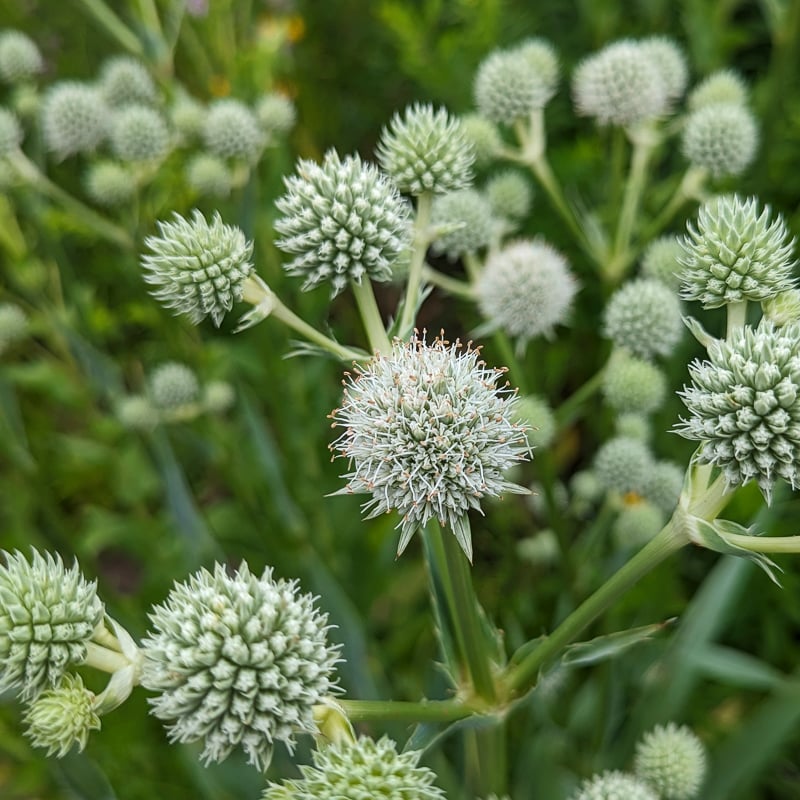
Eryngium yuccifolium (rattlesnake master) looked right at home, though it tended to be smaller, with just a stem or two. A few larger clumps grew in the deeper soils.
© Charles Pannell
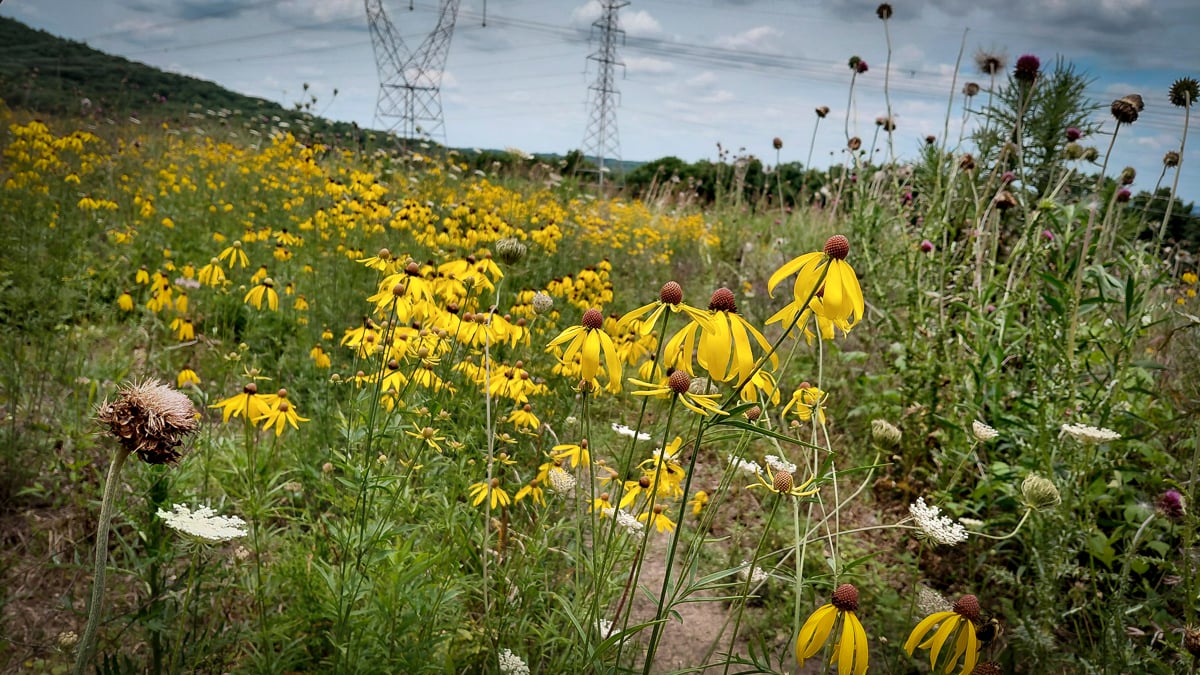
Ratibida pinnata (pinnate prairie coneflower) was thriving in the power right-of-way but also grew alongside the glade species. It’s hard not to smile with this sunny coneflower everywhere.
© Izel Native Plants
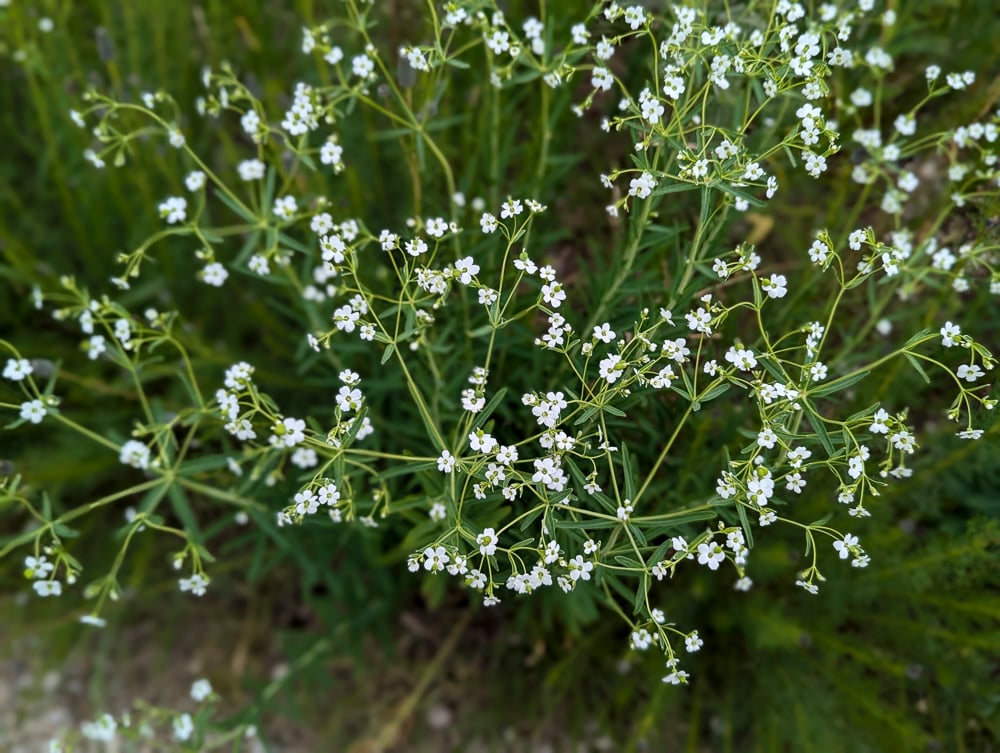
Euphorbia corollata (flowering spurge) is well adapted here with its leathery leaves that conserve moisture. Like other members of Euphorbiaceae, its toxic, milky latex keeps deer and other mammalian herbivores at bay.
© Hoffman Nursery
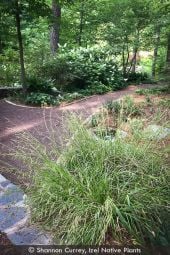
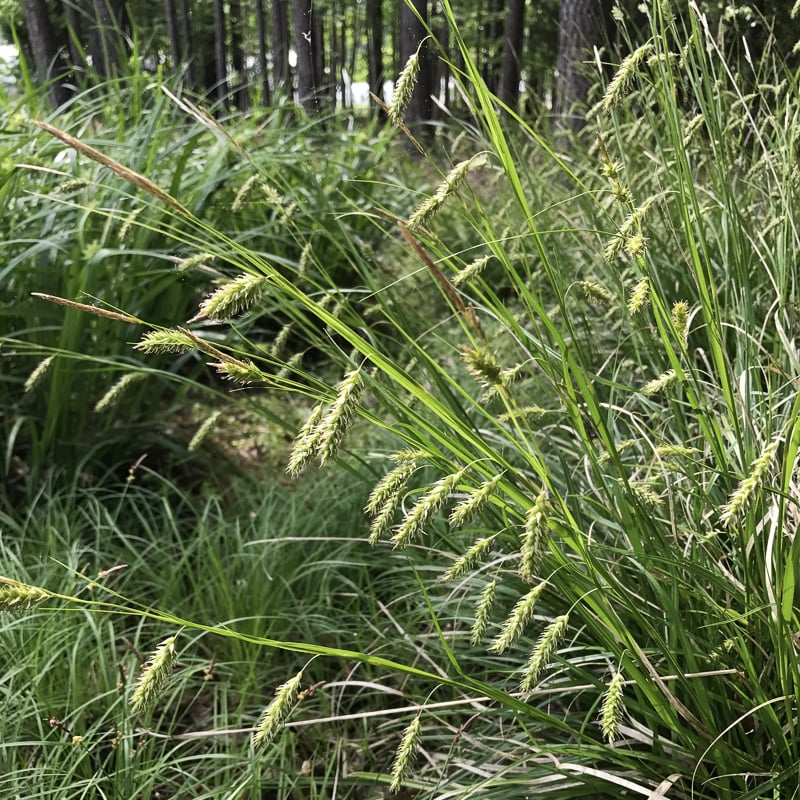
Carex cherokeensis (Cherokee sedge) gave this self-proclaimed "sedge head" the chance to see it blooming in the heart of its native range. While it typically prefers moist, rich forests, it proved its adaptability by thriving along the sunnier path edges of the glade.
© Izel Native Plants
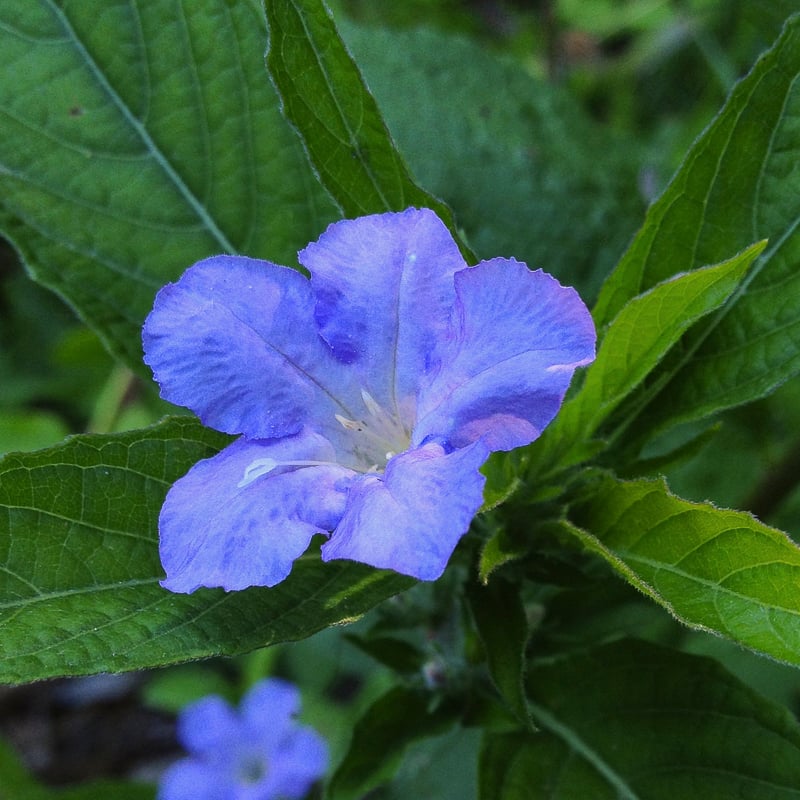
Ruellia caroliniensis (Carolina wild petunia) is a cute perennial that adds pops of purple. It is a long-blooming champion that frequently grows along roadsides and median strips.
We also identified several familiar species that weren’t yet in bloom or had already bloomed, including:
- Coreopsis lanceolata (lanceleaf tickseed)
- Symphyotrichum patens (late purple aster)
- Salvia lyrata (lyreleaf sage)
- Rudbeckia triloba (brown-eyed Susan)
- Schizachyrium scoparium (little bluestem)
- a prickly-pear cactus (likely Opuntia humifusa).
While we didn't see them on this trip, limestone glades like this are documented hosts to a parade of tenacious species:
- Amsonia tabernaemontana (eastern bluestar)
- Antennaria plantaginifolia (plantain-leaf pussytoes)
- Dalea candida (white prairie clover)
- Dalea foliosa (leafy prairie clover)
- Helenium autumnale (common sneezeweed)
- Liatris aspera (tall blazing star)
- Monarda fistulosa (wild bergamot)
- Solidago nemoralis (gray goldenrod)
- Solidago ulmifolia (elmleaf goldenrod)
- Symphyotrichum pilosum (frost aster)
From Glade to Garden
I had long heard about these limestone glades, but being there in person was magical. At the Devil’s Racetrack, I saw plants that were entirely new to me, alongside familiar favorites growing in an unfamiliar habitat. That kind of exposure is the best education for a gardener. It opens possibilities for adding new plants to our landscapes. It also allows us to see familiar plants in a completely different light and appreciate just how adaptable they are.
That got me thinking about parallels in our cultivated landscapes. The conditions in a limestone glade mimic some of our toughest urban landscaping spots: parking lot medians, along gravel driveways, the tops of sunny slopes and retaining walls, or sites with construction debris.
If you have a hot, dry spot in full sun—especially one with gravelly, rocky, or sandy soil—take a cue from the Devil’s Racetrack. Look to these resilient, glade-tested species for beautiful relief.
Author’s Note: This field trip not only gave me a joyful plant experience, it also introduced me to a wonderful group of companions. Our fearless leader, Sara Johnson, guided us with skill, humor, and expertise. Charles Pannell and Lauren Linder from the North Alabama chapter of Wild Ones shared their considerable local knowledge and beautiful photos (as did Sara). Thanks to them and all the others on the hike who made this a day to remember.
A big thank you to the Land Trust of North Alabama for stewarding this special place. They and organizations like them are doing work that benefits us all—please consider supporting your local and regional conservation organizations!

Shannon Currey is a horticultural educator with Izel Native Plants. She’s worked in the nursery trade since 2006, developing expertise in grasses and sedges and expanding her knowledge of native forbs. She currently serves on the North Carolina Plant Conservation Program Scientific Committee, holds advisory roles with several organizations, and served on the Board of the Perennial Plant Association. Shannon lives in Durham, North Carolina and loves exploring the local flora everywhere she goes!