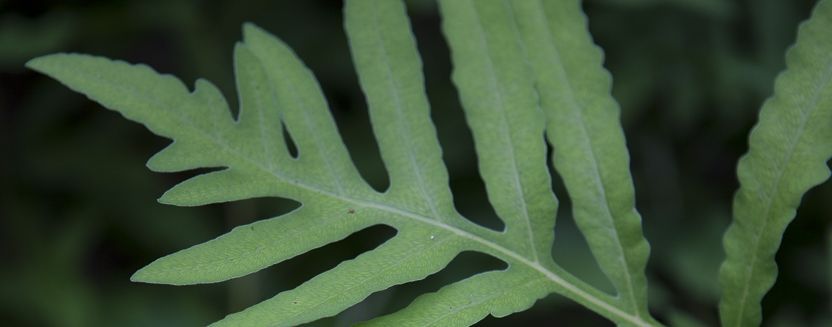
Ferns rarely get the spotlight, but they are essential for shade gardens.
Their foliage unifies plantings and provides visual interest without being overwhelming. They provide cover and shelter for wildlife, and they help build diverse layers in shade plantings. Evergreen species like Polystichum acrostichoides (Christmas fern) and Drypoteris marginalis (marginal woodfern) help cover ground during the dormant season, while Osmunda cinnamomea (cinnamon fern) makes wet sites lush and magical. We wouldn’t be caught without a fern in our gardens.
Ferns are also special because they’re different from most of the perennials we know. They’re an ancient group of plants that developed long before flowers and pollinators were a thing.
A Different Life Cycle
Perhaps it’s obvious, but it’s worth noting that ferns do not produce flowers. Unlike flowering plants, ferns reproduce via spores rather than via seeds. Their life cycle has two distinct phases: a gametophyte, which is a tiny, independent plant that germinates from a spore and produces eggs and sperm; and a sporophyte, which produces spores and is the big, leafy plant we’re used to seeing. Spores are housed in tiny structures called sporangia that are often massed together into sori. These are light green to dark patches often seen on the undersides of fern fronds. But sori don’t always appear there. Some are on separate, fertile fronds that look different from sterile fronds. Think of Osmunda cinnamomea (cinnamon fern), which has upright, rusty-colored fertile fronds at the center of a whorl of sterile fronds.
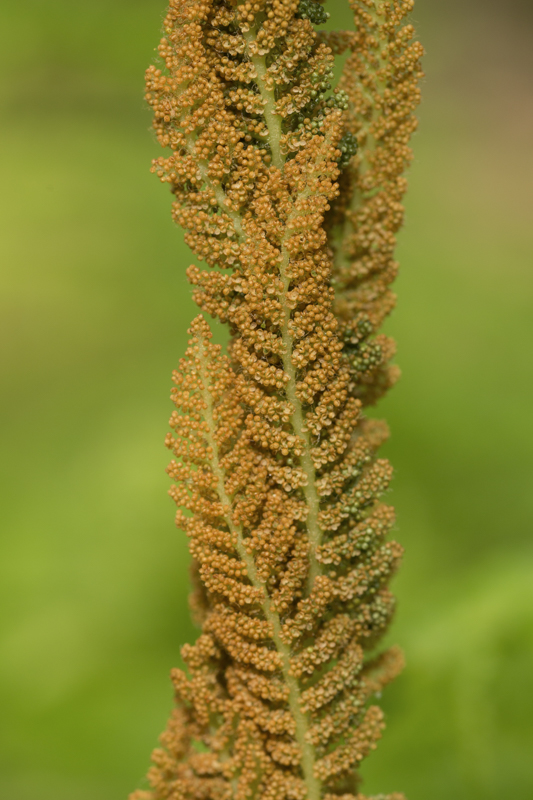
Osmunda cinnamomea (cinnamon fern) fertile frond detail displays clustered sori. © Uli Lorimer
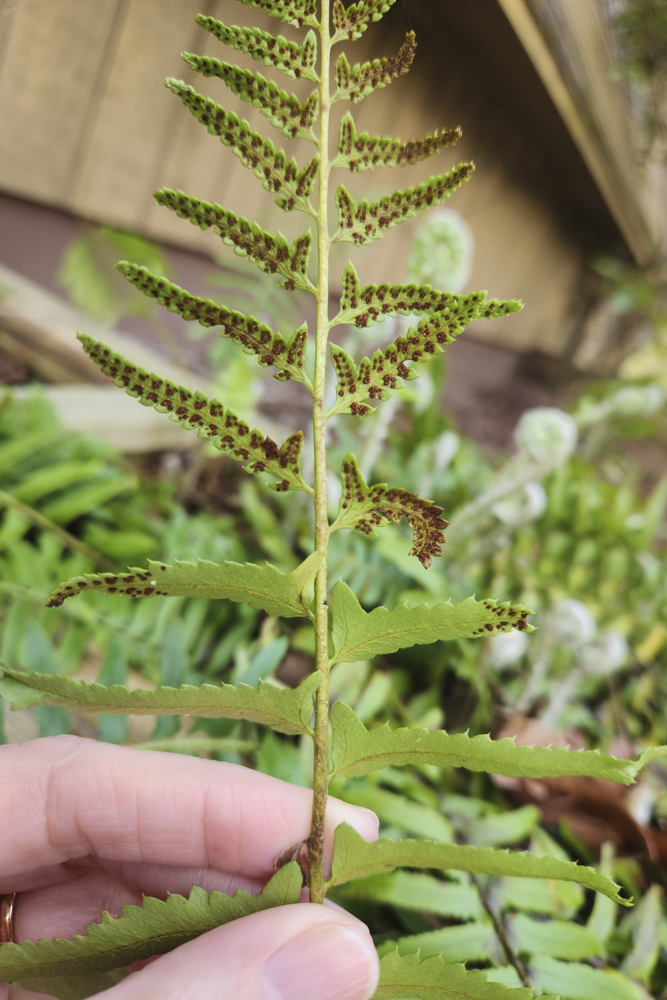
Polystichum acrostichoides (Christmas fern) sori on the leaflets' underside. © Izel Native Plants
Spores are tiny and lightweight, and each fern releases millions of them. Some will land in moist, shady places where they develop into a gametophyte. This is the sexual phase of fern reproduction, when male organs and female organs grow. Once they’re mature, the presence of water will cause sperm to be released and fertilization can occur. The egg starts dividing, and a new sporophyte begins to grow. It’s initially attached to the gametophyte but will mature enough to form roots, grow leaves, and separate itself. Those babies grow into what we know as ferns.
Ferns’ reproductive strategy emerged well before that of flowering plants. Their production of millions of spores is a kind of “shotgun” effect with a low investment of resources. And unlike many flowering plants, ferns aren’t reliant on pollinators. Their reproductive cycle is very different from the perennials we know, yet they’ve managed to stick around.
Ancient Survivors
During the Carboniferous period (299-369 million years ago), ferns were one of the most dominant groups of plants on the planet. They were at the base of the food chain that allowed dinosaurs to reach gargantuan proportions. But around 65 million years ago, an asteroid crashed into the Earth and caused mass extinction. Planetary conditions created by the asteroid destroyed an estimated 75% of all plants and animals alive on the planet. The dinosaurs didn’t make it, but ferns did.
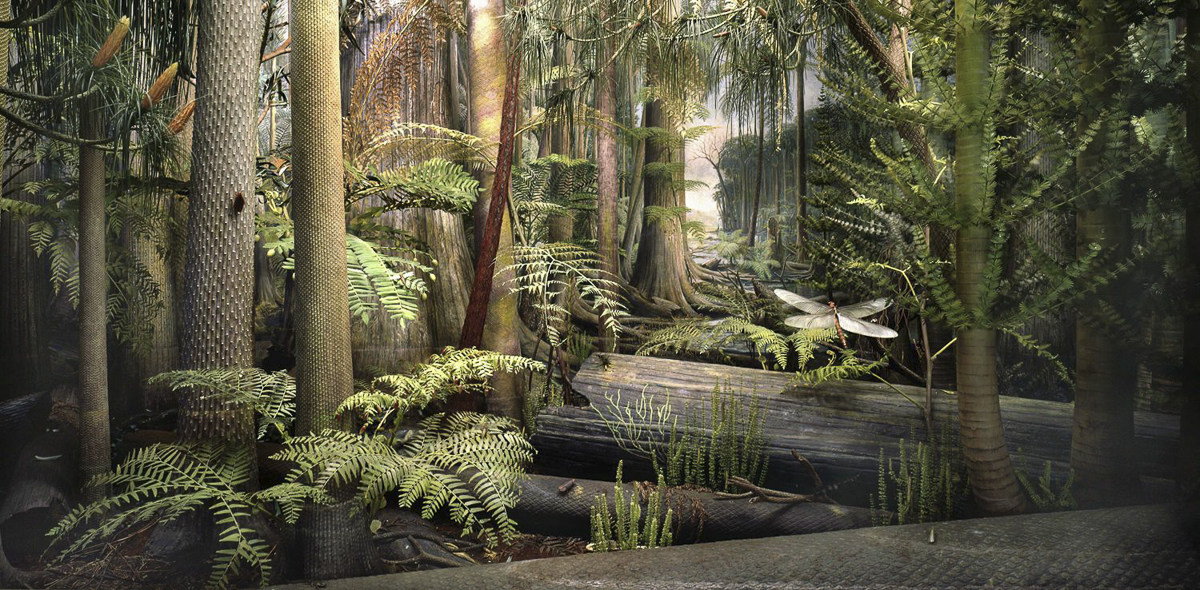
Carboniferous Forest diorama or Coal Forest Diorama old version of exhibit displayed at Museum from 1929-1991 in Hall 38. © The Field Museum, Chicago, Illinois.
Scientists have been studying how ferns reacted to the dire conditions brought about by the asteroid. The scientists knew the sporophytes were able to survive, but they knew less about gametophytes. Turns out, fern gametophytes are surprisingly tough. The experimenters grew ferns under conditions that would have been present in the nuclear-winter of an asteroid impact: dark, cold, high concentrations of carbon dioxide, and acid rain. It took slightly longer for spores to germinate under those conditions, but once they did, the gametophytes thrived.
Staying Power
Ferns are resilient plants, with a unique root and stem system that is advantageous in tough conditions. Most fern species have rhizomes, horizontal underground stems from which the leaves are produced. Everything above ground is essentially a leaf, with all the stems underground. Those rhizomes can store energy and persist even when conditions above ground destroy the leaves. Ferns have a special type of photoreceptor that’s very efficient in low-light conditions, which allows them to do well when surrounded by neighboring species. They’re tolerant of acidic and nutrient-poor soils. With their slow metabolism, they can expend energy on building and preserving their underground resources.

Polypodium virginianum (rock polypody) is one example of a rhizomatous root structure common to ferns. © Izel Native Plants
Most of the earliest ferns have gone extinct, but modern ferns are still incredibly diverse. There are well over 10,000 living species worldwide, some of which look like “ferns,” and others that look like plants from another planet (e.g., Ophioglossum vulgatum, commonly called adder’s tongue).
A Few Favorites
While having 10,000 species to choose from would be overwhelming, most gardeners have access to a manageable subset.
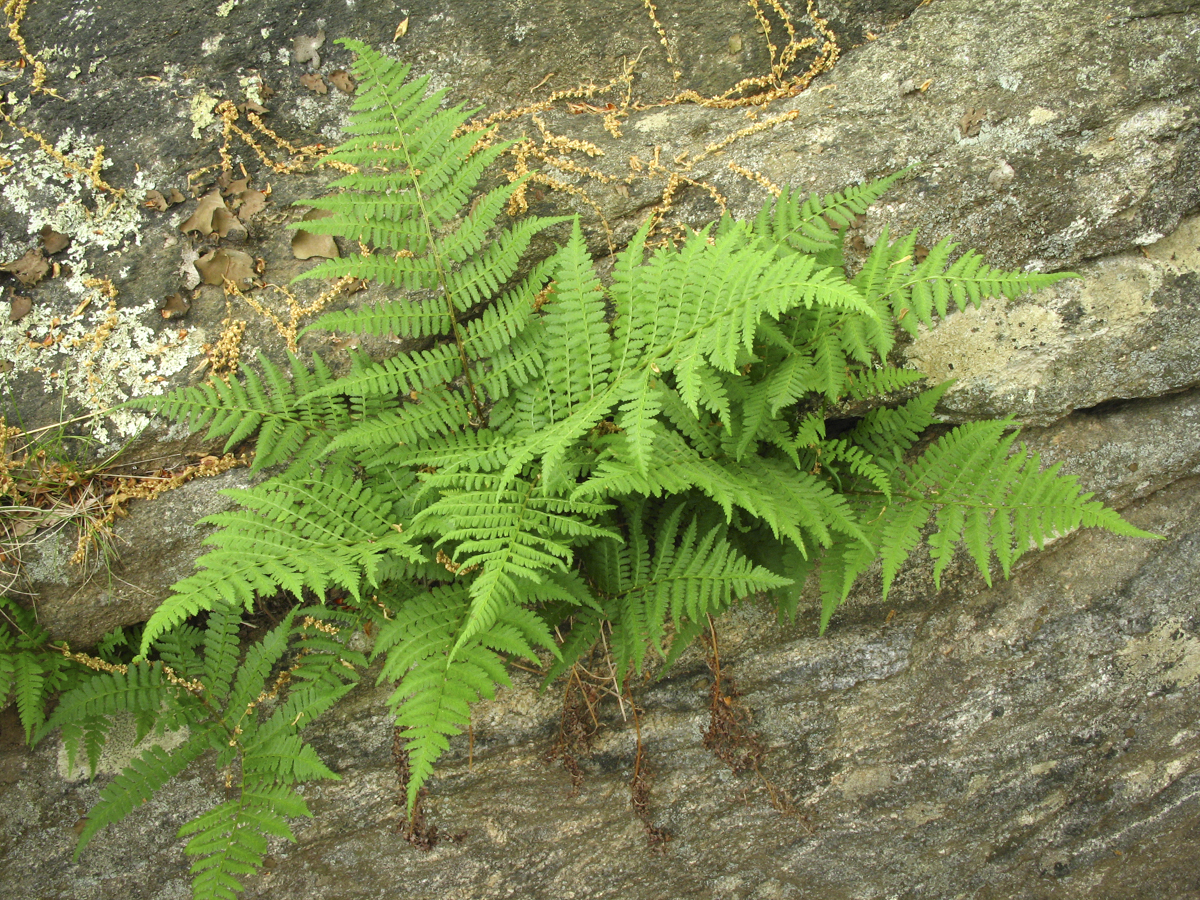
Athyrium filix-femina (common ladyfern). © Allan Cressler
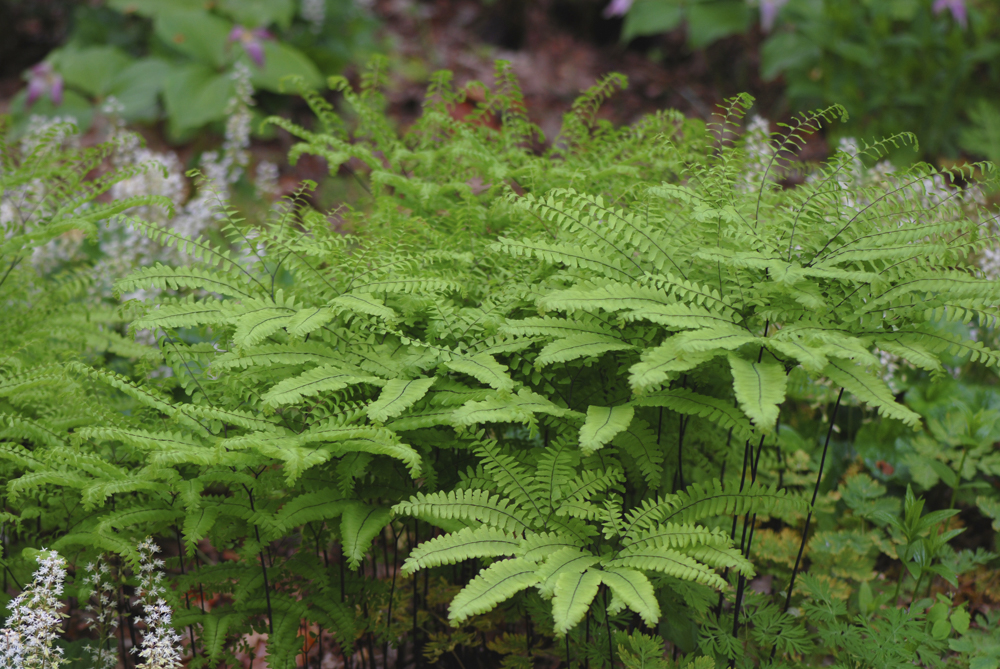
Adiantum pedatum (northern maidenhair). © North Creek Nurseries
When it comes to the fronds, the delicate look of deciduous ferns Athyrium filix-femina (common ladyfern) and Adiantum pedatum (northern maidenhair) are always delightful. Common ladyfern has fronds that are tripinnate (divided three times), which lends them a feathery look. This fern spreads slowly to form a gentle groundcover and does best with rich, consistently moist, well-drained soil in partial shade. Its scientific name has changed recently to Athyrium asplenioides, but that hasn’t yet been adopted in the nursery trade. The northern maidenhair has fronds arranged in a whorl-like pattern on very thin, black stems. The unique look is lush and delicate at the same time. Northern maidenhair thrives in shade and prefers soils high in organic matter. It spreads and will form a mass that’s a woodland wonder.
If you’re looking for a superspreader in moist or wet areas, Onoclea sensibilis (sensitive fern) is a great choice. It’s a deciduous fern that covers ground quickly once established, creating a knee-high groundcover. The fronds are made up of leaflets with wavy margins. It’s usually found in rich, moist woods and wetland habitats, but it adapts well to average garden soils. It does not do well with extended periods of dryness. Onoclea sensibilis earns its specific epithet and common name from being sensitive to drought and to cold weather—the first fall frost sends it into dormancy.
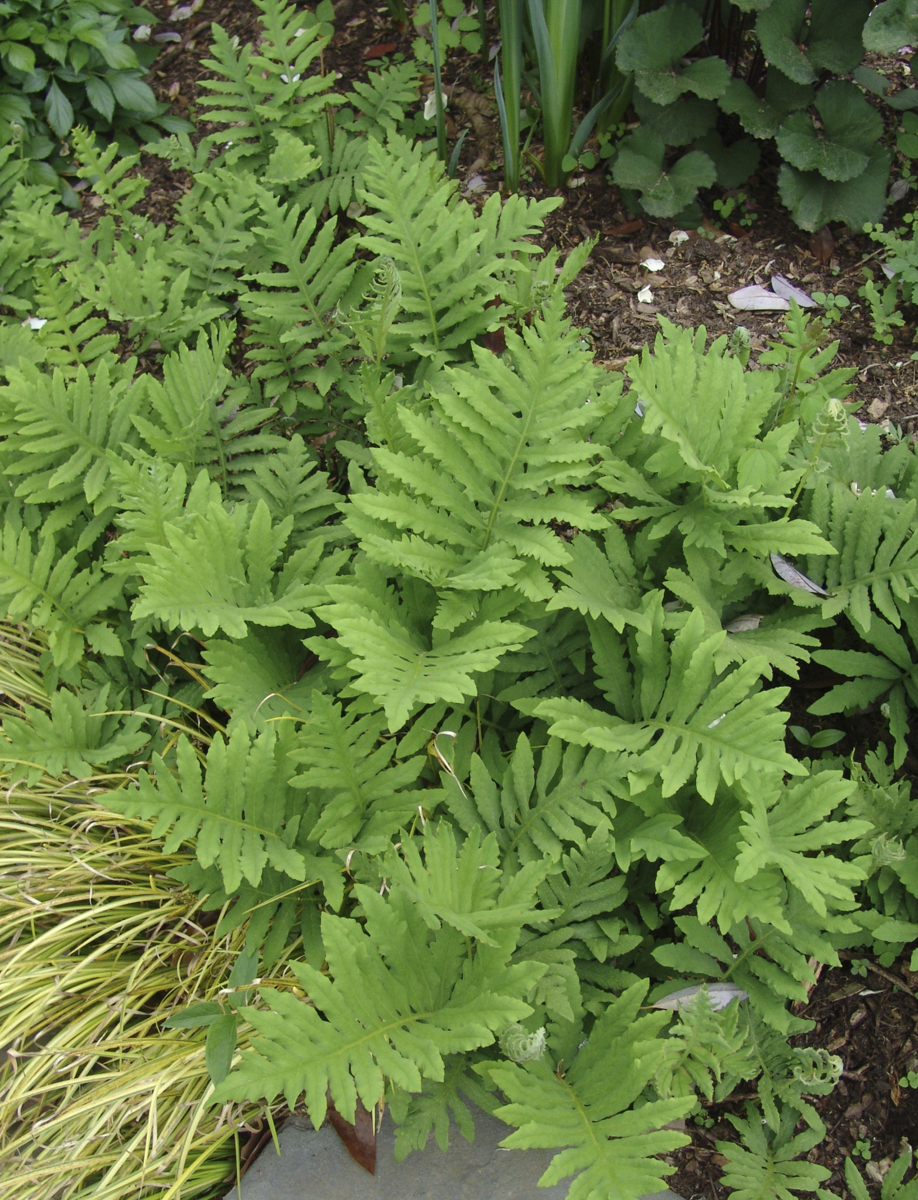
Onoclea sensibilis (sensitive fern). © North Creek Nurseries
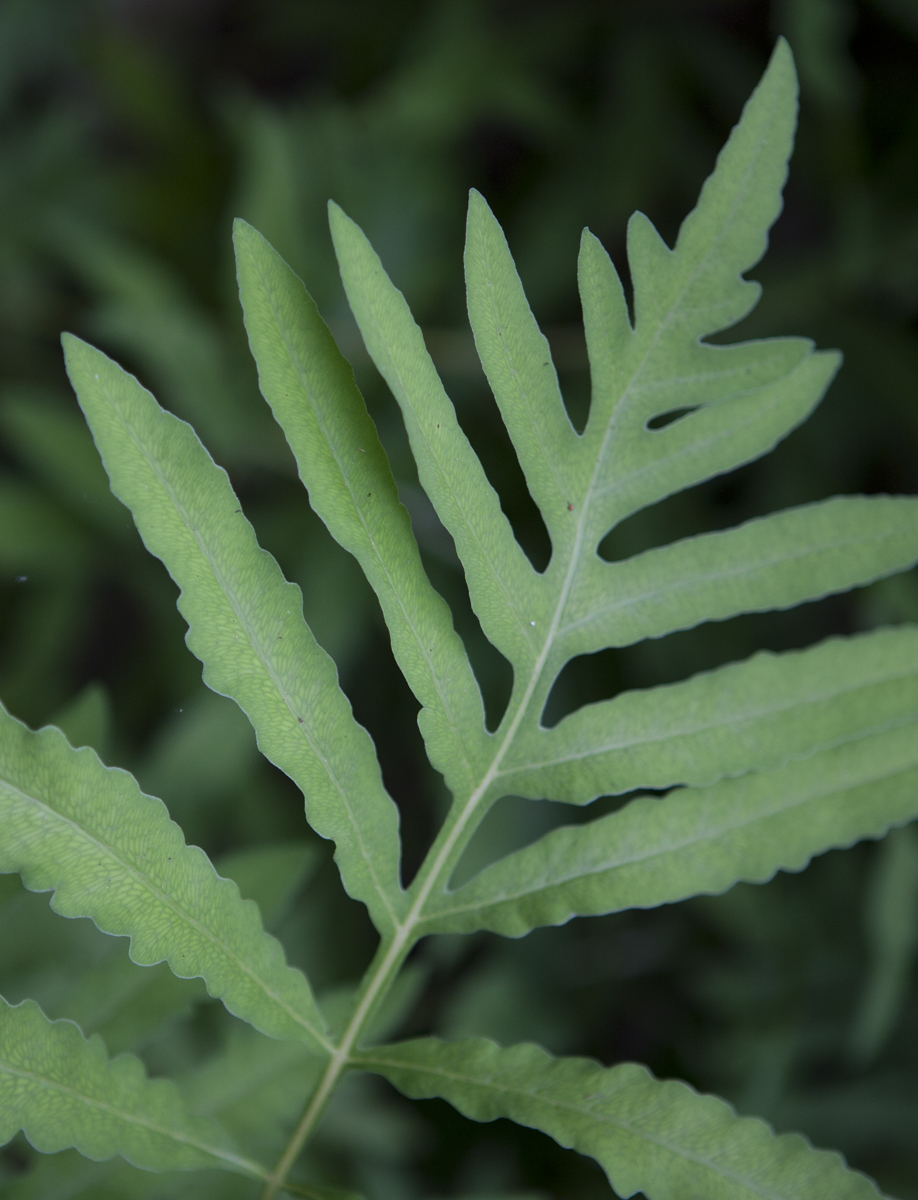
Onoclea sensibilis (sensitive fern). © Izel Native Plants
Two other spreading, deciduous ferns are notable for their presence in eastern woodlands and their ability to blanket a site. Dennstaedtia punctilobula (eastern hayscented fern) gets its common name from the new-mown hay fragrance it emits when the foliage is brushed or crushed. It likes moist, well-drained soil but is surprisingly tolerant of poor soils and drier conditions. It takes partial sun easily, and in cooler regions may take full sun. Growing in optimal conditions, it can get up to 3 feet in height and can spread quickly. Thelypteris noveboracensis (New York fern) is a shorter, more airy and delicate-looking fern than eastern hayscented fern. It usually reaches around 18” tall and sometimes up to 2’. It likes consistent moisture and rich, acidic soils. In spite of its common name, it does well in the southeastern U.S. but will spread less vigorously than in cooler regions.
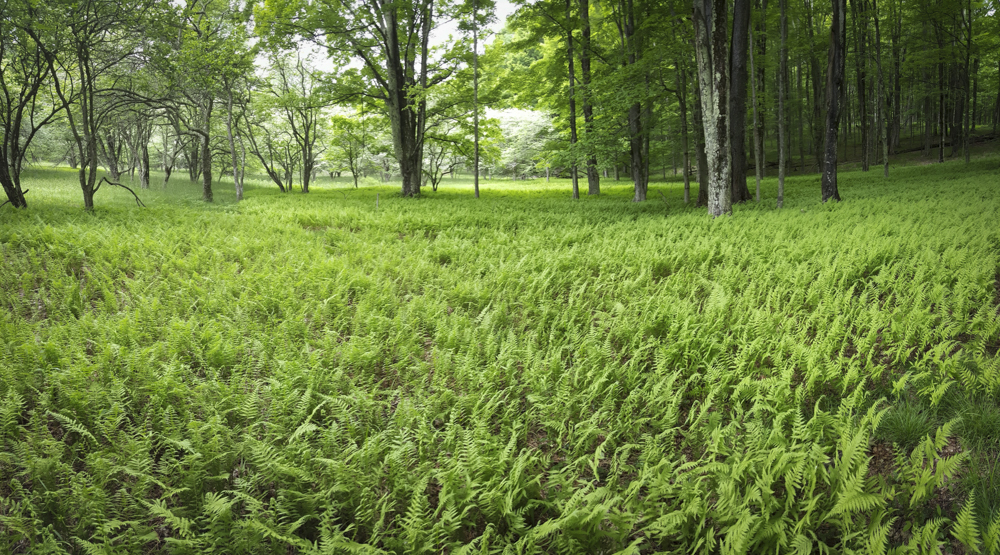
Thelypteris noveboracensis (New York fern) in Canaan Valley, WV. © Izel Native Plants
Eastern hayscented fern and New York fern have proven difficult to grow in production. One possible explanation is that they have mycorrhizal associations that current production methods cannot duplicate. Growers are trying, though, and we’re hopeful they’ll crack the code. To further complicate these species, both have recent scientific name revisions, with eastern hayscented fern changing to Sitobolium punctilobulum and New York fern changing to Amauropelta noveboracensis.
For moist or wet areas where a different habit and look are preferable, try Matteuccia struthiopteris (ostrich fern). It’s a tall, majestic fern with an upright, vase-shaped habit. Over time it will spread to form colonies. And the fiddleheads are a spring delicacy! Consider, too, Osmunda cinnamomea (cinnamon fern), which has sterile, green fronds and distinctive, cinnamon-colored, fertile fronds. If you’re looking for similar majesty on a site that’s a little drier (but not actually dry), Dryopteris goldiana (Goldie’s woodfern) is impressive.
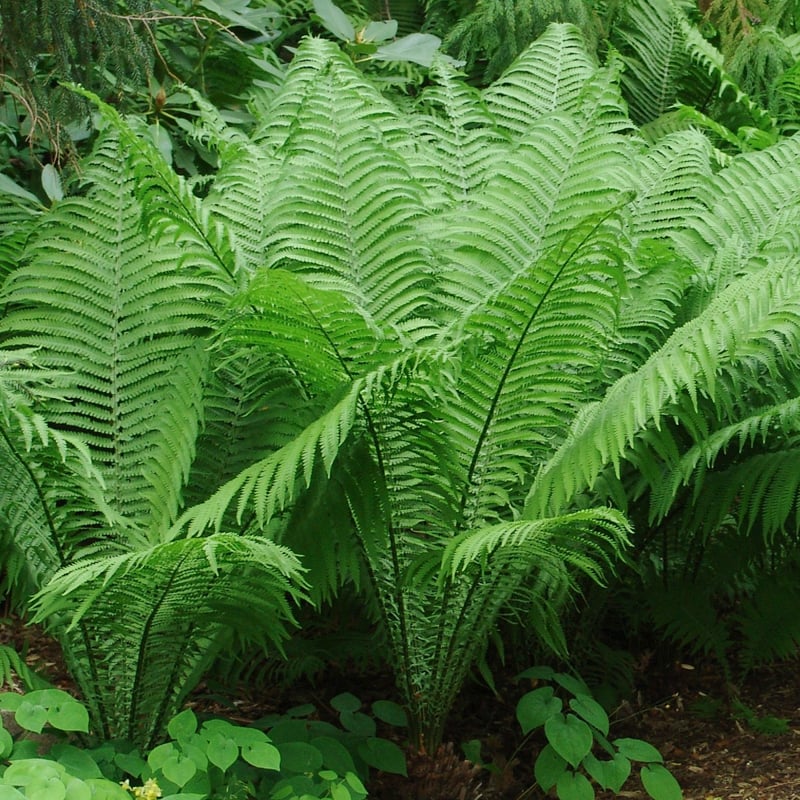
Matteuccia struthiopteris (ostrich fern). © North Creek Nurseries
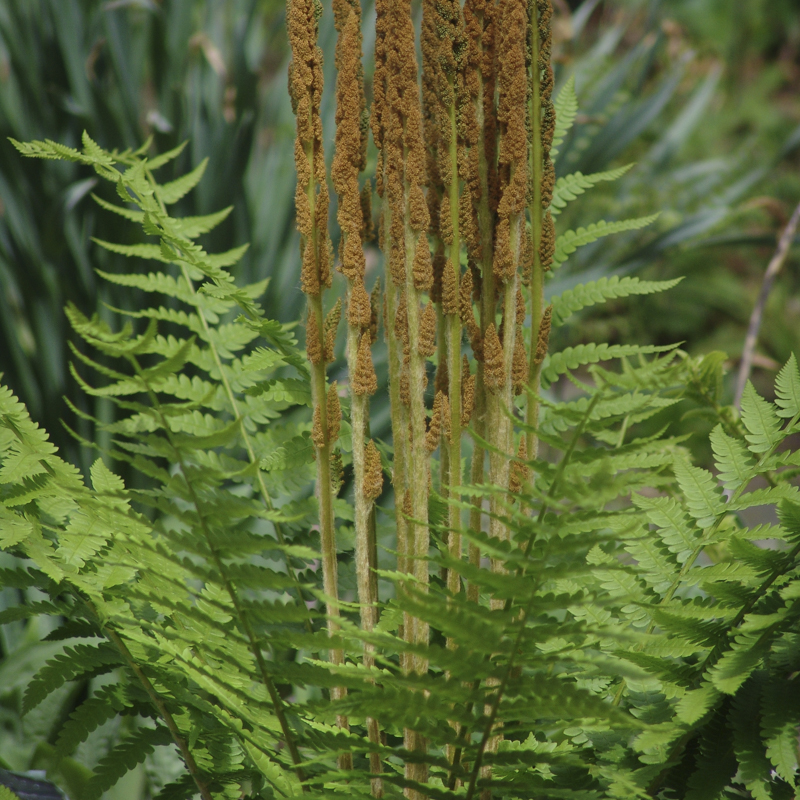
Osmunda cinnamomea (cinnamon fern). © North Creek Nurseries
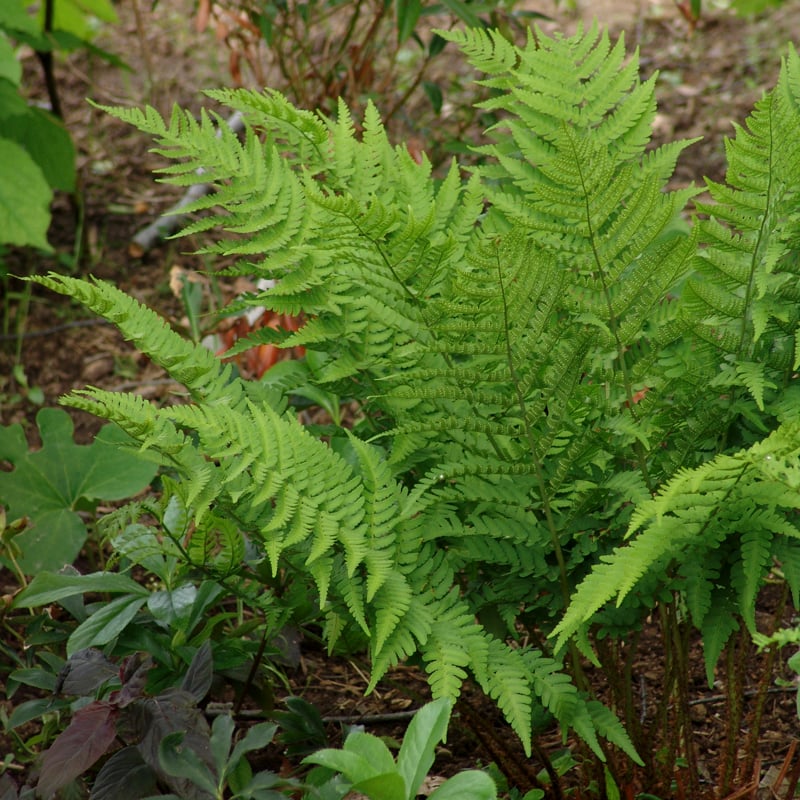
Dryopteris goldiana (Goldie’s woodfern). © North Creek Nurseries
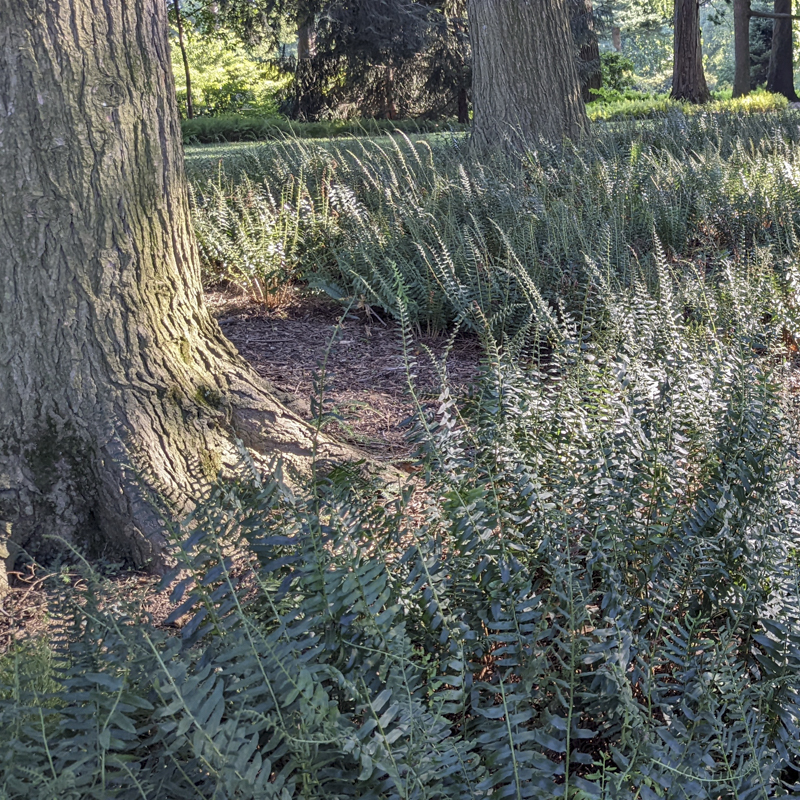
Polystichum acrostichoides (Christmas fern). © Izel Native Plants
When ferns come up, Polystichum acrostichoides (Christmas fern) is always worth noting. It’s evergreen, widely adaptable, and spreads gently. While the fronds aren’t as showy as some, its reliable nature should earn it a place in every shade garden.
These are just a few of the fab ferns available for today’s gardens. As our landscapes mature and shady areas open up, ferns are natural choices for their soothing visuals, cover for wildlife, and as a backdrop for those showy, flowering, evolutionary newcomers. Fortunately for us, it doesn't take going back to dinosaur times to find a fern that fits!
Editor’s notes:
A more modern aspect of ferns is their shifting taxonomy. As with many plant groups, technology has altered scientists’ understanding of relationships among species. Botanical names are changing, and even within the botanical world, it takes a while for changes to be settled and widely adopted. The horticultural world takes a wait-and-see approach, often keeping better known botanical names to avoid confusion. It can be frustrating, but think of the changes as advances in science that help us better understand the plant world. We at Izel keep an eye on changes and try to give you a heads up in the plant listings that you may see different names for the same plant. Sometimes an “Alternative scientific name” will appear at the top of the characteristics tab (see cinnamon fern). You can also find other scientific names, usually previous ones, on the tab, “Maps, wetland status & more.”
If you’d like to learn more about fern propagation, here’s a quick primer from renowned propagator and plantsman, Bill Cullina.
All photos are © Izel Native Plants unless otherwise noted.

Shannon Currey is a horticultural educator with Izel Native Plants. She’s worked in the nursery trade since 2006, developing expertise in grasses and sedges and expanding her knowledge of native forbs. She currently serves on the North Carolina Plant Conservation Program Scientific Committee, holds advisory roles with several organizations, and served on the Board of the Perennial Plant Association. Shannon lives in Durham, North Carolina and loves exploring the local flora everywhere she goes!