Shrubs Build Living Landscapes
In cultivated landscapes, shrubs are often relegated to foundation plantings or islands surrounded by turf. Sometimes they’re sheared or pruned and treated more like sculptures than living organisms. However, rethinking how we use shrubs offers opportunity. Natural landscapes are dynamic, diverse, resilient, and layered. Shrubs play an essential role in bringing that same vibrancy and beauty to cultivated landscapes.
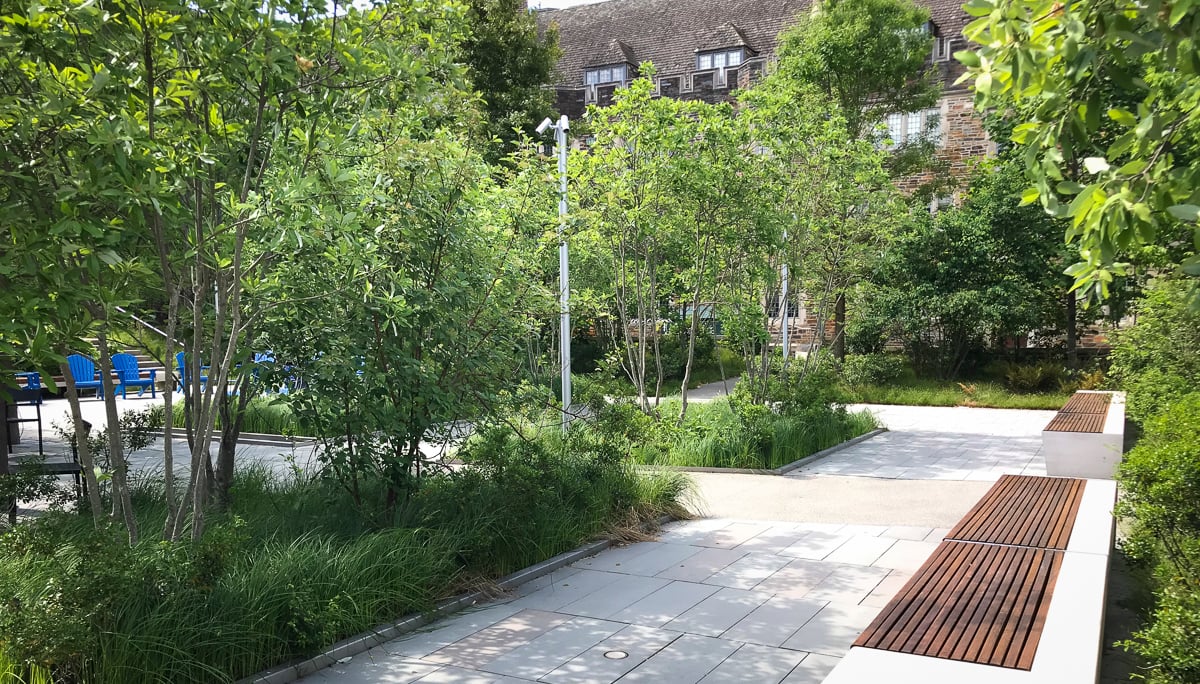
Durham, NC © Izel Native Plants
Why Layers Matter
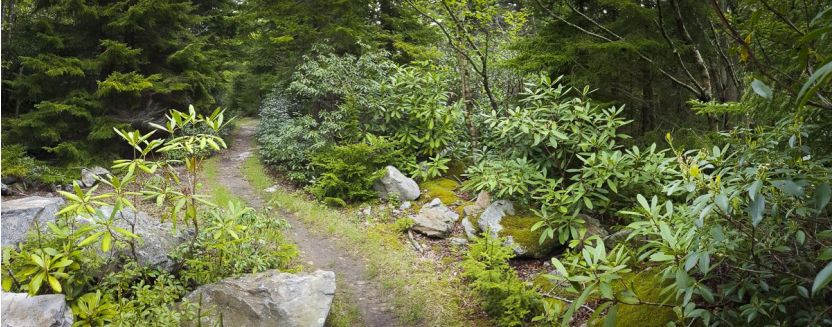
In The Living Landscape, authors Rick Darke and Doug Tallamy discuss the layers inherent in natural landscapes. While some layers are conceptual—spanning time or cultural traditions—others are physical, such as the distinct strata seen in a healthy woodland. A canopy, understory trees, shrubs, herbaceous plants, and a ground layer each contribute distinct physical architecture.
This variation in the physical structure of a landscape is called habitat heterogeneity. Having multiple layers creates diverse ecological niches, allowing different creatures to share limited resources while minimizing competition. The more structural variation in a site, the more niches there are to fill.
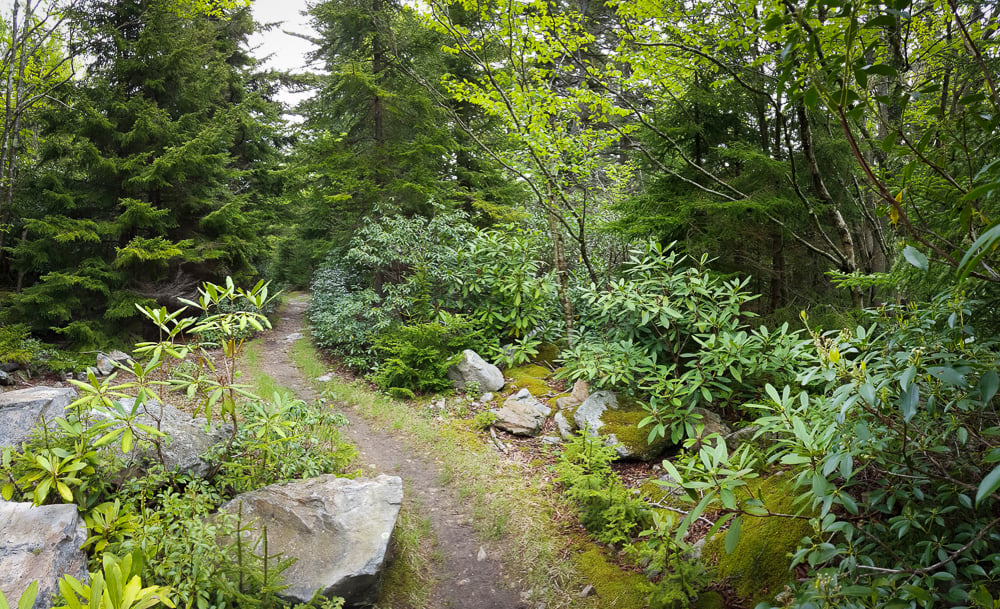
Canaan Valley, WV © Izel Native Plants
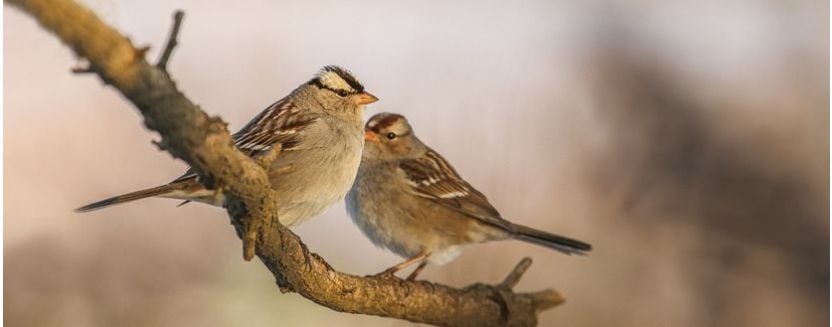
Tallamy notes that birds illustrate this principle well because they occupy every layer of the forest. Some specialize and stick to a single layer, while others use several, like bluebirds who nest in one layer and forage in another. A species’ layer specificity may vary with the season. Hermit Thrushes usually forage on the ground for worms and arthropods, but during winter, they stay mainly in the understory and shrub layer where they feed on nutrient-dense berries.
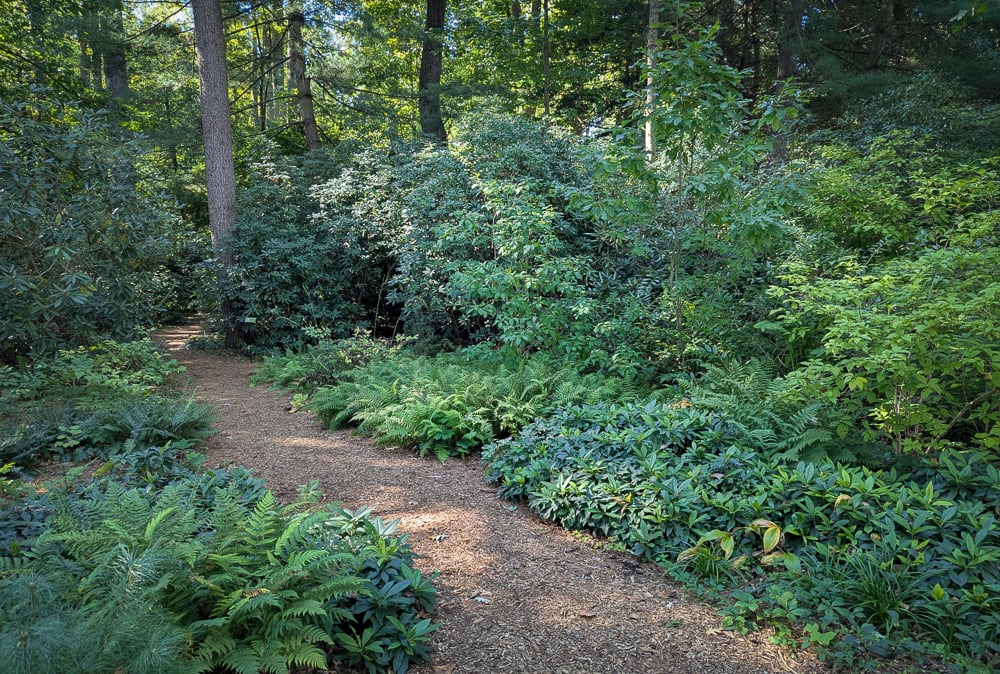
Mt Cuba Center, DE © Izel Native Plants
The shrub layer contributes to those natural plant communities, serving multiple functions and supporting other plants and wildlife. In cultivation, they’re important not only for encouraging biodiversity and life, but also for their structural and design functions and the physical resilience they lend to the landscape.
Shrubs as Habitat
Shrubs are vital for supporting local food webs and providing habitat for wildlife to complete their life cycles. The shrub layer creates microclimates and variable conditions. Shrubs create shade, provide wind protection, hold humidity, and buffer the temperature. Imagine different birds, mammals, and insects occupying the distinct, physical niches created by those variations.
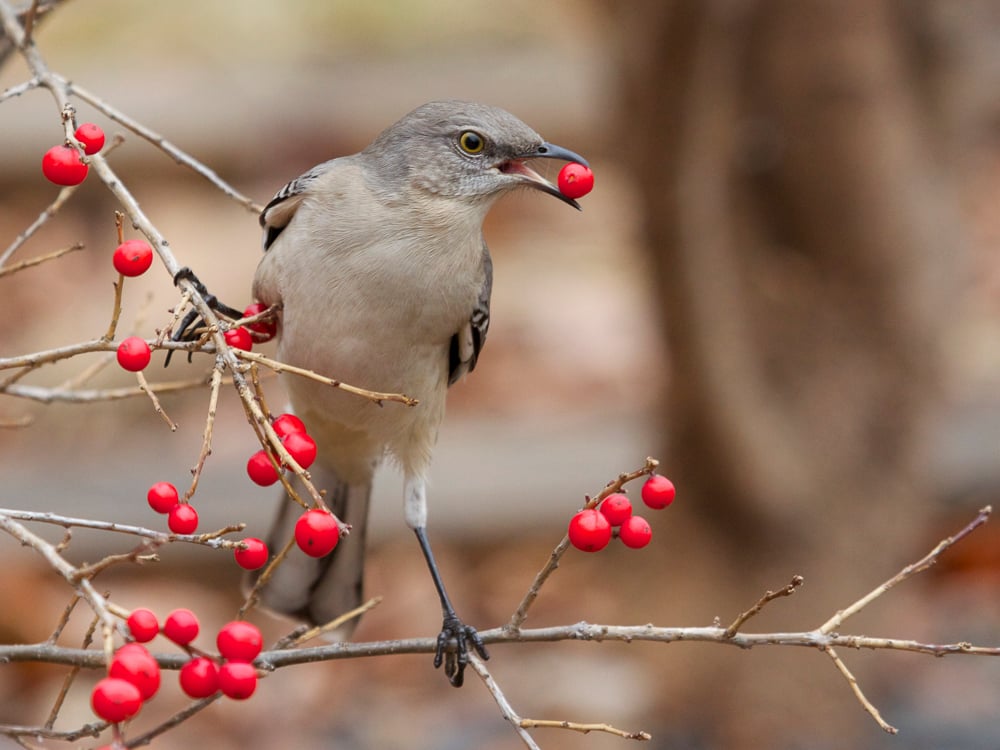
Northern Mockingbird © Matt MacGillivray
Crucially, several native shrub genera act as keystone plants that support critical food web links. In Eastern temperate forests, Salix species (willows) and Vaccinium species (blueberries, deerberries, cranberries) serve as primary host plants for hundreds of caterpillar species and several specialized native bees. Genera such as Corylus (hazelnuts), Myrica (bayberries/myrtles), and Amelanchier (serviceberries) host over 90 species of native butterflies and moths.
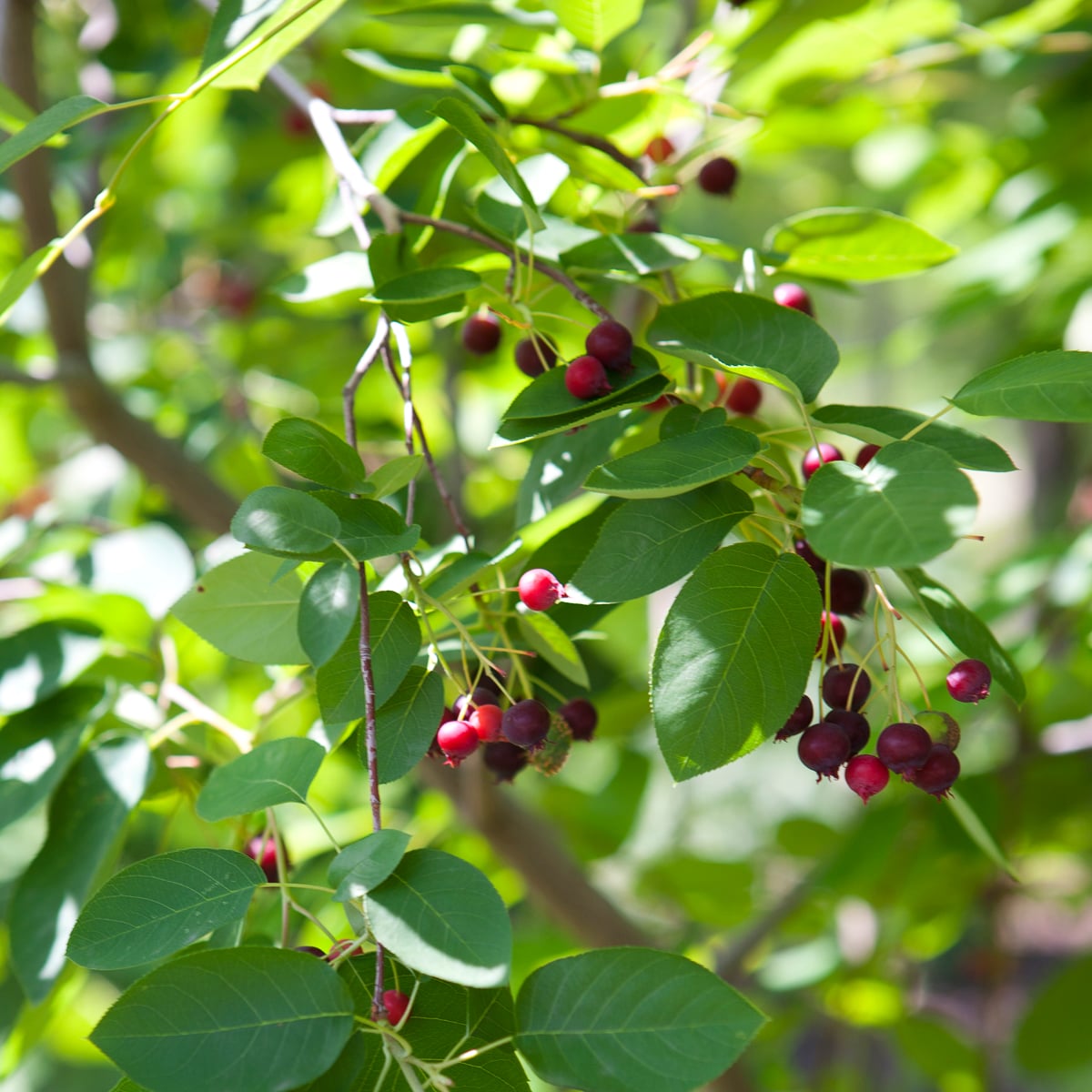
Amelanchier canadensis (Canadian serviceberry) © Izel Native Plants
By choosing a diverse mix of native shrubs, you can provide year-round support for local fauna. In spring, Lindera benzoin (northern spicebush) opens early with critical pollen and nectar when few other plants are blooming. Come summer, dense branch networks offer protected nesting sites, while summer-fruiting species like Amelanchier arborea (downy serviceberry) yield early crops of nutritious berries. In fall, lipid-rich berries, like those from Callicarpa americana (American beautyberry), help songbirds fatten up for winter or store energy for long migrations. During the coldest months, persistent berries—such as those on Ilex verticillata (winterberry holly)—offer winter food reserves. Shrubs with pith-filled or hollow stems, like Sambucus spp. (elderberries) or Rhus spp. (sumacs), provide overwintering sites for stem-nesting native bees, and branches provide structural cover. No matter which season, the shrub layer contributes to a living landscape.
Shrubs as Structural and Design Elements
Along with canopy trees, shrubs form the structural backbone of designed landscapes. They delineate spatial boundaries, forming "garden rooms" that ground human activity to an inviting scale. Overhead tree canopies provide enclosure from above, but understory and shrub layers bring the eye down to eye level, preventing open spaces from feeling overwhelming.
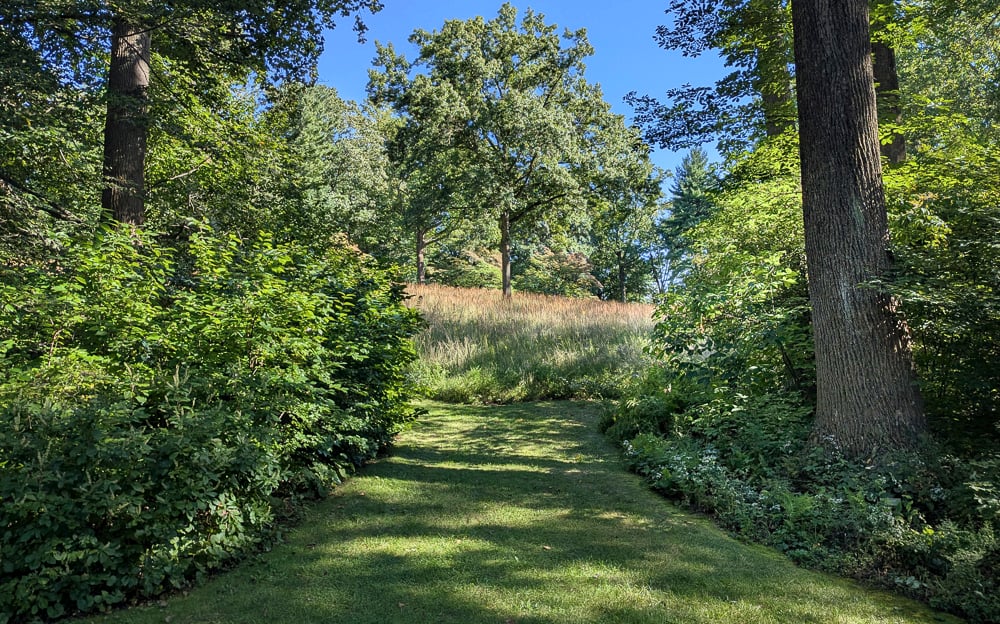
Mt Cuba Center, DE © Izel Native Plants
From a design perspective, shrubs offer practical layout solutions by screening unwanted views, establishing property boundaries, and creating subtle visual transitions without the formality of built walls. Shrubs can also frame a view or hint at what’s around the next corner. The glorious Aesculus parviflora (bottlebrush buckeye) suckers to form stands that can define spaces with softness and beauty, offering panicles of flowers that hum with pollinators in summer. Evergreen species like Morella cerifera (wax myrtle) and Ilex glabra (inkberry holly) respond well to pruning and can give a more refined, traditional garden look when shaped.
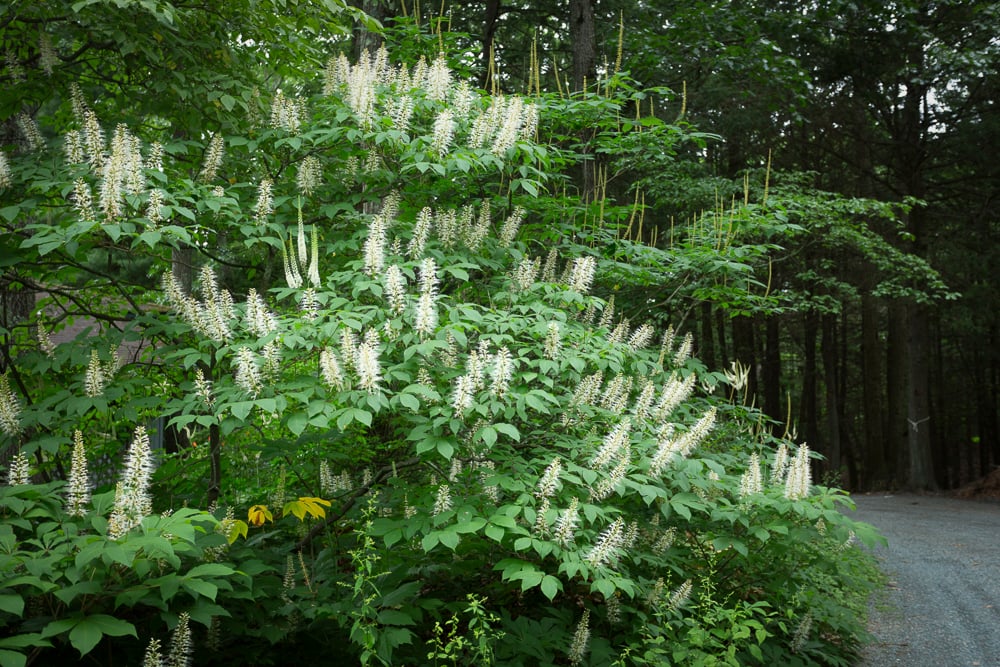
Aesculus parviflora (bottlebrush buckeye) © Uli Lorimer
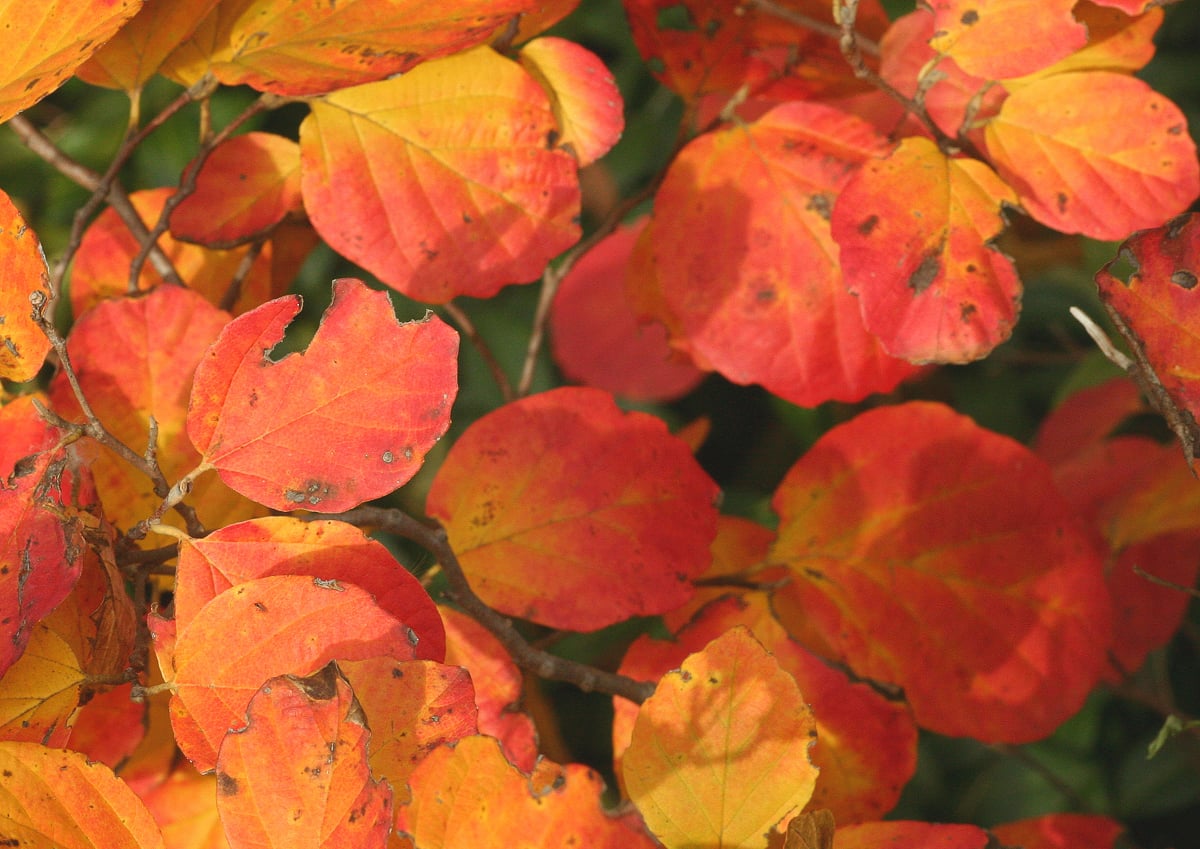
Shrub foliage ranges from large and bold to fine and delicate. The autumn colors for many species are brilliant, from burgundy-to-purple on Viburnum nudum (possumhaw), to crimson on Itea virginica (Virginia sweetspire), to deep gold on Hamamelis virginiana (American witchhazel). Shrub habits range from open and airy to dense and full. Some are treelike and reach into the understory, while others are low-growing and spreading.
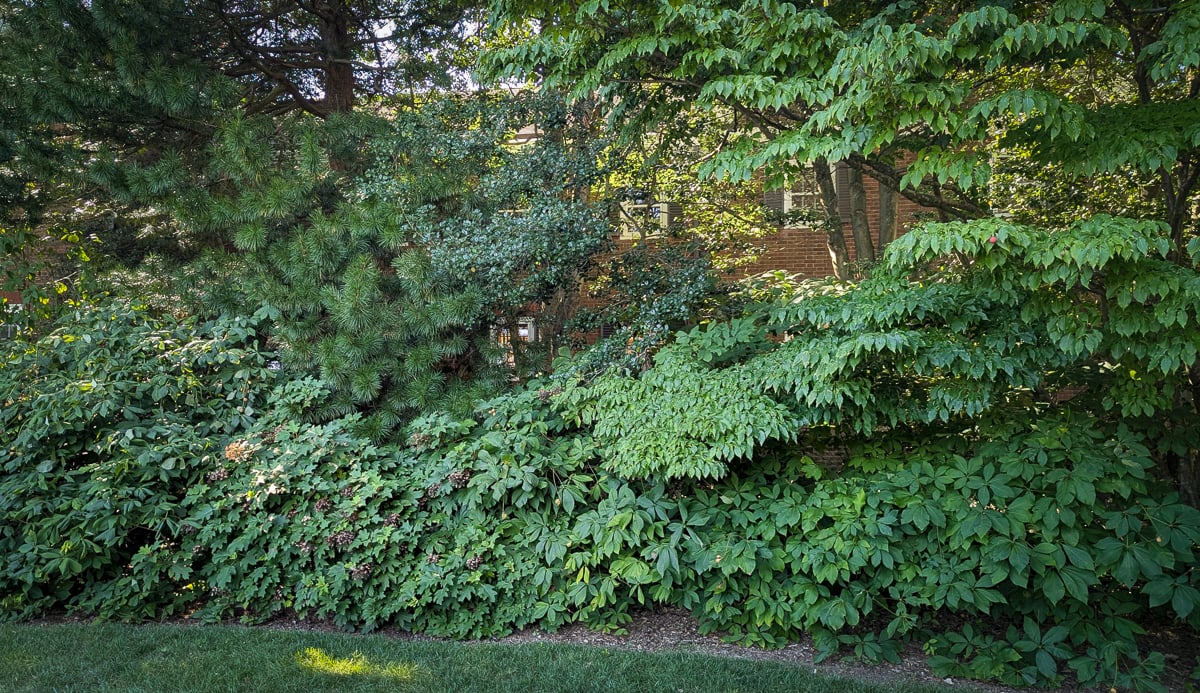
Mt Cuba Center, DE © Izel Native Plants
Replacing a sterile row of non-native evergeens with a diverse hedge of native species creates a visually dynamic screen that actively supports wildlife. Furthermore, planting multiple species rather than a single monoculture hedge reduces the risk of the planting being wiped out by a single pest, disease, or weather event.
Building Landscape Resilience
In addition to its other contributions, a shrub layer builds physical resilience. Extensive branching and multi-layered foliage help slow rainfall and reduce its impact on the ground. They slow surface runoff and give it more time to infiltrate, which reduces erosion and sediment in the runoff. Their woody, branching root systems, especially species with suckering habits, hold soil and reduce erosion further. Species like Cephalanthus occidentalis (buttonbush) naturally anchor stream banks and stabilize slopes.
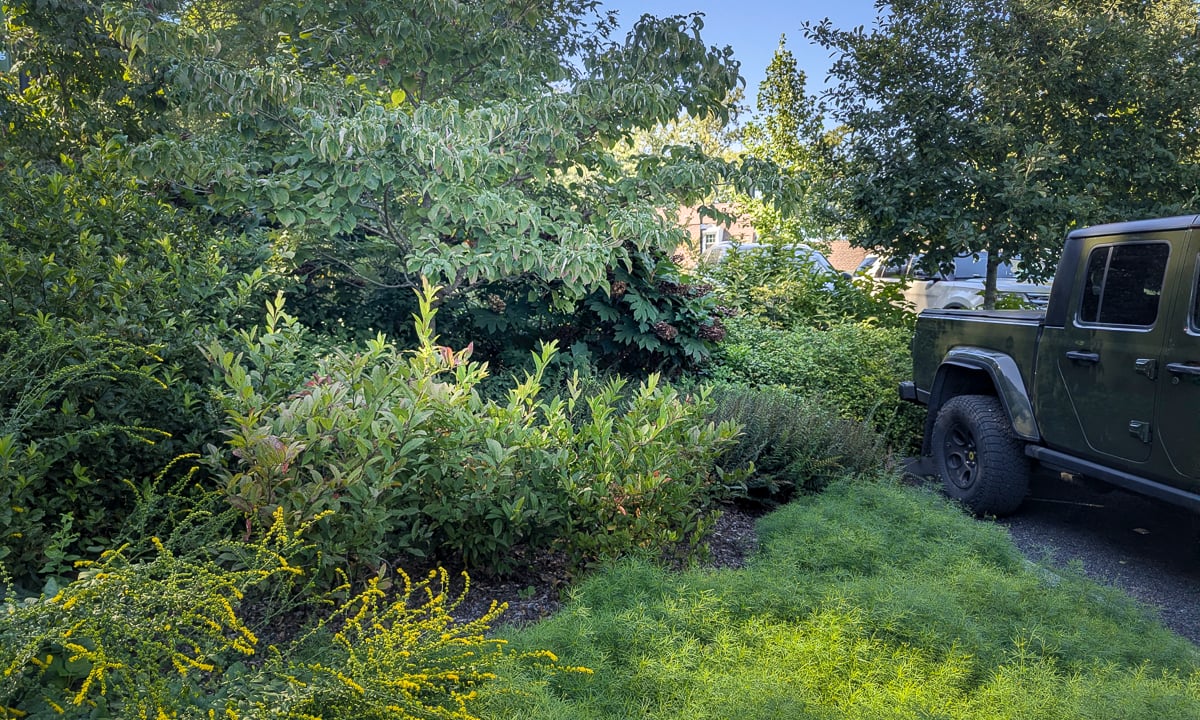
Mt Cuba Center, DE © Izel Native Plants
Shrub plantings can serve as windbreaks and help retain radiant heat in winter. In summer, they cool surrounding air via evapotranspiration and buffer heat radiation along stone patios, foundations, and driveways.
Planting for Success
Once you’ve chosen the shrubs you want, you’ve got to plant them. Fall is the ideal time for planting shrubs. In autumn, decreasing daylight, cooler air, and other environmental cues signal woody plants to stop active top growth. As air temperatures drop, the soil retains the warmth it’s absorbed over the summer. This combination allows shrubs to direct all their metabolic energy toward establishing and expanding root systems into warm soil without having to support new leaf or shoot growth.
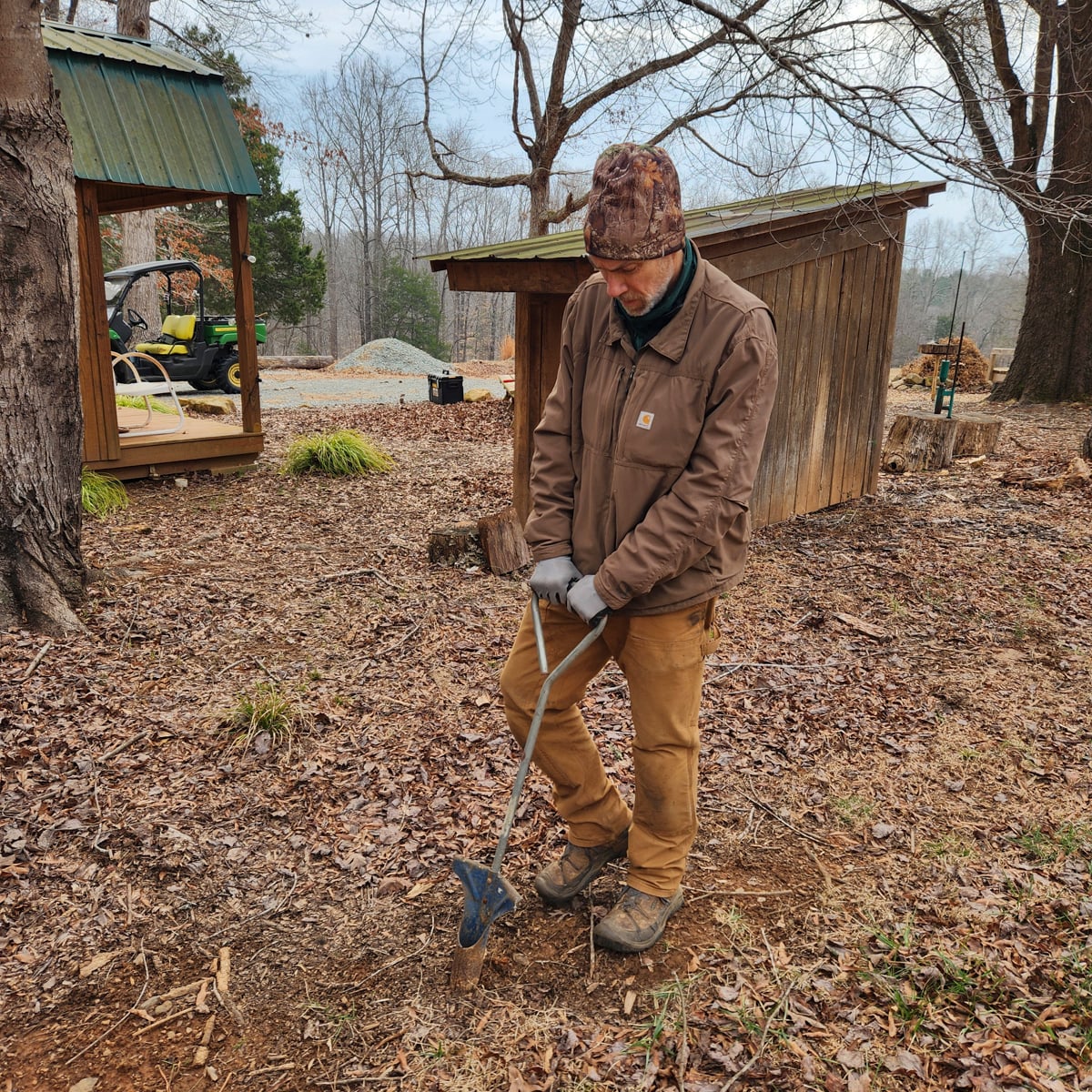
© Izel Native Plants
Also, as deciduous shrubs start the dormancy process and drop their foliage, they lose less water through their leaves. Cooler temperatures reduce drought and heat stress on newly installed plants, and root growth will continue while soil temperatures remain above freezing.
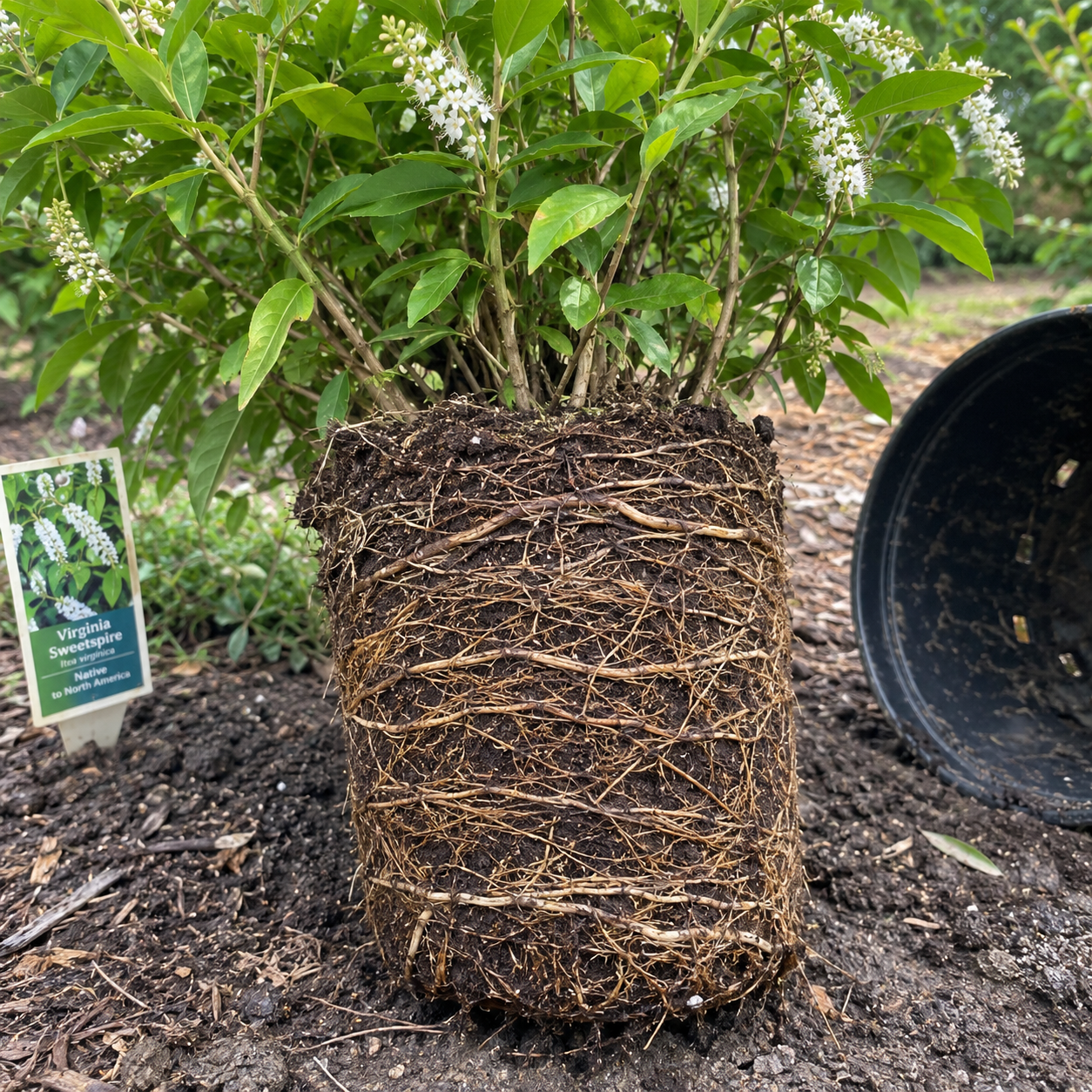
Woody species grown in containers can sometimes develop poor root structures. This is more likely to happen in larger, finished containers than in smaller pots. Young woody seedlings of many species send down a central taproot first before developing their branching root structure. A more mature plant in a larger container is more likely to have reached the bottom of the container and started circling. They can easily become pot bound. A younger, smaller tree or shrub at planting has advantages over a larger specimen that’s spent more time in a container.
© Izel Native Plants
Always be on the lookout for pot-bound or girdling roots (those that wrap around themselves or the crown of the plant). You may need to prune them before planting, and doing this in fall when plants are not drawing energy from the roots is safest. Bare-rooting woody plants before putting them in the ground adds another layer of safety. They’re immediately integrated into the native soil and can grow outward rather than behaving as if they’re still in the pot.
Fothergilla gardenii (dwarf witchalder) © John Hagstrom
Fall-planted shrubs will establish a root network through the late autumn and into winter. When warm weather arrives in spring, the root system is already in place to send water and nutrients upward into new, spring foliage. That established root network imparts an advantage when summer heat and dry spells hit. You can plant shrubs in spring, but it’s safest to wait until after the last frost. They’re more susceptible to transplant shock, and you’ll need to give them more attention and care to get them established.
Reclaiming the Shrub Layer
By rethinking how we use shrubs—moving away from sheared, isolated specimens toward dynamic, layered plantings—we can restore essential ecological functions to our built environments. Whether you are stabilizing an eroding slope, planting a privacy screen, or creating shelter for migrating birds, native shrubs offer a combination of structural beauty and ecological might. As you plan your next project, look closely at the spaces between the canopy and the ground. That missing middle layer may just be the key to bringing your landscape to life.

Shannon Currey is a horticultural educator with Izel Native Plants. She’s worked in the nursery trade since 2006, developing expertise in grasses and sedges and expanding her knowledge of native forbs. She currently serves on the North Carolina Plant Conservation Program Scientific Committee, holds advisory roles with several organizations, and served on the Board of the Perennial Plant Association. Shannon lives in Durham, North Carolina and loves exploring the local flora everywhere she goes!