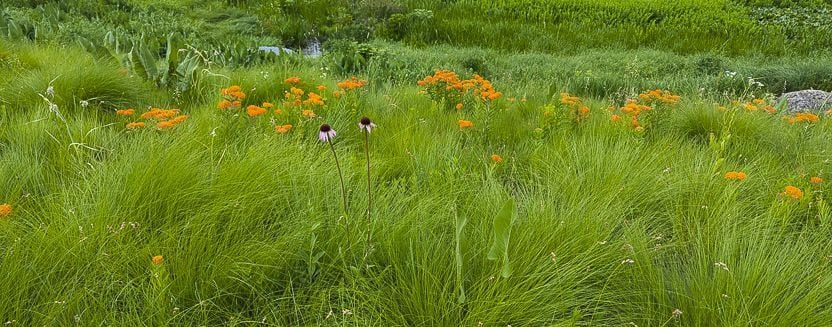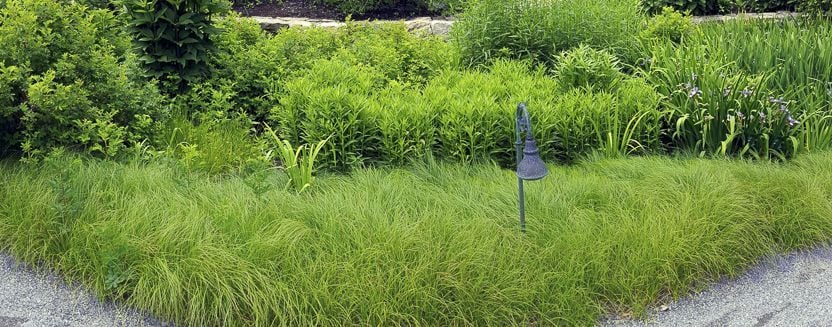

Grasses and sedges get lumped together as graminoids based on their general appearance and form: herbaceous plants with linear leaves, small, mostly wind-pollinated flowers, and a “grasslike” habit. There are mnemonics to help us tell them apart (sedges have edges…), but is knowing whether it’s a grass or a sedge useful? When would you choose a grass vs. a sedge?
A quick review of fundamentals sets the stage. “True” grasses are in the Poaceae plant family, while sedges are in Cyperaceae. Cultivated grasses represent many different genera, but the majority of sedges in cultivation are in the genus Carex.
Grasses have adapted to survive in difficult conditions. Their deep, fibrous roots give them stability, resilience, and staying power. Introduced species of grasses that are traditionally used for turf, like Bermuda and Zoysia, have been bred and managed differently, and their root systems are much shallower.
Many native grasses, especially the ones we’re most familiar with, have a warm-season growth cycle that excels under high temperatures. They emerge from winter dormancy when soil and air temperatures have warmed up in mid- to late spring. Most warm-season grasses bloom starting in mid- to late summer into early fall. They often have intense fall color or blooms that peak in fall. They’re very efficient with water, nutrients, and sunlight, producing copious amounts of growth when they have the resources. They’re also great at growing in poor soils and dry conditions, and many perform best in tough conditions. Cool-season grasses are more often shade tolerant and affiliated with moist environments. They emerge and flower earlier than their warm-season cousins.
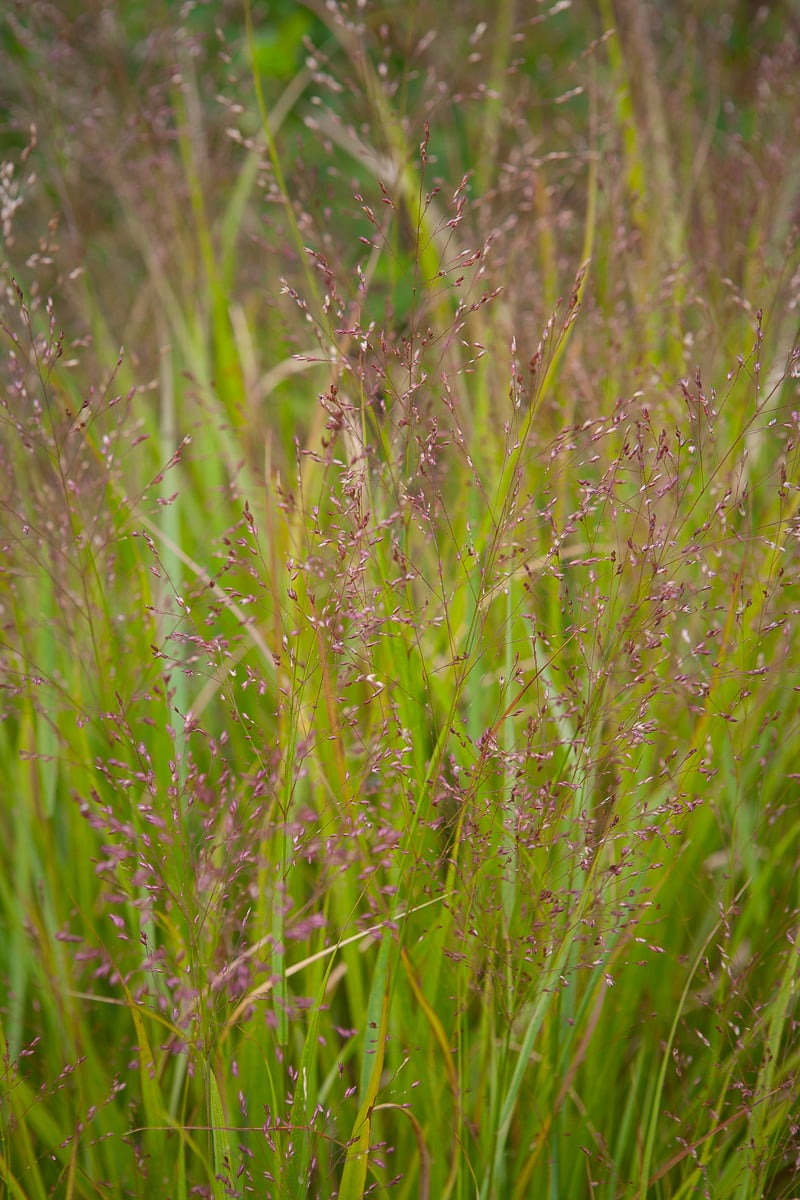
Panicum virgatum (switchgrass)
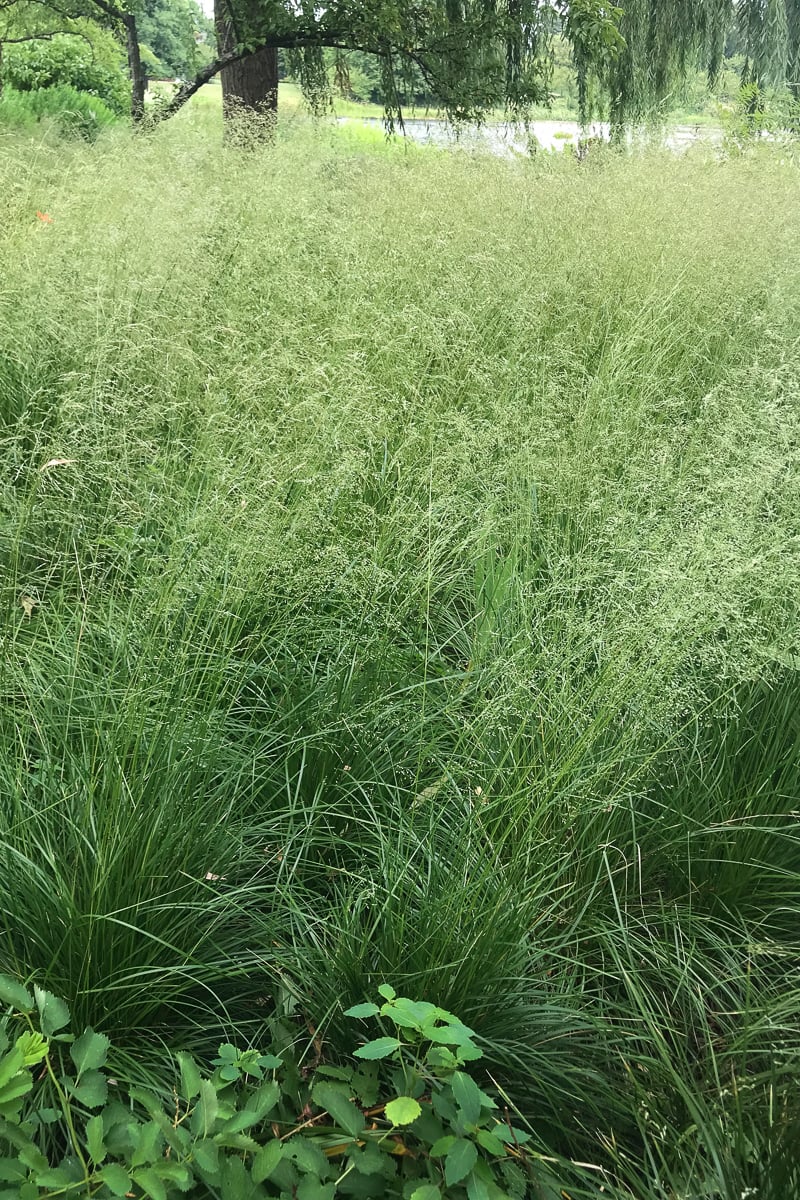
Deschampsia cespitosa (tufted hairgrass) is a cool season grass.
Sedges in the genus Carex are all cool-season growers. They operate best when soil and air temperatures are cooler; generally in spring and fall. They emerge from dormancy much earlier than grasses—often in late winter or early spring—and bloom before the heat of the summer begins. They also have fibrous root systems, but their roots aren’t typically as deep as grasses. Generally, sedges grow more often in moist and wet areas and northern climates than do grasses. They also tend to prefer shady habitats. Of course, there are exceptions; there are a few heat- and sun-loving sedges (looking at you, Carex texensis).
Carex texensis (Texas sedge) © Hoffman Nursery, Inc
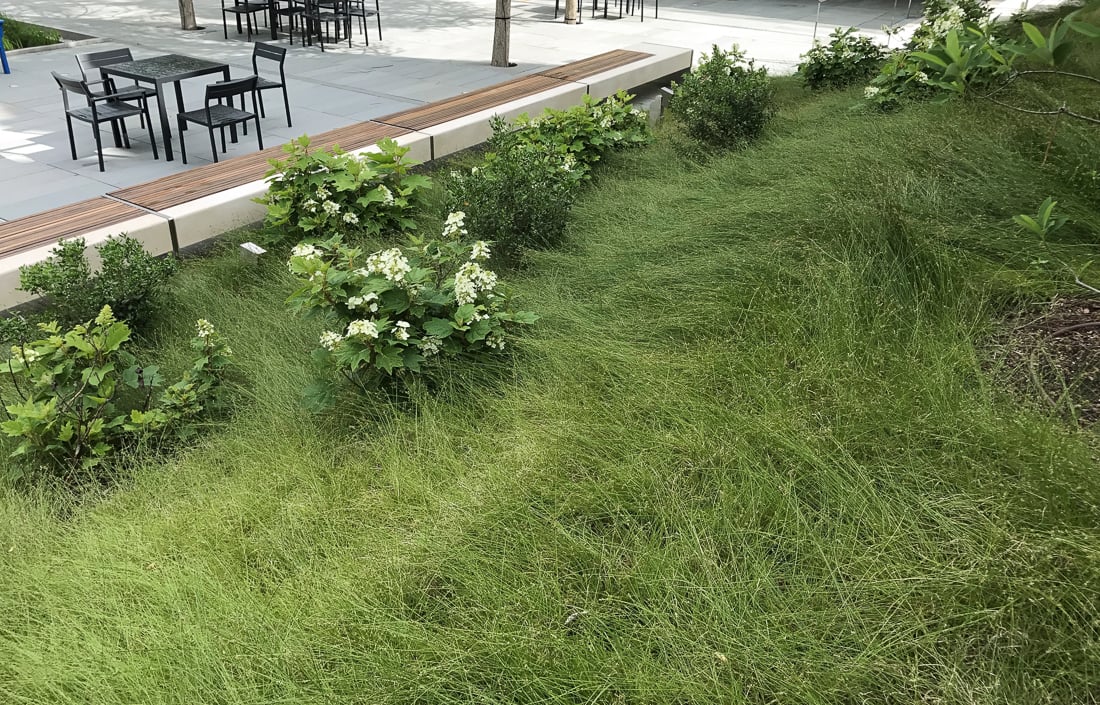
Choosing a grass vs. a sedge mostly comes down to different roles, or similar roles under differing site conditions. They’re complementary. Sedges and cool-season grasses will fill in space early in the season, competing with winter and spring weeds and providing coverage. Many sedges are evergreen or mostly evergreen, and their presence during the dormant season also helps with weed competition. Carex blanda (eastern woodland sedge) and Carex amphibola (eastern narrowleaf sedge) come to mind. Sedges are well suited as a foundation for herbaceous or mixed plantings, especially in shady conditions. Two favorites, Carex pensylvanica (Pennsylvania sedge) for dry shade, and Carex radiata (eastern star sedge) for mesic to moist shade, have narrow blades and play backup to showier perennials and shrubs.
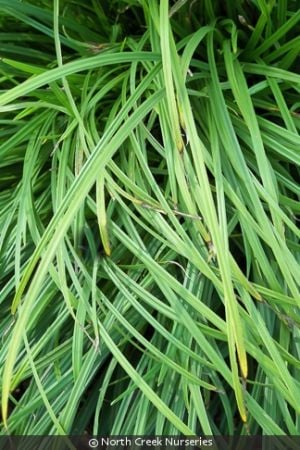
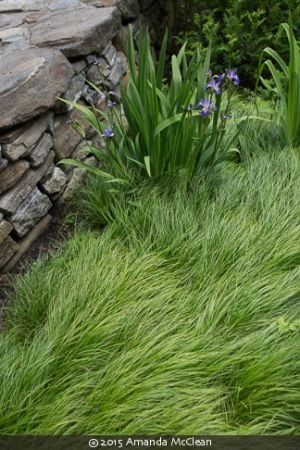
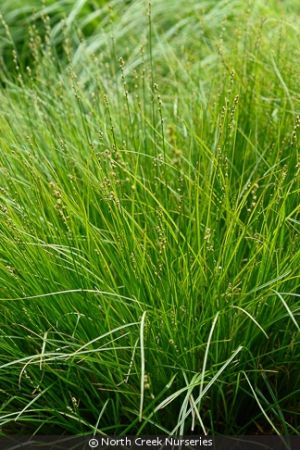
Some of the bigger, more vigorous sedges are wetland plants, and their superpowers are competing with weeds and supporting wildlife. Carex vulpinoidea (fox sedge) will thrive in wet, sunny or partially shady sites. It and similar species are good for covering ground in wet areas, especially low-traffic and backyard spots where tidiness is less important. Some will take drier conditions and more sun, making them versatile for applications like rain gardens and drainage ditches. Consider planting them down in wetter zones and then aiming for grasses on the drier edges.
As the season heats up, grasses take on a starring role. Large, warm-season grasses are built to bask in the sun and provide structure to landscapes. They’re great for screening, focal points, or to establish seasonal patterns with color and texture. We saw plantings of Andropogon gerardii ‘Blackhawks’ last summer that anchored perennial beds in late spring and then grabbed attention when they bloomed in late summer. There were also breathtaking displays of Muhlenbergia capillaris ‘White Cloud’ that lit up the fall landscape. We love, too, that grasses keep their habit even when fully dormant. That lends structure to the landscape, even in winter.
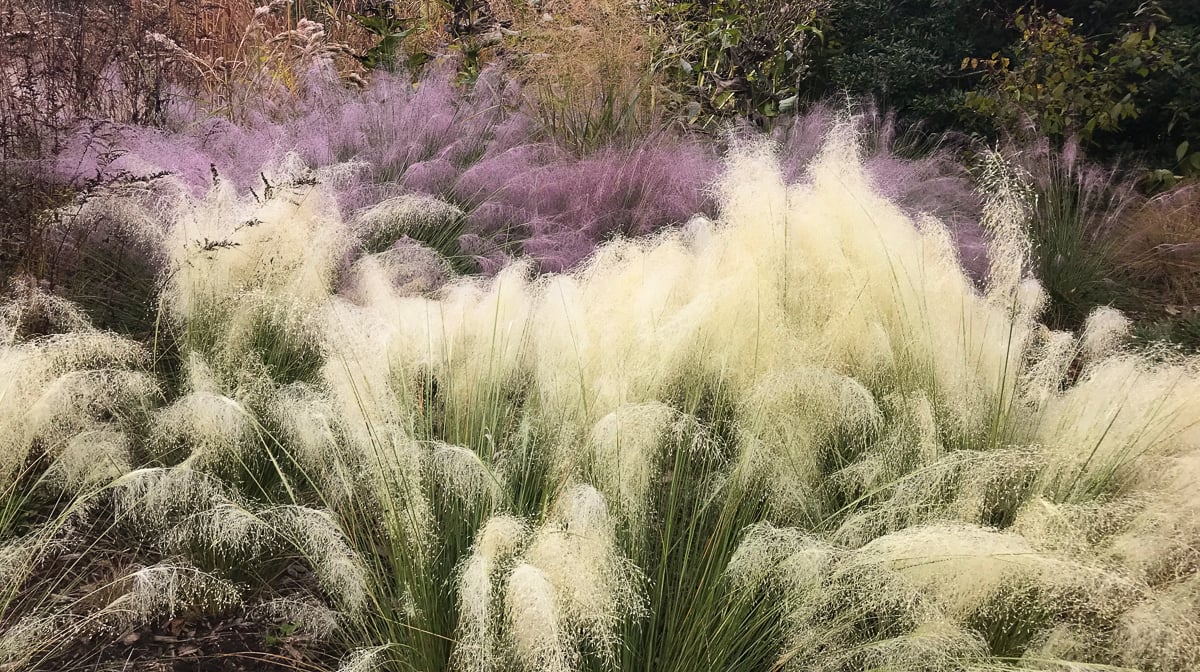
Muhlenbergia capillaris 'White Cloud' © Hoffman Nusery, Inc
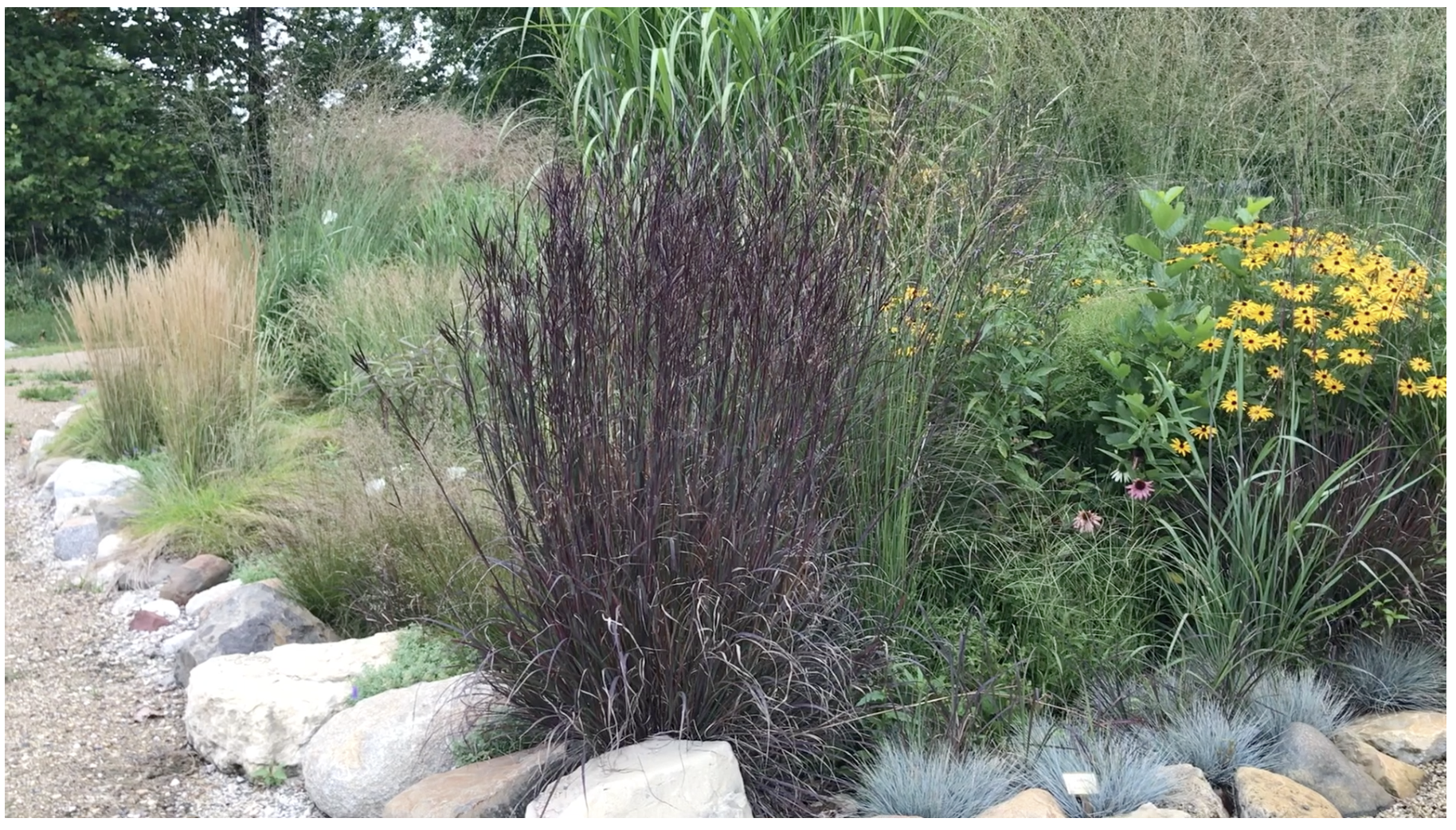
Andropogon gerardii 'Blackhawks' ('Blackhawks' big bluestem) © Intrinsic Introductions
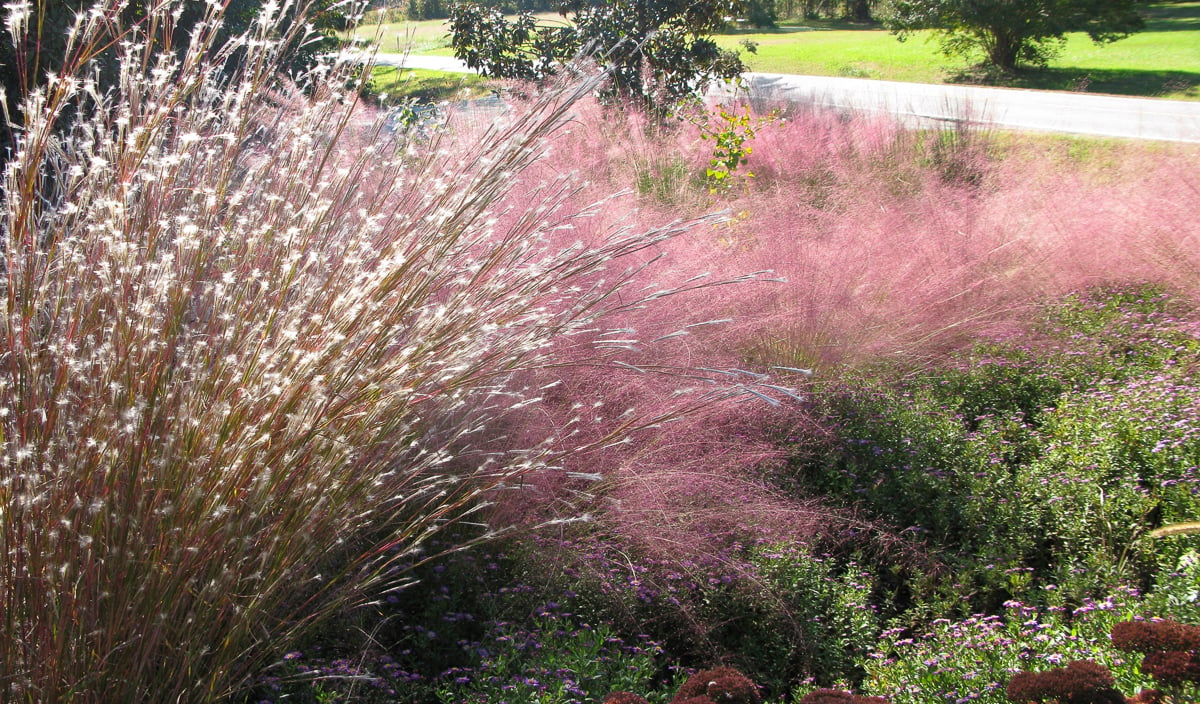
Muhlenbergia capillaris (pink muhly) with Andropogon ternarius (splitbeard bluestem)
Smaller, warm-season grasses make wonderful edge plants or foundations for sunny plantings, where they thrive in hot (and often dry) conditions. Schizachyrium scoparium (little bluestem) and its cultivars are good performers in parking medians or along sidewalks. They also are quite at home in prairie plantings or perennial borders where they provide color across the growing season.
It’s oversimplified, but generally, think about grasses for sun, hot weather, and fall display; sedges for shade, moist conditions, and spring. Between them, they cover you year round and across all kinds of site conditions.
When it comes to the question, grass vs. sedge, the answer is both!
All photos are © Izel Native Plants unless otherwise noted.

Shannon Currey is a horticultural educator with Izel Native Plants. She’s worked in the nursery trade since 2006, developing expertise in grasses and sedges and expanding her knowledge of native forbs. She currently serves on the North Carolina Plant Conservation Program Scientific Committee, holds advisory roles with several organizations, and served on the Board of the Perennial Plant Association. Shannon lives in Durham, North Carolina and loves exploring the local flora everywhere she goes!