
Please check the average dates of last frost for your area before choosing your ship weeks.
Search
PLANTS NATIVE TO KANSAS' ECOREGIONS
Below is a listing of all the plants native to the state of Kansas that are currently available for sale through Izel Native Plants. This listing will change from month to month, or even from day to day, as some species become sold out and other crops become ready to ship to our customers.
Jump to bottom of page for Kansas Ecoregions Map


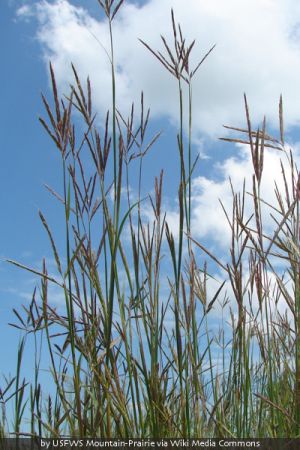
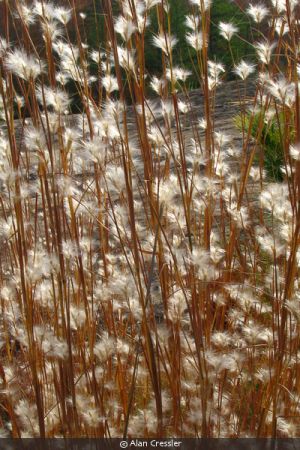
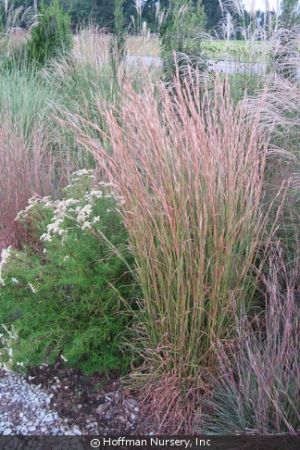
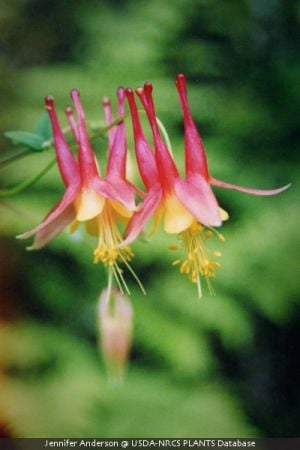


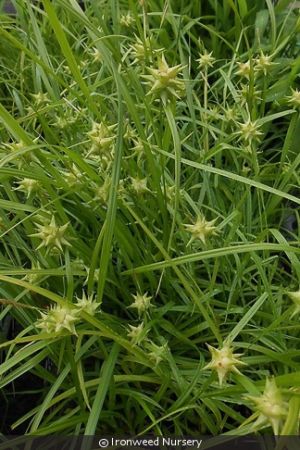
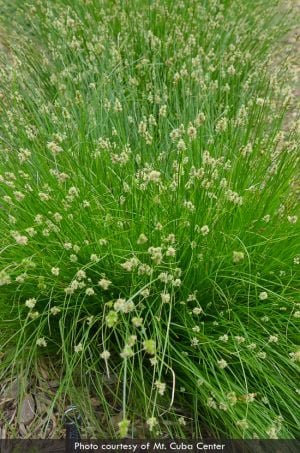
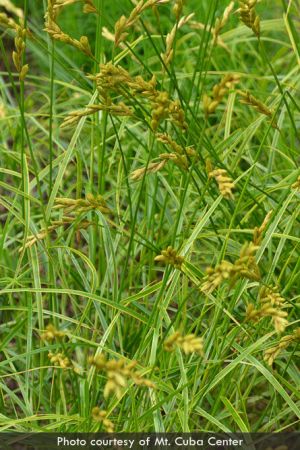
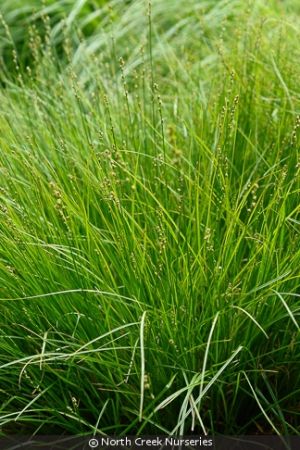
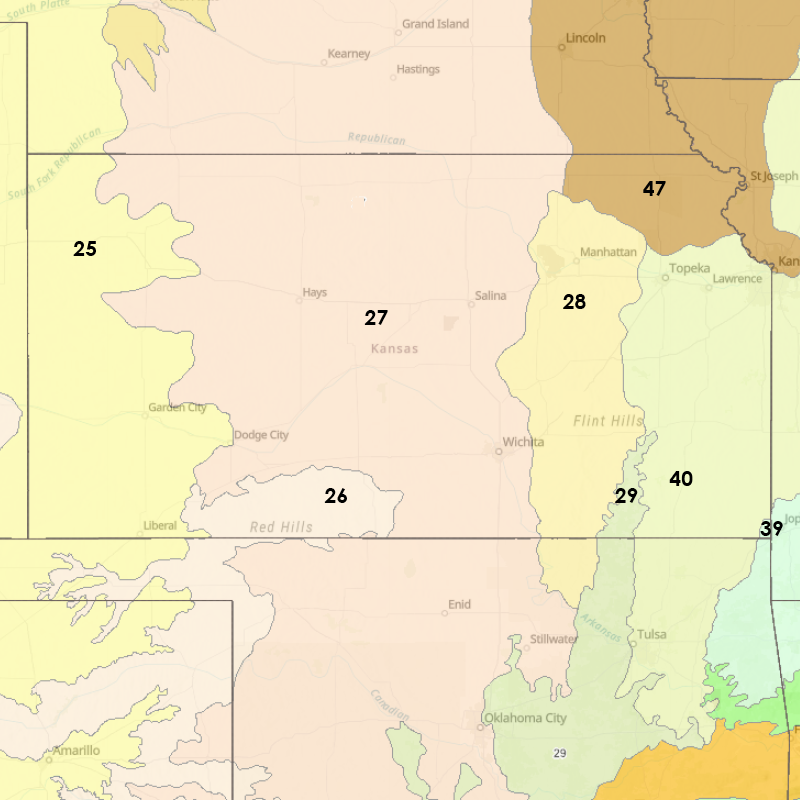
Kansas Ecoregions - EPA Level 3
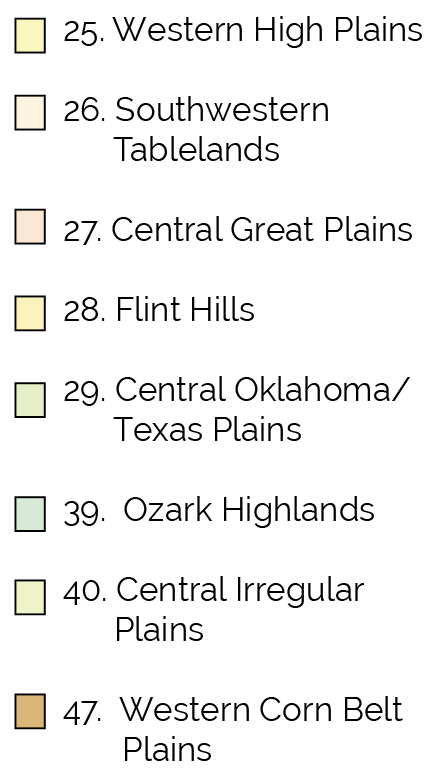
25. Western High Plains
- The Western High Plains is an irregular and disjunct ecoregion with a small peninsula extending north into southern South Dakota. It then flows southward through Wyoming, Nebraska, Colorado, Kansas, Oklahoma, New Mexico and Texas. It is a landscape of rolling plains and tablelands formed by the erosion of the Rocky Mountains. Moisture is a limiting factor in the rainshadow of the Rocky Mountains; as a result, the plains vegetation is dominated by drought resistant shortgrass prairie.
26. Southwestern Tablelands
- The southwestern Tablelands flank the High Plains (25) with red hued canyons, mesas, badlands, and dissected river breaks. The ecoregion is irregular and dissected with a peninsula extending into south-central Kansas, and portions included in Colorado and New Mexico to the west, and Oklahoma and Texas to the south. Unlike most adjacent Great Plains ecological regions, little of the Southwestern Tablelands is in cropland. Much of this region is in sub-humid grassland and semiarid range land. The potential natural vegetation is grama-buffalo grass with some mesquite-buffalo grass in the southeast, juniper-scrub oak-midgrass savanna on escarpment bluffs, and shinnery (midgrass prairie with open low and shrubs) along the Canadian River.
27. Central Great Plains
- The Central Great Plains ecoregion is slightly lower, receives more precipitation, and is somewhat more irregular than the Western High Plains (25) to the west. The ecoregion extends from central Nebraska, southward through central Kansas where it represents approximately half of the state, then Oklahoma, and Texas. Once a grassland, dominated by mixedgrass prairie with scattered low trees and shrubs in the south, much of this region is now in cropland. Subsurface salt deposits and leaching contribute to the high salinity found in some streams.
28. Flint Hills
- The Flint Hills ecoregion, the largest remaining intact tallgrass prairie in the Great Plains. It is a relatively narrow, north-south strip, extending from Kansas into Oklahoma. The ecoregion is characterized by rolling hills composed of shale and limestone, and rocky soils. Climate is marked by humid, wet summers, and average annual precipitation of 28 to 35 inches. Erosion of the softer limestones has left the more resistant chert (flint) on the surface, producing the area's coarse soils. This rocky surface, with its steep slopes, is difficult to plow; consequently, the region has historically supported very little cropland agriculture. The natural tallgrass prairie is still intact in most of the ecoregion and is used for range and pasture land.
29. Central Oklahoma/Texas Plains
- The Central Oklahoma/Texas Plains ecoregion is a transitional area between prairie vegetation to the west and forested regions to the south. Kansas contains the northern extent of the region. Oak savanna and forests are common on the sandy, dry soils. The thick Pennsylvanian-aged sandstone has been eroded into a series of hills that exhibit more relief than the Central Irregular Plains (40) to the east, but less relief than the larger hills of the Flint Hills (28) to the west.
39. Ozark Highlands
- The Ozark Highlands ecoregion occurs in Arkansas and Oklahoma, with the largest portion in Missouri, and covers only a small area in the southeastern corner of Kansas. This area is not as agricultural as bordering regions; less than one fourth of the core and half or more of the periphery of this region has been cleared for pasture and cropland. Humid, wet summers are typical and precipitation is generally greater than 40 inches per year. Mississippian-aged rocks, including the Warsaw and Keokuk cherty limestones, are geologically much older than strata in adjacent northern regions.
40. Central Irregular Plains
- The Central Irregular Plains ecoregion is a disjunct ecoregion with one portion occurring in northern Missouri and south-central Iowa, and another portion occurring in eastern Kansas, western Missouri, and northeastern Oklahoma. The ecoregion has a variety of land use types and tends to be topographically more irregular than the Western Corn Belt Plains (47) to the north, where most of the land is in crops. The potential natural vegetation of the region is a mosaic of tallgrass prairie and oak-hickory forest, with more forested areas than 47. The climate is humid with rainfall averaging 28 to 40 inches per year, most of it falling during the growing season.
47. Western Corn Belt Plains
- The Western Corn Belt Plains ecoregion runs across several states of the Upper Midwest, including most of Iowa, and the western section of Nebraska. Once covered with tall-grass prairie, over 75 percent of the Western Corn Belt Plains is now used for cropland agriculture, and much of the remainder is in forage for livestock. A combination of nearly level to gently rolling till plains and hilly loess plains, an average annual precipitation of 63–89 cm, which occurs mainly in the growing season, and fertile, warm, moist soils make this one of the most productive areas of corn and soybeans in the world.
To view, or download, a pdf of the entire map of the U.S. Level III Ecoregions, go to the following link:
EPA Data Commons Ecoregion Level III pdf