
Size is a conundrum as old as the hills and just as tricky to pin down! We've pondered it over wealth, belongings, and all sorts of earthly treasures, even tiptoeing into the forbidden territory of the unmentionable. We yearn for a tidy little answer, but each response just stirs up a whirlwind of new queries. Now, add plant sizes to the age-old debate and, if you're after a plain ol' yes or no, prepare yourself for a resounding "maybe".
There are many considerations when purchasing plants, and thinking through your priorities will greatly facilitate choosing plant sizes that will work best for you. Cost is often at the top of the list of concerns, and in that case, smaller is less expensive and, therefore, better. However, as gardeners, we also have a penchant for instant gratification, and in that case, bigger is undoubtedly better.
But beyond the bang for your buck, is there a plant size that requires less maintenance once installed in the landscape? How important are site conditions and timing when choosing one size over another? Should the species, their growing requirements and habit be taken into account?
Let’s take a look at several options, starting with the smallest, and go through the pros and cons of each. We will focus on herbaceous perennials rather than woody plants, because the type of plant makes a big difference in the root structure, and woody plants are in a separate nursery category and follow different standards.
Plugs
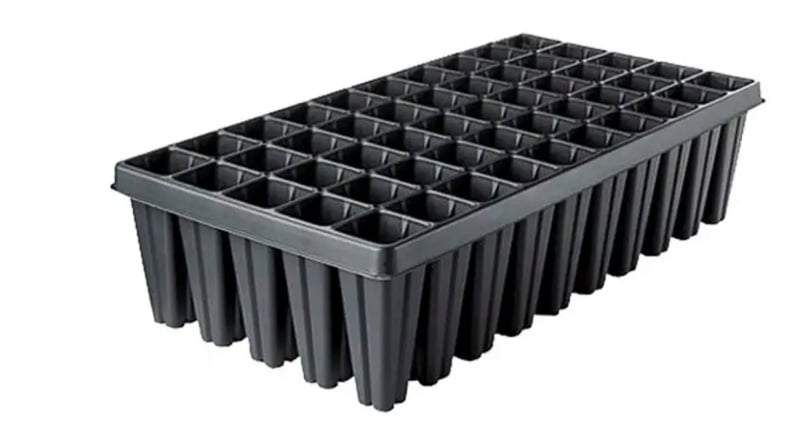
Plug flats/trays closely follow an industry standard size of 11 x 22". Picture here is a landscape-ready flat of DP50s that holds 50 deep plugs. Photo courtesy of T.O. Plastic
Plugs are young plants that range in age from just a couple of months to eight months, or so, depending on their size and whether they’re an overwintered crop. They are grown in modular cells called flats or trays. The industry standard size for flats is 11 x 22” (give or take a fraction of an inch) and they are referred to by the number of plugs within them: 72s, 50s, 32s, and so on. Because all plugs are grown in the same size flat, the higher the number, the smaller the individual plants. Some plugs will have a prefix to indicate that they are deeper than a standard plug, and/or are considered ready for use in the landscape: DP50 stands for 50-count deep plug, LP50® (trademarked by North Creek Nurseries) stands for 50-count landscape plug. The exact size and shape of the plug can vary slightly according to the tray manufacturers’ specifications. There are other plug sizes than those mentioned above, but any flat with a count of 98 or higher is only used for propagation purposes, and is exclusively used or sold within the growing trade. You might also come across plugs as large as 18s, but those are a crossover size and consist of individual pots within a tray.
Root structure:
“I received the plugs, and they’re totally root bound!” This is a common concern we hear from customers. When it comes to the root structure of plugs, the conventional wisdom for larger size plants—especially woody plants—does not apply. Plugs are considered ready when they have filled in the entire cell and the plants can easily be removed without the root system falling apart or leaving any growing medium behind. And yes, one might think that they are root bound. I mentioned woody plants above. The reason that root bound woody plants are problematic is that when the roots reach the edges of the pot, they will begin circling the perimeter looking for an escape route. Because these roots are persistent and woody, the issue must be addressed, or you run the risk of the roots strangling themselves as they become larger. This is not the case with herbaceous perennials. Up to 75% of their roots will die back over winter, which eliminates any long-term choking hazard.
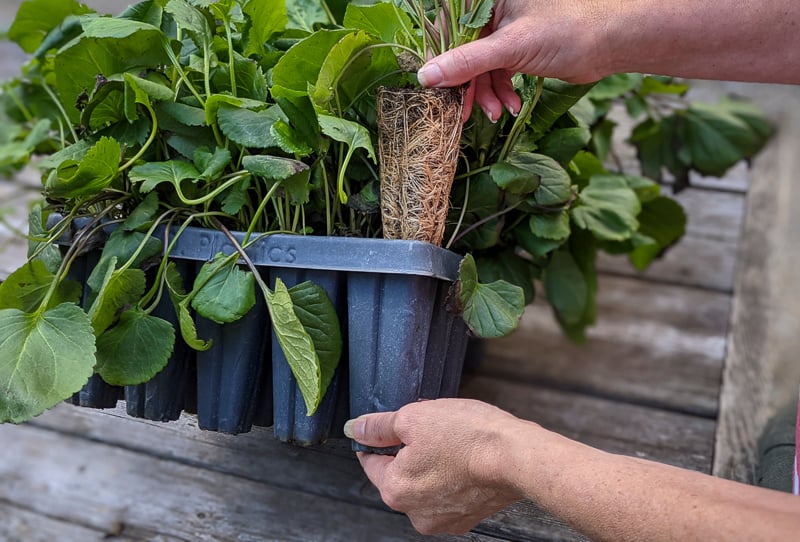
When optimium, plugs have dense root structures. Pictured here: Packera aurea DP50. © Izel Native Plants
A nifty thing to notice with plugs is the design of the cells themselves; they all have some form of vertical ridges. These are not manufacturing quirks, but are channels designed to push the roots downward and avoid circling. You might find some circling roots at the bottom of older plugs, but that’s rarely a concern.
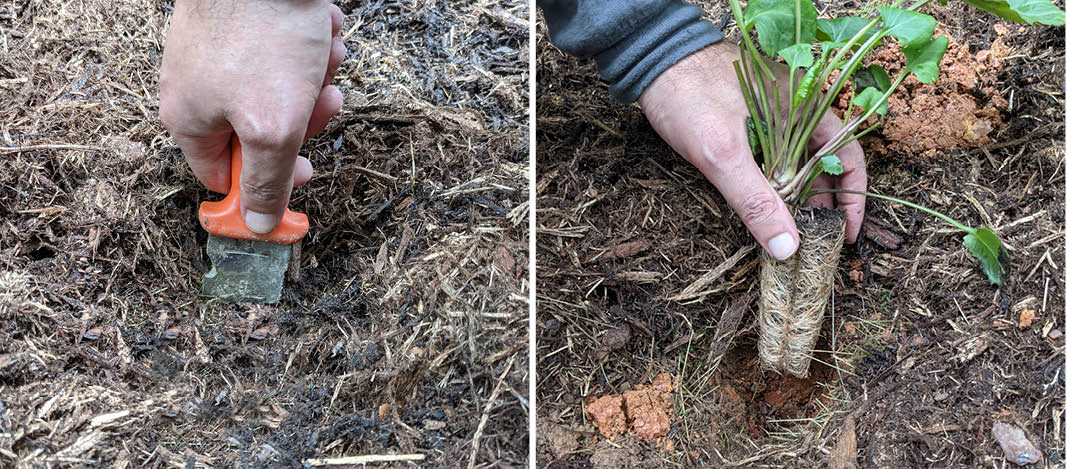
Plugs are easy to install, requiring a hole no larger than the size of the plug. A good soil knife is the ideal tool for planting small projects. © Izel Native Plants
Plant installation:
Plugs are young plants, and their roots are at a vigorous stage of development. One of the reasons plugs establish so quickly is that actively growing plants continue to photosynthesize even as their root mass (soil volume) stays constant. So those roots have stored up excess energy, and when they're freed from the tray, they have energy to spend. In addition, once they have depleted the few resources available to them and filled in their cell, they have no choice but to rapidly expand into the soil in search for nutrients. To that extent, the circling roots at the bottom are not a problem because they will rapidly expand outward. Some gardeners like to trim them off and splay the bottom of the plug. However, pruning these roots is not necessary, and splaying them will then require that you dig a larger hole than otherwise necessary—the hole does not need to be any larger than the minimum for the plug to fit into. Lastly, this increases the chances that there will be air gaps and those are definitely not good for the plants.
Plug sizes most likely to be available direct to consumer:
72-count plugs
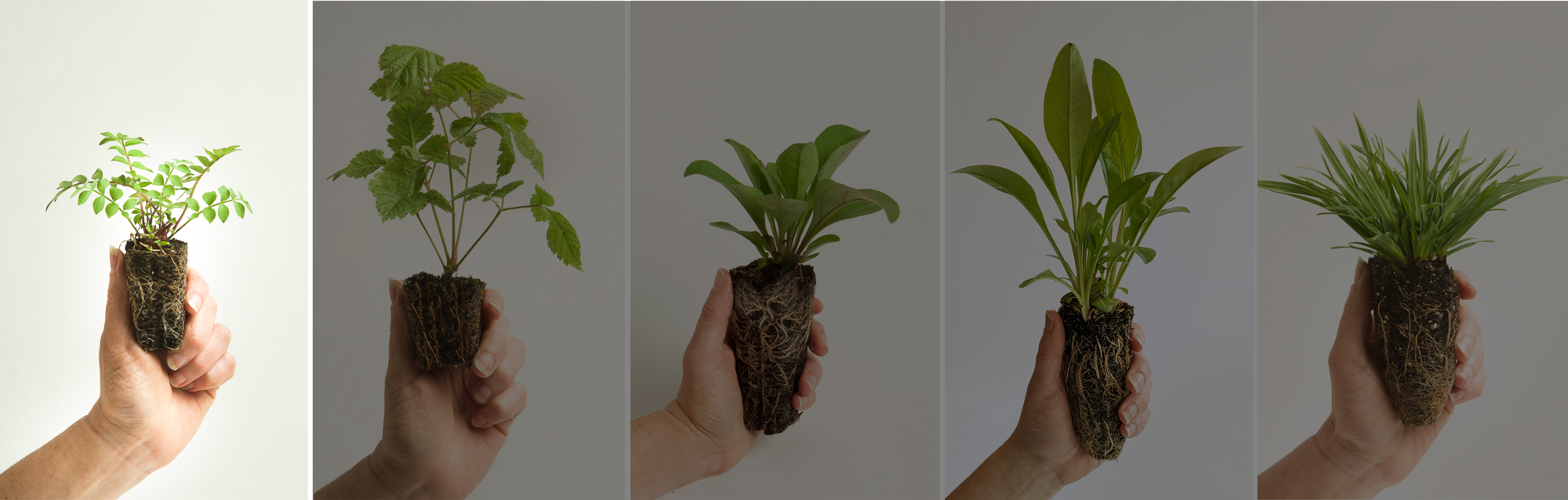
© Izel Native Plants
- Size
1 ½” x 1 ½” across by 2 ¼” deep. They are referred to as 72s. - Recommended Uses
72s are starter plugs. They are usually transplanted into larger pots and readied for resale. They can be planted directly into the landscape but will require additional care due to their small size. - Pros
Economical because they require fewer resources, and less time, and space to produce. One of the lowest cost purchasing options. - Cons
They are small, young plants with little margin for error; they can be damaged in shipping and require skill to nurse in the flats or pot up. They will require more TLC than larger plants when installed directly in the landscape. They should not be used as filler plants where previously established plants will compete for available resources.
50-count plugs
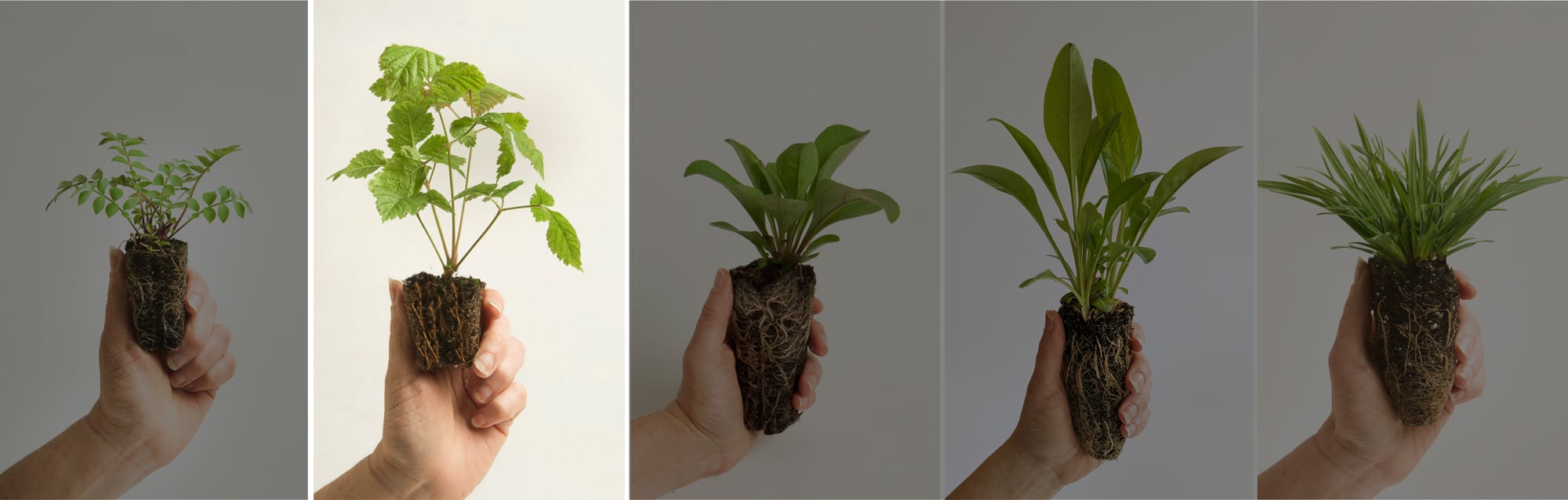
© Izel Native Plants
- Size
1 ⅞” x 1 ⅞” across by 2 ⅜” deep. They are referred to as 50s or regular 50s. - Recommended Uses
50s are starter plugs. They are usually transplanted into larger pots and readied for resale. They can be planted directly into the landscape but will require additional care due to their small size. They are wider than 72s and are often used for species that produce fibrous roots and/or roots that spread laterally rather than downward. - Pros
Economical because they require fewer resources to produce. One of the lowest cost purchasing options. 50s are often reserved for plants with root systems that establish quickly, ensuring a fast turnaround in the greenhouse. This can be a clue that the plants will rapidly expand their roots in the landscape as well. - Cons
They are small, young plants with little margin for error; they can be damaged in shipping and require skill to nurse in the flats or pot up. They will require more TLC than larger plants when installed directly in the landscape. They should not be used as filler plants where previously established plants will compete for available resources.
50-count deep plugs
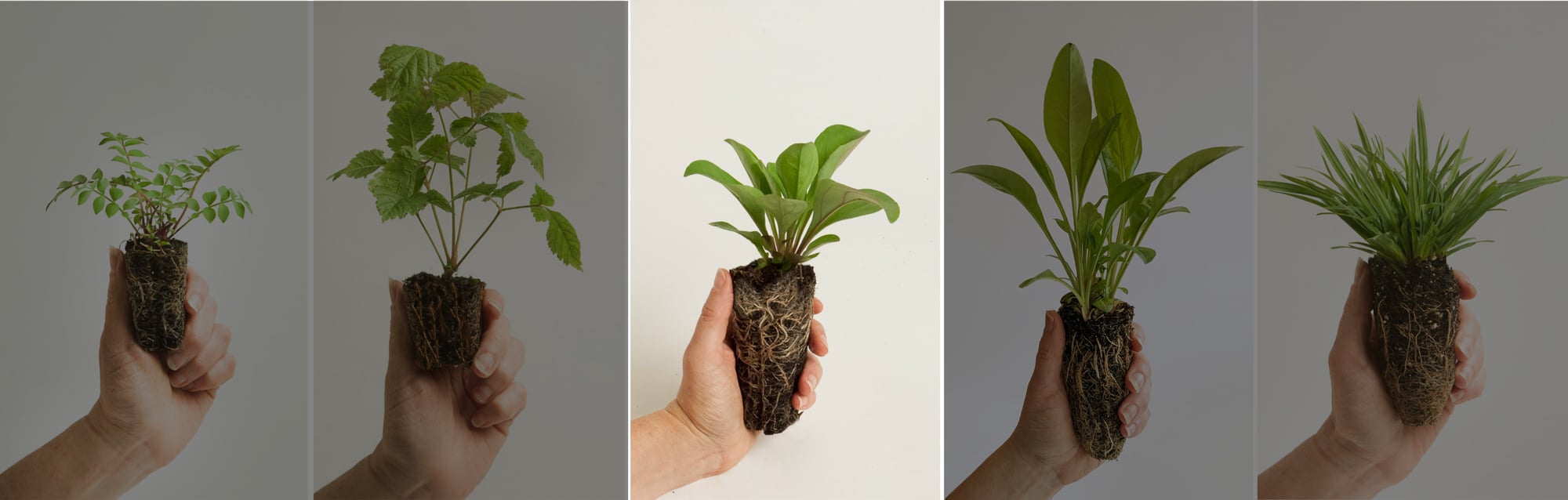
© Izel Native Plants
- Size
2” x 2” across by 5” deep. They are referred to as deep 50s, DP50, or LP50®. - Recommended Uses
DP50s are landscape-ready plugs and can be planted as they are. They can also be used as starter plants to be finished in gallon-size pots. - Pros
They hit the sweet spot by combining the benefits of young plants with deep root systems and the lower cost of 50 plugs per flat. The plants are still at a vigorous stage of growth and establish quickly in the landscape. Due to their large size, they require less TLC once planted than the smaller plug sizes. They are ideal for new installations as well as filling gaps in established plantings. - Cons
We haven’t really found any downsides to using DP50s. However, to install them we recommend purchasing a good soil knife or a drill auger for large installations.
38-count plugs
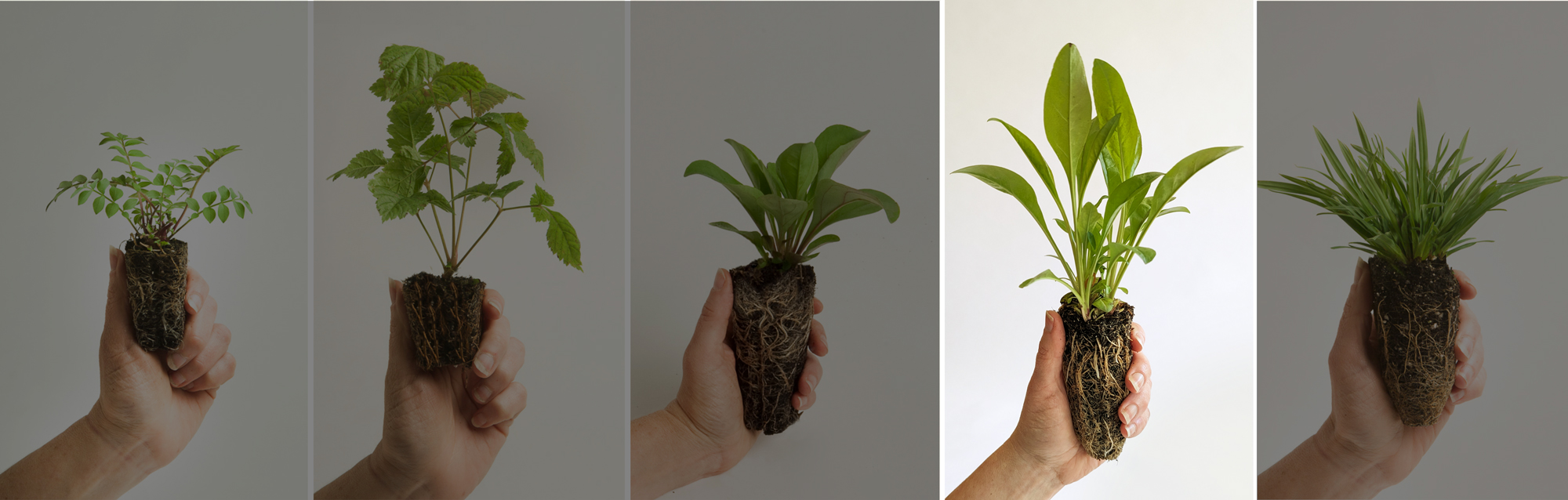
© Izel Native Plants
- Size
2 ¼ ” x 2 ¼ ” across by 5” deep. They are referred to as deep 38s or DP38s. - Recommended Use
38s are the same width as our 32s, but are 1” deeper. They are the same depth as our DP50s, but wider. Essentially, they provide slightly more root volume than either the 32s or DP50s. They are landscape-ready and can also be used as starter plants to be finished in gallon-size containers or larger. - Pros
They hit the sweet spot by combining the benefits of young plants with deep root systems and the lower cost of 38 plugs per flat. The plants are still at a vigorous stage of growth and establish quickly in the landscape. Due to their large size they require less TLC once planted than the smaller plug sizes. They are ideal for new installations as well as filling gaps in established plantings. - Cons
We haven’t really found any downsides to using 38s. However, to install them we recommend purchasing a good soil knife, or a drill auger for large installations
32-count plugs
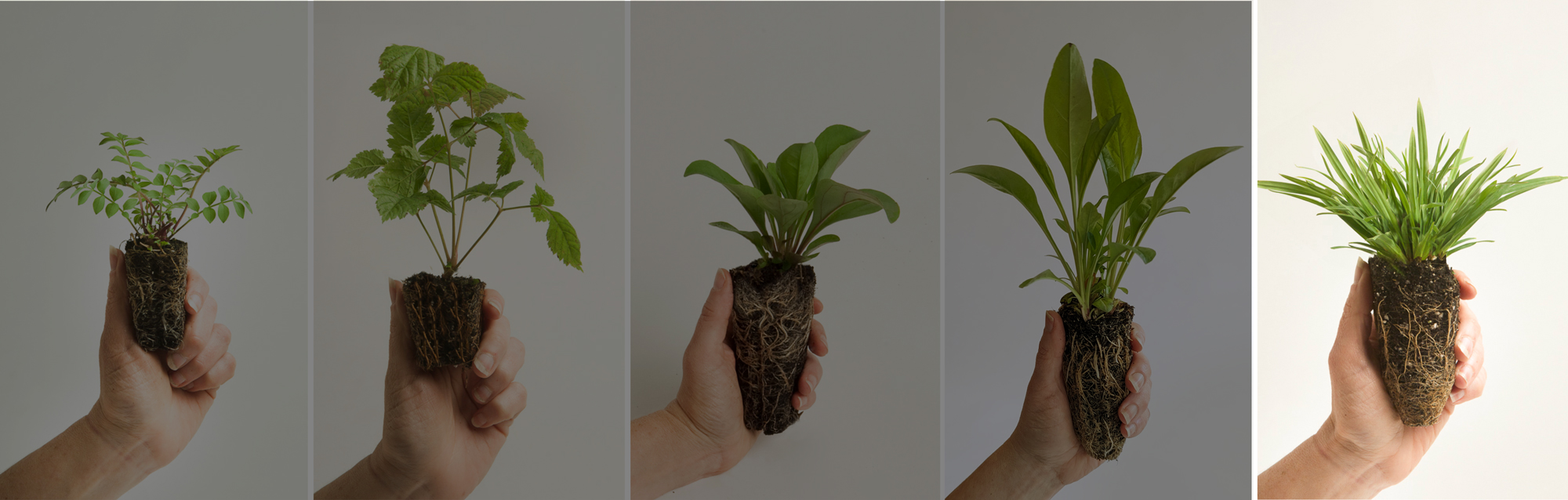
© Izel Native Plants
- Size
2 ¼” x 2 ¼” across by 4” deep. They are referred to as 32s, or LP32s®. They can also come as individual cells—sometimes called liners—in a holding tray. - Recommended Use
32s are landscape-ready plugs and can be planted as they are. Because they are slightly wider, but shallower than DP50s, some growers reserve this size for growing species with shallow and/or fibrous root systems. They can also be used as starter plants to be finished in gallon-size pots. - Pros
They hit the sweet spot by combining the benefits of young plants with deep root systems and the lower cost of 32 plugs per flat. The plants are still at a vigorous stage of growth and establish quickly in the landscape. Due to their large size, they require less TLC once planted than the smaller plug sizes. They are ideal for new installations as well as filling gaps in established plantings. - Cons
We haven’t really found any downsides to using 32s. However, to install them we recommend purchasing a good soil knife, or a drill auger for large installations.
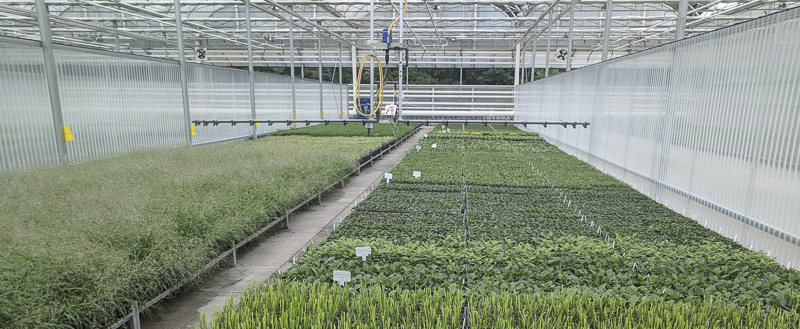
Final stages of production for wholesale crops of plugs in a state-of-the-art greenhouse. North Creek Nurseries, Landenberg, PA © Izel Native Plants
A commonality across all plug sizes is that they are a wholesale product that is rarely, if ever, available at retail locations. The demand for plugs is increasing but hasn’t yet reached the point where it’s viable for garden centers to stock full flats of a single species. Some independent garden centers are testing the waters and offering individual plugs for sale, but doing so requires more labor for smaller returns. Mail order offers more options for purchasing full flats and, through select nurseries, individual plugs.
Site conditions and timing:
As a rule of thumb, we don’t recommend amending the soil unless absolutely necessary. But, because plugs are young plants, you have to be mindful of where and when they will be planted. The smaller sizes, 72s and 50s, don’t allow for much margin of error, and you want to give them as much time to establish as possible before the going gets rough. If they are to be planted in a difficult site that is characterized by heavy clay or fast-draining, lean soil, spring installations should be scheduled well ahead of the hot summer months. Conversely, fall installations should be timed to give the roots a chance to establish well before the soil turns cold and soggy.
The larger plugs, DP50s and 32s, offer more latitude and are more forgiving. Their roots start off deeper and are, therefore, not as sensitive to the variations in heat and humidity that can rapidly dry out the top layer of soil. It will still be important to allow plenty of time for them to establish before winter sets in.
We have written a couple of blog post that address safegards that should be taken under consideration when planting early, or late, in the growing season:
Additional resources you should take advantage of are the maps of average dates of first and last frost:
Containerized plants:
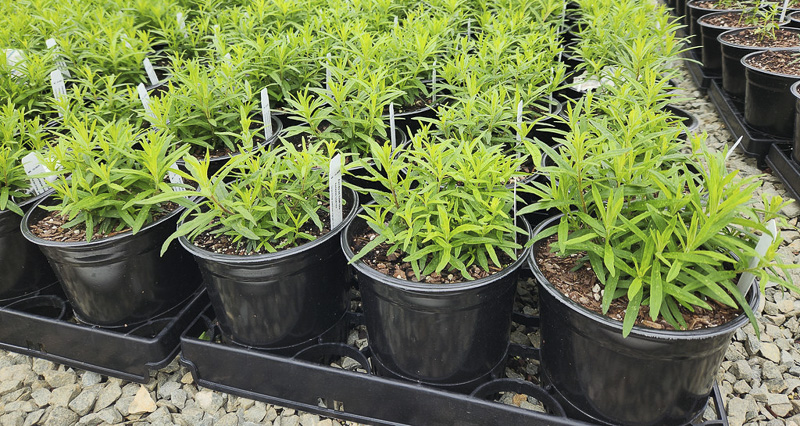
Gallon-size containers of Asclepias tuberosa (butterfly milkweed) at Plantworks Nursery, Rougemont, NC © Izel Native Plants
I’m probably not venturing too far out on a limb by assuming that most readers have visited garden centers and have not necessarily paid much attention to pot sizes. Plants tend to be displayed and sorted based on the type of plant and their intended uses (woody plants, culinary herbs, flowering herbaceous perennials for sun, etc) rather than by the types of containers in which they are sold. More often than not, you will not have the option to choose from different sizes of a given species and will be happy to find a plant whose growing requirements meet your site conditions and fall within your overall garden plans.
However, if you take a close look, you might walk away with the impression that it’s a free-for-all, and you wouldn't be entirely wrong. Some pots are small, some are large, and many are in between. Some are square, some are round. Some are short, others are tall. Yes, Goldilocks had it easy. To simplify communications with customers, pot sizes are often referred to using imperial volumes such as pints, quarts and gallons. Within those sizes, industry standards vary greatly depending on shape and manufacturer: A nursery pint can range in volume from 0.08 pint to 1.76 pints. A nursery quart can vary from 0.96 quart to 1.35 quarts. And, a nursery gallon can range in volume from 3 quarts (trade gallon) to 1.3 actual gallons.
This was a long way of saying that containerized plants are not as easily standardized by size and volume as are plugs. Containers increase in size on a near continuous scale starting at about 2.5” across and going up to several gallons. For our purposes, this is way too much information. We will focus on what containerized plants have in common and the advantages and disadvantages of using one size over another.
Root structure:
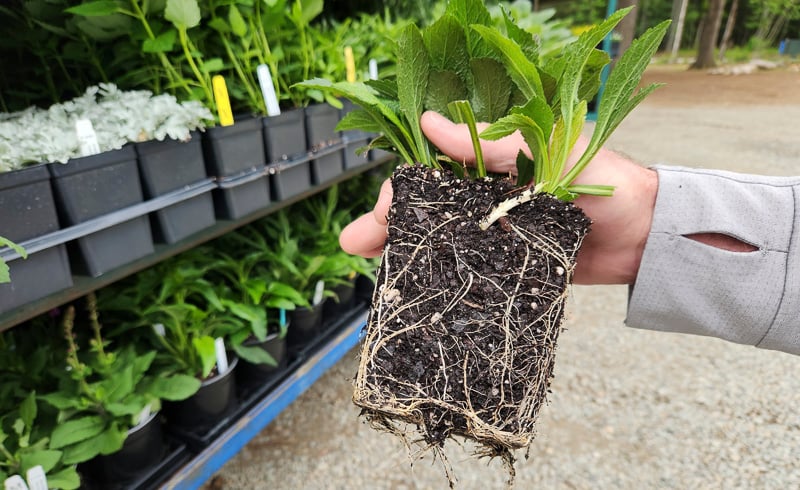
Quart-size Solidago rugosa 'Fireworks' at Plantworks Nursery, Rougemont, NC. This root structure is optimum for the plant's size. Beyond this stage, the roots will begin to circle at the bottom and will need attention before planting. © Izel Native Plants
The root structure of containerized plants can vary greatly and will have deeper implications than what we explored with plugs. The process of getting large plants to market can be described as step-up production. The timeline for growing a gallon-size plant does not start by planting seeds in the finished-size container, but instead involves gradually potting up seedlings into progressively larger containers. There are many reasons for this approach, most of which have to do with the use of resources and the economics of greenhouse space.
Being aware of this process can help you select the best plants if you are purchasing them from a retail nursery or garden center. As the plants are moved from one size container to a larger one, the roots will take increasingly longer to fill in the pot. In some cases the plants might be rushed to market before being fully rooted, and you might be purchasing a gallon-worth of growing medium with a poorly rooted plug or quart inside. Checking the drain holes at the bottom of the container for roots, and/or gently trying to remove the plant from its container will give you an indication of how well it’s rooted. You might want to ask permission, or help, from someone at the garden center before pulling plants out of their pots. Personally, I wouldn’t buy the plants if they say no. Root structure is a better indicator of plant health than is top growth.
Plant installation:
Containerized plants can also be too well-rooted, and, unlike a rootbound plug, this can be problematic with larger plants. Mature plants will slow down their root production and focus their energy into top growth and flower production. Without taking remedial steps, these plants will behave in the ground as if they were still in the pots, and the roots will not venture into the soil. Another potential risk to be aware of is that growing medium behaves differently than most soils and will dry out or become water-logged at a different rate. It is designed to be moisture retentive, but if allowed to dry out, it becomes hydrophobic and can no longer retain water (this is similar to trying to use a dry sponge). Conversely, when planted in heavy soil, the medium can become waterlogged—as if it were in a bucket—and the plant will suffer if it is not adapted to having wet feet.
It is therefore important to assess the root structure of containerized plants before installing them. If they are poorly rooted, and crucially, if they are root bound, it is recommended to bareroot the plants, discard the growing medium, and loosen up the roots before planting. Doing so will shorten the time it takes for the plants to establish in the soil, reduce the medium-term maintenance, and will ensure they have a healthy future.
Containerized pots:
Nursery pint
Size
3.5” x 3.5” across by 3.5” deep. Shape, height to width ratios, and volume vary within the nursery trade.
Recommended uses
Pints are landscape ready and can also be used as starter plants for quart and gallon containers.
Pros
Similar in volume to the larger plug sizes, they can be purchased individually. Plants are still at a vigorous stage of growth and establish quickly in the landscape. Ideal for plants with shallow, and/or fibrous root systems.
Cons
Not recommended for plants with deep taproots.
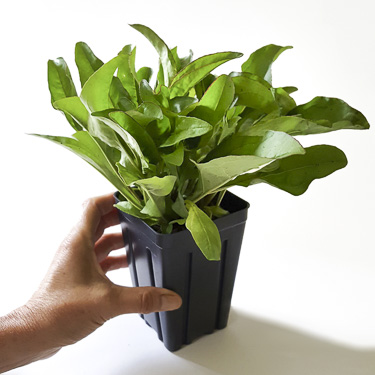
© Izel Native Plants
Nursery quart
Size
4” x 4” across by 5” deep. Shape, height to width ratios, and volume vary within the nursery trade.
Recommended uses
Quarts are landscape ready and can also be used as starter plants for gallon containers. This is the most versatile container size and accommodates plants with fibrous roots, taproots, and young woody plants.
Pros
Well-established, mature root systems. Will provide a rapid visual impact in the garden.
Cons
Installing quarts creates more soil disturbance than smaller plants and plugs.
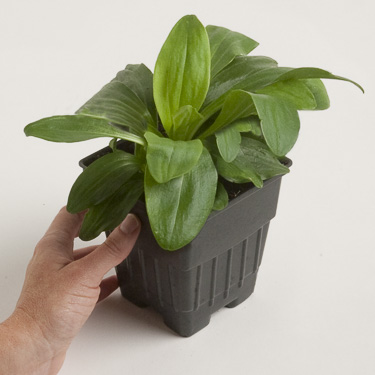
© Izel Native Plants
Nursery gallon
Size
6 ½” in diameter by 6 ½” deep. Shape, height to width ratios, and volume vary within the nursery trade.
Recommended uses
Landscape-ready plants. Nursery-finished plants.
Pros
Well-established, mature root systems. Instant gratification and impact in the landscape. Can easily be held for long periods of time before planting.
Cons
Installation requires considerable soil disturbance. Can be a challenge in rocky soil and not recommended around tree roots. Root-bound plants should be bare-rooted before planting.arts creates more soil disturbance than smaller plants and plugs.
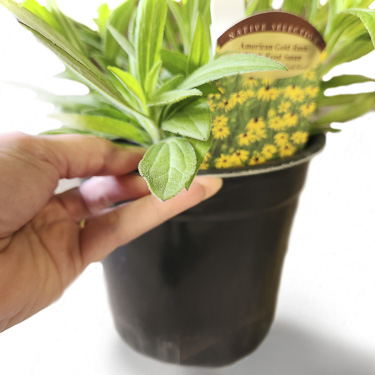
© Izel Native Plants
Site conditions and timing:
Larger plant material offers more flexibility when it comes to timing. The root systems are mature and have enough stored energy to withstand most weather fluctuations. They will require less maintenance than younger plants when installed as the summer heats up, and can be planted later in the fall season. When planting late in heavy soil, beware of the bucket effect mentioned earlier.
The last, but not least, of considerations when choosing a plant size, is the growing habit of the particular species. Some species grow rapidly—a 72-count plug of Eragrostis spectabils (purple lovegrass) planted in late spring will reach mature size by mid-summer. Other species grow slowly—Sporobolus heterolepis (paririe dropseed) will take several years to reach mature size. So, in the end, there are still a lot of personal choices to be made depending on your priorities, the level of plant care you are willing to commit to, and your patience or desire for instant gratification.
Izel Native Plants notes:
Izel Native Plants make it easy to shop by plant size: just expand the pot size filter in any of our plant categories and select your desired plant sizes. See screenshot below:

© Izel Native Plants

Claudio Vazquez co-founded Izel Plants in 2009 to fill the gap in online information about native plants that was pervasive at the time. With an initial focus on describing horticulturally available native plants, Izel Native Plants has since evolved into one of the top destinations for purchasing native plants online.